

VivaTech 2026: The Champs-Élysées Transforms into a Giant Laboratory of the Future for the Opening of the Show’s 10th Anniversary
Sunday 14 June, 11:00 AM PT Paris, Champs-Élysées 2026-06-14
To celebrate its tenth anniversary, VivaTech decided to step outside its usual venue and offer Paris a spectacular prelude ahead of the official opening of the trade show at Paris Expo Porte de Versailles from June 17 to 20, 2026. On June 14, Europe’s leading event dedicated to startups, innovation, and new technologies took over the Champs-Élysées as part of a special day organized in partnership with the Champs-Élysées Committee. Long before the arrival of the thousands of visitors expected at Porte de Versailles, innovation thus made its way into the heart of the French capital, transforming the world’s most famous avenue into a massive technological showcase open to the public free of charge.
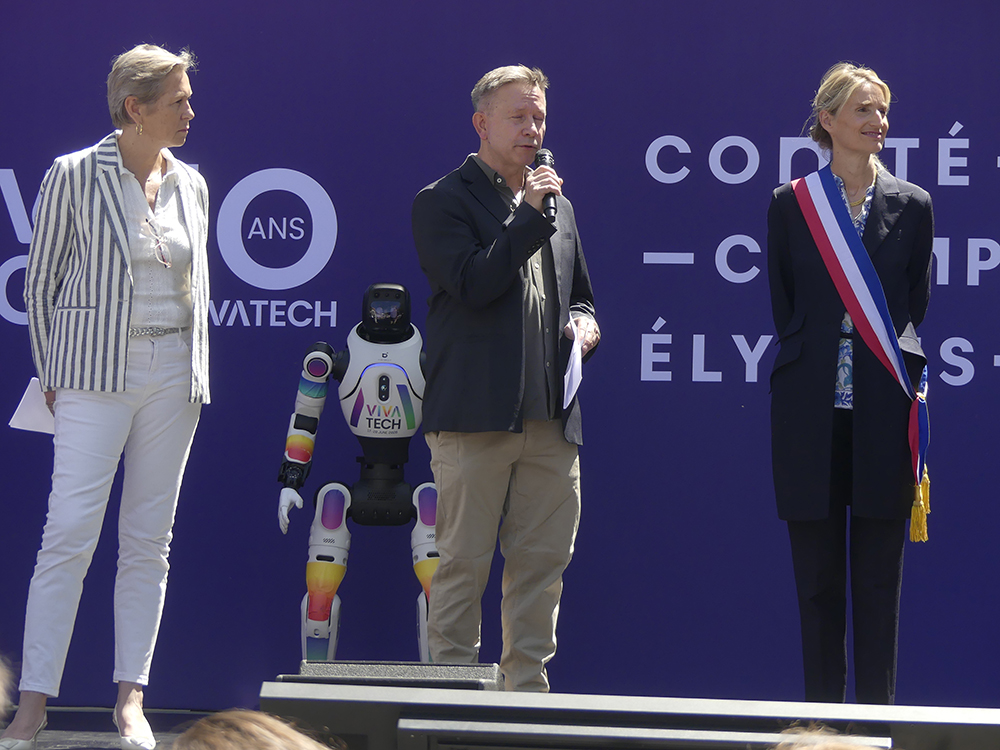
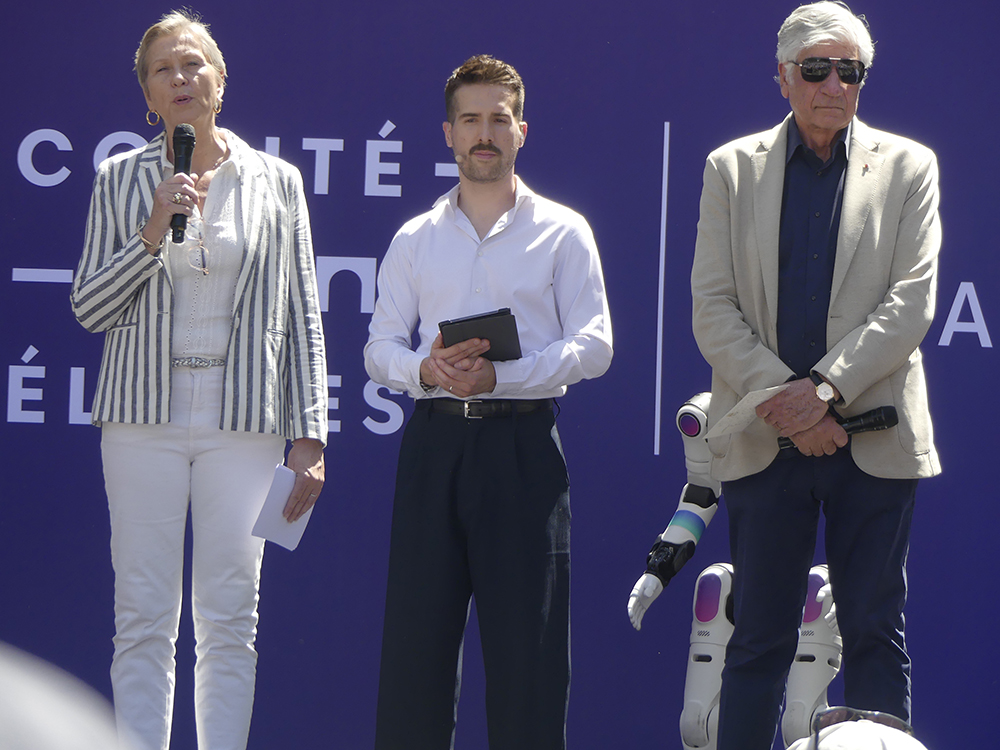
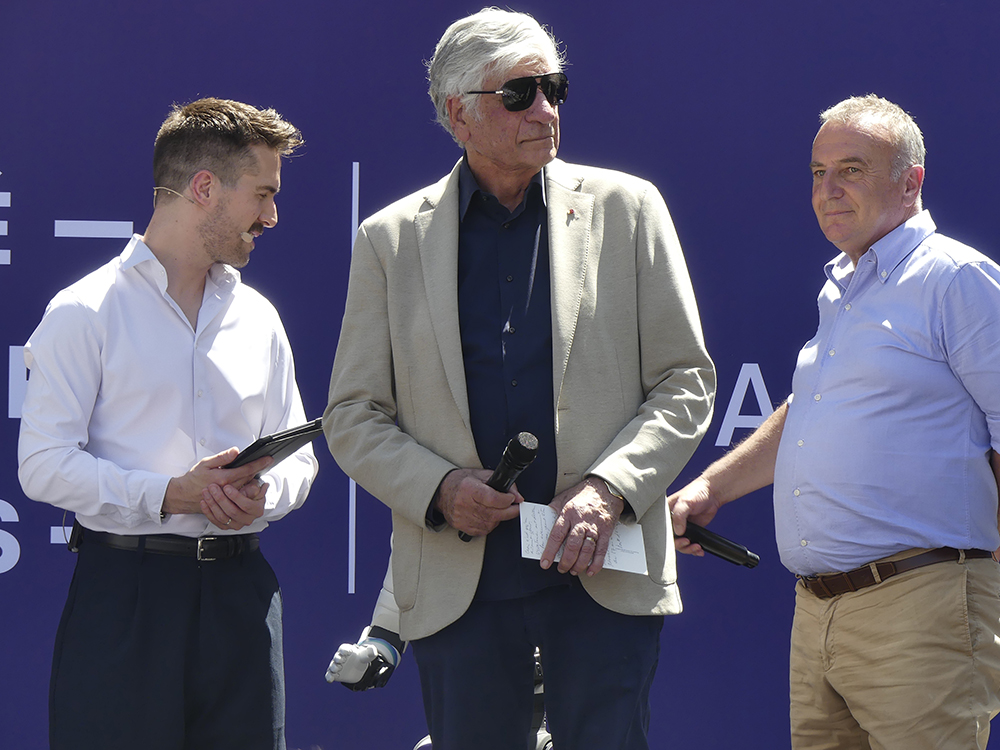
The opening ceremony set the tone for this particularly symbolic anniversary edition. On stage were Marc-Antoine Jamet, president of the Comité Champs-Élysées; Maurice Lévy, co-shareholder of VivaTech through the company Elvyr with the Les Échos Group; Michèle Benbunan, CEO of LVMH’s Media Division, Richard Bouigue, Deputy Mayor of Paris, Anne Le Hénanff, Minister Delegate for Artificial Intelligence and Digital Affairs under the Minister of the Economy, Finance, and Industrial, Energy, and Digital Sovereignty, as well as Catherine Lécuyer, Mayor of Paris’s 8th arrondissement. Their joint presence perfectly illustrated what has been at the heart of VivaTech since its inception: bringing together public authorities, major corporations, entrepreneurs, investors, and citizens around the technologies that are already shaping our future.
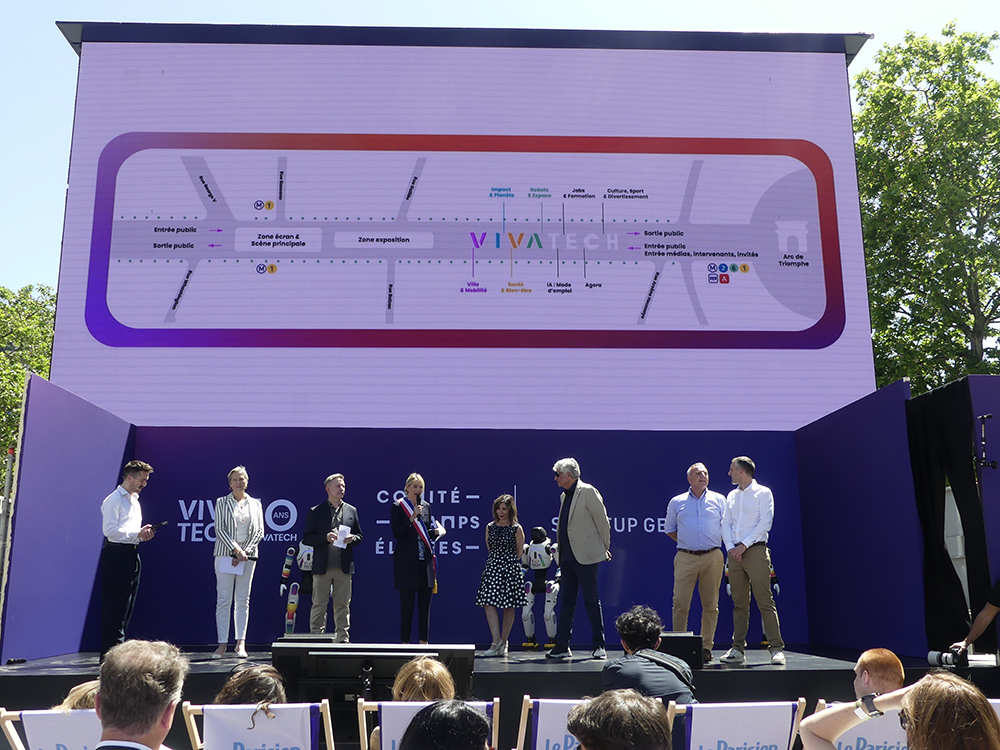
The decision to take over the Champs-Élysées is no small matter. While the event has grown over the years to become Europe’s largest gathering dedicated to technology and innovation, its organizers wanted to make its content more accessible than ever. For an entire day, the avenue was transformed into an immersive discovery experience, allowing families, tech enthusiasts, the simply curious, and tourists to explore more than thirty-five tangible innovations for free. This choice also recalls the original purpose of many technological innovations: to leave laboratories and research centers to directly improve citizens’ daily lives.
One of the most spectacular elements of this installation was the eight monumental letters forming the word VIVATECH, each representing a major theme: City & Mobility, Impact & Planet, Health & Well-being, Robots & Space, AI: A User’s Guide, Jobs & Training, Agora, Culture, Sports & Entertainment. This particularly ambitious design transformed each letter into a full-fledged exhibition pavilion where visitors could interact with hands-on demonstrations rather than mere theoretical presentations.
In the City & Mobility space, several projects illustrated the transformations of our urban environments. Vusion presented its VusionLive for Fresh solution, using artificial intelligence, image analysis, and sensors to optimize the management of fresh food aisles and reduce waste. Urban Cuisine highlighted urban agriculture through its indoor vegetable gardens capable of producing several kilograms of fresh produce each month. Visitors could also discover the Sternboard by SQ Motors, an all-terrain electric skateboard designed to navigate both urban environments and more challenging terrain, while Roofscapes demonstrated how Parisian rooftops could become true green spaces promoting biodiversity and thermal comfort. BNP Paribas, meanwhile, used the event to present Wero, a European instant payment solution designed to simplify everyday financial transactions.
The Impact & Planet track particularly highlighted innovations aimed at addressing environmental challenges. La Poste Group offered an immersive virtual reality experience that plunged visitors into the heart of the consequences of climate change, from heat waves to floods. Agua de Sol showcased its SunAir Fountain, a fountain capable of producing drinking water using solar energy without resorting to conventional water extraction methods. But one of the most fascinating initiatives was undoubtedly Climate Impulse, led by Bertrand Piccard and Raphaël Dinelli, whose goal is to complete a non-stop round-the-world flight aboard a plane powered by green hydrogen by 2029. This project perfectly embodies the spirit of VivaTech: transforming what seems like science fiction today into the technological reality of tomorrow.
Health and wellness also played a significant role. Among the most original demonstrations was EveryHuman’s Algorithmic Perfumery platform, allowing visitors to create their own personalized perfume using artificial intelligence and robotics. HABS presented its Neuro-AI technology developed with NRJ, capable of analyzing emotional reactions in real time. Rokid’s smart glasses, meanwhile, demonstrated the spectacular advances in augmented reality with instant translation into dozens of languages, while companies like Wandercraft, Lili For Life, Lattice Medical, and Xpanceo illustrated the growing importance of health technologies in the European startup ecosystem.
The Robots & Space area was naturally one of the most popular. With humanoid robots, interactive companions, exoskeletons, and space technologies on display, the public could see just how far robotics has moved beyond the experimental stage. Companies such as Blue Frog Robotics, Unitree Robotics, Agibot, German Bionic, Exotrail, and Sirius Space demonstrated concretely how robots, autonomous systems, and space technologies are set to play a major role in the years to come.
Beyond the themed zones, several spectacular areas were spread out along the avenue. Visitors could explore a space capsule developed by Zephalto, a French project aiming to eventually offer trips into the stratosphere aboard a pressurized balloon, as well as observe next-generation drones, autonomous vehicles from Next Modular Vehicles, a Lightyear solar vehicle with photovoltaic panels directly integrated into its bodywork, and CycloTech’s aerial mobility concepts. These demonstrations offered a concrete vision of possible futures in the fields of ground, air, and space transportation.
The main stage also contributed to the particularly festive atmosphere of this opening. Robot shows alternated with inspiring talks, demonstrations focused on artificial intelligence, a Prompt Party organized with Le Wagon allowing the public to discover the art of formulating prompts for generative AI, as well as an interactive musical blind test designed by Mukiz. This playful approach was one of the event’s major successes: making sometimes complex technological topics accessible through participatory and entertaining experiences.
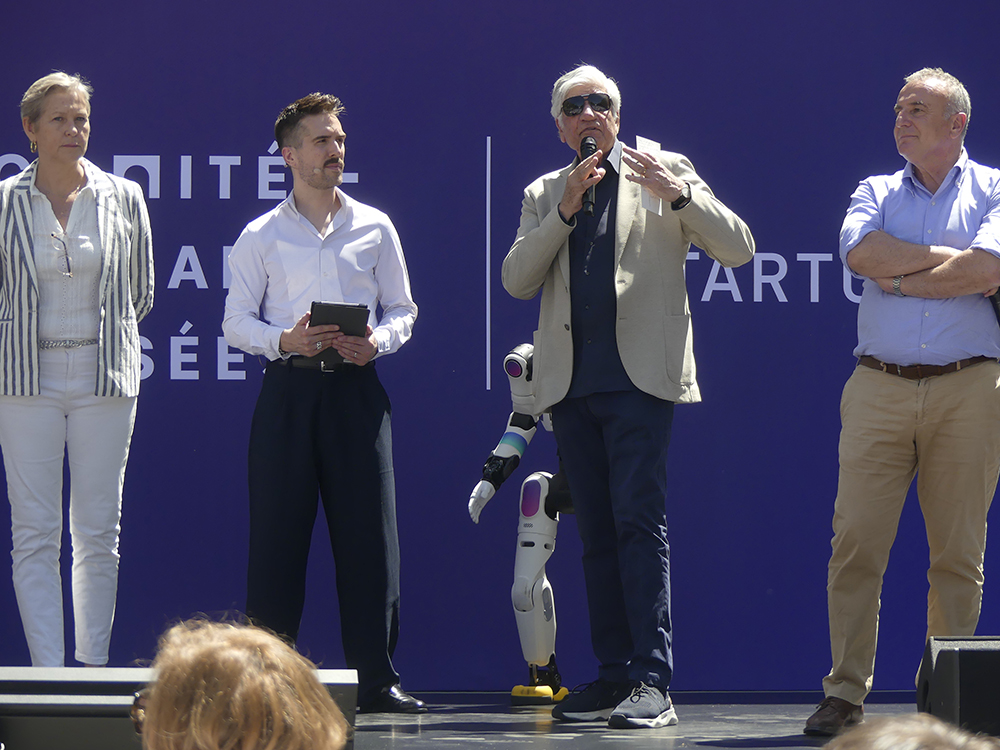
To host this exceptional day, VivaTech had enlisted well-known figures from the general public and among tech enthusiasts. PP Garcia, a leading figure in French tech journalism; Kayane, an esports pioneer and renowned gaming host; and journalist Guillaume Cérin led the various presentations and demonstrations throughout the day. Their presence also highlighted the evolution of technology outreach, now driven as much by specialized journalists as by content creators and personalities from the digital world.
This event on the Champs-Élysées stands out as one of the most ambitious initiatives ever conceived by VivaTech since its creation in 2016. By taking innovation out of the exhibition halls and placing it at the heart of the public space, the organizers underscored that technology only makes sense when it connects with the public. Spanning artificial intelligence, robotics, healthcare, sustainable mobility, space technologies, and immersive experiences, this day offered a particularly concrete glimpse into the topics that will dominate discussions at the 2026 edition. More than just a PR stunt, this life-size immersion transformed one of the world’s most iconic avenues into a veritable laboratory of the future, demonstrating that innovation is no longer just a promise for tomorrow, but a reality already very much present in our daily lives.
You can view our photos on our Flickr page
Photos and 4K video: Boris Colletier / Mulderville