

Masters of the Universe: The Cast and Filmmakers on Bringing Eternia to Life
Tuesday 19 May, 2:30 PM PT Los Angeles 2026-05-19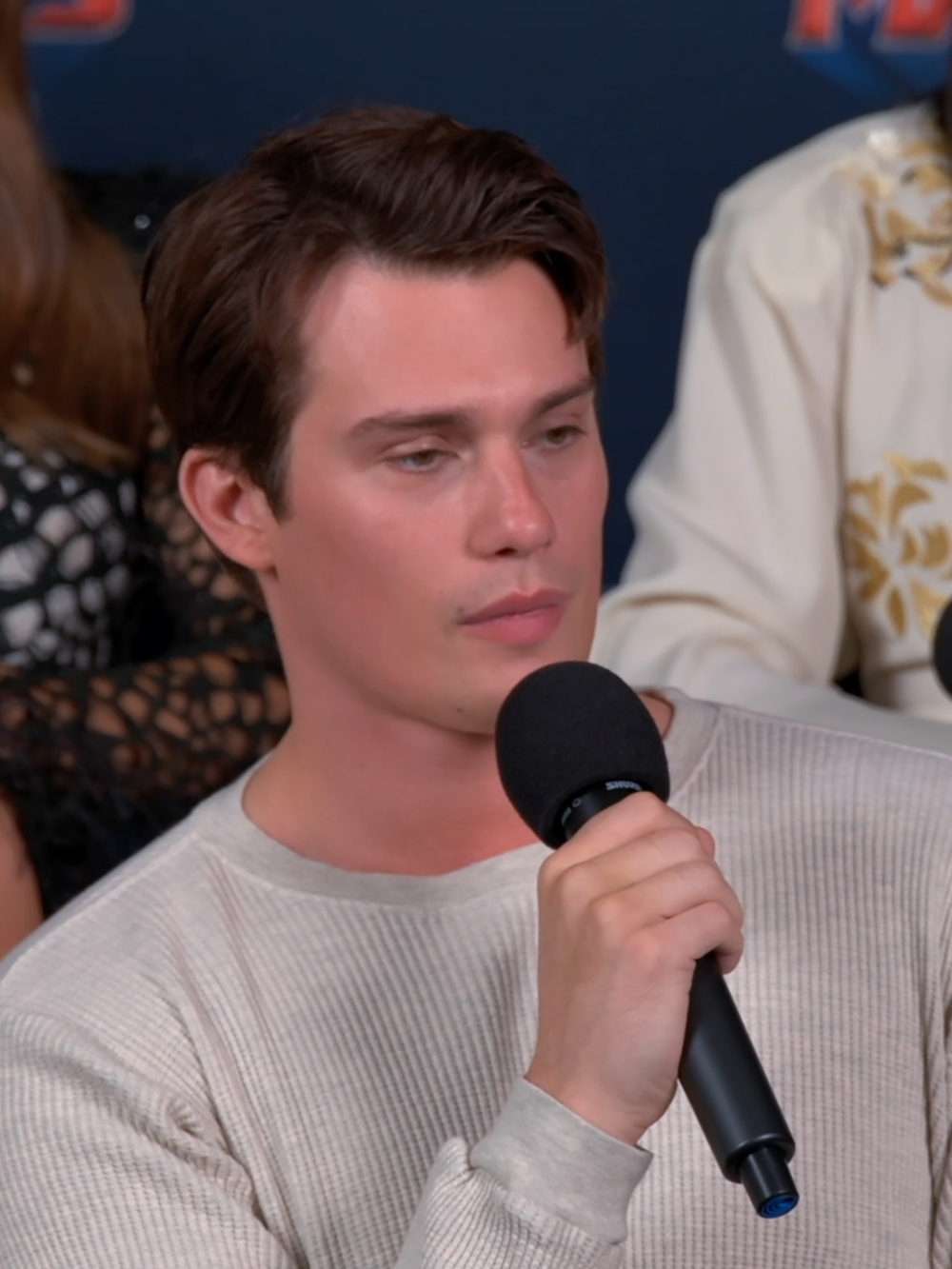
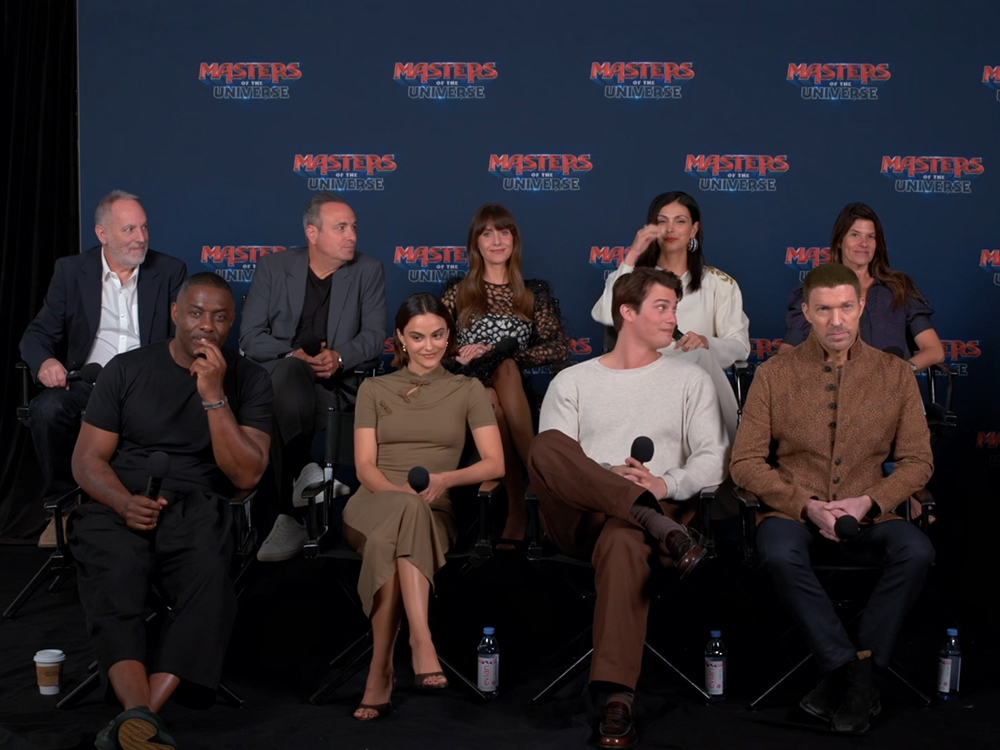
Following the world premiere of Masters of the Universe, members of the cast and creative team gathered for a lively press conference moderated by film journalist Kevin McCarthy. Director Travis Knight, stars Nicholas Galitzine, Camila Mendes, Idris Elba, Alison Brie, and Morena Baccarin, along with producers Robbie Brenner, Jason Blumenthal, and Todd Black, reflected on the long journey of bringing Mattel’s iconic fantasy franchise to the big screen. Throughout the discussion, the team shared personal memories of growing up with He-Man, explored the emotional and physical challenges of adapting beloved characters, and revealed behind-the-scenes stories about the film’s elaborate sets, costumes, action sequences, and music. The conversation offers a fascinating look at the passion, nostalgia, and creative ambition that shaped one of the most anticipated fantasy films of 2026.
Kevin McCarthy: All right. thank you everyone for tuning in. My name is Kevin McCarthy. I'm the host of the On Film with Kevin McCarthy podcast, and I'm here with the incredible cast, filmmakers, and creative team behind Masters of the Universe. And what an honor this is. Alison, good to see you. I didn't say hi to everybody yet, but—
Alison Brie: Good to see you. Thank you for the immediate shout-out. Thank you for that.
Kevin McCarthy: Idris, how are you? Good to see you.
Idris Elba: What's up, man? I'm good. How are you?
Kevin McCarthy: I'm doing good. It's good to see you guys. I'm going to introduce everybody real quick, and then we'll get into the questions. We're also going to be taking some questions from the press as well. But Travis Knight, absolutely amazing visionary filmmaker and director of the film. Nicholas Galitzine, who's an amazing actor. I first met you on The Idea of You. You play He-Man. Camila Mendes playing Teela. Idris Elba playing the amazing Duncan. Robbie Brenner, producer and president of Mattel Studios. Produced Barbie as well. Amazing. Um, Morena Baccarin, who plays the Sorceress. we also have the amazing Alison Brie as Evil-Lyn, which is the best name ever. and then we also have the incredible Jason Blumenthal, producer, as well as Todd Black, producer. Congratulations to all of you. The premiere was last night, which was incredible. They turned the TCL into Castle Grayskull, which was absolutely amazing. So, how are you all feeling from the premiere last night? I'll go to you first, Travis. This must be a dream come true.
Travis Knight: I'm a little hoarse, actually. I went hard last night. So, forgive the sound of my voice. No, it's great. Look, we've been working on this thing for a long time, and to finally get it out into the world and to get the response we've been getting is just—it's a real joy. So, no, I feel good. I feel really good.
Kevin McCarthy: Nicholas, I saw you on the carpet last night talking about how, when you first came to LA when you were 20, and you tell this story. This is a really, really great story. Full stop.
Nicholas Galitzine: I mean, well, so, you know, for a lot of English actors or British actors, there's kind of the added step in your career process of going out to LA to get agents, to do pilot season, and really we have this thing called the ESTA visa, which is a 90-day visa. And I used to book the full length of this visa, have no idea where I was going to sleep, and so I stayed on a few couches in North Hollywood. And I remember I would always walk past the Chinese Theatre and kind of, in my wildest dreams, hope that I could have a movie there one day. And so it was extremely surreal being there last night. We all had a great time, I think.
Kevin McCarthy: Well, not only do you have a movie there, you're He-Man in that film, which is remarkable. Um, Travis, I'm going to start with you only because this has been a really big journey from your childhood. And what I loved about the show in the '80s is the idea of appointment television. You get home from school and you kind of watch it. I just miss that vibe of sitting down after school. But talk about that journey for you from your childhood to now and just what that means to you, to now have this film presented on screen with Daniel's amazing score, the performances. Talk about your journey emotionally and what it meant for you.
Travis Knight: Look, it is a trip. I mean, I loved He-Man when I was a kid. And, you know, I played with the toys. I read the comics. I watched the cartoons every day after school. I actually made my own He-Man home movie when I was a kid. I commandeered my dad's video camera, and I was He-Man, of course. I didn't really look the part. I had the haircut, but I didn't really look the part. But no, it's been a huge part of my life. It was a huge part of my childhood. And so to be here 40 years later and actually be able to tell these stories with these characters that I've loved since I was a kid, it's a very moving experience for me, I have to say. And probably the most moving thing was the day that Nick did that famous incantation where he transforms into He-Man for the first time. I was welling up. I was getting really emotional just because it was such an incredible thing to see this character brought to life on the big screen.
Kevin McCarthy: Is it too late for Amazon MGM to add your original short film?
Travis Knight: the end. Nobody needs to see that.
Kevin McCarthy: No. Yes, we do. Or Micah can do a recreation in stop-motion.
Travis Knight: I'm down for that.
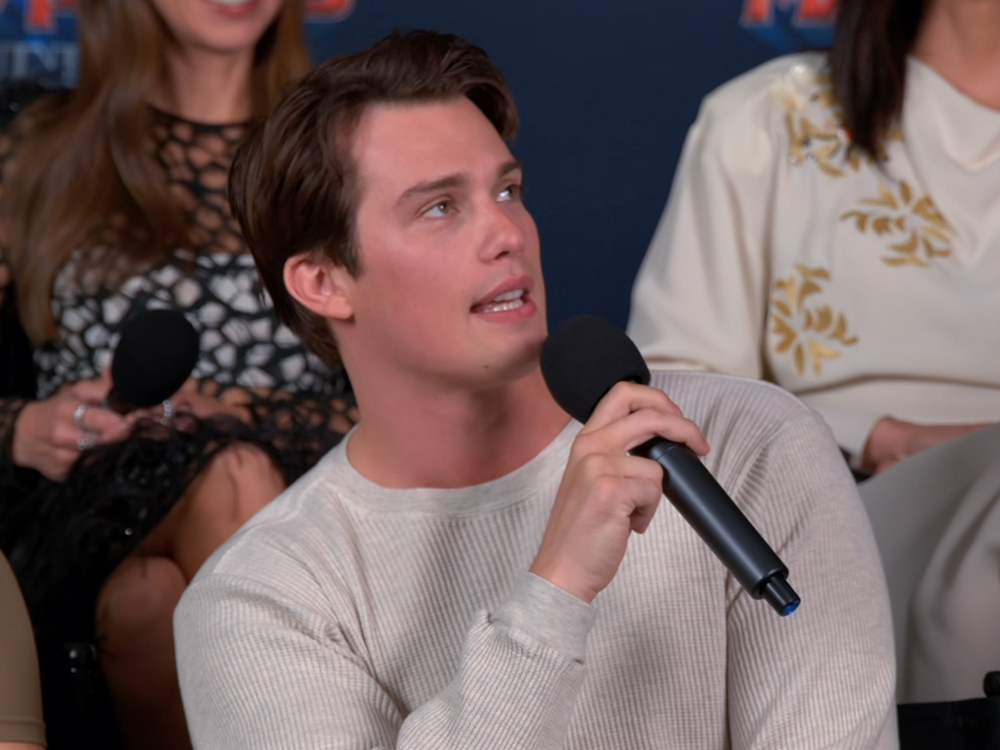
Kevin McCarthy: Nick, congratulations to you on the amazing performance. It's such a well-earned arc that your character goes through. And I think what's fascinating is that a lot of people talk about the physical transformation, but I think the emotional transformation is also equally important. And I believe that they probably inform each other. So, as you're physically transforming into him and emotionally transforming into him, how do they inform each other? I'm just curious how that juxtaposition is.
Nicholas Galitzine: I mean, it's interesting. You know, I think when Travis and I first met, obviously, as you say, a lot of people are interested in the physical component of it. And obviously, when he is transformed and all those amazing action sequences happen, they're very fun. But the thing that Travis and I really connected on was: how do we find the human in this larger-than-life character? And doing that incantation on that day, I remember being very emotional as well. What does it mean to have the power? This is a guy who really has been gaslit for most of his life. No one believes he is who he is. Despite having this kind of unbreakable sense of hope, which is bashed almost every day of his life, he really... I remember saying that incantation. That moment is built on so many moments of rejection and earning it, earning the right to say that line. And so, as you say, everything in the movie, having the hardships of his life before that, informs that really powerful moment.
Kevin McCarthy: When you say that line, though, kind of going through what you just said about all the rejection personally, on a level as Nick, did you also feel that catharsis as well?
Nicholas Galitzine: I channeled this guy's... I mean, all actors go through it. I was thinking of every casting director who ever rejected me. No, it's exactly that. That's why I think I shed a tear or two. No, I mean, inevitably, look, it's really funny. I think for a lot of people, especially with a movie like this, they kind of assume that you burst onto the scene, but this is 13 years in the making. And I just feel very honored that I have a lot of people here who trusted me with the responsibility.
Kevin McCarthy: Well, you're so great. I remember when the movie ended, I was like, I just missed being in the world with the characters. You guys are so fun to be with. Camila, I'll say this. In the beginning of the film, we have younger versions of the characters, but then when we first meet your version, it's during that amazing fight sequence. So we're introduced to your character through her fighting before we even really get into the dialogue and emotional core of what she's dealing with. But I find that really cool because the fighting also informs who she is emotionally, and vice versa. Can you speak about the fighting specifically and how that serviced the emotional core of who she is?
Camila Mendes: I mean, Teela is Duncan's daughter, Man-At-Arms' daughter. So obviously she has been training from a very young age. I think what really made Teela's storyline so interesting was her relationship with her father. And I feel like that really informs who she becomes when she's older. You know, she obviously has this very tough exterior, but deep down she has a lot of deep feeling, which is why I think that she and Adam really connect when he comes from Earth because he brings that sensitivity to Eternia.
Kevin McCarthy: The movie also has one of the most insane friend-zone moments I've ever seen. I was like, "Oh my God, I felt so bad for you."
Camila Mendes: We've all been there.
Nicholas Galitzine: Got all these big muscles for nothing. I mean, it means nothing at the end of the day.
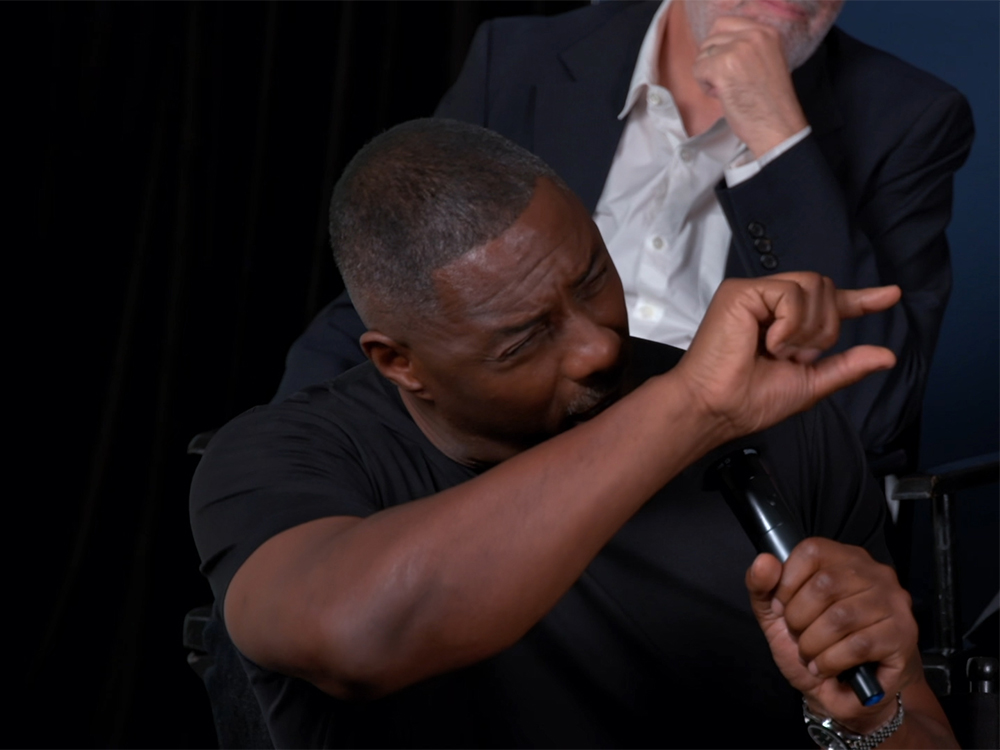
Kevin McCarthy: Oh gosh. I was leaning into that scene, too. I was like, "Oh, okay." Um, so Idris, I've been a fan of yours, obviously, for a very long time. And when I see your character on screen, you wear his history on your face. What I mean by that is there's so much that you give to us internally as an actor before you even speak. I know this guy's been through some things, right? And the way he ends up fighting in the beginning of the film and his arc is remarkable. You really earn your arc. And like Camila was saying, that relationship between you two is really a big heart of the film. I find it interesting, though, that there are little details sometimes that can lock you into a character. I know some people say it's shoes, some people say it could be an accent or costume. Is there anything little that would surprise people that kind of helped you find this guy?
Idris Elba: The mustache. Really big old sprawling thing across my face.
Kevin McCarthy: The way you speak.
Idris Elba: it does. It was definitely... Travis and I met in London and had lots of talks about our dads, actually. We spoke about fatherhood a lot, and that sort of old-school machismo that lives in cowboy characters. That sort of "not very good at expressing my feelings" type thing. And I think both our fathers had that sort of air to them. So I latched onto that. At the heart of my character, he's a dad. He loves his kid. And he has this sense of loss the whole time. I really leaned into that. It was a lot of fun to play with, and it gave a character that ordinarily just kicks ass a lot of depth to play with, and that was great.
Kevin McCarthy: You know, I was telling Camila before we started that I won't give away the scene, but there's just some really great emotional core sequences between you two. And obviously your character is dealing with some pain from what happens early on in the story, and we want him to find catharsis. And that's obviously what you're trying to bring to him in a way.
Idris Elba: Just quickly, by the end of it—you know, I'm not old enough, by the way—but I felt like Camila's real dad. She's like, "What's up, Dad?" I'm like, "What up? Did you brush your teeth today? Did you eat?"
Camila Mendes: I'm glad you've embraced that role.
Kevin McCarthy: Producer and president of Mattel Studios, Robbie Brenner. Um, amazing. Also produced a little film called Barbie. And obviously this brand, Mattel, is so locked into our childhoods. There's something beautiful about how this is going to be for new fans and also old fans, generationally. What is it about these nostalgic properties that is so cinematic and so interesting for audiences to experience in theaters?
Robbie Brenner: Well, I think with toys in general, I mean, it's something that you play with. You know, you bring it into your room, you imagine for hours, you have the wonder, the whimsy, the play, everything. Everybody has nostalgia for toys and characters and figures that make us dream of places that we want to go to. And I think that just working at Mattel and being in this world of these brands and all this nostalgia is amazing. And then seeing it come to life, being able to be involved with a movie like Masters of the Universe, and making sure that it has the integrity of the original while at the same time recreating it for new audiences, is incredible. I think we did something so bold, so unique, so amazing, original, and interesting. Watching it last night was just amazing.
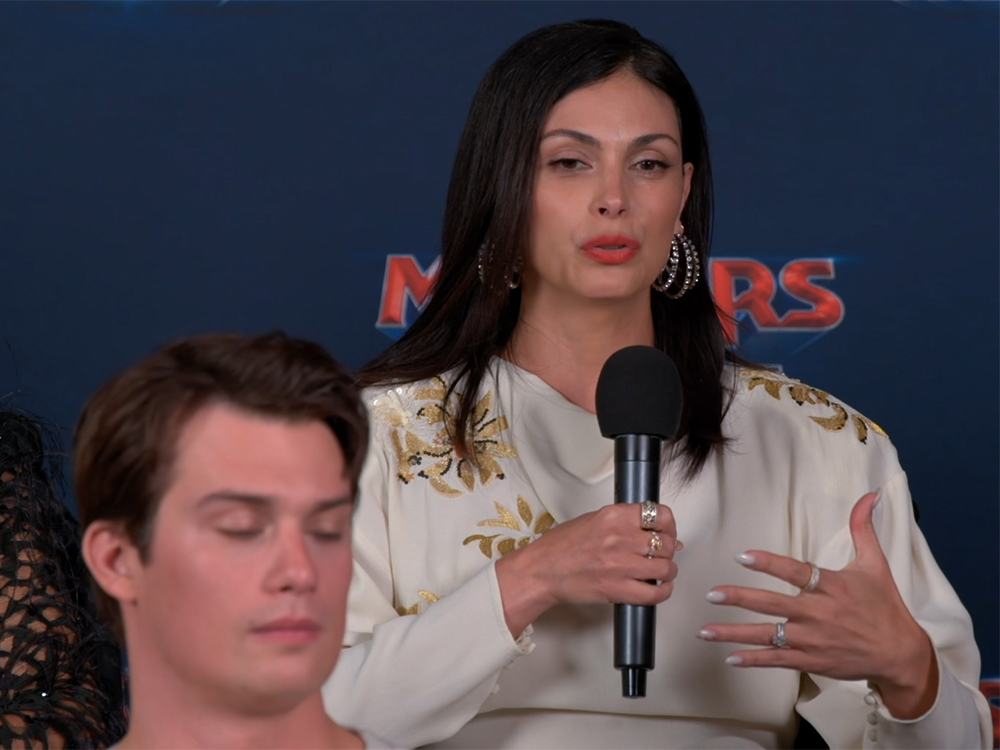
Kevin McCarthy: I can't imagine what it was like to be at that premiere. I wish I could have gone last night. Morena Baccarin, one of my favorite actors. You're amazing at what you do. I genuinely love all your work. Similar to what I was saying about Idris, there's this element where, when you show up on screen, I immediately feel safe in your presence. She's a protector. But also, there's an immediate history through the way she physically takes the screen and commands our attention as an audience. Can you speak to that idea? What is it like to have a character introduction and immediately make us feel her overall protection and guiding light for He-Man and Adam?
Morena Baccarin: Well, much like Travis, I spent a lot of my childhood playing He-Man and She-Ra with my brother. So I had the history internally. I knew everything about them. It wasn't hard to drop into this world.
Kevin McCarthy: Correcting people on set if they said they did something wrong.
Morena Baccarin: I wouldn't dare, but I was internally. Of course, they're big shoes to fill. But I think one of the hardest things as an actor when you drop into a project this huge is trust. It's trusting that the people around you have the vision for it and trusting that the character exists and that you just have to be there and wear the clothes. This character is very ethereal, but also very grounded and motherly. If you have the confidence to allow it to be what it is, you end up transforming more quickly, if that makes sense. It's a character that is very all-encompassing in the world, but I don't have to work at it because it's in the costumes, it's in the look, it's in the universe that is created for me. So I just had to have a lot of trust coming in.
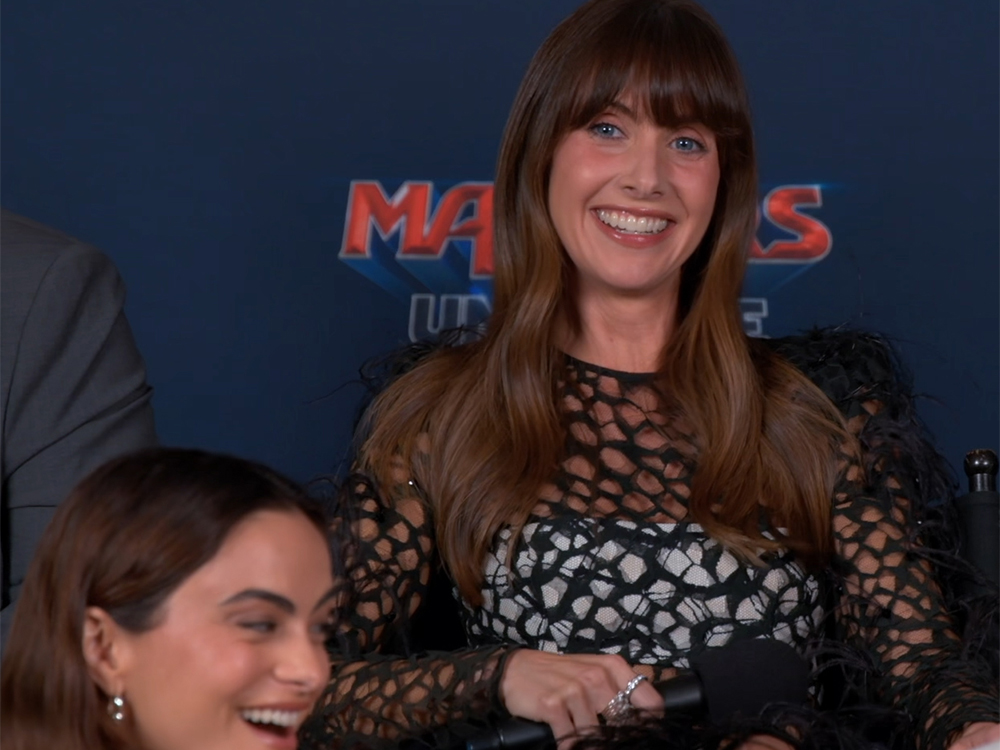
Kevin McCarthy: She's such a great character. Allison, you do something really smart in this film with balancing tone. And I know the script—well, I find this interesting because I really mean that. The script obviously gives you so much, but you have this incredible chemistry with Jared's character, Skeletor. Obviously, there's this comedic tone, but then it turns diabolical instantly. And it's actually scary as hell when he goes diabolical.
Alison Brie: You didn't feel immediately safe in my presence?
Kevin McCarthy: I was scared. I mean, your name is Evil-Lyn, that's true. But talk about finding that balance of tone because obviously you can have a moment where you're doing an evil laugh, and then the next minute he's doing something extremely horrific to you. Speak about playing in those different tonal realms and making that shift believable. I felt there was an empathy I had for her, and I think empathy is interesting, especially with quote-unquote villain characters. I don't consider her a villain, but she's kind of trapped in her own...
Alison Brie: You don't consider her a villain?
Kevin McCarthy: I don't like the term villain, if that makes sense.
Alison Brie: I like the term villain, and I think Evil-Lyn does too. Can I take offense?
Kevin McCarthy: I apologize. I apologize.
Alison Brie: I do understand what you're saying. It starts with the script. The tone of the script was incredibly clear and really fun. Even that is a throwback to the original series. I think what I was really excited about with this character is the relationship between Evil-Lyn and Skeletor and how contentious it is and how funny it is. The original Evil-Lyn is a really funny character because she is sometimes his most loyal ally and also his least loyal foe. She is ready to turn on Skeletor at the drop of a hat. I also think, in my first meetings with Travis, I talked about there being something within the love-hate relationship. Even when he's causing her pain, she sort of enjoys it because she likes how evil he can be. So it was really about collaboration. I think Travis was such an incredible director. What Morena was saying about trust and feeling his fandom and his love for the franchise, and also being able to reference things from the original cartoons... I don't know, I feel like we would talk all the time and say, "What if we keep this laugh going?" Travis was so open to saying, "Try it. Let's see if it's working." And Jared too. We had so much fun on set exploring the ups and downs of the Skeletor/Evil-Lyn relationship. It's just so juicy. It's very complicated.
Kevin McCarthy: I'd watch a whole movie about just their relationship. It's really interesting. Did you guys hear that? Robbie, let's get on that. Right. But what did Jared look like on set? Was he in a performance-capture suit?
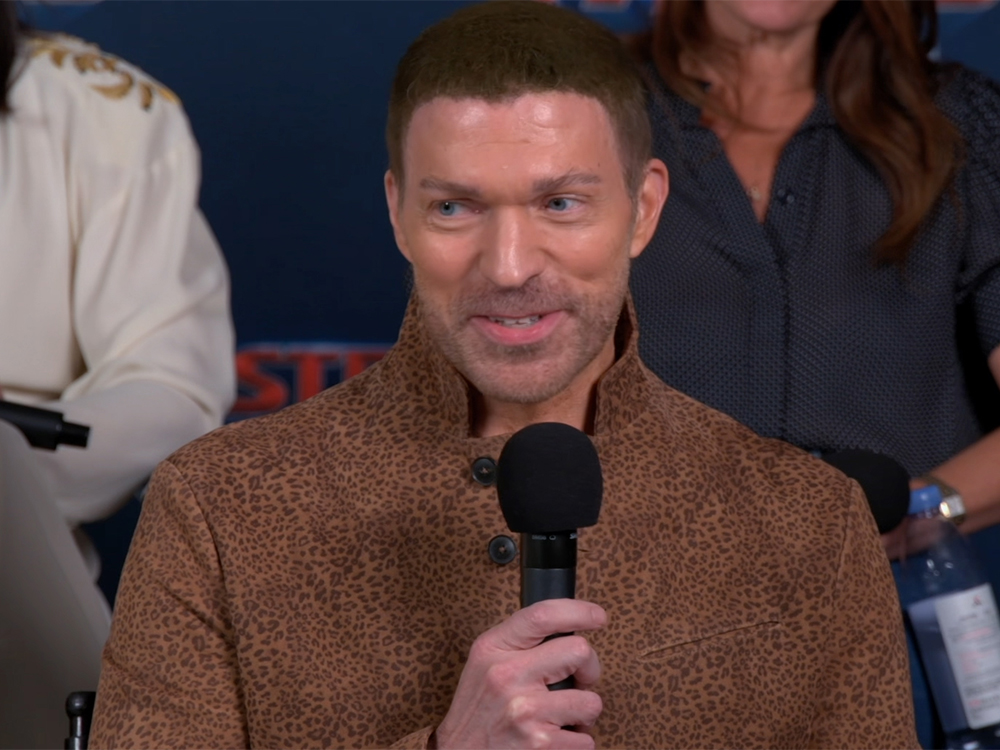
Alison Brie: No. He was in the full Skeletor costume. An incredible suit. The blue muscles—that's what we were looking at every day. Giant boots, cloak, hood...
Morena Baccarin: And he had the blood-red face.
Alison Brie: He did. So we weren't looking at just red markings on his face. He still looked terrifying to all of us. And he really did.
Kevin McCarthy: There's a teeth-chattering thing he does at one point that has actually haunted me since I saw it. That is one of the most unhinged things I've ever seen a character do. Incredible. You were great in the film. And if I'm not mistaken, Evil-Lyn wasn't always evil. I think initially, in some of the backstories, that's why I'm interested in learning more about her character.
Alison Brie: Totally.
Kevin McCarthy: All right. I want to bring in Jason Blumenthal, who's an amazing producer. Sorry, Blumenthal. My apologies. Jason Blumenthal. I've been having nightmares about getting names wrong. Talk about, for both you and Todd Black, producing a movie and the theatrical nature of communal experiences. There's nothing better than sitting in a theater with an audience and watching a film. To me, it's leaving the theater afterward and talking to friends about what we just experienced. I really miss that, and you don't get that at home. For each of you as producers, can you speak about the importance of theatrical exhibition?
Jason Blumenthal: I can, especially on this one, because this one took a long time to get here, right? We joke, but it took 18 years to get the movie made. And I say that only because there was a time when Todd and I, 18 years ago, went from being fans to being the producers of this really important franchise. That day changed everything for us because, as fans, we loved this thing. But now, as producers, we had to understand that we were becoming stewards and guardians of this really special piece of IP that fans had a very strong connection to. Todd and I became the de facto representatives of those fans, trying our best to get this movie made the right way on a big screen in front of a huge global audience. We got close sometimes, and for various reasons it didn't happen, because this was the movie that needed to happen. There was no movie before Travis. There were ideas about movies. There were thoughts about what it would be like. Travis put this thing together, and together we all landed this plane. From the performances in front of the camera and behind it, it was a huge responsibility to go from being a fan to being someone who represents the fans as a producer. Last night made it all worth it. It was an amazing experience to see the fans watch the movie we made and have that reaction.
Kevin McCarthy: What is comparable from your childhood to what you experienced last night in terms of a theatrical experience?
Todd Black: For me, Star Wars, the original 1977 film. I remember seeing Star Wars when we were on a family vacation in Hawaii. I remember going to the theater and it was packed. I remembered when it came out in Westwood—we couldn't get in. There was a line around the block. I thought, "God damn it, I'm not going to see it." My mom and dad said, "We'll see it in Hawaii when we go on vacation." And sure enough, we did. I thought about that last night when we were at the premiere. Actually, Travis, I was thinking, wow, this is like—you know, you're George Lucas. I mean, I'll take that. This all came together because of you. Whatever vision you had when you were eight or ten years old, however old you were—I want to see that film, by the way. Robbie, Jason, and I got incredibly lucky meeting you. You saw our dream come true. I think for all of these people, and for the public, last night's screening proved that. There were a lot of people there, and the audience went crazy. You don't get that if you're not in a big theater with a big theatrical movie. Travis knew how to make it work on so many levels: adventure, comedy, emotion, spectacle, the music. Travis, you and Daniel did an amazing score. It was off the charts. You knew how to make it theatrical. You had this sense that this belonged on the big screen all the way. We love that. We want that, and we need that. I think we're all here because of Travis's vision, his brains, and his heart. I'm thrilled as a producer.
Kevin McCarthy: What I love about this group, even before we went live, is that everybody here is genuinely excited to be here and so passionate. The movie business is a business, but there's also the art of it and the passion for it, Travis. You talked about being a kid and playing with these toys and then ending up leading a massive production. That leads me right into my next question about Daniel Pemberton, who's one of my favorite composers of all time. We need more guitar solos. Talk about Brian May from Queen. Those solos are amazing. I felt like I needed that score playing over my daily life. Everything would be more epic with that theme. Talk about your use of music as a character in the film. You also have to handle needle drops in the movie, which I don't think people realize can be difficult because the score has to fit tonally with the needle drops in an emotional way. And that theme still echoes in my mind a week later.
Travis Knight: The music really is a character in the movie. I remember when I had my initial conversations with Daniel about a year and a half ago. One of the big musical touchstones for the film was the 1980s Flash Gordon movie, which I absolutely adored. That was famously scored by Queen. There was something fantastic, theatrical, and operatic about it. But like all Queen music, there was a real sincerity underneath everything. It was emotionally complex, it had a huge heart, and it also sounded awesome. Daniel and I talked about that, and I couldn't have imagined that a year later we'd be sitting in Brian May's home studio watching him record guitar solos for our score. It was unbelievable.
Kevin McCarthy: Underrated.
Idris Elba: Okay, stop showing off now. What? Come on.
Travis Knight: You know, the trippy thing was, we were with Brian, and then he was with us. I thought maybe we'd get like an hour or two with him. He was with us all day long. It was near midnight, and then he disappears, and I thought, "Oh, he's probably just tired." But then he comes back about 10 minutes later. He's got two giant boxes of He-Man toys. They were his son's He-Man toys. He still had them in his attic, and he brought them down. He knew all the characters. He was pulling out Skeletor, Castle Grayskull. I could not believe that Brian May knew He-Man. It was such a trip. No, it was really an incredible experience.
Kevin McCarthy: You're so right about his music, though. There is such an emotional intention. "Bohemian Rhapsody" is an entire arc in itself. It's operatic. Oh, it's so beautiful. All right, let's get to some press questions. Nick, this is something you've already kind of answered, but I want to get into more detail about the first transformation and the delivery of the line. Also, it's the way you hold the sword. The sword basically becomes part of you in a physical way. So, can you speak about that first transformation moment, but also the delivery of the line? Are you actually shouting it that loudly? And the holding of the sword.
Nicholas Galitzine: I was shouting it that loudly. It's one of these funny things because it's so obviously synonymous with the IP. There would be a lot of crew members on set, or cast members, who would say, "Well, have you been practicing the line?" And it's this thing that can quickly mount a lot of pressure. You want to meet people's expectations of it. But genuinely, I was quite reluctant to rehearse it too much at home because we were talking a bit before about the emotionality of that line and what it really means. I think, generally, as an actor, if I feel like something is too ingrained in me, it doesn't feel raw, which is certainly what it is that first time. We obviously tried it a few different ways. Given that I transform a couple of times in the movie, there's a different quality to the first one and the second one, and that's partially down to Travis telling that story in editing. But it was suddenly daunting. It was the biggest soundstage I think I've ever been on in my life. I was looking out and seeing just a wave of expectant faces. So you do it, and you're like—it wasn't about the line.
Travis Knight: Everyone was just looking at your half-naked body.
Nicholas Galitzine: That's true. They were checking me out.
Idris Elba: I just got visions of you doing it in your living room, and your neighbors are like, "Yo, what are you doing up there?"
Kevin McCarthy: Is there any mirror or shower practice of this?
Nicholas Galitzine: There might be. There obviously was.
Travis Knight: I think he got the job.
Nicholas Galitzine: exactly. It was a one-on-one. Me and Travis in the shower.
Idris Elba: Just one more, please. One more. One more.
Nicholas Galitzine: Let's keep workshopping this. Let's get clothes.
Kevin McCarthy: Camila, I got a question for you from a press member who says, "One of the things that stood out to us is how much Teela helps drive the story forward, especially once the action shifts to Eternia." Did you approach her as more than just a supporting warrior, as someone helping shape Adam into the hero he becomes? I feel like you both shape each other, I would argue.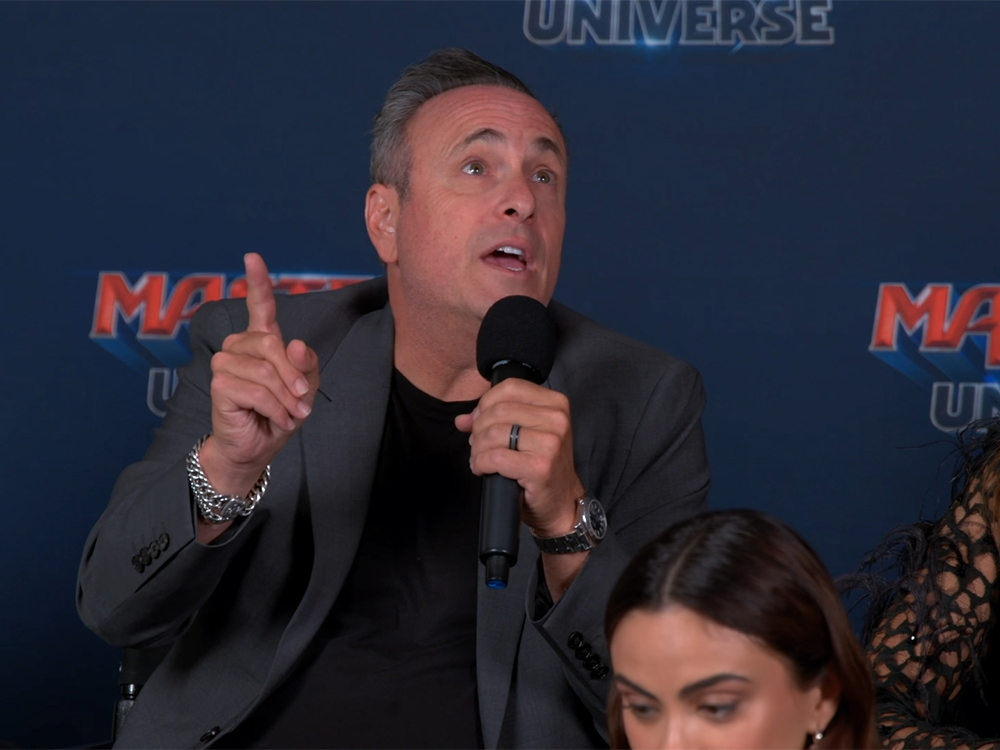
Camila Mendes: absolutely. I think they both have something to learn from each other. But I do think, in the beginning, Teela's sort of the leader of the group until both of them can find their inner power because, obviously, Duncan becomes disconnected from himself in a way, and Adam still hasn't quite found his power. So Teela, in the beginning, really is leading the charge and giving direction to them because he's useless for a bit, and kind of so is Adam. So Teela is very resourceful, and she's very much a leader. I feel like she leads the charge for a bit until both of them are capable of accessing their strength.
Kevin McCarthy: I didn't plan this question, but who did all the drawings in your room on Earth?
Nicholas Galitzine: It must have been unbelievable.
Travis Knight: We had an amazing art department on the film. Basically, there were so many drawings. Everybody was drawing.
Kevin McCarthy: I loved it because it kind of reminded me of where the characters were. All right, so we got to get out of here on this. This is the last one. This is for everybody, so feel free to jump in. Masters of the Universe has such a huge legacy behind it. Was there ever a moment during filming where it really hit you that you were stepping into something iconic? Nick, for you, I would imagine it had to be that line, but if you have a different answer...
Nicholas Galitzine: I don't know. It probably was the line, but honestly, the sets as well.
Morena Baccarin: I'd say the castle.
Nicholas Galitzine: A lot could be said about what it is to perform next to green screens and the pitfalls from the performance side of it. I never felt that on this job because the sets that were made for us were incredible. Truly, it felt like you could have been on location somewhere. You could really chart a journey through these incredible sets. Guy Hendrix Dyas, our wonderful production designer, was responsible for that. I'd say that was probably the most immersive part.
Todd Black: I would say, for me, when I got to London and saw you and Jason—you guys had been there for a while—and Jason walked me through the costumes. To see everything in the costume department, it was like, "Oh my God, there's Skeletor." This one's outfit, that one's outfit, and all of a sudden it hit me. I'm like, "Wow, this is actually amazing." It's breathtaking.
Jason Blumenthal: There's a lot of movies where the sets are fake. The costumes aren't real. That's what we avoided. Everything you could touch, everything you could feel, everything you wore.
Idris Elba: So, it felt like being at a He-Man Comic-Con.
Camila Mendes: You let me cosplay this.
Alison Brie: For me, it was filming the scene that's going to be the first time people see Evil-Lyn on camera. Travis even told me, "Of course we're going to do a special shot. This is Evil-Lyn's entrance. She's an iconic character." The cast of characters in He-Man and in this movie are all iconic. People who grew up playing with the toys are going to have a different favorite character. Everybody has their moment. There are no small characters in this movie. It was fun every time to get to set and see a new person in costume. Even Hafþór Björnsson as Goat Man—he's in makeup for eight hours every day. He's getting there at 2 in the morning when we're shooting in the afternoon. Even Moss Man—everyone is highlighted in this film. It's so fun for the fans and for people experiencing He-Man for the first time because every character is so unique. It's the vast scope of imagination and the way we play off that in the movie, particularly through Adam and a child's imagination. I think that's really exciting.
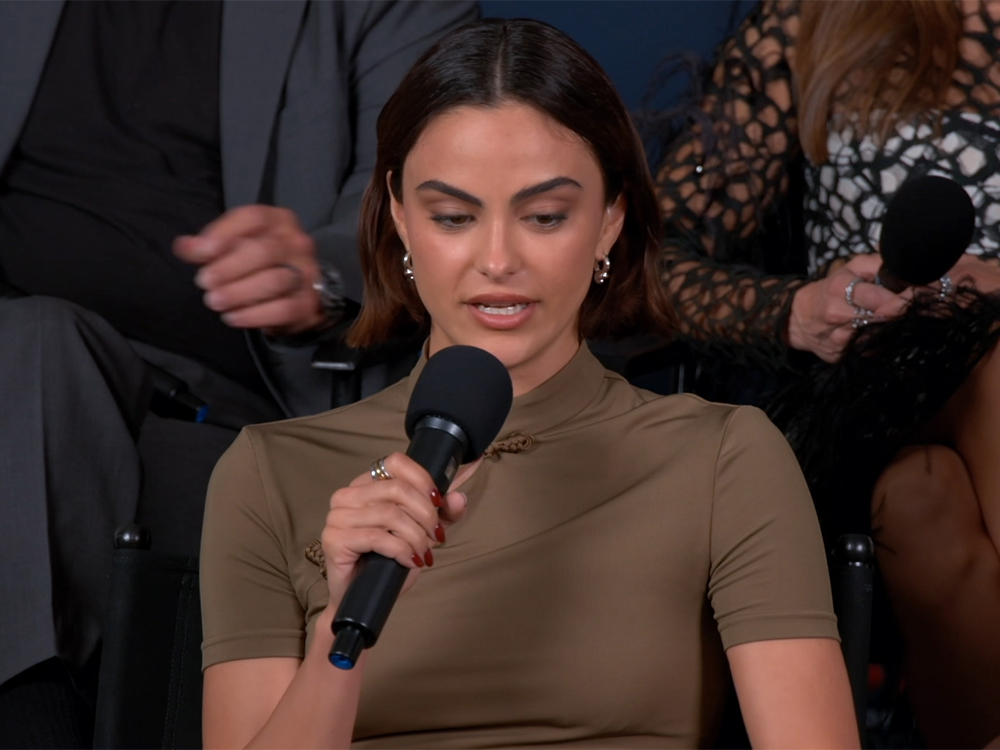
Kevin McCarthy: I'm so glad you brought that up because every character had an earned arc. Everybody really went through a full arc.
Alison Brie: Even poor Moss Man. It's a quick arc. Everybody's is quick. It's still an arc.
Kevin McCarthy: Morena, because you were a fan growing up, did you have that moment on set? What was it?
Morena Baccarin: For me, it was the castle. The costumes were incredible, and once I put mine on... The Sorceress was an iconic character, although not my favorite growing up. It was obviously She-Ra, because come on. But walking onto the set and seeing that, and walking through it—you could literally walk through it, go down the steps, see the sword resting where it should be. That was really a moment. I remember—I wasn't supposed to—but I took a picture of it and sent it to my brother. I was like, "Can you believe this?" Then we were texting back and forth.
Idris Elba: Oh, so that's how we got the culprits.
Morena Baccarin: I know you've been acting for 20 years, but now you've made it.
Alison Brie: The sets were so accurate that some of the stairways and hallways were a little treacherous. Going up Skeletor's Throne of Bones was a little precarious.
Kevin McCarthy: It probably helps with the fighting and choreography too when you're on real sets.
Alison Brie: Definitely.
Nicholas Galitzine: I have to say, though, you don't want to be walking backwards down some uneven steps while Jóhannes Haukur Jóhannesson is wheeling a six-foot axe at your head, which is what we did.
Camila Mendes: Alison had to do that in heels and a cape.
Nicholas Galitzine: Okay, sorry. That's right. I didn't have my heels on.
Morena Baccarin: Or your clothes.
Nicholas Galitzine: It's true.
Camila Mendes: Wait, I'd like to add one moment too. I think it made the trailer because it's so iconic. As we descend on that platform and approach Castle Grayskull, that felt like, "Okay, we're really entering something special here," because that was awesome. It's all the heroes lined up, and Cringer, and Roboto, and Man-At-Arms.
Kevin McCarthy: And the slow-motion walk. That slow-motion walk was perfect. Perfect. Perfect. All right. Well, I want to say congratulations to all of you. Masters of the Universe is in theaters on June 5. As everybody here said, go to a theater to see it. Bring your friends, bring your family, everybody. Thank you guys so much for having me here today, and congratulations to all of you.
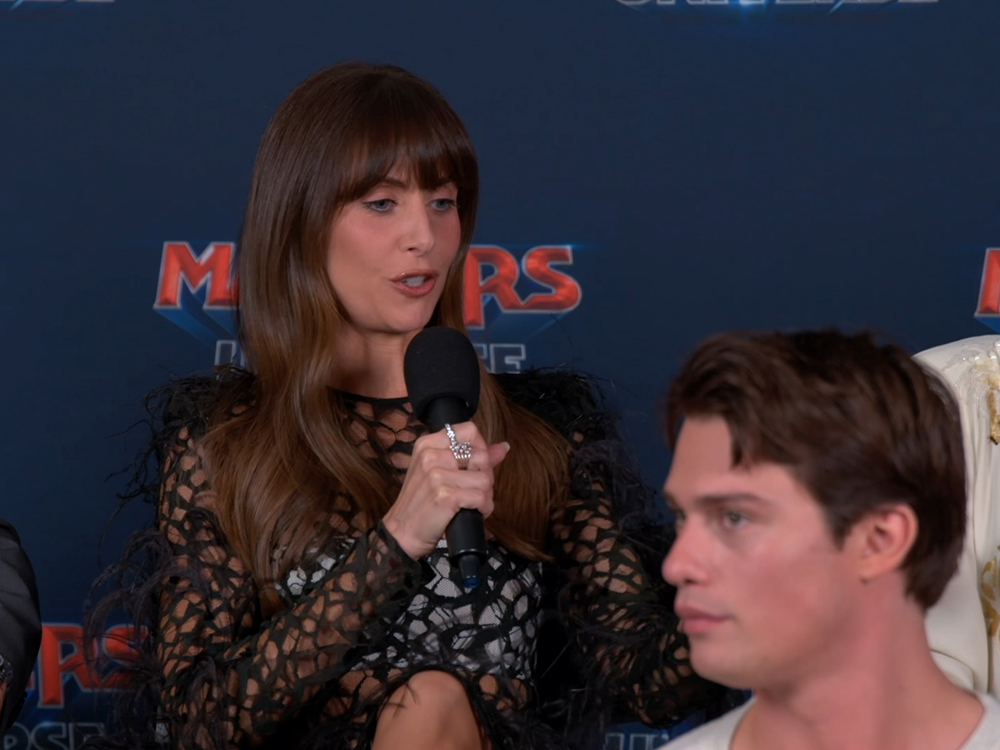
Directed by Travis Knight, Masters of the Universe reimagines the legendary Mattel property for a new generation while honoring the characters and mythology that captivated audiences throughout the 1980s. Starring Nicholas Galitzine as Prince Adam/He-Man alongside Camila Mendes, Idris Elba, Alison Brie, Morena Baccarin, and Jared Leto, the film blends epic fantasy, action, humor, and heartfelt character relationships as a young man discovers his true destiny and fights to protect the kingdom of Eternia. Produced by Mattel Studios and Amazon MGM Studios, Masters of the Universe arrives in theaters on June 5, 2026, aiming to deliver a large-scale cinematic adventure for longtime fans and newcomers alike.
Synopsis:
A young man on Earth discovers a fabulous secret legacy as the prince of an alien planet. He must retrieve a magical sword and return home to protect his kingdom.
Masters of the Universe
Directed by Travis Knight
Written by Chris Butler
Based on Mattel’s Masters of the Universe
Produced by Todd Black, Jason Blumenthal, Steve Tisch, Robbie Brenner
Starring Nicholas Galitzine, Camila Mendes, Jared Leto, Alison Brie, Idris Elba, Morena Baccarin, Jóhannes Haukur Jóhannesson, Sasheer Zamata, James Purefoy, Charlotte Riley
Director of Photography: Fabian Wagner
Production Companies: Metro-Goldwyn-Mayer, Mattel Films, Escape Artists
Distributed by Amazon MGM Studios
Release Date: June 5, 2026 (United States)