

When Marilyn Sang for the GIs: The Extraordinary Journey That Made Marilyn Monroe a Legend
Monday 25 May, 2:30 PM PT Paris, Cinémathèque française 2026-05-25
As the centennial of Marilyn Monroe’s birth to be celebrated on June 1, 2026 approaches, the Cinémathèque Française hosted a particularly symbolic screening on May 25, 2026, of *When Marilyn Sang for the GIs*, a new documentary directed by Patrick Jeudy and set to air soon on France Télévisions. In a packed theater filled with film historians, journalists, enthusiasts of American culture, and admirers of the Hollywood icon, the presentation of the film by Frédéric Bonnaud, director of the Cinémathèque, alongside Patrick Jeudy, co-producer Loïc Bouchet, and Emmanuel Migeot, director of the History and Culture division at France Télévisions, immediately set the tone: this was not simply a nostalgic documentary about a Hollywood star, but a genuine historical reinterpretation of a pivotal moment in 20th-century American culture. From the very first minutes, the film impresses with the exceptional quality of its restored archival footage and its ability to place Marilyn Monroe’s famous Korean tour within the heated political context of 1950s anti-communist America, at a time when the Cold War was already shaping the patriotic imagination of the United States.
The documentary revisits an episode often mentioned but rarely examined with such precision: in February 1954, while officially on her honeymoon in Japan with baseball legend Joe DiMaggio, Marilyn Monroe accepted an invitation from the U.S. Army and flew to South Korea, a country still traumatized by a conflict that, although an armistice had been signed a few months earlier in July 1953, remained extremely tense militarily. This impromptu trip quickly became a massive event. Over the course of just four days, the young actress performed ten shows for more than 100,000 American soldiers stationed at freezing-cold bases. The period footage, beautifully restored here, reminds us just how surreal these performances were: a young woman dressed in sparkling stage gowns, braving sub-freezing temperatures, wading through mud and cold to sing “Diamonds Are a Girl’s Best Friend,” “Bye Bye Baby,” and “Do It Again” before soldiers exhausted by three years of war. What the film shows with great insight is that this tour was not merely a patriotic publicity stunt organized by the U.S. Army; for Marilyn Monroe, it was above all a deeply moving personal revelation. As she would later say in remarks featured in the documentary: “For the first time in my life, I wasn’t afraid of anything; I just felt happy.” ” These words take on a special resonance when one considers the star’s chronic psychological fragility, her anxieties regarding her artistic legitimacy, and the constant pressure Hollywood exerted on her public image.
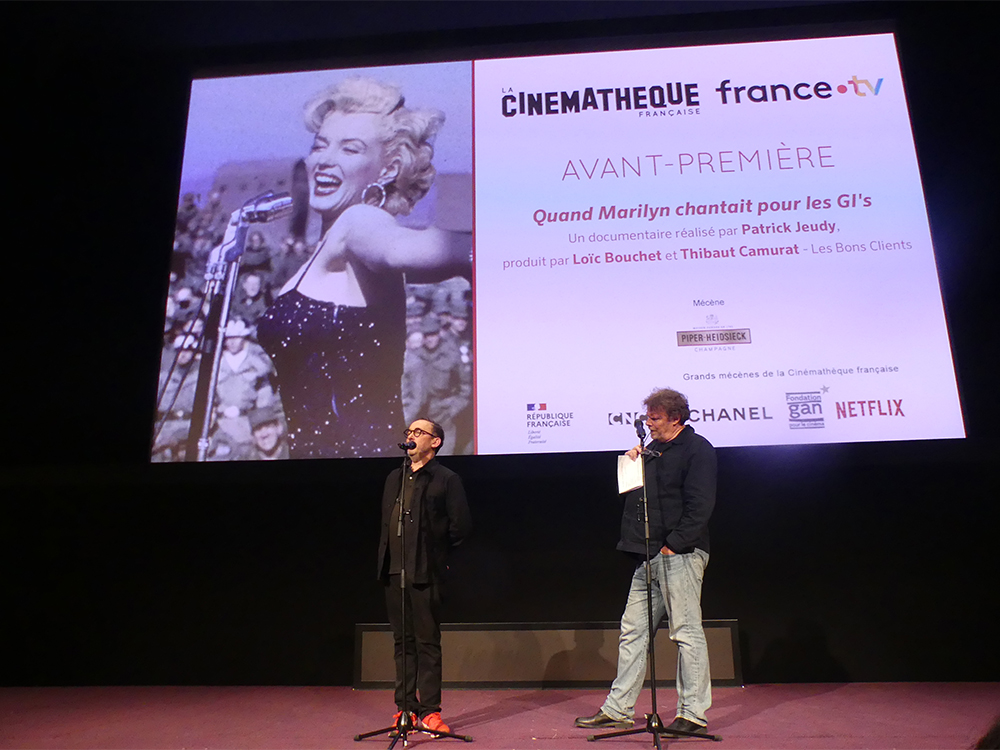
One of Patrick Jeudy’s great strengths is precisely that he never succumbs to facile hagiography. His documentary shows a Marilyn Monroe still in the making, far from the frozen mythological figure that popular history would remember after her tragic death in 1962. In 1954, she was only 28 years old, and even though she was beginning to gain recognition thanks to films like *Gentlemen Prefer Blondes* or *Niagara*, she was still perceived by some studios as just another interchangeable glamorous blonde. This trip to Korea would change everything. The documentary explains with great subtlety that it was precisely through her interactions with these American soldiers—far from Hollywood sets and producers controlling every aspect of her image—that she finally understood the emotional impact she had on the public. Archival footage shows thousands of young soldiers screaming her name with almost hysterical fervor, creating scenes that already foreshadow the Beatlemania of the 1960s or the modern adoration of contemporary pop stars. Through these awestruck gazes, Marilyn Monroe discovers that she is no longer simply a studio actress but a true embodiment of the American dream. This psychological shift forms the emotional core of the documentary and explains why this tour remains a pivotal moment in her personal history.
But When Marilyn Sang for the GIs is more than just an intimate portrait. The documentary also offers a fascinating historical perspective on Dwight D. Eisenhower’s America, a nation deeply marked by the fear of communism and the still-fresh traumas of the Korean War. In this regard, the film aligns with several contemporary historical analyses that view this conflict as the true psychological matrix of modern interventionist America. Patrick Jeudy shows how Marilyn Monroe’s presence among the troops also served as a form of extremely effective patriotic propaganda: this free, sensual, and radiant young woman became almost a symbolic weapon against the ideological austerity of the Communist bloc. The documentary aptly highlights that soldiers returning home brought back photographs of the star, unwittingly helping to transform her image into a national phenomenon. Marilyn Monroe’s face then began to invade American homes, magazines, and the collective imagination. In this conservative America of the early 1950s, she paradoxically became a symbol of female emancipation while simultaneously embodying American patriotic glamour. This fascinating duality is one of the film’s most compelling aspects.
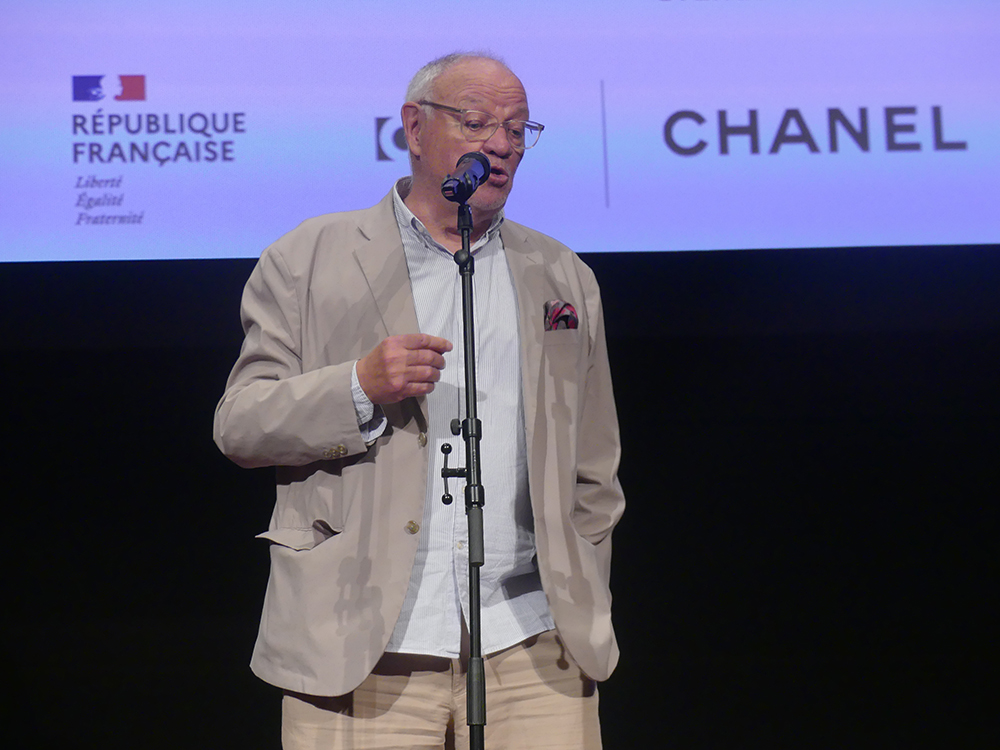
The Paris screening at the Cinémathèque Française also held special emotional significance, as the documentary is part of a year of global celebrations marking the centennial of Marilyn Monroe’s birth. For several months now, numerous American and European institutions have been preparing exhibitions, retrospectives, and publications dedicated to the woman who remains one of the most studied figures in the history of cinema. Yet, despite this abundant literature, the 1954 Korean tour remains relatively unknown to the general public. This is precisely where Patrick Jeudy’s film finds its relevance: it succeeds in revealing a rarely explored chapter with such visual and emotional richness. Thanks to remarkable restoration work and elegant storytelling, the director transforms these four days of the military tour into a true coming-of-age story. We gradually come to understand that this experience allowed Marilyn Monroe to realize not only her media power but also her ability to forge an authentic emotional connection with a popular audience far removed from the Hollywood elite.
Running 52 minutes, produced by Loïc Bouchet and Thibaut Camurat for Les Bons Clients, and edited by Barthélémy Vieillot, *When Marilyn Sang for the GIs* ultimately achieves something rare in the contemporary documentary landscape: telling a familiar story while giving the impression of rediscovering it entirely. Through these beautifully restored archival images, the film reminds us that behind the frozen legend of Marilyn Monroe lay a young woman who was still vulnerable, desperately seeking to find her place in the eyes of others. In Korea, amidst the cold, military bases, and soldiers exhausted by war, she would finally find that recognition. And as the documentary brilliantly suggests, it was likely there, far from Hollywood, that the real Marilyn Monroe was born. Airing Sunday, May 31, 2026, at 11:35 p.m. on France 5 and available on france.tv, this documentary is already establishing itself as one of the most intelligent and moving tributes to the American icon on the occasion of her centennial.
You can discover our photos in our Flickr page
Synopsis:
In 1954, Marilyn Monroe—a 28-year-old actress who was not yet a star—traveled to Korea, in the midst of the war, to perform on stage and boost the morale of American troops. She undertook a four-day tour in the dead of winter, immortalized by unforgettable photographs: Marilyn in a tight-fitting dress, in the freezing cold, facing more than 100,000 GIs. This trip is a turning point in her life. Thanks to this unprecedented success, she will reveal herself to herself and to others. Marilyn discovers herself as a radiant, free, sexy, and admired woman. She becomes a legend, entering every American home in the 1950s.
When Marilyn Sang for the GIs (Quand Marilyn chantait pour les GI's)
Directed by Patrick Jeudy
Produced by Loïc Bouchet, Thibaut Camurat
Starring Marilyn Monroe
Edited by Barthélémy Vieillot
Production companies : Les Bons Clients
Distributed by France Television
Release dates : May 31, 2026 (France)
Running time : 52 minutes
Photos and video 4K : Boris Colletier / Mulderville