

Cannes 2026 : Cristian Mungiu Triumphs as Fjord Wins the Palme d’Or During an Emotional and Star-Studded Closing Ceremony
Saturday 23 May, 2:30 PM PT Cannes, Palais des Festivals et des Congrès de Cannes 2026-05-23
The 79th edition of the Cannes Film Festival 2026 came to a close on May 23, 2026, with one of the most eclectic and emotionally charged ceremonies the festival has seen in recent years, confirming once again that the Croisette remains the beating heart of world cinema. Held inside the legendary Palais des Festivals et des Congrès, the final evening blended prestige, glamour, cinephile passion, and political undertones as filmmakers, actors, producers, and international press gathered for the unveiling of the official awards. Presided over by acclaimed South Korean filmmaker Park Chan-wook, the jury reflected the global spirit Cannes has increasingly embraced over the last decade, bringing together personalities as varied as Demi Moore, Ruth Negga, Laura Wandel, Chloé Zhao, Diego Céspedes, Isaach De Bankolé, Paul Laverty, and Stellan Skarsgård. Long before the winners were announced, the atmosphere outside the Palais had already become electric, with thousands of festivalgoers and photographers crowding the barriers hours ahead of the ceremony in the hope of catching one final glimpse of the stars who transformed Cannes into the center of cinematic conversation for nearly two weeks.

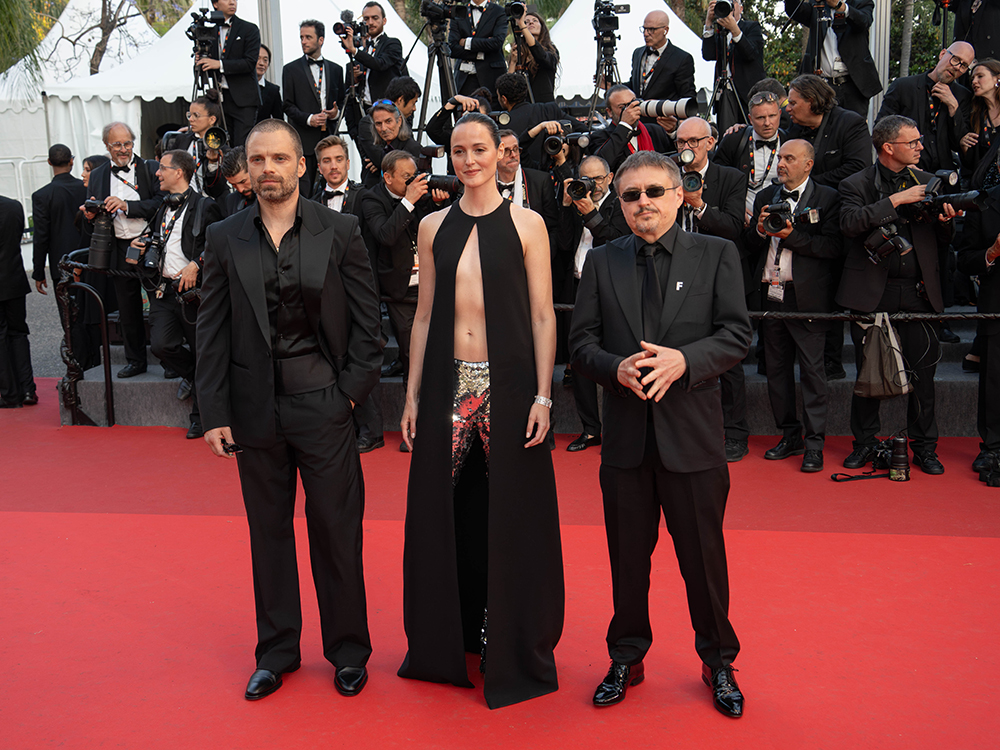
The closing ceremony red carpet itself felt like a condensed version of the entire festival, a final parade where glamour and exhaustion collided in equal measure after twelve intense days of screenings, interviews, standing ovations, and midnight premieres. Demi Moore, one of the most talked-about jury members throughout the festival, drew enormous attention as she arrived in a sculptural couture gown that immediately became one of the evening’s defining fashion moments. Nearby, Eva Longoria once again demonstrated why she remains one of Cannes’ most photographed personalities, effortlessly balancing old Hollywood elegance with the relaxed confidence of a veteran festival attendee. Sebastian Stan, who spent much of the festival generating speculation about upcoming projects and quietly attending multiple competition screenings, received a particularly warm reception from fans gathered behind the barricades, while Zoe Saldaña arrived to thunderous applause, her appearance reinforcing the increasingly strong relationship between Hollywood franchise stars and auteur-driven international cinema. The crowd reaction throughout the evening was unusually emotional, perhaps because many attendees understood this was the final chapter of a festival edition already filled with memorable viral moments, including appearances from Bella Hadid, Vin Diesel, John Travolta, Miles Teller, and Kristen Stewart, while one model’s pregnancy announcement on the red carpet had become one of the most widely discussed pop culture moments of the festival. Even Cannes veterans commented privately that the atmosphere in 2026 felt slightly different: less dominated by studio marketing machines and more focused on filmmakers, performances, and discovery.

Inside the Palais, the ceremony unfolded with an elegant but restrained tone, avoiding excessive spectacle in favor of celebrating cinema itself. The major triumph of the night belonged to Romanian filmmaker Cristian Mungiu, whose film Fjord captured the prestigious Palme d’Or after becoming one of the festival’s strongest word-of-mouth sensations among critics and industry insiders. Known for his uncompromising storytelling and sharp moral explorations in films such as 4 Months, 3 Weeks and 2 Days and Graduation, Cristian Mungiu returned to Cannes with a work many journalists had quietly identified as a serious contender from the moment of its premiere. According to several international critics present on the Croisette, Fjord impressed the jury through its austere visual language, emotionally layered performances, and contemporary social resonance, qualities historically favored by Cannes juries seeking films that combine artistic ambition with political depth. When the Palme d’Or announcement was made, the audience reaction inside the Grand Théâtre Lumière was immediate and overwhelmingly positive, with a prolonged standing ovation that extended well beyond protocol. Several attendees described the moment as one of the rare instances where press, jury, and industry consensus appeared almost perfectly aligned.

The Grand Prix was awarded to Minotaure by Russian director Andreï Zviaguintsev, whose return to Cannes also generated significant discussion during the festival due to the film’s bleak but visually astonishing examination of power structures and spiritual collapse. The directing award was notably split between Spanish duo Javier Calvo and Javier Ambrossi for La bola negra and Polish filmmaker Paweł Pawlikowski for Fatherland, reflecting the jury’s apparent desire to recognize radically different cinematic approaches. Meanwhile, the screenplay prize went to Belgian filmmaker Emmanuel Marre for Notre salut, a film whose intimate storytelling and delicate human observations reportedly became a favorite among many European critics during the second half of the festival. German director Valeska Grisebach received the Jury Prize for Das geträumte abenteuer, further cementing her reputation as one of Europe’s most distinctive contemporary auteurs.

The acting awards also reflected Cannes’ increasingly international sensibility. The Best Actress prize was jointly awarded to Virginie Efira and Tao Okamoto for their performances in Soudain directed by Ryusuke Hamaguchi, a pairing that surprised some observers but was largely celebrated within the press corps for the emotional complexity both actresses reportedly brought to the film. During backstage conversations after the ceremony, several critics noted that the dual award mirrored the emotional duality explored within Ryusuke Hamaguchi’s work itself, reinforcing themes of identity, intimacy, and emotional fragmentation that have become central to his cinema. The Best Actor award similarly resulted in a shared prize, recognizing Emmanuel Macchia and Valentin Campagne for Coward by Belgian filmmaker Lukas Dhont, whose emotionally raw storytelling once again proved deeply resonant with Cannes audiences.

Outside the main competition, the festival’s parallel sections also highlighted the remarkable diversity of emerging international voices. In Un Certain Regard, Austrian filmmaker Sandra Wollner won the top prize for Everytime, while Nepalese director Abinash Bikram Shah captured the Jury Prize for Les éléphants dans la brume, a debut feature that many critics reportedly discovered almost by accident during the crowded early days of the festival before becoming one of the section’s breakout titles. French animation filmmaker Louis Clichy received the Special Jury Prize for Le corset, while Congolese actor Bradley Fiomona Dembeasset earned Best Actor honors for his role in Congo boy directed by Rafiki Fariala. The Best Actress award recognized the ensemble performances of Marina de Tavira, Daniela Marín Navarro, and Mariangel Villegas in Siempre soy tu animal materno by Valentina Maurel, underlining the section’s emphasis on bold and emotionally challenging cinema.
One of the evening’s most warmly received moments came with the Caméra d’Or victory for Ben’imana directed by Marie-Clémentine Dusabejambo, a result applauded enthusiastically by many journalists who had championed the film since its premiere in Un Certain Regard. Several critics noted that the award continued Cannes’ recent tendency to spotlight filmmakers from historically underrepresented cinematic regions, particularly African auteurs whose voices are increasingly shaping the future of global arthouse cinema. The La Cinef awards similarly highlighted the emergence of young international talents from institutions such as New York University, Columbia University, and La Fémis.

Beyond the glamour and trophies, however, Cannes 2026 will likely be remembered for its unusually reflective tone. Conversations across hotel terraces, beach parties, and press lounges frequently revolved around the evolving future of theatrical cinema, the financial fragility of independent filmmaking, and the tension between streaming-era visibility and traditional auteur prestige. Several distributors privately admitted that this year’s market atmosphere felt more cautious than previous editions, yet paradoxically more passionate, with many buyers focusing on fewer acquisitions but showing stronger commitment to artistic cinema. That tension was visible everywhere during the festival, from packed midnight screenings to emotional standing ovations that sometimes lasted more than ten minutes. Even the red carpet itself appeared less performative and more celebratory of cinema culture than in certain previous years dominated by influencer marketing and brand activations.

As photographers continued capturing the final images of the night beneath the lights of the Croisette, many attendees lingered outside the Palais long after the ceremony ended, reluctant to let go of a festival edition that balanced classic Cannes glamour with a renewed focus on international auteurs and emotionally daring storytelling. The image of Cristian Mungiu holding the Palme d’Or while surrounded by his cast instantly became one of the defining photographs of Cannes 2026, symbolizing a festival that once again chose artistic rigor over predictability. For the thousands of journalists, filmmakers, photographers, and cinephiles who descended upon Cannes this May, the 79th edition ultimately reaffirmed why the festival remains incomparable: a place where cinema is not merely consumed, but passionately debated, celebrated, and elevated into global cultural history.

Feature Films
Palme d'Or : Fjord directed by Cristian Mungiu
Grand Prix : Minotaure directed by Andrei Zvyagintsev
Best Director Award : Javier Calvo & Javier Ambrossi for La bola negra
Best Director Award : Paweł Pawlikowski for Fatherland
Best Screenplay Award : Emmanuel Marre for Notre salut
Jury Prize : Das geträumte abenteuer directed by Valeska Grisebach
Best Actress Award : Virginie Efira and Tao Okamoto in Soudain directed by Ryusuke Hamaguchi
Best Actor Award : Emmanuel Macchia and Valentin Campagne in Coward directed by Lukas Dhont
Un Certain Regard
Un Certain Regard Prize : Everytime directed by Sandra Wollner
Jury Prize : Les éléphants dans la brume directed by Abinash Bikram Shah
Special Jury Prize : Le corset directed by Louis Clichy
Best Actor Award : Bradley Fiomona Dembeasset in Congo boy directed by Rafiki Fariala
Best Actress Award : Marina de Tavira, Daniela Marín Navarro, and Mariangel Villegas in Siempre soy tu animal materno directed by Valentina Maurel
Higher Technical Commission Awards
CST Artist-Technician Award : Nicolas Rumpl, editor of Notre salut directed by Emmanuel Marre
CST Young Female Technician Award : Esther Mysius, production designer of Histoires de la nuit directed by Léa Mysius
You can discover our photos in our Flickr page
Photos : @fannyrlphotography