

Cannes 2026 : Penélope Cruz Shines in Chanel at The Black Ball World Premiere
Thursday 21 May, 1:00 PM PT Cannes, Palais des Festivals et des Congrès de Cannes 2026-05-21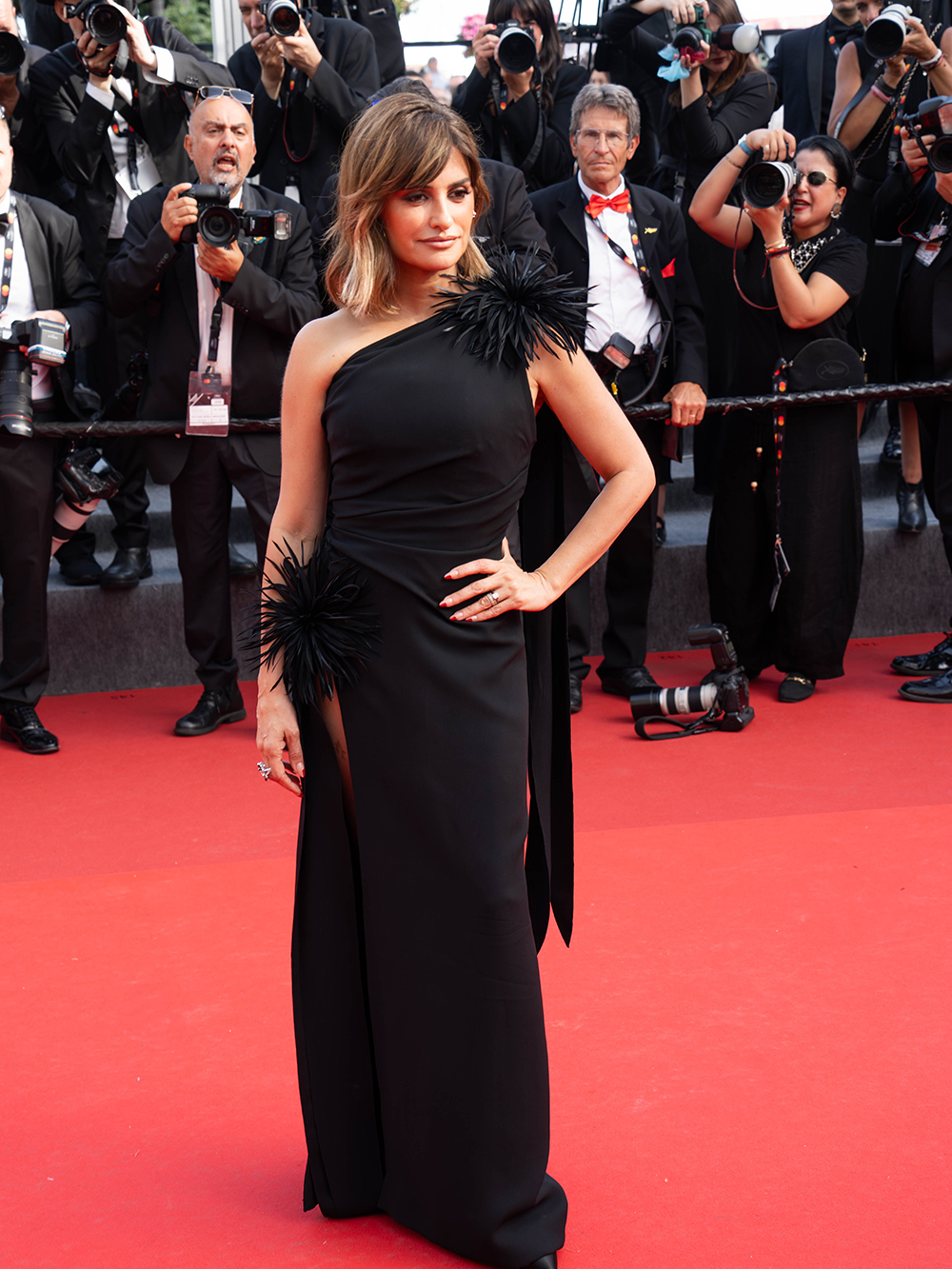
On Thursday, May 21, 2026, the Palais des Festivals and Congress Center in Cannes experienced one of those magical moments that only the Cannes Film Festival can still conjure up, when cinema, fashion, historical memory, and collective emotion come together in a single breath. Presented in the Official Competition at this 79th edition of the Cannes Film Festival, La bola negra (The Black Ball) established itself from the moment it hit the red carpet as one of the major events of the festival’s closing days, drawing a dense crowd of photographers, journalists, and festival-goers to the red carpet to witness the highly anticipated return to Cannes of Penélope Cruz, who had been absent from the Croisette since Pedro Almodóvar’s Pain and Glory in 2019. Behind the barriers, the excitement was palpable long before the film’s crew arrived, thanks in large part to the growing reputation of Javier Calvo and Javier Ambrossi whose new project already appears to be their most ambitious and intimate work to date.
When the first official cars began driving up the Palais’s driveway, the applause quickly gave way to genuine public fervor. Lola Dueñas, Miguel Bernardeau, Guitarricadelafuente, Javier Ambrossi, Javier Calvo, Penélope Cruz, Milo Quifes, and Carlos González thus ascended the legendary Cannes steps together in an atmosphere blending classic elegance with an almost melancholic emotion, perfectly in tune with the film’s themes. The presence of Guitarricadelafuente, for whom this marks his very first film role, particularly intrigued onlookers at the scene, with many already seeing this appearance as a significant step in the Spanish singer’s artistic transition to the big screen. Throughout the red-carpet walk, eyes were also on the two directors, whose personal relationship—recently highlighted by several Spanish media outlets—added an extra layer to the emotional reception of the project without ever overshadowing the essential: the profoundly human power of this queer historical epic spanning three major periods of Spanish history.
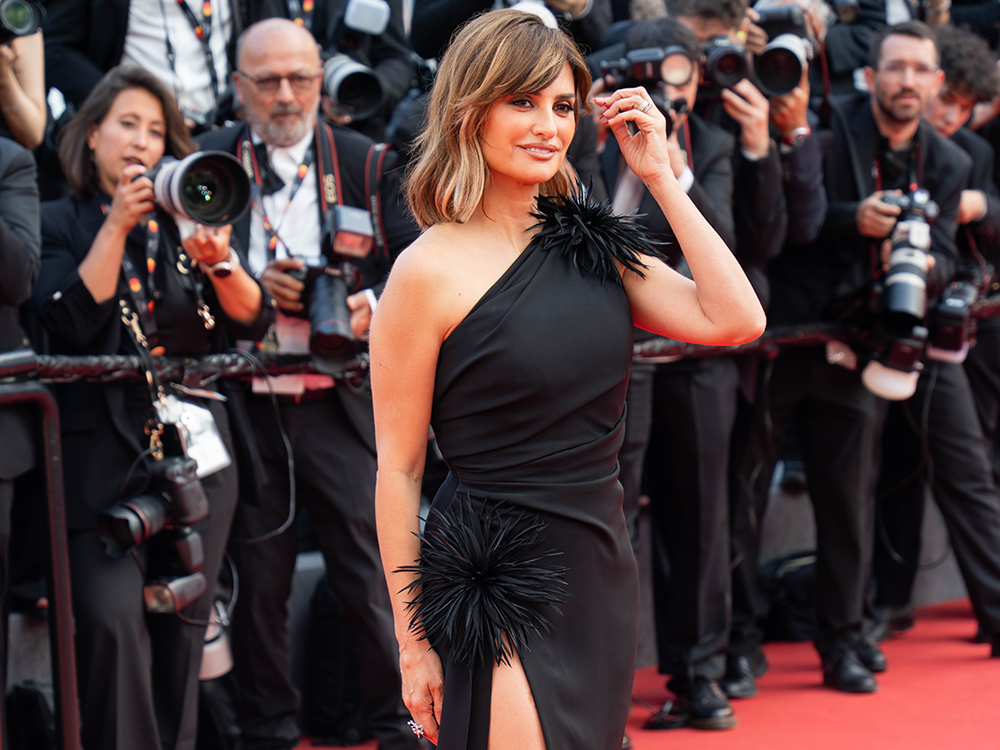
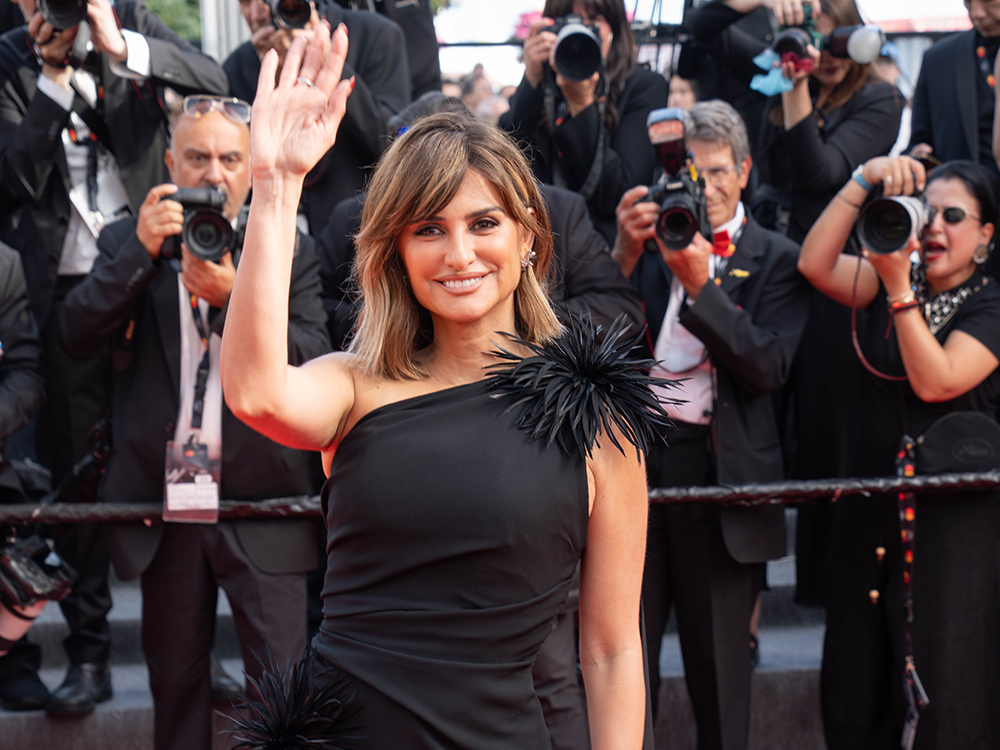
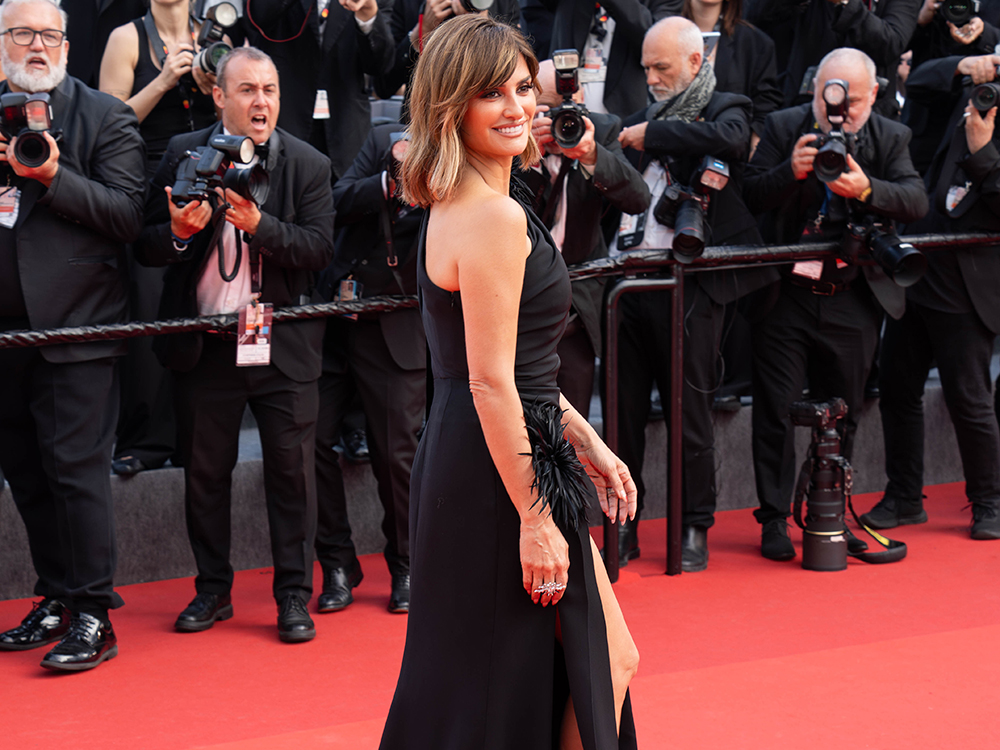
But the true appearance that electrified the Croisette was, of course, that of Penélope Cruz, whose every visit to Cannes continues to provoke the same phenomenon of collective fascination. At 52, the Spanish actress looked radiant in a Chanel ensemble that immediately became one of the major fashion highlights of this 2026 edition. A loyal ambassador for the French fashion house, she chose a particularly sleek black asymmetrical dress, a blend of classicism and contemporary sensuality, featuring a spectacular slit up the right leg and several details of black feathers sewn onto the shoulder and waist. Under the photographers’ incessant flashes, the ensemble created a striking contrast with the lights of the Cannes red carpet. Her look was enhanced by Chanel’s Dazzling Star double C set, inspired by the legendary Bijoux de Diamants collection designed by Gabrielle Chanel in 1932. The earrings set with 102 diamonds and the ring adorned with 104 diamonds evoked the constellations dear to the French designer, while the fine lines of black lacquer accentuated the ensemble’s almost cosmic elegance. On the scene, several fashion journalists were already hailing it as one of the most memorable appearances of the actress’s Cannes career.
This red-carpet appearance also served to highlight the symbolic importance of *La bola negra* in the contemporary Spanish film landscape. Adapted from Federico García Lorca’s unfinished novel and Alberto Conejero’s play La piedra oscura (Conejero also co-wrote the screenplay) the film is part of a tradition of historical and political cinema deeply rooted in the Spanish collective memory. The plot, structured around three distinct time periods (1932, 1937, and 2017), explores the intertwined fates of three gay men separated by time but united by desire, rejection, memory, and legacy. The directors have deliberately maintained an air of mystery surrounding the possible appearance of Federico García Lorca as a character on screen, preferring to let the film engage with the poet’s spirit rather than offer a simple biographical reconstruction. This approach has already sparked numerous critical discussions on the Croisette, with some observers seeing the film as a work about the invisible ghosts left behind by the Spanish Civil War and the intimate scars of history.
In the corridors of the Palais, several conversations also touched on the film’s tumultuous production, particularly its shooting in the abandoned village of Castil de Carrias, as well as in Granada, Comillas, and Sigüenza. Some Spanish journalists present in Cannes recalled with emotion the tragedy that struck the production when a 70-year-old extra died after a fall on set in Comillas, an event that reportedly left a deep mark on the crew. Despite these difficult circumstances, early critical responses describe a work of considerable emotional depth, carried by Gris Jordana’s cinematography, Alberto Gutiérrez’s editing, and Raül Refree’s atmospheric score—already praised during the first press screenings for its sensory and elegiac approach. With its unapologetic 155-minute runtime, La bola negra emerges as a deeply ambitious project, almost literary in its narrative construction, far removed from the more formulaic formats typically associated with major international competitions.
Around the red carpet, the atmosphere at times evoked the golden years of Pedro Almodóvar’s Spanish Cannes, as the fervor surrounding the film seemed to transcend mere festival curiosity. The presence of Demi Moore, a member of this year’s jury, further enhanced the glamour of this particularly packed evening. Blending auteur cinema, political emotion, queer aesthetics, and timeless glamour, La bola negra offered Cannes one of those rare moments when a film already seems to exist far beyond its official screening. Many festival-goers present on Thursday evening felt they were witnessing the birth of a future major work of contemporary Spanish cinema, capable of extending the artistic and political legacy left by Federico García Lorca while speaking directly to modern fractures in identity and memory. It remains to be seen whether this enthusiastic reception will translate in the coming days into a genuine contender for the Palme d’Or or the Queer Palm, but one thing is certain: on the Croisette, La bola negra has already made a lasting impression long before the winners are announced.
You can discover our photos in our Flickr page
Synopsis :
Spain, 1932, 1937, 2017. Three men. Three eras. A single invisible thread of desire, pain, and legacy. La Bola Negra spans time to reveal what binds them together.
The Black Ball (La bola Negra)
Written and directed by Javier Calvo, Javier Ambrossi
Based on La bola Negra by Federico García Lorca, La piedra oscura by Alberto Conejero
Starring Guitarricadelafuente, Miguel Bernardeau, Carlos González, Milo Quifes, Lola Dueñas, Penélope Cruz, Glenn Close
Cinematography : Gris Jordana
Edited by Alberto Gutiérrez
Music by Raül Refree
Production companies : Movistar Plus+, Suma Content Films, El Deseo, Le Pacte
Distributed by Le Pacte (France)
Release dates : 21 May 2026 (Cannes),
Running time : 155 minutes
Photos : @fannyrlphotography