

Cannes 2026 : The Man I Love Brings Emotion, Elegance and Old-New York Melancholy to the Croisette
Wednesday 20 May, 2:45 PM PT Cannes, Palais des Festivals et des Congrès de Cannes 2026-05-02 → 2026-05-20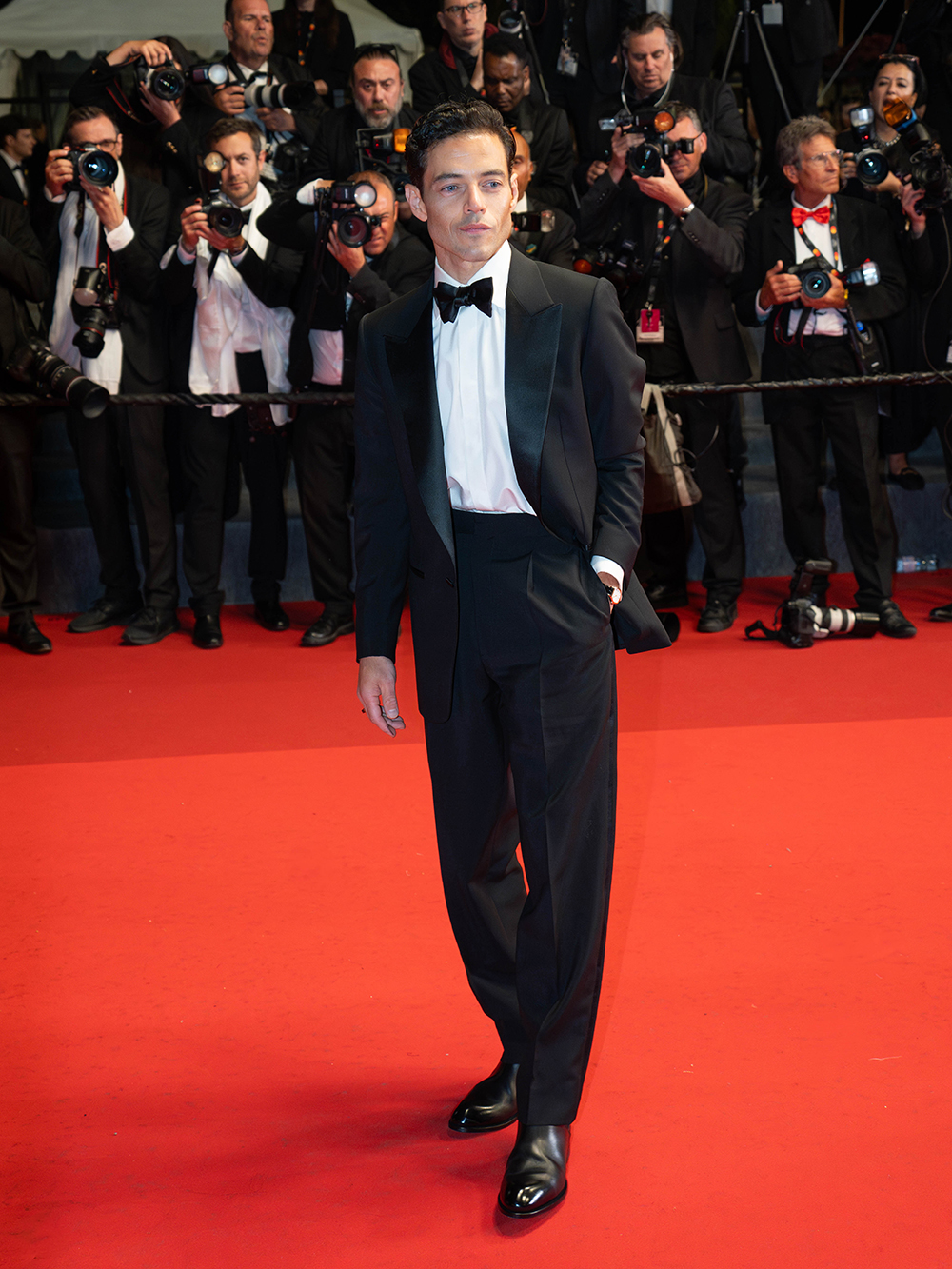
On May 20, 2026, the Palais des Festivals et des Congrès de Cannes welcomed one of the most quietly anticipated premieres of the Competition with The Man I Love, the new feature film directed by Ira Sachs, a filmmaker whose intimate and deeply human cinema has long occupied a singular place in contemporary American independent filmmaking. Presented in Competition for the Palme d’Or at the 79th edition of the Cannes Film Festival and also competing for the Queer Palm, the film transformed the Croisette into a strange and moving time capsule, carrying audiences back to the late 1980s New York artistic scene through a musical fantasy drama infused with fragility, romance and the looming shadow of mortality. The atmosphere surrounding the screening felt markedly different from the louder studio premieres dominating the festival this year, with a quieter but deeply cinephile energy surrounding the arrival of the cast and creative team. On the red carpet, Ira Sachs appeared alongside leading actor Rami Malek, as well as Tom Sturridge, Luther Ford, producers Scott McGehee, David Siegel, Mike Spreter, and Myriam Schroeter, cinematographer Josée Deshaies, co-writer Mauricio Zacharias, production designer Tommy Love, costume designer Megan Gray, and actor Tom Sturridge, all greeted by sustained applause from festival attendees and photographers packed tightly against the barricades lining the iconic Cannes staircase.
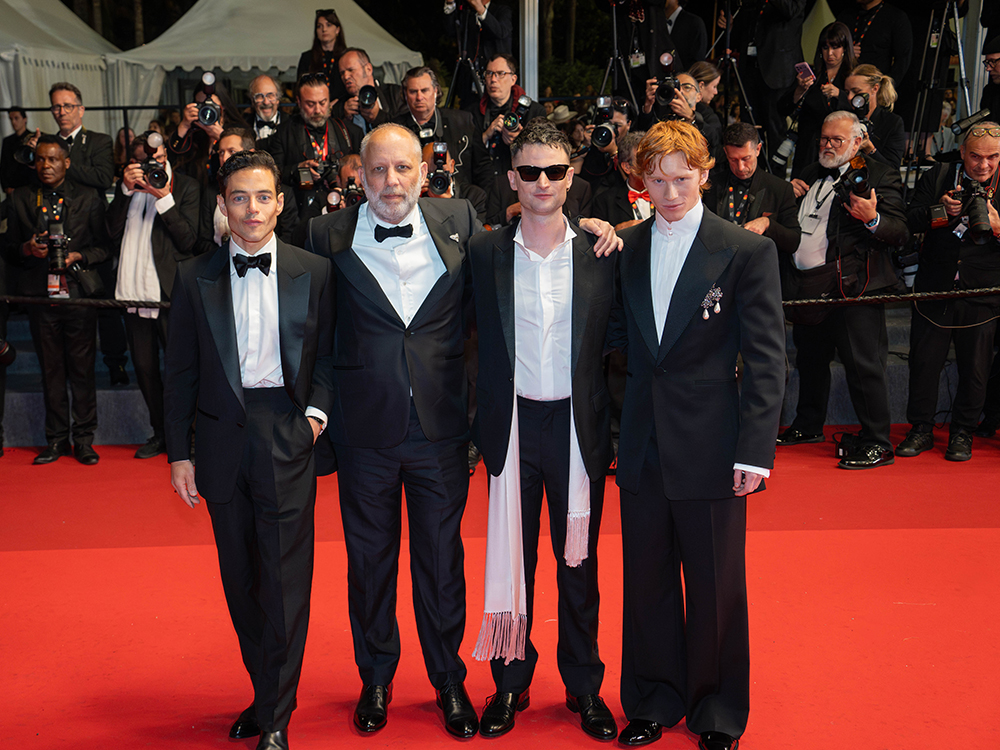
What immediately struck observers during the premiere was how cohesive and visibly close-knit the creative team appeared throughout both the press conference and the red carpet appearance, reinforcing the impression that The Man I Love was less a prestige awards vehicle than a deeply personal labor of love for everyone involved. Rami Malek, dressed in an understated black tuxedo that echoed the classic elegance of late-1980s Manhattan nightlife, spent an unusually long amount of time greeting fans and photographers before climbing the famous red steps, while Ira Sachs remained characteristically calm and reflective during press interactions, discussing the emotional origins of the project and his fascination with characters living in transitional moments between beauty and disappearance. The emotional texture of the film itself mirrors that atmosphere. Set in New York at the end of the 1980s, the story follows Jimmy George, an actor confronting a terminal illness while attempting to embrace love, creation and desire one final time. According to official production notes and verified festival material, the film explores the AIDS-era artistic underground through a musical and fantasy-infused lens, blending theatrical intimacy with dreamlike emotional transitions. The approach feels particularly significant within Ira Sachs’ filmography, which has consistently examined relationships, vulnerability and queer identity with remarkable sensitivity since films such as Keep the Lights On and Passages.
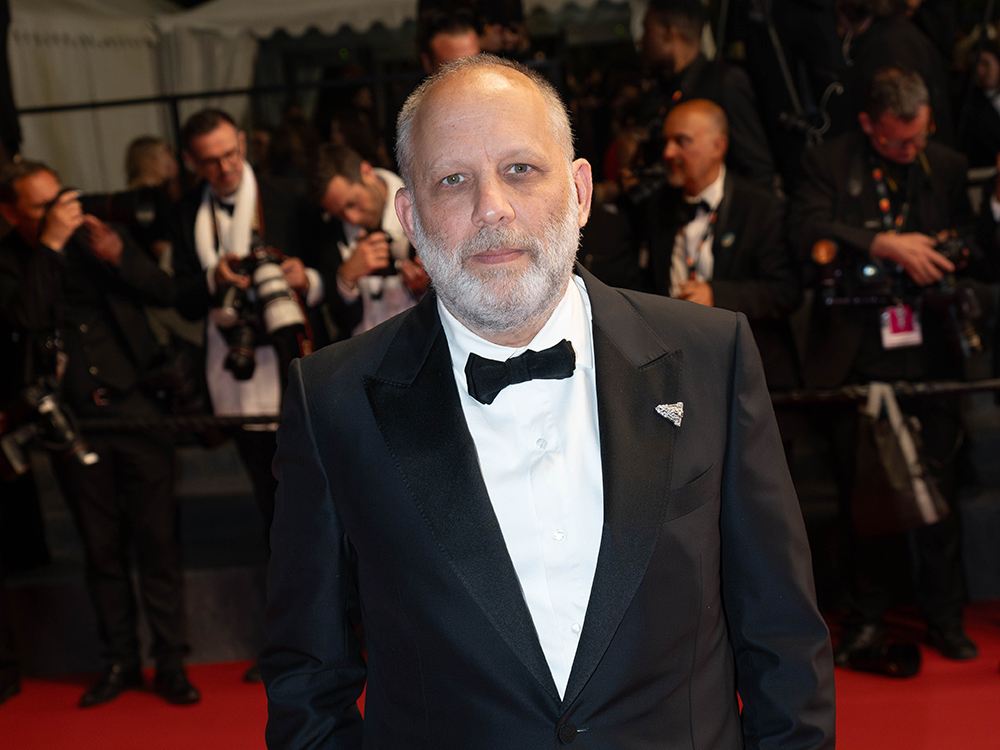
The road toward the Cannes premiere also became one of the most discussed behind-the-scenes stories among festival journalists this year. In January 2025, Ira Sachs officially announced the project as his next feature, initially revealing it as a musical centered around mortality and artistic legacy. At that stage, Ben Whishaw had been attached to the lead role before ultimately departing the production, with Rami Malek joining the film later in 2025. That casting transition became a recurring topic of conversation during Cannes, especially given how strongly many critics felt Rami Malek embodied Jimmy George’s haunted elegance during the premiere screening. Principal photography began in New York in the autumn of 2025, with filming taking place across several locations intended to recreate the texture of late-1980s Manhattan. Members of the production privately described the challenge of balancing historical authenticity with the film’s musical fantasy elements, and that meticulous work was evident throughout the footage presented in Cannes. Cinematographer Josée Deshaies, known for her visually textured collaborations with auteurs across European cinema, crafted a muted but luminous visual palette evoking fading nightlife, smoky theaters and dim rehearsal spaces, while costume designer Megan Gray leaned heavily into period-specific silhouettes without ever making the film feel trapped inside nostalgia. During the press conference, several journalists noted how the costumes and production design avoided the more exaggerated aesthetic clichés often associated with recreating the 1980s onscreen, instead grounding the emotional reality of the characters in tangible textures and understated details.
Another element that generated considerable discussion following the screening was the film’s hybrid identity as both an intimate drama and a musical fantasy. While audiences entering the Palais expected a conventional awards-season character study, the film reportedly embraces musical transitions and emotional dream logic in a way that surprised many viewers. Co-written by Ira Sachs and longtime collaborator Mauricio Zacharias, the screenplay appears intentionally structured around emotional states rather than strict realism, allowing Jimmy George’s internal fears and desires to spill into stylized sequences reflecting both theatrical performance and emotional memory. Industry observers on the Croisette were quick to compare the ambition of the project to the kind of adult-oriented American art cinema that rarely receives major studio backing today, making its Competition presence all the more notable. Produced by Scott McGehee, David Siegel, Mike Spreter, Myriam Schroeter, Misook Doolittle, and Saïd Ben Saïd, the project also attracted attention after international sales company MK2 Films boarded the film shortly after the Cannes selection announcement, while WME Independent took charge of North American sales. Within the current festival landscape increasingly dominated by franchise-driven conversations, The Man I Love stood out as a reminder of Cannes’ continued commitment to emotionally daring auteur cinema.
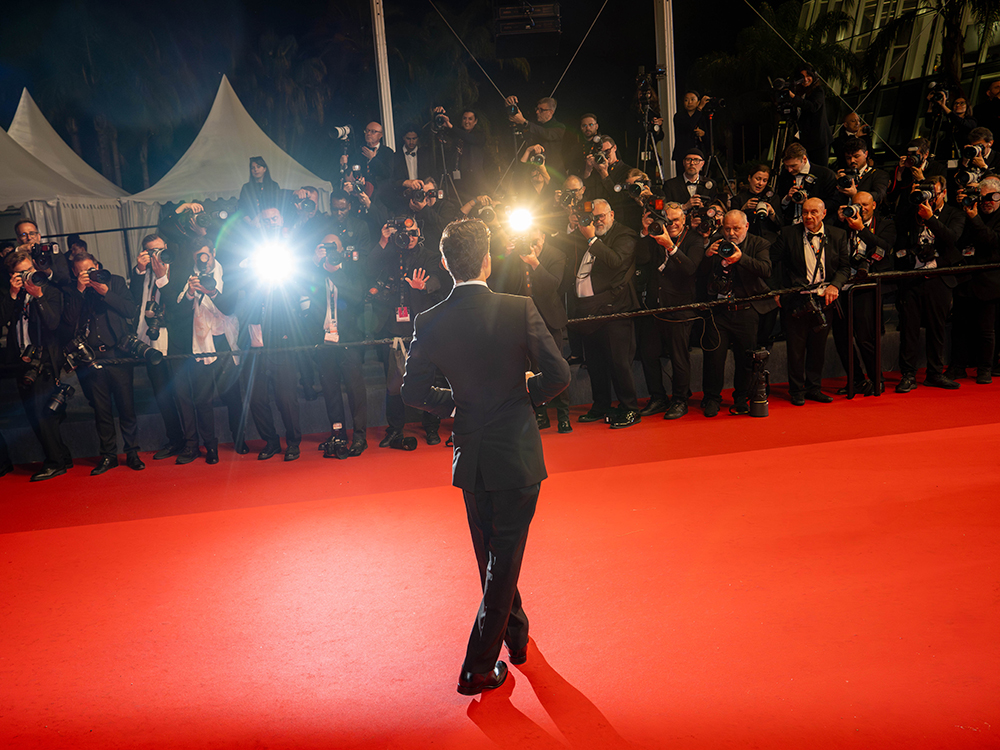
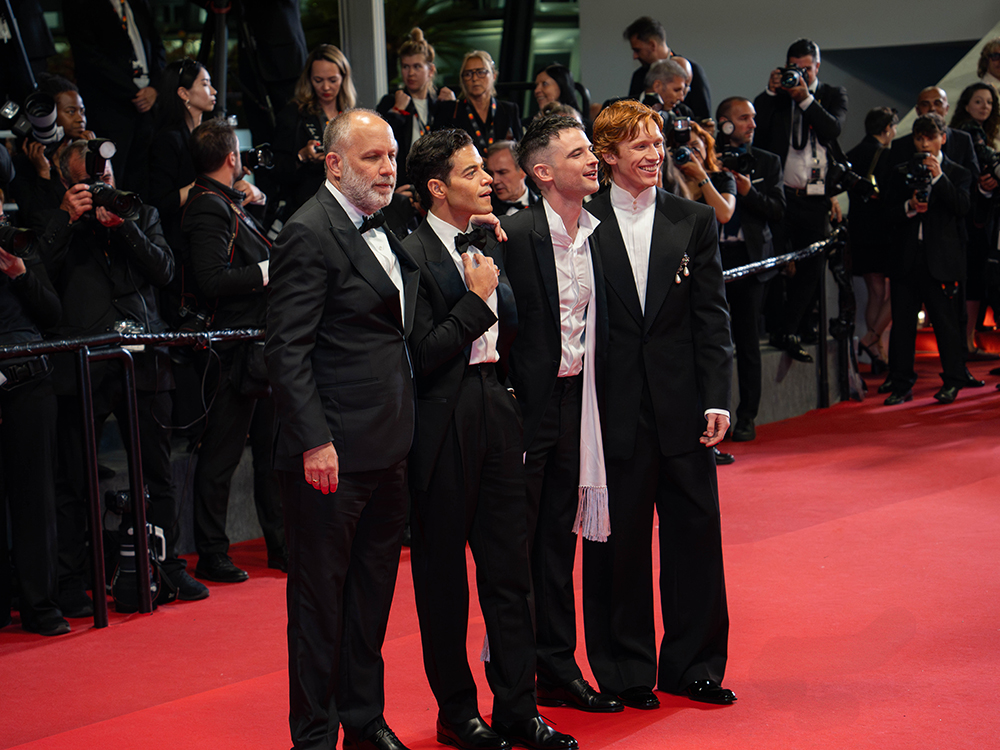
The red carpet itself became one of the evening’s most elegant yet emotionally restrained events, with attendees noting the contrast between the film’s intimate tone and the enormous media machinery surrounding the festival. Unlike some premieres built around spectacle or celebrity theatrics, the arrival of the The Man I Love team felt almost old-fashioned in the best possible sense, driven more by artistic curiosity than promotional excess. Festival photographers repeatedly called out to Rami Malek and Tom Sturridge as the two actors paused together midway up the staircase beneath the massive Cannes lights, while Luther Ford, quickly becoming one of the younger breakout faces discussed on the Croisette this year, drew strong reactions from international press photographers lining the carpet. Inside the theater, applause reportedly continued for several minutes after the screening ended, with many attendees visibly emotional during the closing moments. Though critical consensus will continue evolving throughout the festival, early reactions suggested that many viewers connected strongly with the film’s meditation on love, mortality and artistic urgency. At a festival often defined by cinematic grandeur and political statements, The Man I Love instead arrived with something quieter but perhaps equally powerful: the fragile reminder that cinema can still speak softly while leaving a lasting emotional echo.
You can discover our photos in our Flickr page
Synopsis :
New York, late 1980s: Jimmy George, an iconic figure in the theater world, is living with the most tender and caring of lovers. But faced with the death that awaits him, his thirst to live and create, to desire and to love—one last time—is stronger than anything else.
The Man I Love
Directed by Ira Sachs
Written by Ira Sachs, Mauricio Zacharias
Produced by Scott McGehee, David Siegel, Saïd Ben Saïd, Mike Spreter, Myriam Schroeter
Starring Rami Malek, Tom Sturridge, Luther Ford, Rebecca Hall, Ebon Moss-Bachrach
Cinematography : Josée Deshaies
Edited by Affonso Gonçalves
Production companies : Big Creek Projects, Assemble Media, Merino Films, SBS Productions
Distributed by Memento (France)
Release date : May 20, 2026 (Cannes)
Running time : 95 minutes
Photos : @fannyrlphotography