

JEKCA France: Xavier Mahieu Discusses the Brand’s Growing Success
Tuesday 19 May, 3:00 AM PT France 2026-05-19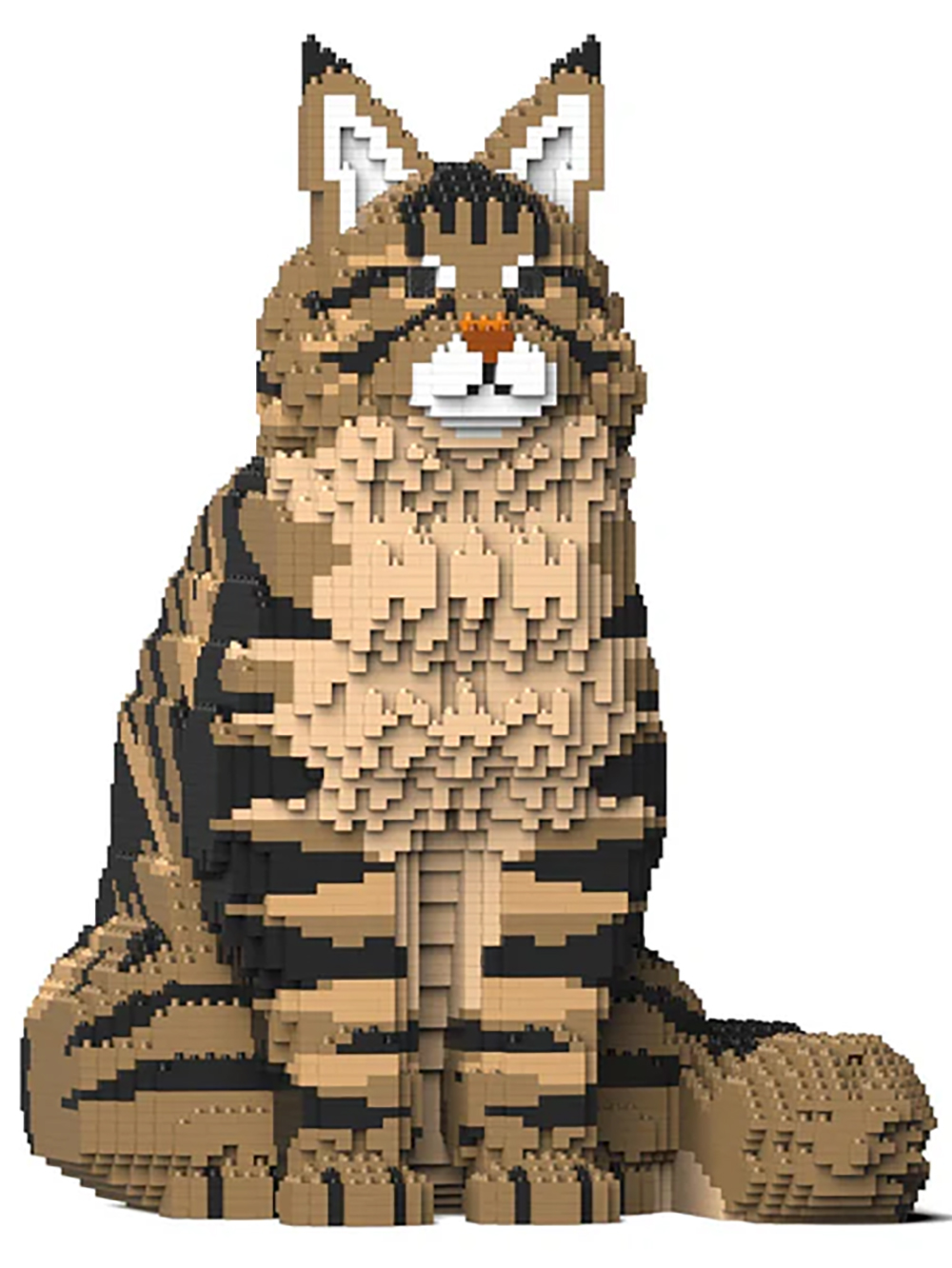
The building brick market continues to undergo a profound transformation with the explosion of the “kidult” phenomenon—adults who are passionate about collectibles, model building, and decorative kits. In this context, JEKCA France aims to stand out by offering a much more technical and sustainable approach to brick building thanks to its famous brick-through technology, a patented system that transforms each model into a true sculpture meant to be displayed. Between international ambitions, a gradual expansion into major French retailers, and a desire to appeal to an increasingly adult audience, the brand is pursuing a particularly ambitious strategy in a rapidly changing market. During this interview, we spoke with Xavier Mahieu to discuss JEKCA’s history, his vision for the market, his ambitions for the coming years, and the increasingly blurred line between toys, decorative objects, and works of art.
Q: Hello, to start off, could you briefly introduce yourself and also tell us about JEKCA, its history, and what it specializes in ?
Xavier Mahieu: Well, briefly, my name is Xavier, and we’re based in Lac-sur-Mer. We discovered JEKCA in Hong Kong about 6 or 7 years ago—time flies—and when my business partner Bruce and I returned to France, we contacted JEKCA since the product wasn’t distributed here. We asked if they were looking for agents to expand their business, and they got back to us. We got to know each other through email, chat, and video calls, and so there you have it—we reached an agreement, drafted a sales agent contract for France, and that’s how we ended up launching JEKCA in France.
Q: Today, the “kidult” phenomenon is booming: at what point did you realize at JEKCA that the adult market was going to become central, rather than marginal ?
Xavier Mahieu: Well, it’s something that has evolved over time and that we’ve observed in the toy industry. That is to say, JouéClub told us a few years ago that they were going to launch specific kidult ranges and kidult sections. We were even contacted by major retailers who are also looking to set up “kidult” sections in certain hypermarkets, and when it comes to building blocks, there’s LEGO, which is a major player in the kidult market—and often, well, people are also looking for a second brand to avoid having, um… and they think of us.
Q: You clearly position yourselves as an alternative to The LEGO Group: is this a deliberate positioning or rather a comparison imposed by the market ?
Xavier Mahieu: I’d say it’s partly the market; that’s often the sector we’re placed in. We’re often placed in the LEGO category and seen as a competitor, so to speak. Well, LEGO is a global giant; we’re a long way behind them, but it’s true that there are few players in the recognized brick sector, and we’re one of them with a concept that’s also a bit different from LEGO’s.
Q: JEKCA talks about becoming the world’s number two: is that a realistic ambition, and by when, in your opinion ?
Xavier Mahieu: Based on the data we have today—that is, all the results from the professional toy partners we work with—we’re in second place in the building block industry. We can certainly consider ourselves the number two player in the building block industry in France.
Q: Do you consider JEKCA a toy brand… or already a brand for home decor and art objects ?
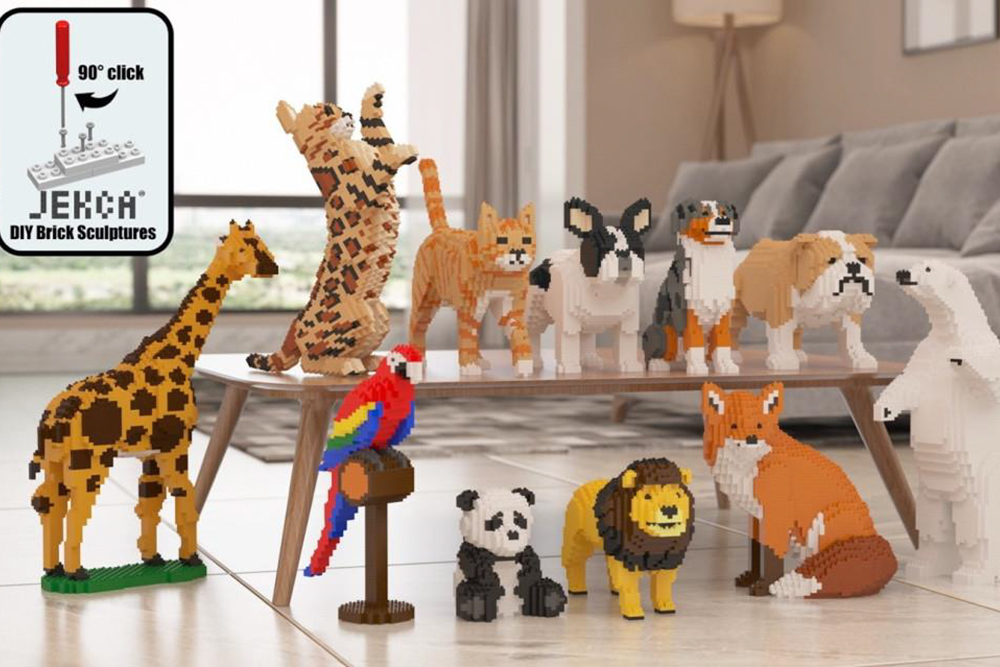
Xavier Mahieu: That’s a complicated question. I’d like to say both, my friend, but yes, we’re really somewhere between a toy and the satisfaction of ending up with a trendy, pop-culture design object—and on top of that, an object that’s durable in the sense that, well, we don’t have to worry about the cat swatting at the big LEGO set we have, you know.
Q: “Brick-through technology” completely changes the logic of assembly: did you hesitate to go that far, at the risk of losing the playful aspect ?
Xavier Mahieu: Well, no, I don’t think we lose the playful aspect because, well, we have the same system as LEGO—meaning you follow a plan and see your object take shape over time. And there are also people who have fun building JEKCA sets without plans, using only bricks of different colors. You can order bricks on the website and pins—in the colors of your choice—and there are people who create some pretty impressive sculptures.
Q: Is this added complexity intentionally designed to appeal to a more adult audience ?
Xavier Mahieu: Well, yes, it’s true that starting at age 5 or 6, building a JEKCA on your own— some do it, but often it’s more about having an adult—a parent, a father or mother—guide them, spending time with your child on activities that take you away from the screen, that bring you back to things requiring a bit of precision, that let you clear your mind and experience that sense of satisfaction. For example, the first JEKCA I assembled—well, the one I brought back from Hong Kong—I put it together with my daughter. She must have been 11 or 12 at the time, and we’d have sessions in the evenings; we spent time together. So there’s that aspect too, which is interesting.
Q: Your models are designed to last and not be taken apart: does that change the way you envision your products right from the design phase ?
Xavier Mahieu: Well, in terms of the design phase, yes, we’re really all about the brick. That is to say, unlike LEGO, where at some point there will be bricks specifically designed for a sculpture, we are true brick purists. That means all the bricks we make come in standard sizes, and we start from that principle. We don’t create bricks solely for a specific final object. And that’s what I find truly interesting about brick building. So it leaves the field open—the field of possibilities.
Q: What is the biggest technical challenge today in developing your models ?
Xavier Mahieu: It’s perhaps what I just said—that is, staying true to a guiding principle and saying: “We’re working with bricks; we’re not building bricks for a specific model.” That’s perhaps the hardest part of creating designs that yield a nice result.
Q: Animal sculptures feature heavily in your catalog: why this strong focus on living creatures ?
Xavier Mahieu: Well, it’s true that there are two points. The first point is that anything involving pets or wild animals is something that’s always close to people’s hearts and always a pleasure for the owner. For example, if you have a dog, a Border Collie, you’ll enjoy making a sculpture of a Border Collie. You see it on Instagram—there are tons of people posting photos with their pets or favorite animals and the JEKCA. So that’s an interesting avenue. And then there’s also the fact that it’s a product—well, you know—that comes from Hong Kong with some Asian licenses, like Hello Kitty and things like that. Right now, it’s not entirely geared toward the French market. We’re also in talks with them about possibly securing some licenses. That said, licenses come at a certain cost. And in the brick world, the leader LEGO has really locked things down, and it’s tough to compete against them.
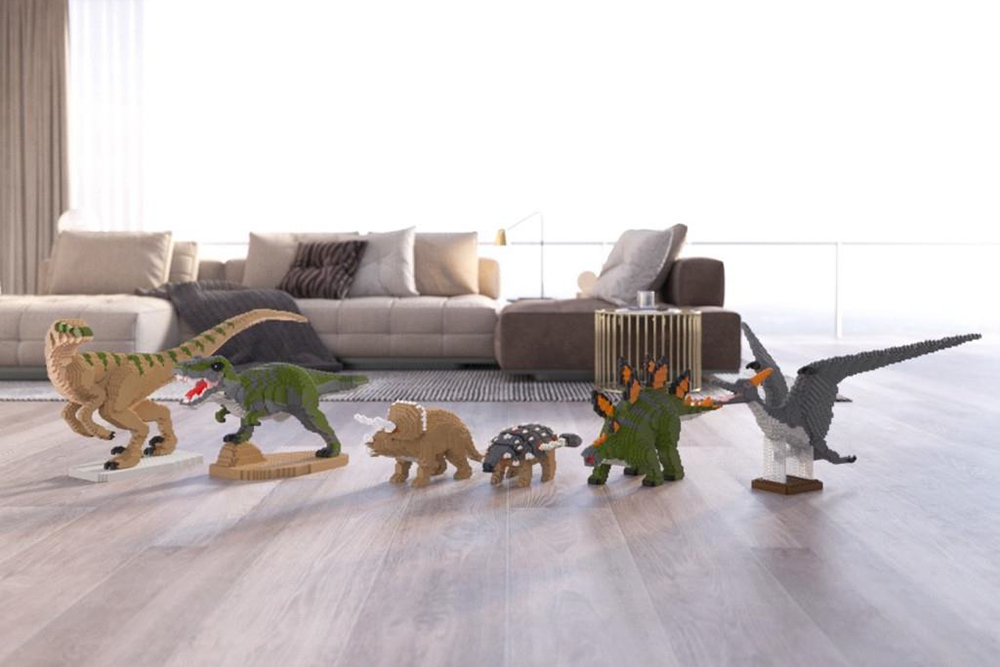
Q: Are you planning to move further into licensing (movies, video games, pop culture), or do you want to stick to original creations ?
Xavier Mahieu: We’d really like to develop and continue, and this is our chance to put out a call—to all pop culture creators or people who’ve launched projects. We’ve also had artists reach out to us. It could be interesting to use JEKCA bricks to make sculptures. For example, I have a cat we made with bricks because we have bricks of different sizes, and I made a cat using bricks that are five times the normal size—the cat is 1.70 meters tall. So there you go, there are opportunities to create cool things for events. We can do collaborations. That’s it—I’ve been pushing for that a bit over time, too; it’s definitely interesting.
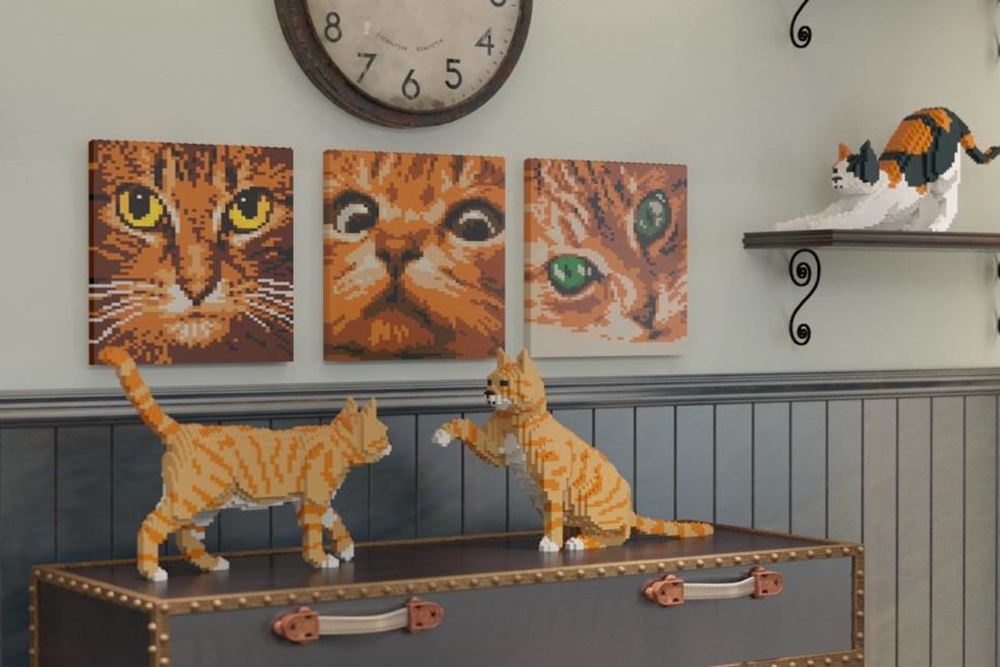
Q: You’re also developing brick paintings: is this a way to reach an even wider audience, closer to the world of interior design?
Xavier Mahieu: The art pieces are really cool, and the finished look is great. I have the Mona Lisa in my living room, and honestly, I really love how it looks. Plus, I’m pretty passionate about art—whether it’s graffiti or street art—and you generally find pop art in there too. There are some really interesting icons to work with. And the Mona Lisa, for example, has also served as a foundation for pop artists. We’re talking about icons here.
Q: How far can customization go at JEKCA? Can you offer bespoke solutions for individuals or businesses?
Xavier Mahieu: Yes. Well, for individuals it might be a little more complicated, but yes, for events or for artists, we can work with our designers to explore options. Now, we’re not going to start with the idea of saying, “Send me a photo of your dog and we’ll make a JEKCA that looks like it”—but that wouldn’t be possible. But then, for certain collaborations, yes, we can do it. And there are also some freelance designers who create JEKCA-based designs, including assembly plans.
Q: Is France a strategic market for JEKCA in Europe?
Xavier Mahieu: Yes, France is one of the biggest European markets. Historically, it’s also one of the first. But yes, currently in Europe, France is performing the best.
Q: Your presence at JouéClub, King Jouet, or La Grande Récré shows a real physical presence: is that essential to win over the public?
Xavier Mahieu: Yes, I think it’s an important reassurance, and above all, it’s a way to raise awareness of JEKCA because we’ve noticed that when people discover us, they become fans. But the hardest part is always building brand recognition, and unfortunately, we don’t have LEGO’s marketing budget. So it’s important to promote our brand through already established channels.
Q: Is the higher price of your products a barrier… or, on the contrary, a sought-after premium marker ?
Xavier Mahieu: Well, in terms of price, if we compare it to LEGO, for example, or look at sizes or weights—because, you see, we’re also selling a raw material that has a certain weight to it. If we make a comparison, we’re not more expensive than LEGO. We’re even often cheaper on large pieces. We’ve also created what we call “minis” here—which are much smaller sculptures—and they range from €20 to €30. So they remain completely affordable.
Q: The community plays a key role: how do you actively foster this ecosystem of enthusiasts ?
Xavier Mahieu: Well, that’s one of my goals—to bring the community together—because right now we have people scattered all over the place. We see that there are people who have built 15 or 20 JEKCA figures. Bringing everyone together through social media is a work in progress.
Q: Social media shows a lot of staged photos and displays: is JEKCA creating a new form of artistic expression?
Xavier Mahieu: Why not? In any case, taking photos of your pet next to a sculpture you built yourself—that’s something unique to us.
Q: Do you work with creators, artists, or influencers to develop the brand’s image ?
Xavier Mahieu: Not yet, but we’re starting to. We sent out our first press release and got some feedback. That’s the idea—to generate press coverage and work with collaborators and partners to move JEKCA forward.
Q: In five years, how would you like the public to describe JEKCA in one sentence ?
Xavier Mahieu: Better than LEGO..
Through this conversation, Xavier Mahieu confirms that JEKCA France isn’t simply seeking to offer yet another alternative in the building block market, but rather to support the profound shift in adult consumers’ expectations. With decorative sculptures, collectibles, and a more premium approach to building, the brand appears to be positioning itself in a hybrid segment that bridges toys, design, and contemporary art. With an increasingly visible presence in French retail stores, a particularly active community on social media, and an instantly recognizable visual identity, JEKCA continues to grow with a clear ambition: to become a key player in the international adult building block market in the years to come…
We would like to thank Xavier Mahieu for taking the time to answer our questions