

Cannes 2026 : Quentin Dupieux Brings Chaos, Absurdity and Style to Midnight Screenings With Full Phil
Saturday 16 May, 4:00 PM PT Cannes, Palais des Festivals et des Congrès de Cannes 2026-05-16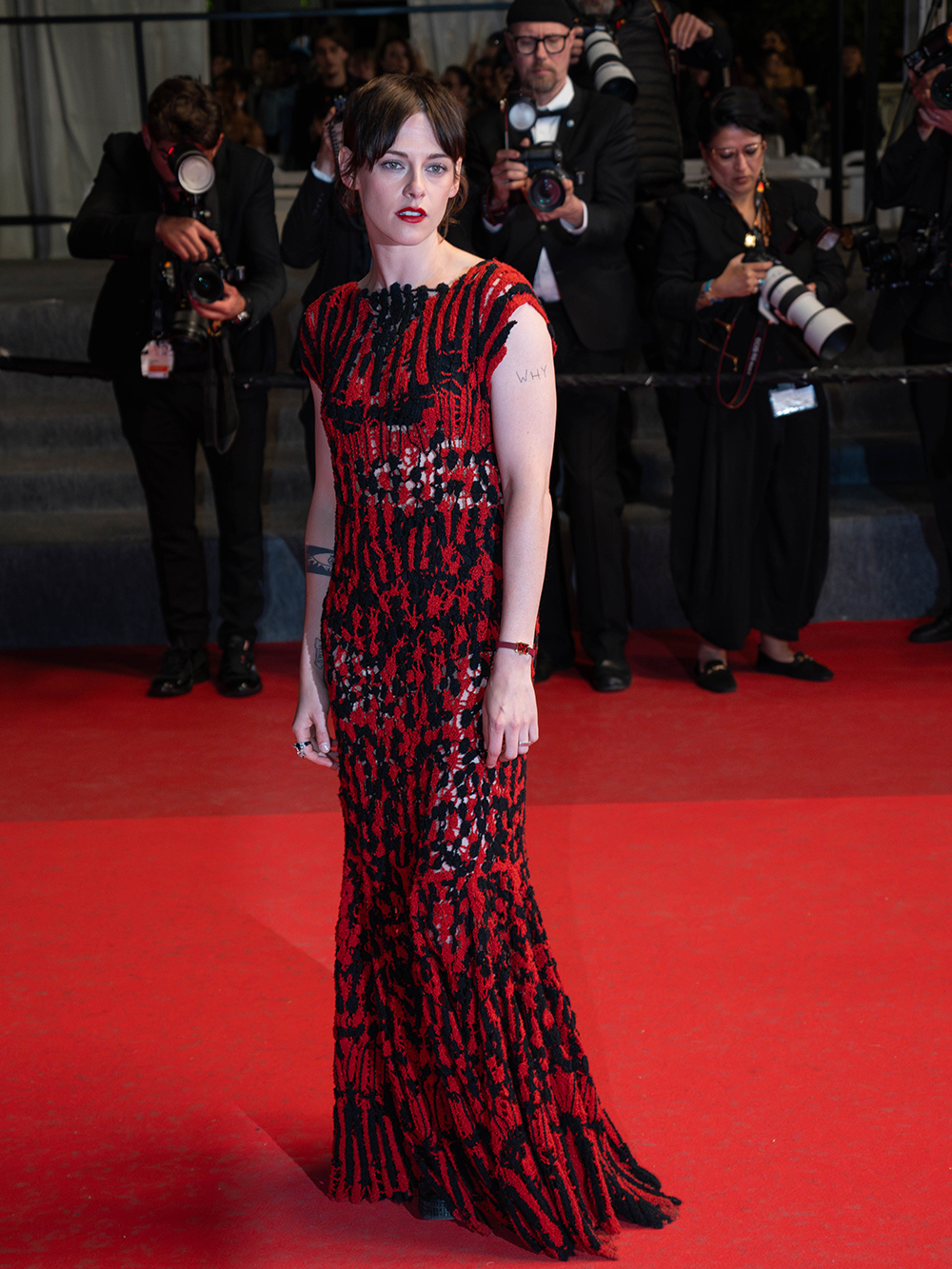
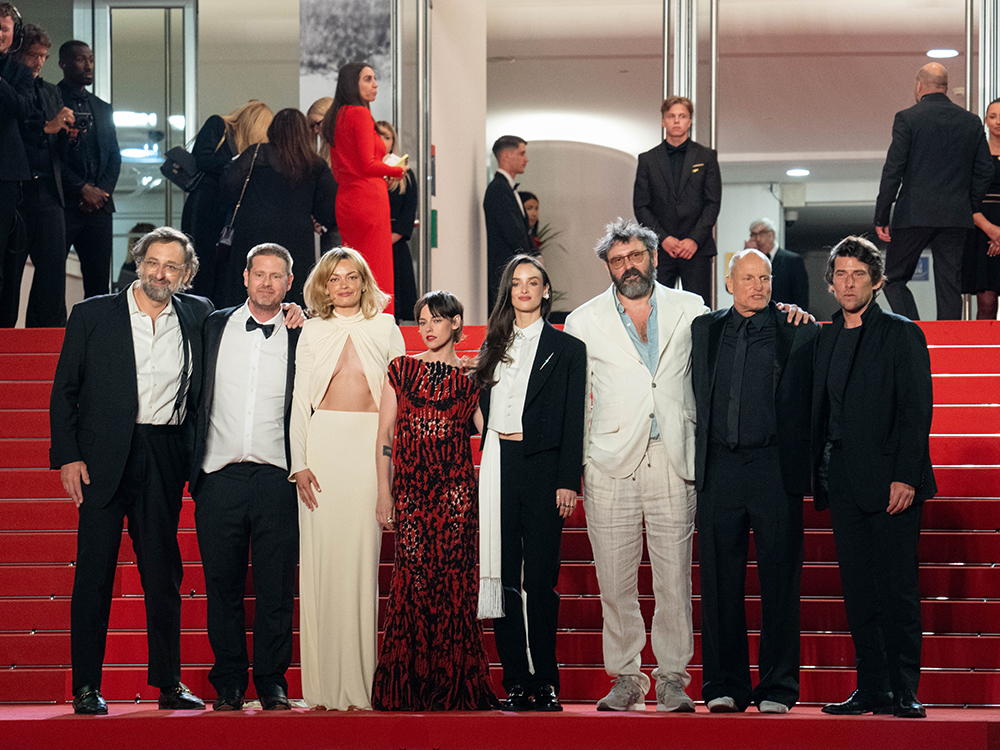
In Cannes, some midnight screenings feel like parties, others like provocations, and then there are those rare evenings that somehow manage to be both at once. On May 16, 2026, the Palais des Festivals experienced just such a strange buzz with Full Phil, Quentin Dupieux’s latest cinematic experiment, unveiled in the Midnight Encounters section of the 2026 Cannes Film Festival. Long before the film began, the atmosphere around the red carpet already hinted that something unusual was about to happen. The crowd pressed against the barriers along the Croisette as photographers shouted out names at a frantic pace, while the actors slowly ascended the famous red steps under the night sky of the French Riviera. The arrival of Kristen Stewart, Emma Mackey, Charlotte Le Bon, Woody Harrelson, and Quentin Dupieux turned this premiere into one of the festival’s most visually talked-about midnight events, particularly because each artist seemed perfectly in tune with the film’s bizarre elegance and detached absurdity.
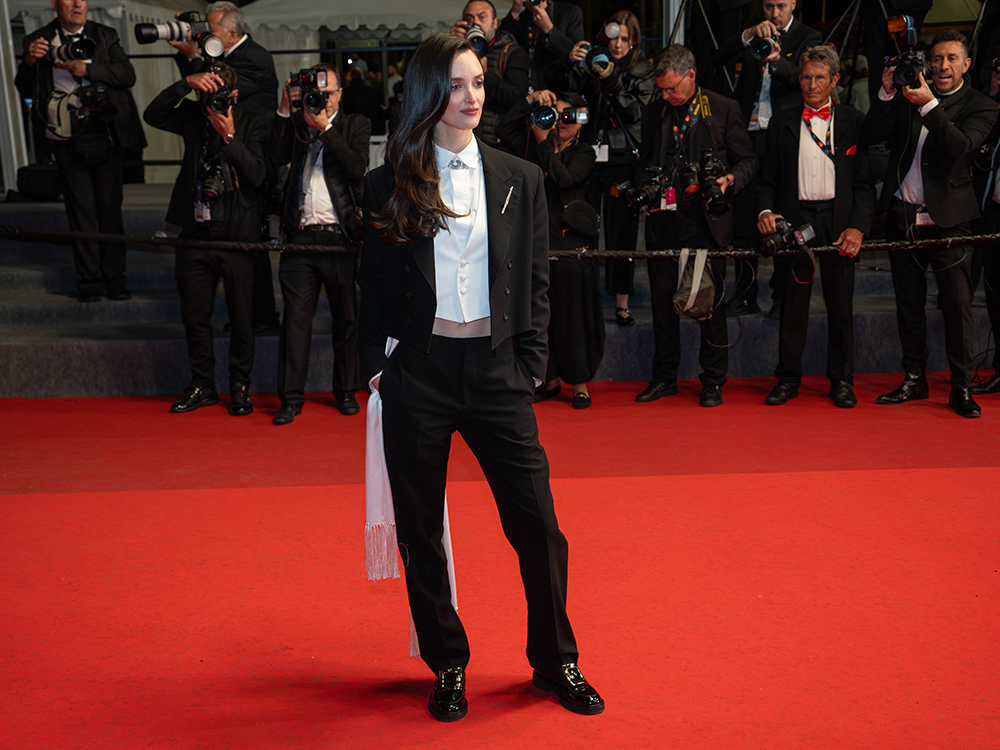
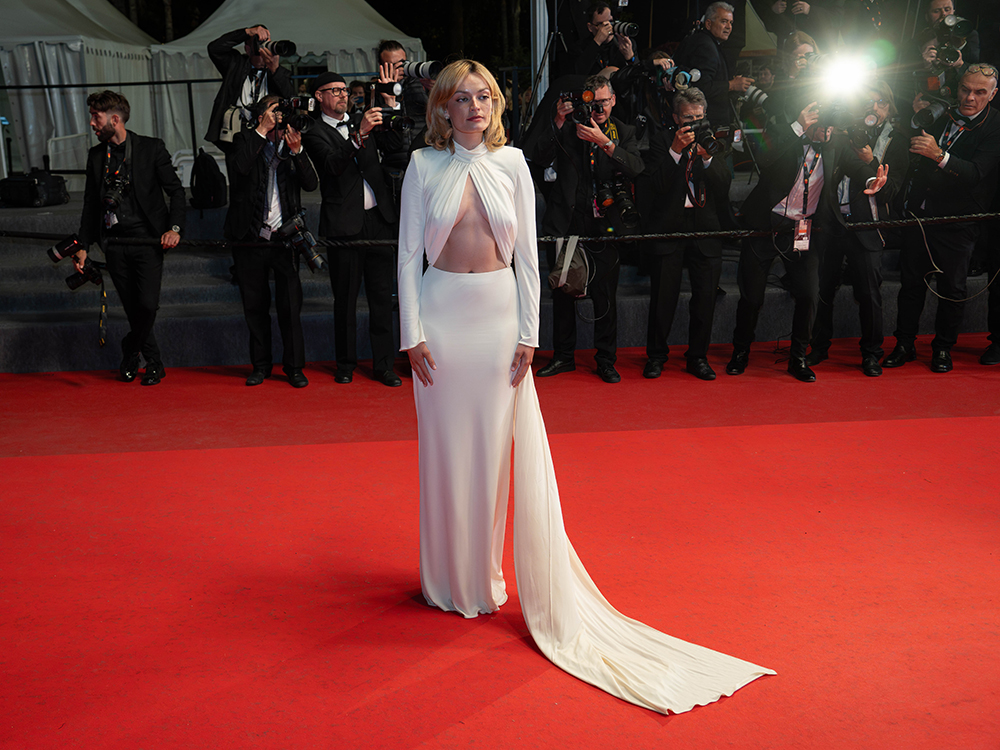
The red carpet itself almost seemed like an extension of a Dupieux shot, oscillating between sophistication and deliberate awkwardness. Kristen Stewart, continuing her longstanding collaboration with Chanel, appeared in a impeccably tailored black-and-white ensemble, blending masculine codes with old-school Hollywood glamour, effortlessly capturing the photographers’ attention with that cool detachment that has increasingly characterized her appearances at Cannes over the past decade. At her side, Emma Mackey wore a striking ivory dress whose sculptural cut immediately became one of the most photographed looks of the evening, while Charlotte Le Bon brought a more playful energy in a textured red and black dress that perfectly echoed the chaotic spirit associated with Dupieux’s cinema. Meanwhile, Woody Harrelson, dressed in a simple black suit and white shoes, seemed both relaxed and slightly amused by the madness unfolding around him, stopping several times to greet fans and photographers with the natural charisma that has made him one of the most beloved American actors on the international festival circuit. The group photos taken on the staircase captured something fascinating: the cast didn’t resemble that of a traditional high-profile drama, but rather a collection of personalities from different cinematic dimensions, brought together in some way under Dupieux’s absurd universe.
This surreal quality carries directly over into Full Phil itself, an absurd French comedy-drama in English that marks Quentin Dupieux’s first major English-language feature film since Wrong Cops in 2013. Produced by Hugo Sélignac and starring Woody Harrelson, Kristen Stewart, Emma Mackey, Charlotte Le Bon, Tim Heidecker, and Eric Wareheim, the film follows Philip Doom, a wealthy American industrialist who attempts to reconnect with his estranged daughter Madeleine during a stay in Paris as riots rage in the streets outside their hotel. But since this is a Dupieux film, this emotional premise quickly morphs into something far stranger. French cuisine, grotesque bodily transformations, clips from vintage horror films, and an increasingly intrusive hotel employee collide within a narrative structure built like a Russian nesting doll, endlessly layering one fiction upon another. Critics immediately noted that the filmmaker was once again using the “story-within-a-story” device, already present in films such as Daaaaaalí! and Au poste!, but here, this technique seems darker, more cynical, and more openly cruel.
Several French critics at Cannes drew parallels between Full Phil and Marco Ferreri’s La Grande Bouffe, particularly regarding the film’s fascination with excess, grotesque consumption, and humiliation. One of the film’s central comic ideas involves Madeleine, played by Kristen Stewart, eating compulsively, while the physical consequences strangely affect her father instead, causing him to gain weight in her place. This is exactly the kind of absurd concept that has become the hallmark of Quentin Dupieux’s cinema: at once hilarious, unsettling, intellectually provocative, and deliberately unfinished. Some reactions at the festival praised the film’s fearless commitment to surrealism and emotional disorientation, while others criticized the filmmaker for introducing fascinating thematic ideas without fully exploring them. Yet even the critics admitted that the film possesses an undeniable personality, something increasingly rare in contemporary festival cinema. The director’s blend of impassive absurdity and aggressive cruelty continues to divide audiences, but it also explains why every new premiere by Dupieux instantly becomes an event at Cannes.
What also fascinated many observers at this Cannes premiere was the way Full Phil seems to function as a strange collision between different periods of Quentin Dupieux’s own career. The film reportedly incorporates clips from a fictional B-movie that Madeleine watches on her computer, featuring Eric Wareheim, a longtime collaborator of Dupieux’s, thereby creating a bridge between the filmmaker’s early American-style absurdism and the more overtly French social satire of his recent works. Since films like Unbelievable but True, Yannick, and The Piano Accident, Dupieux’s cinema has become increasingly scathing, taking aim at celebrity culture, narcissism, aging masculinity, and the absurdity of the media with a growing bitterness concealed beneath his deadpan humor. Several Cannes critics have even wondered whether the filmmaker, now in his fifties, has entered a distinctly darker artistic phase, using surrealist comedy less as pure entertainment and more as a vehicle for social unease and irritation.
Behind the scenes, Full Phil represents an unusually ambitious production for Dupieux. Filming began in Paris in October 2025 and wrapped in February 2026, with the filmmaker once again personally handling the cinematography and editing, thereby cementing his reputation as one of the most fiercely independent auteurs in modern French cinema. This project reunites him with actors capable of navigating his singularly strange tonal universe, but it also demonstrates just how appealing his cinematic style has become on an international scale. Seeing actors like Woody Harrelson and Kristen Stewart fully embrace the bizarre rhythms of a Dupieux production speaks volumes about the filmmaker’s growing global reputation. Unlike many directors who tone down their identity when moving into English-language cinema, Dupieux seems to have doubled down on everything that makes his films controversial and instantly recognizable.
At a time when many festival films are carefully calibrated for award season buzz or social media consensus, Quentin Dupieux continues to make films that seem aggressively unpredictable. Whether audiences love them or reject them becomes almost secondary. What matters is the experience itself: the sensation of sitting in a packed theater during a midnight screening in Cannes, while a filmmaker gleefully dismantles narrative comfort in front of an audience unsure whether to laugh, grimace, or applaud. For that reason alone, Full Phil has already established itself as one of the unforgettable moments of Cannes 2026.
You can discover our photos in our Flickr page
Synopsis :
In Paris, Philip Doom, a wealthy American industrialist, tries to reconnect with his daughter Madeleine. Unfortunately, French cuisine, a 1950s horror movie, and an overbearing hotel employee throw a wrench in his plans...
Full Phil
Written and directed by Quentin Dupieux
Produced by Hugo Sélignac
Starring Woody Harrelson, Kristen Stewart, Emma Mackey, Charlotte Le Bon, Tim Heidecker, Eric Wareheim
Cinematography : Quentin Dupieux
Edited by Quentin Dupieux
Music by Siriusmo
Production companies : Chi-Fou-Mi Productions, Artémis Productions, Samsa Film
Distributed by Diaphana Distribution (France)
Release date : 17 May 2026 (Cannes)
Running time : 78 minutes
Photos : @fannyrlphotography