

Cannes 2026: John Travolta—Emotion, Aviation, and an Unexpected Tribute on the Croisette
Friday 15 May, 2:45 PM PT Cannes, Palais des Festivals et des Congrès de Cannes 2026-05-15
There are evenings in Cannes that seem scripted in advance, tailored for prestige and camera flashes, and then there are those that suddenly shift into something more intimate, almost surreal. On Friday, May 15, 2026, at the Palais des Festivals in Cannes, John Travolta’s appearance to present his very first feature film as a director, Propeller One-Way Night Coach, was already set to be one of the most nostalgic and cinephile-friendly events of this 79th edition of the Cannes Film Festival. But the evening turned into a true celebration of an entire career when Thierry Frémaux, the festival’s general delegate, presented the American actor with a surprise Honorary Palme d’Or, prompting an immediate standing ovation in the packed Salle Debussy. John Travolta’s emotion, visibly moved, immediately reminded everyone why the actor remains such a singular figure in the history of American popular cinema: a star shaped by dance, music, mainstream cinema, and, more quietly, an obsessive passion for aviation.

t’s hard not to see this evening as a sort of perfect full circle for the man who had already made his mark on Cannes in 1994 with Quentin Tarantino’s Pulp Fiction, a Palme d’Or winner that became one of the most influential films of the 1990s. This time, however, John Travolta did not return as a cult actor, but as the director of an extremely personal project, directly inspired by his illustrated book Propeller One-Way Night Coach, published in 1997 and originally written for his son Jett Travolta. The film tells the story of a young boy’s first flight as he travels across the United States with his mother in early 1960s America, an idealized era when flying still represented an almost romantic adventure. In this autobiographical tale, the main character Jeff discovers the world through the aisles of a TWA aircraft, fascinated as much by the flight attendants as by the cockpit or the magic of the journey itself. This fascination is anything but artificial: in real life, John Travolta has been a private pilot for decades, certified on the Boeing 707 and 747, the owner of several aircraft, and a true unofficial ambassador of American aviation culture. He even traveled to Cannes aboard his own private jet with his daughter Ella Bleu Travolta, already turning his arrival on the Croisette into an anecdote worthy of a bygone Hollywood.
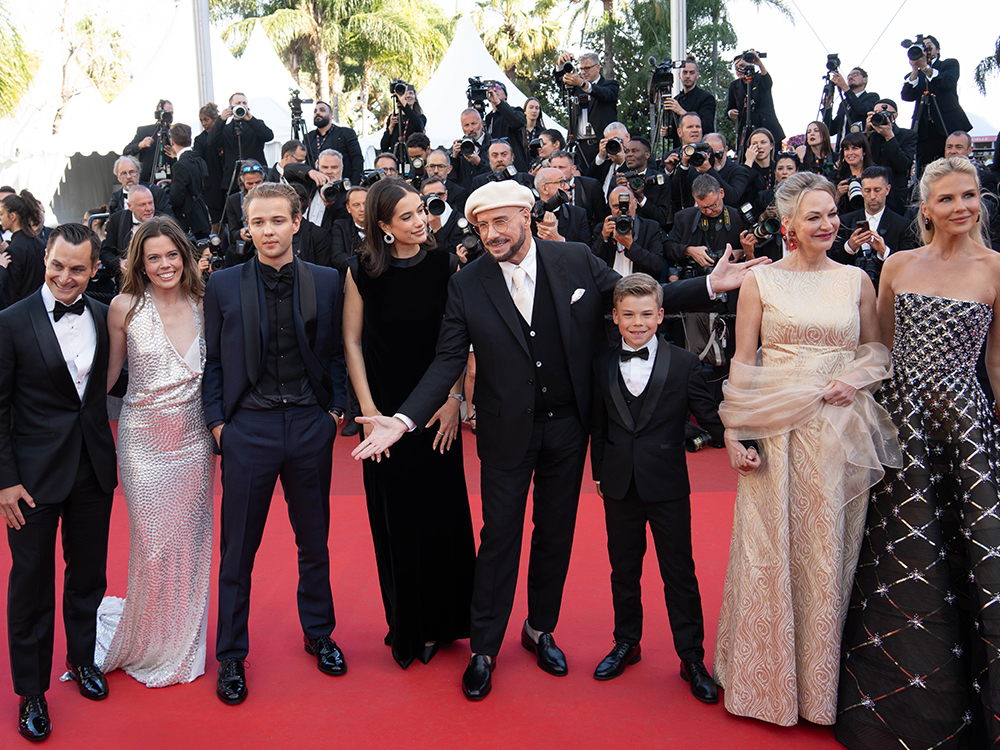
This passion for aviation permeates Night Flight to Los Angeles entirely, right down to its direction. Early reviews describe a contemplative, candid, almost timeless film, where the red and white colors of the TWA cabins recreate a dreamlike America of the Kennedy years. Young Clark Shotwell, who plays Jeff, carries on his shoulders this constant sense of childlike wonder, while Kelly Eviston-Quinnett plays his aspiring actress mother with a melancholic gentleness. But the most talked-about element is, of course, the presence of Ella Bleu Travolta, daughter of the actor and the late Kelly Preston, in the role of Doris, a flight attendant who becomes the young hero’s first crush. This family dimension gives the project a very special tone, reinforced by the omnipresent narration of John Travolta himself.
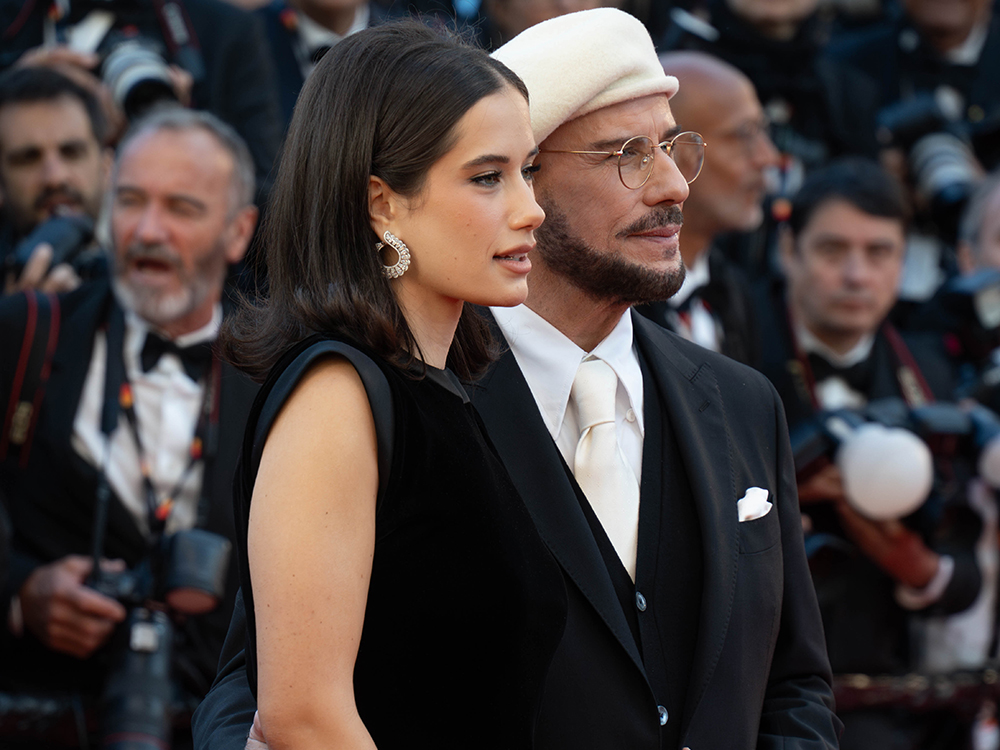
On the red carpet, the chemistry between John Travolta and Ella Bleu Travolta immediately caught the photographers’ attention. The duo exchanged smiles and tender gestures in an atmosphere far warmer than the often highly scripted red-carpet appearances at the Cannes Film Festival. But beyond this very touching father-daughter relationship, it was also the American star’s unusual look that got people talking. With his slightly retro white beret, discreet glasses, and minimalist black suit, John Travolta exuded an almost European air, a far cry from the ultra-slick Hollywood image he has long embodied. Some French media outlets even described him as unrecognizable, so surprisingly rejuvenated did his face appear. This appearance immediately sparked conversations on the Croisette, but above all, it reinforced the strange impression that this evening belonged more to a timeless icon than to a 72-year-old star who had simply come to present a film.
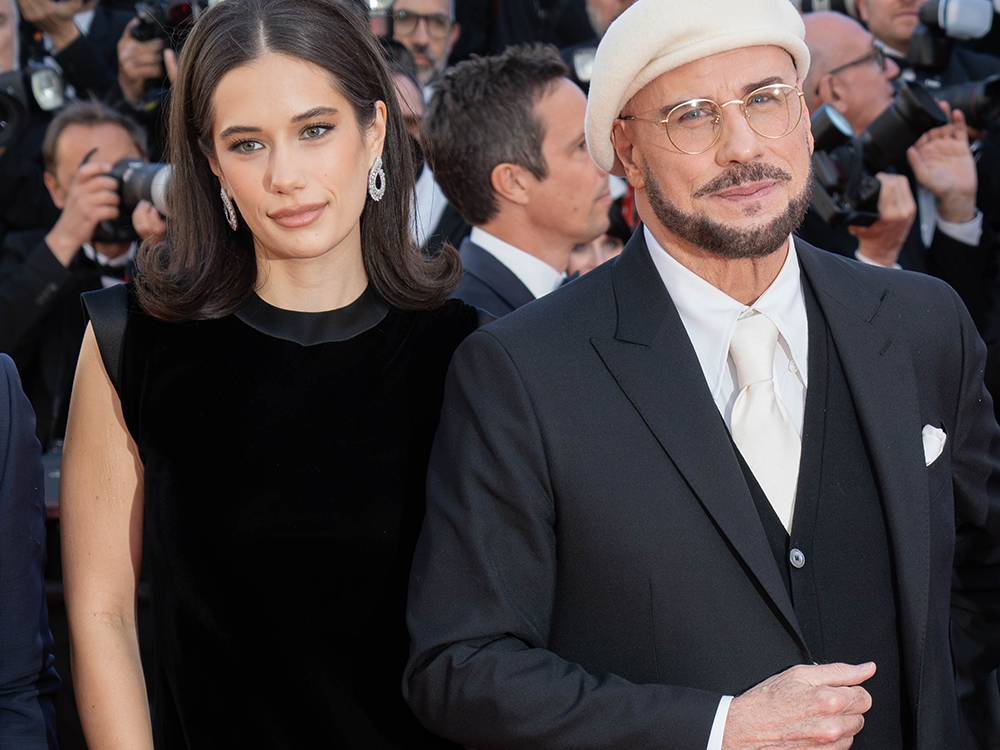
The presentation of the Honorary Palme d’Or then shifted the evening into an even more emotional dimension. After a montage of clips from Saturday Night Fever, Grease, Blow Out, Face/Off, Hairspray, and Pulp Fiction, the Debussy theater erupted in applause when Thierry Frémaux announced the surprise award. Visibly moved, John Travolta admitted to crying like a baby when he learned a few months earlier that his film had been selected for Cannes, explaining that he had never imagined his first feature film would be accepted so early in the festival’s history. The symbolism was all the more powerful given that the actor has always maintained an almost mythological relationship with the Palme d’Or. During his speech, he recalled that some of his all-time favorite films, such as Marcel Camus’s Orfeu Negro or Claude Lelouch’s Un homme et une femme, had won the top prize at Cannes. The music from Claude Lelouch’s film also appears in Night Flight to Los Angeles, as an overt tribute to that romantic and nostalgic cinema that has deeply influenced John Travolta’s imagination.
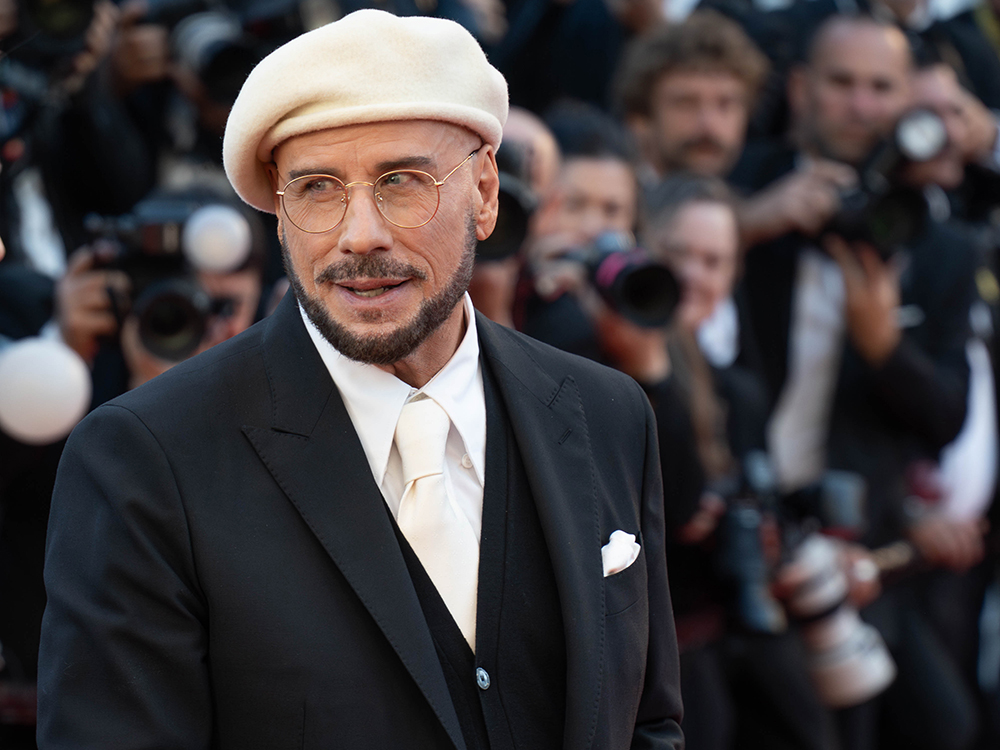
It must be said that John Travolta’s career has always resembled a series of rebirths. Born in 1954 in New Jersey and first gaining recognition through the series Welcome Back, Kotter, he became a global superstar with Saturday Night Fever and Grease in the late 1970s before enduring a long period of critical decline in the 1980s. His spectacular comeback, thanks to Quentin Tarantino in Pulp Fiction, remains one of the most famous comebacks in Hollywood history. Since then, his career has had its ups and downs, oscillating between popular blockbusters, more low-key productions, and unconventional projects. Yet, despite the failures, controversies, and changing times, John Travolta has always retained something unique: that ability to remain instantly recognizable, whether he’s dancing in a Brooklyn nightclub, piloting a plane, or playing a philosophical killer in a Los Angeles diner.
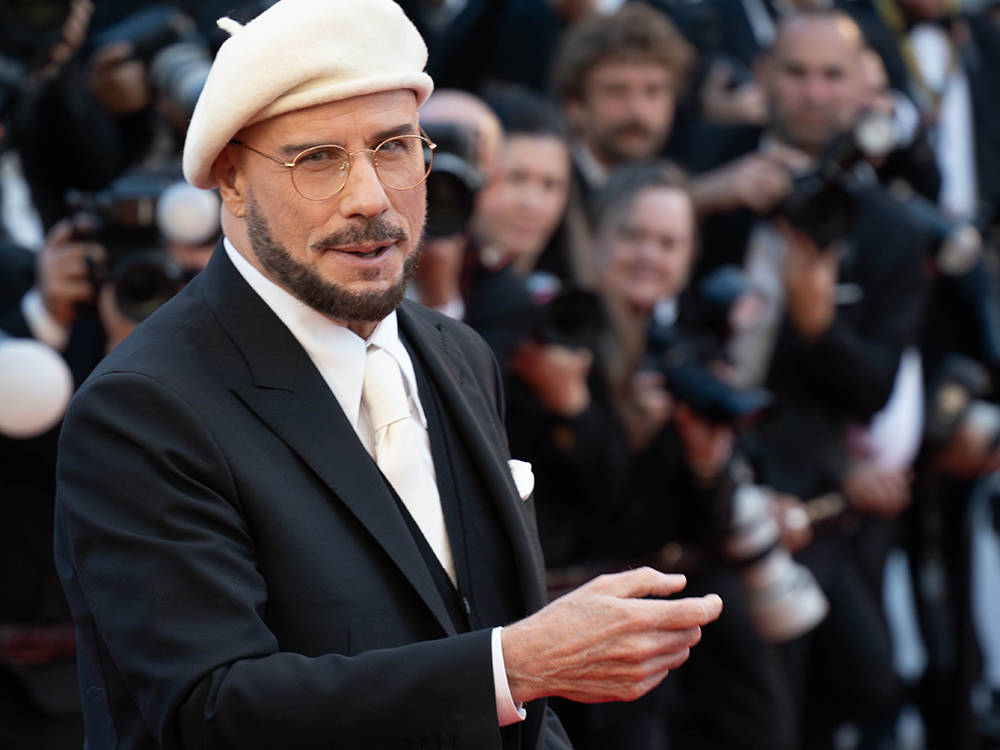
The critical reception of Night Flight to Los Angeles, however, remains more mixed than the reception reserved for the man himself. Some critics praised the project’s deeply disarming sincerity, its retro charm, and its total lack of cynicism in an era dominated by franchises and formulaic content. Others, on the contrary, criticized the film for its highly anecdotal, even narcissistic, nature, arguing that the work functions more like a filmed personal album than a true cinematic work. Several French media outlets notably pointed out that the direction remained extremely conventional and that the constant voice-over narration sometimes prevented the film from truly taking off emotionally. Yet even its detractors acknowledge that the project possesses a rare authenticity in the contemporary Hollywood landscape. In a festival often dominated by dark or ultra-conceptual films, seeing an American legend dedicate his first film to the childlike wonder of a child discovering an airplane was almost radically unexpected.
This evening in Cannes will likely be remembered less for the cinematic qualities of Night Flight to Los Angeles than for what it represented emotionally. Seeing John Travolta, an actor who has spent more than half a century in the spotlight, receive an Honorary Palme d’Or to the applause of a standing-room-only Théâtre Debussy was genuinely touching in a festival often accused of cynicism or elitism. Between clips from Grease and Pulp Fiction, between a tribute to classic French cinema and childhood memories tied to aviation, Cannes gave John Travolta an evening in his own image: over-the-top, nostalgic, sincere, sometimes awkward, but deeply human. And on a Croisette where appearances often become perfectly orchestrated marketing stunts, that emotion ultimately seemed far more precious than a simple walk up the red carpet.
You can discover our photos in our Flickr page
Synopsis :
In the golden age of aviation, Jeff, a young boy with a passion for aviation, takes off alongside his mother on a one-way trip to Hollywood, crossing the United States. What could have been just an ordinary flight turns into the journey of a lifetime. Between the meals served on board, the flight attendants’ attentive service, unexpected layovers, colorful fellow passengers, and a memorable visit to first class, the adventure holds moments as magical as they are surprising, forever shaping the young boy’s destiny.
Propeller One-Way Night Coach
Written and directed by John Travolta
Based on Propeller One-Way Night Coach by John Travolta
Produced by John Travolta, Jason Berger, Amy Laslett
Starring Clark Shotwell, Kelly Eviston-Quinnett, Ella Bleu Travolta, Olga Hoffmann
Narrated by John Travolta
Cinematography : Paul de Lumen
Edited by Mark J Marraccini, Adam Varney
Music by Tim Aarons, Alec Puro, Eric Meyers
Production companies : JTP Productions, Kids at Play
Distributed by Apple TV
Release dates : May 15, 2026 (Cannes), May 29, 2026 (United States)
Running time :61 minutes
Photos : @fannyrlphotography