

Cannes 2026 : Karma Brings Emotion, Mystery, and a Triumphant Comeback to the Croisette
Friday 15 May, 2:45 PM PT Cannes, Palais des Festivals et des Congrès de Cannes 2026-05-15
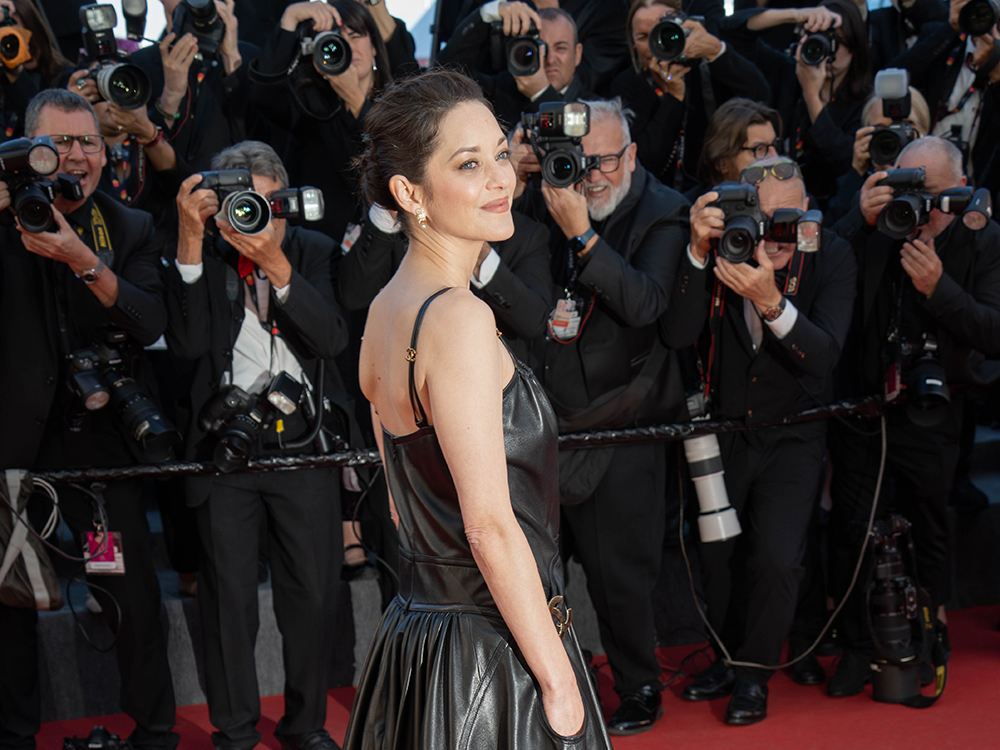
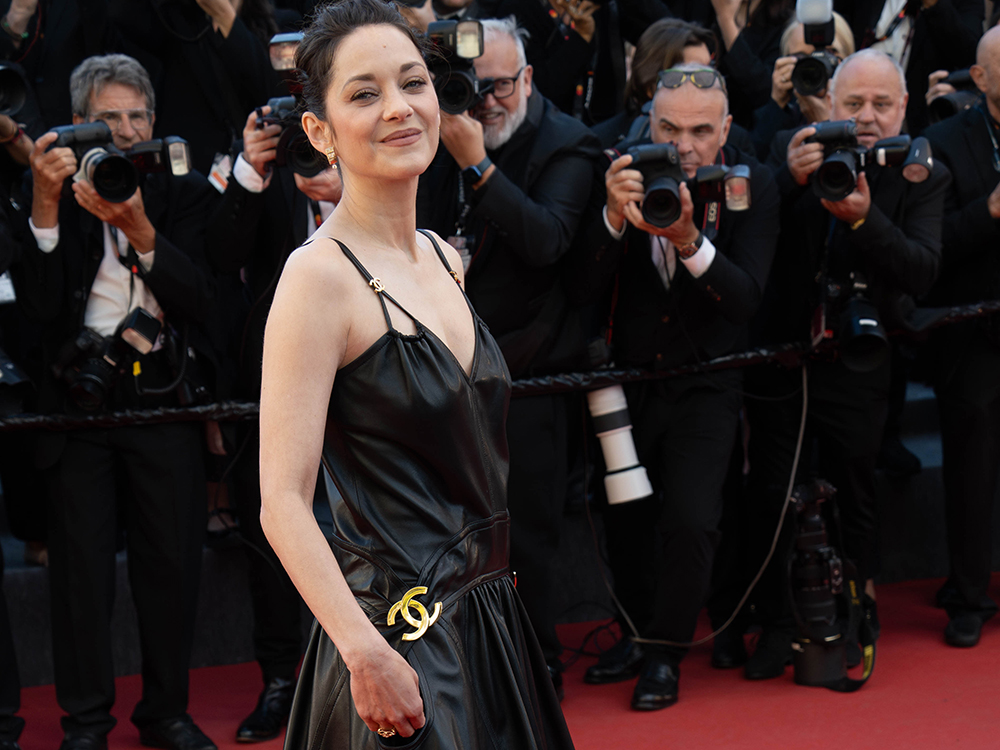
There was something unusually electric on the Croisette on Friday, May 15, 2026, when Karma premiered Out of Competition at the 79th edition of the Cannes Film Festival. Long before the screening began inside the Grand Théâtre Lumière, the atmosphere surrounding the film had already turned the evening into one of the festival’s defining moments. Under the endless flashes of photographers gathered in front of the Palais des Festivals, Guillaume Canet returned to Cannes not only as a director presenting his ninth feature film, but as a filmmaker seemingly reclaiming a part of his cinematic identity. With Marion Cotillard leading the cast, joined by Leonardo Sbaraglia, Luis Zahera, and Denis Ménochet, Karma immediately became one of the most discussed premieres of the festival, blending psychological tension on screen with deeply emotional real-life moments on the red carpet.
What instantly struck everyone present on the famous Cannes steps was the deeply personal nature of the evening. Rather than opting for the coldly choreographed elegance often associated with major festival premieres, Guillaume Canet arrived surrounded by his family, creating one of the warmest and most authentic red carpet moments seen this year. Alongside Marion Cotillard, the director was accompanied by their son Marcel, as well as his parents, Philippe Canet and Marie-Antoinette Canet, turning the event into what many French journalists described as a touching family reunion under the Cannes spotlight. The symbolism was impossible to ignore. Following the public announcement of Guillaume Canet and Marion Cotillard’s separation last year after nearly two decades together, seeing them reunited for what is officially their final collaboration as a couple gave the evening an undeniable emotional weight. At several moments during the climb up the stairs, both appeared visibly moved, smiling toward the crowd while sharing quiet exchanges away from the cameras. The audience gathered outside the Palais reacted with enthusiasm, while inside the Grand Théâtre Lumière, the applause following the screening reportedly lasted several minutes, confirming that Karma had made a strong impact on festivalgoers.
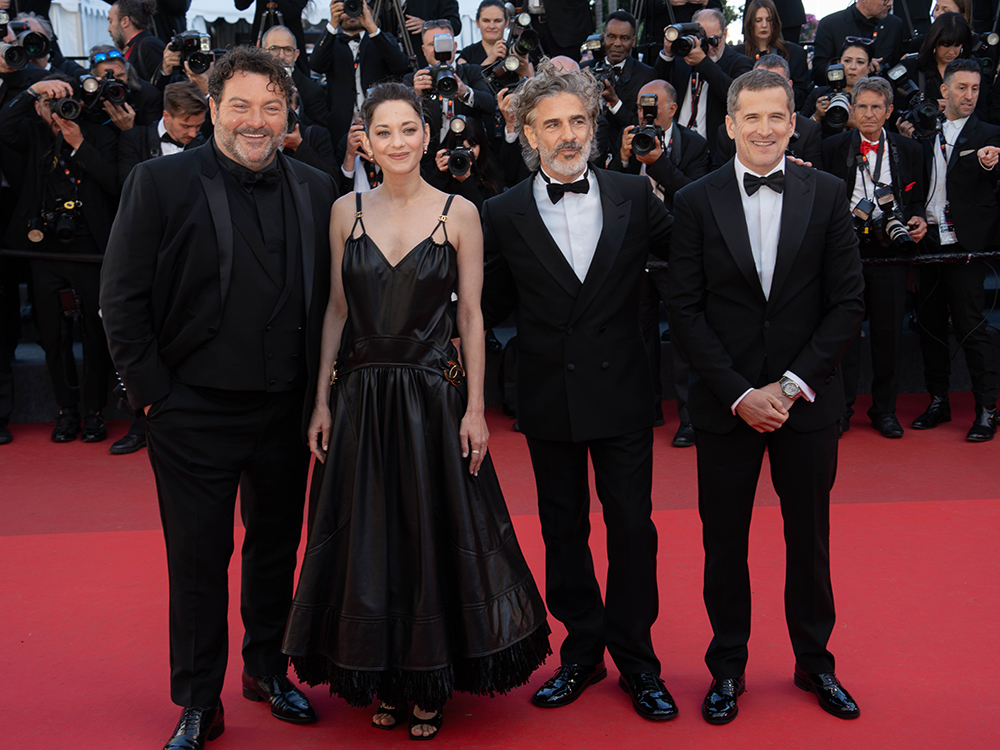
One of the evening’s unexpected talking points quickly became Marcel himself. At just 15 years old, the son of Guillaume Canet and Marion Cotillard already seems increasingly comfortable with the world of cinema and public appearances. After making his acting debut as the young Asterix in Asterix & Obelix: The Middle Kingdom, directed by his father, and later appearing alongside him in Netflix’s Ad Vitam, Marcel now has a small role in Karma. Many photographers present on the Croisette noticed how naturally he handled the attention, sparking conversations among French media about whether this Cannes appearance might represent the beginning of a more serious acting career. Yet beyond the celebrity angle, what truly resonated throughout the evening was the sincerity of the atmosphere surrounding the film. Cannes often excels at spectacle, but Karma delivered something rarer: vulnerability. Even seasoned festival attendees seemed touched by the visible affection and mutual respect still shared between Guillaume Canet and Marion Cotillard, despite the end of their romantic relationship.
Artistically, Karma also represents a major turning point in Guillaume Canet’s directing career. Since the enormous success of Tell No One in 2006, many critics had argued that the filmmaker never fully rediscovered the balance of tension, emotional depth, and cinematic precision that made that thriller such a landmark of modern French genre cinema. While films like Little White Lies became box office sensations, projects such as Blood Ties, Rock’n Roll, Lui, and especially Asterix & Obelix: The Middle Kingdom divided audiences and critics alike. With Karma, however, Guillaume Canet returns directly to the psychological thriller territory that originally established his reputation, and according to many reactions coming out of Cannes, this may well be his strongest work in nearly twenty years. The film follows Jeanne, played by Marion Cotillard, a French expatriate living in northern Spain with Daniel, portrayed by Leonardo Sbaraglia. Jeanne appears to have escaped a troubled past, but when her six-year-old godson Mateo mysteriously disappears, suspicion rapidly falls on her. Forced to flee, she returns to the religious community in France where she was born and which she escaped years earlier, while Daniel desperately tries to prove her innocence before the police catch up to her.
What makes Karma particularly compelling is its oppressive atmosphere and visual ambition. The cinematography by Benoît Debie, famous for his work with Gaspar Noé, gives the film a constantly unsettling texture, using narrow depth of field, shifting focal lengths, and haunting compositions to place viewers directly inside Jeanne’s fractured psychological state. The Catalonian locations, including El Port de la Selva and La Selva de Mar, add a harsh and almost suffocating beauty to the story, contrasting with the rigid isolation of the French religious community at the center of the narrative. Several critics attending the premiere noted echoes of Prisoners by Denis Villeneuve, while others compared the film’s rural tension and investigative atmosphere to the work of Spanish director Rodrigo Sorogoyen, especially with Luis Zahera delivering a memorable performance as a police investigator. The film carefully balances mystery, emotional trauma, and social commentary about manipulation within sectarian environments, even if some observers pointed out that the depiction of cult behavior occasionally leans into familiar genre conventions.
During interviews held the following day in Cannes, Guillaume Canet spoke openly about the origins of the project. Looking visibly exhausted after the emotional intensity of the premiere, the director admitted that Cannes brings “a lot of joy, but also a lot of pressure.” He explained that the idea for Karma emerged after meeting someone in Portugal several years ago who had escaped from a cult. That testimony deeply affected him and pushed him into extensive research alongside co-writer Simon Jacquet. According to Guillaume Canet, they studied investigative reports, watched documentaries, and even discreetly attended a cult-related trial in disguise in order to better understand the psychological mechanisms of manipulation and control. The film’s central themes — emotional isolation, exploitation of personal vulnerability, destruction of family ties, and blind spiritual obedience — are all rooted in real-life testimonies and documented cases. This realism gives the film an unsettling credibility beneath its thriller framework, particularly through the terrifying performance delivered by Denis Ménochet as Marc, the authoritarian leader of the religious community.
Much of the praise following the Cannes premiere also focused on Marion Cotillard’s performance, which many critics described as one of her rawest and most emotionally exposed roles in years. Jeanne is portrayed as both deeply fragile and fiercely resilient, carrying visible physical and emotional scars throughout the story. One promotional still released months earlier already hinted at the darkness of the role, showing Marion Cotillard bruised and alone in a dimly lit hallway, but the full performance reportedly goes far beyond simple thriller archetypes. Opposite her, Leonardo Sbaraglia brings emotional warmth and determination, while Denis Ménochet dominates every scene he enters with an almost hypnotic calmness that gradually turns terrifying. The result is a film that combines psychological suspense with intimate human drama in a way French mainstream cinema rarely attempts at this scale.
Produced by Iconoclast, Caneo Films, Pathé, and M6 Films, edited by Laure Gardette, and featuring a score by Yodelice, Karma now stands as one of the major French cinematic events scheduled for autumn 2026 ahead of its theatrical release on October 21. Yet beyond industry expectations and critical reactions, what will likely remain in Cannes memories is the extraordinary emotional resonance of that premiere night itself. In a festival often dominated by calculated glamour and promotional spectacle, Karma offered something unexpectedly sincere: the image of a filmmaker returning to the genre that first defined him, surrounded by family, former love, collaborators, and a public visibly ready to believe in him again.
You can discover our photos in our Flickr page
Synopsis :
In a village in northern Spain, Jeanne is trying to rebuild her life with Daniel, who knows nothing about her troubled past. One day, Mateo, Jeanne’s six-year-old godson, mysteriously disappears… To escape the police, who quickly become suspicious of her, Jeanne flees to France, to the community where she was born and from which she had fled a few years earlier. Daniel doesn’t believe the woman he loves is guilty and will do everything in his power to find her before the police do.
Karma
Directed by Guillaume Canet
Written by Guillaume Canet, Simon Jacquet
Starring Marion Cotillard, Leonardo Sbaraglia, Luis Zahera, Denis Ménochet
Cinematography : Benoît Debie
Edited by Laure Gardette
Music by Yodelice
Production companies : Iconoclast, Caneo Films, Pathé, M6 Films
Distributed by Pathé (Francais)
Release dates : 15 May 2026 (Cannes), 21 October 2026 (France)
Running time : 149 minutes
Photos : @fannyrlphotography