
 English
Festivals - Cannes 2026 : Colony Turns the Croisette Into an Evolving Nightmare With Yeon Sang-ho’s Explosive Zombie Return
By Mulder, Cannes, Palais des Festivals et des Congrès de Cannes, 15 may 2026

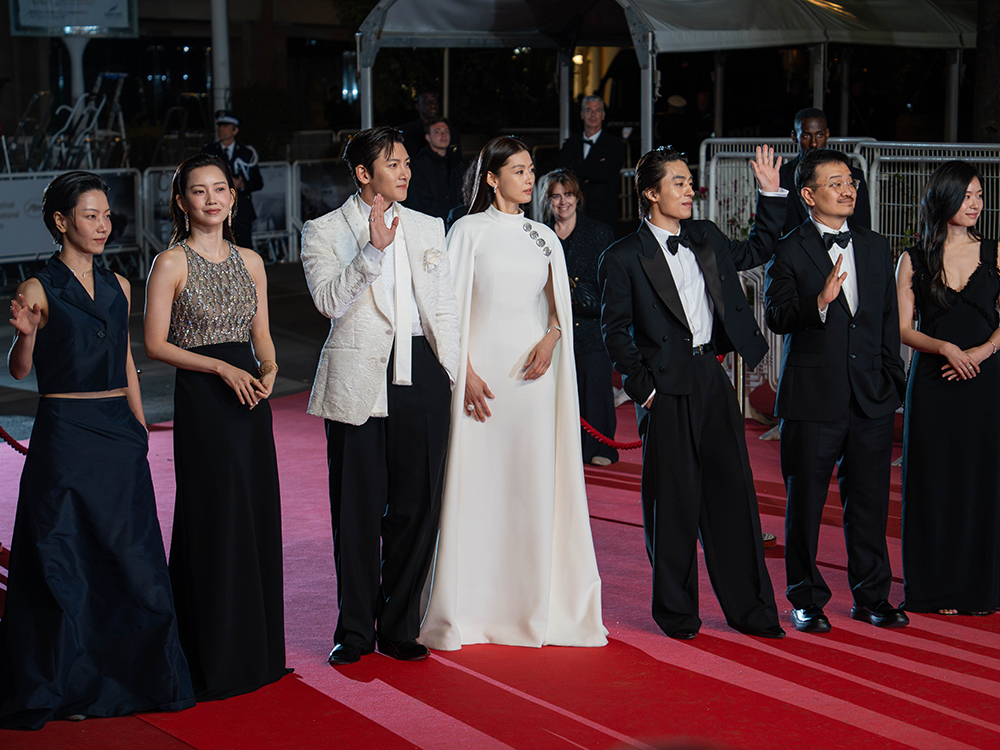
There was a very particular electricity surrounding the arrival of Colony at the 79th edition of the Cannes Film Festival, the kind of late-night anticipation that only a handful of genre films manage to create on the Croisette. On May 15, 2026, the red carpet in front of the Palais des Festivals transformed into a sea of flashing cameras and excited festivalgoers as director Yeon Sang-ho climbed the famous Cannes stairs accompanied by his cast including Jun Ji-hyun, Koo Kyo-hwan, Ji Chang-wook, Kim Shin-rok, and Shin Hyun-been, all gathered for the world premiere of one of the most anticipated Asian genre productions of the year. The atmosphere felt closer to a major blockbuster launch than a traditional arthouse Cannes presentation, with crowds lining the barricades hours in advance hoping to catch a glimpse of the South Korean stars whose global popularity has exploded over the last decade thanks to the international rise of Korean cinema and streaming platforms. Even before the screening began, conversations among journalists and festival attendees repeatedly circled back to one unavoidable point: after redefining modern zombie cinema with Train to Busan, could Yeon Sang-ho once again reinvent the infected genre?
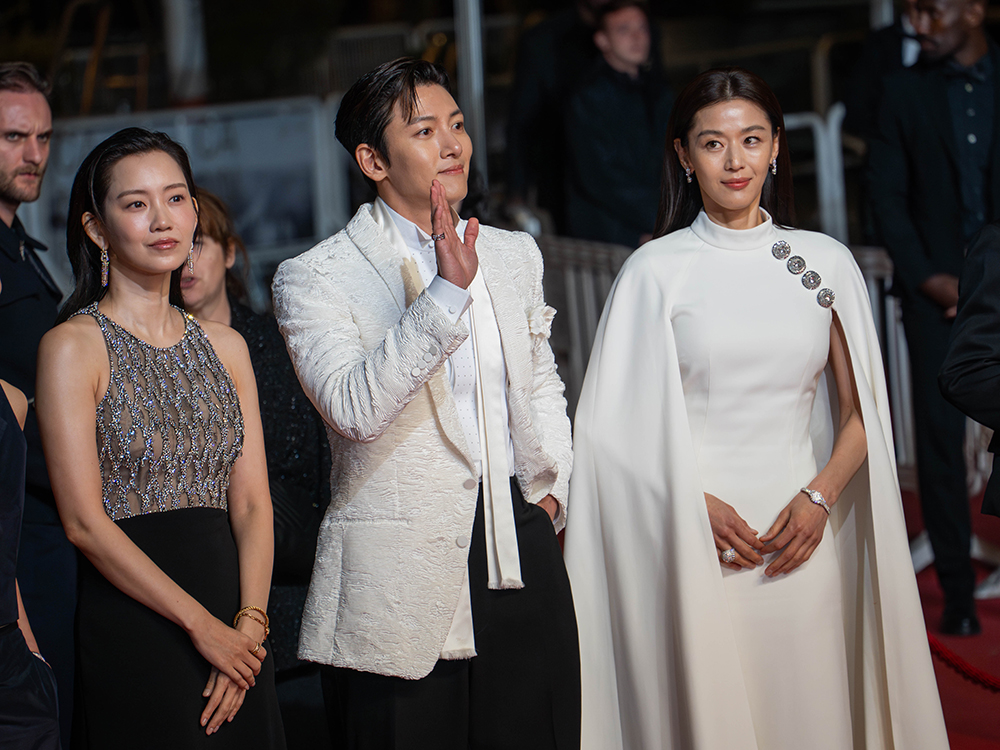
The answer, at least judging by the reactions echoing through the Palais after the midnight screening, appears to be an emphatic yes. Colony immediately established itself as one of the standout genre events of Cannes 2026, delivering a brutal, claustrophobic, and surprisingly cerebral survival thriller that expands the filmmaker’s obsession with societal collapse and human adaptation. Set almost entirely inside a quarantined skyscraper in downtown Seoul, the film follows biotechnology professor Se-jeong, played by Jun Ji-hyun, as a mysterious infection spreads during a biotech conference, rapidly mutating its victims into terrifying evolving creatures. Rather than relying solely on traditional zombie mechanics, Yeon Sang-ho and co-writer Choi Gyu-seok imagined infected beings capable of accelerating intelligence and developing collective behavioral patterns, creating an unsettling enemy that learns from human reactions instead of merely attacking blindly. This evolving structure gives the film an almost strategic quality at times, as survivors continuously adapt to creatures whose intelligence increases with every passing minute, adding a psychological dimension rarely seen in contemporary zombie productions.

One of the most fascinating aspects repeatedly discussed during the Cannes premiere was how Colony feels simultaneously like a spiritual continuation of Train to Busan and a complete reinvention of the genre language Yeon Sang-ho helped popularize internationally. During interviews around the festival, the director openly described the project as potentially “the most commercial film” of his career while still attempting to preserve the thematic complexity found in works like Hellbound. That duality is visible throughout the film. On one side, Colony delivers massive action sequences staged with remarkable precision inside collapsing corridors, darkened laboratories, and overcrowded quarantine zones. On the other, the film constantly questions how humanity reorganizes itself when survival requires abandoning traditional morality. Cannes audiences seemed particularly impressed by the film’s escalating sense of unpredictability, especially because the infected are never static threats. Their mutations alter not only their physicality but also their collective intelligence, forcing the human survivors to rethink their own roles almost like players trapped inside a constantly shifting game.
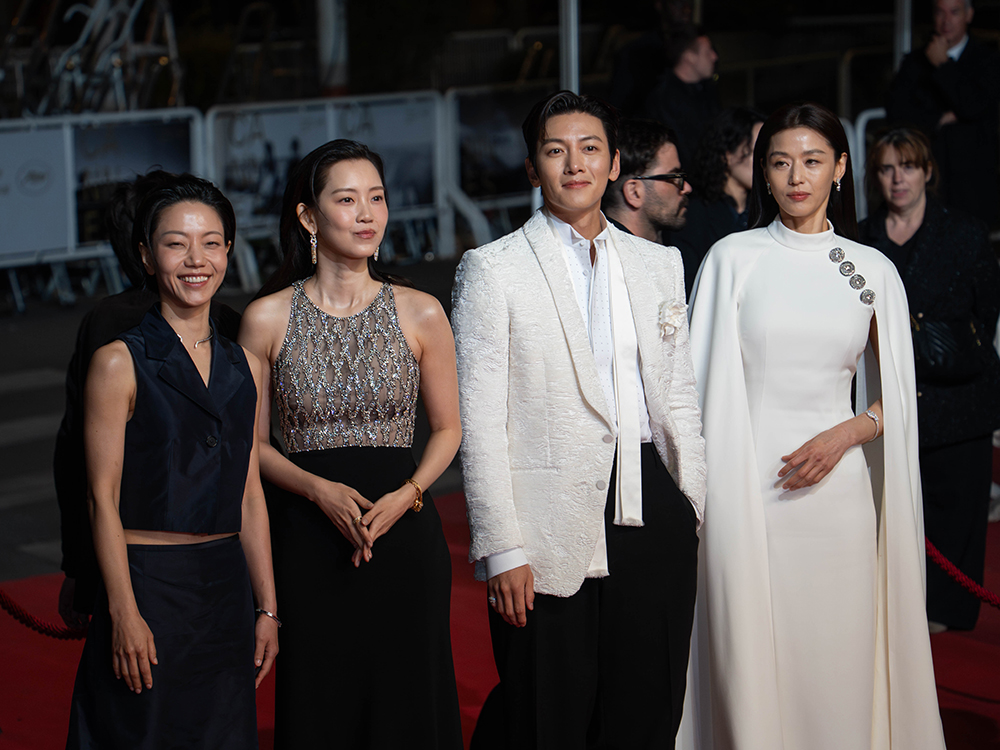
The red carpet itself reflected the scale of the production. Jun Ji-hyun, making a rare international festival appearance, immediately drew enormous attention from photographers and fans gathered near the Palais entrance. Dressed elegantly while maintaining the poised charisma that made her one of South Korea’s most recognizable stars, she became one of the most photographed personalities of the evening. Nearby, Ji Chang-wook spent several minutes greeting fans and signing autographs, while Koo Kyo-hwan shared relaxed moments with the press before the screening began. Observers familiar with Cannes history could not help but notice how significantly Korean cinema has evolved within the festival ecosystem over the last twenty years. What once felt like niche midnight programming has gradually transformed into major global cinematic events capable of generating blockbuster-level anticipation on the Croisette. In many ways, Colony perfectly embodies that transformation, balancing festival prestige with crowd-pleasing intensity in a way that few contemporary productions successfully achieve.
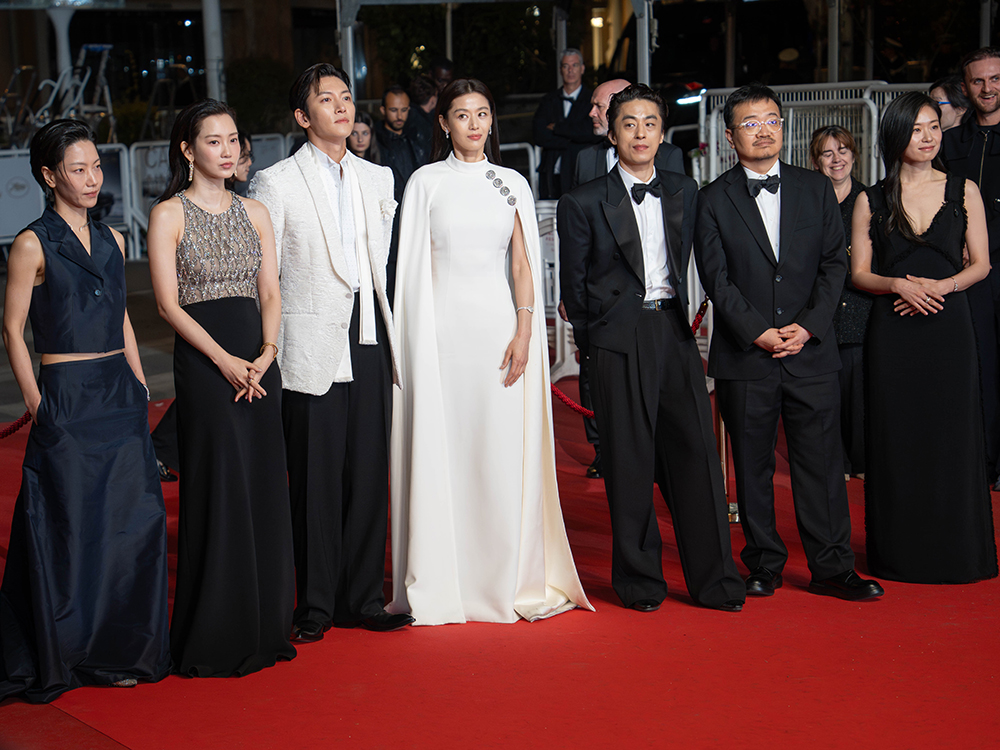
Behind the camera, the production itself was unusually ambitious for the genre. Produced by Wow Point and Smilegate with an estimated budget of approximately ₩17 billion, the film reportedly underwent extensive choreography planning to create entirely new movement patterns for the infected creatures. Choreographer Jeon Young, who previously collaborated with Yeon Sang-ho on Train to Busan, Peninsula, and Hellbound, worked alongside dancer-choreographers Song Seung-wook, Lim Hee-jong, and Jung Eui-young to design the disturbing physical language of the infected. Rather than emphasizing purely animalistic movement, the performers developed an evolving behavioral system where infected bodies begin almost primitive before gradually exhibiting synchronized intelligence and accelerated reactions. Several Cannes attendees reportedly compared certain sequences to a fusion between body horror and swarm psychology, particularly during the film’s final act where the infected appear to communicate and strategize in ways that profoundly unsettle both the characters and the audience.
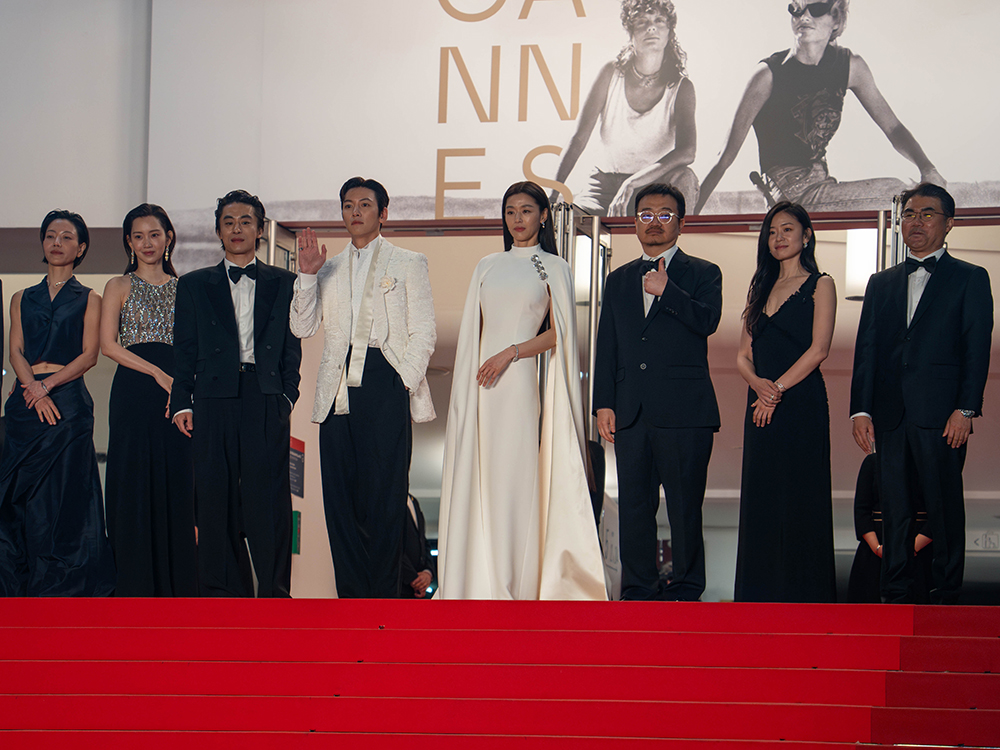
Visually, Colony also marks one of the most polished productions in Yeon Sang-ho’s live-action career. Cinematographer Bong-Sun Byun creates an oppressive atmosphere dominated by sterile lighting, metallic interiors, and increasingly chaotic environments as the quarantine collapses. The skyscraper setting becomes almost a character itself, functioning as a vertical labyrinth where every floor introduces new dangers and moral compromises. Editor Mee-Yeon Han maintains a relentless rhythm throughout the 122-minute runtime, while composer Suk-Won Kim amplifies the growing tension with a score oscillating between electronic dread and emotional devastation. Several critics leaving the Palais noted how effectively the film balances brutal action with deeply human moments, especially in scenes where survivors begin questioning whether adaptation itself may ultimately transform them into something as frightening as the infected surrounding them.
The Cannes Midnight Screenings section has historically become a launching pad for unforgettable genre experiences, and Colony feels poised to join that legacy. There was a genuine sense of exhilaration among festival crowds exiting the screening shortly after 2 AM, with many attendees openly discussing the film’s large-scale set pieces and disturbing creature evolution concepts while gathering around the Palais entrance and along the Croisette. Some longtime Cannes journalists even described the atmosphere as reminiscent of the explosive reception that once surrounded Train to Busan nearly a decade earlier, though Colony arguably operates on a much grander scale both visually and philosophically. The applause following the screening reportedly lasted several minutes, particularly for Yeon Sang-ho and Jun Ji-hyun, whose emotionally grounded performance anchors much of the film’s escalating chaos.
Distributed internationally by Showbox in the United States and ARP Sélection in France, Colony is already positioned as one of the major genre releases of 2026, with a South Korean theatrical release scheduled for May 21 before arriving in French cinemas on May 27. Beyond the excitement generated by its Cannes premiere, the film also reinforces the extraordinary global influence of South Korean genre filmmaking, particularly within horror and thriller cinema. What makes Colony especially compelling is how it refuses to simply replicate the formulas that made earlier zombie films successful. Instead, Yeon Sang-ho continues exploring evolution itself — not only biological evolution among the infected, but moral evolution among survivors forced to redefine what humanity means inside collapsing systems. On the Croisette, where prestige dramas often dominate conversation, Colony managed to accomplish something rare: it reminded Cannes audiences that large-scale genre cinema can still provoke thought, fear, adrenaline, and emotional reflection all at once.
You can discover our photos in our Flickr page
Synopsis :
In a skyscraper in downtown Seoul, a mysterious infection suddenly spreads. The building is sealed off, and everyone inside is quarantined. At first, the infected crawl around like animals. But little by little, they begin to evolve…
Colony
Directed by Yeon Sang-ho
Written by Yeon Sang-ho, Choi Gyu-seok
Produced by Yoomin Hailey Yang
Starring Jun Ji-hyun, Koo Kyo-hwan, Ji Chang-wook, Kim Shin-rok, Shin Hyun-been, Go Soo
Cinematography : Bong-Sun Byun
Edited by Mee-Yeon Han
Music by Suk-Won Kim
Production companies : Wow Point, Smilegate
Distributed by Showbox (United States), ARP Sélection (France)
Release dates : May 16, 2026 (Cannes), May 21, 2026 (South Korea), May 27, 2026 (France)
Running time : 122 minutes
Photos : @fannyrlphotography