

Cannes 2026 : Gentle Monster Brings Léa Seydoux, Catherine Deneuve and Marie Kreutzer to One of the Festival’s Most Haunting Red Carpets
Friday 15 May, 2:30 PM PT Cannes, Palais des Festivals et des Congrès de Cannes 2026-05-15
On May 15, 2026, the 79th edition of the Cannes Film Festival witnessed one of its most fascinating and emotionally charged premieres with the official competition screening of Gentle Monster, the latest feature from Austrian filmmaker Marie Kreutzer. From the very beginning of the evening, there was a noticeably different atmosphere surrounding the Palais des Festivals et des Congrès. Long before the cast arrived, photographers had already packed the red carpet entrance while festivalgoers crowded behind the barriers hoping to catch a glimpse of what many insiders were already describing as one of the most talked-about films of the competition. When Léa Seydoux, Catherine Deneuve, Jella Haase, Laurence Rupp, Marie Kreutzer, Alexander Glehr, Camille Dalmais, and Malo Blanchet finally appeared on the carpet, the reaction from the crowd immediately shifted into full Cannes frenzy. The arrival of Cara Delevingne among the evening’s guests added another wave of excitement, but it was the elegant entrance of Catherine Deneuve that truly froze the staircase in time, reminding everyone once again why her appearances at Cannes remain cinematic events in themselves.
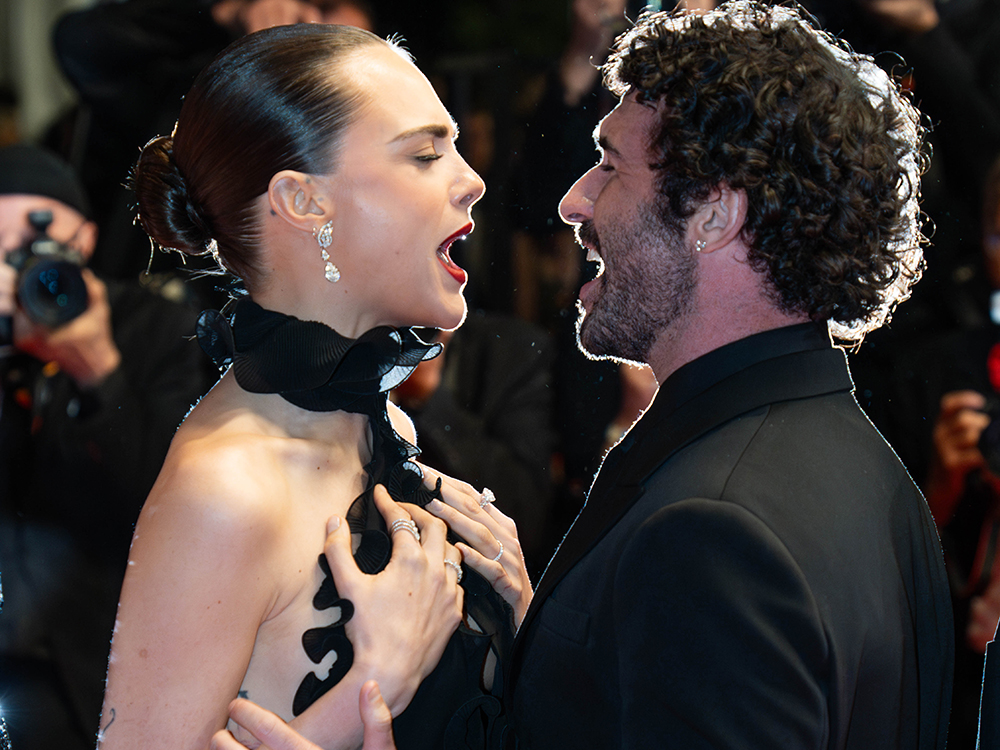
What made the evening especially fascinating was the contrast between the glamour of the red carpet and the deeply disturbing subject matter explored in Gentle Monster. Written and directed by Marie Kreutzer, the film follows Lucy, played by Léa Seydoux, a successful pianist whose seemingly stable family life collapses after police officers arrive at her countryside home near Munich to arrest her husband Philip and confiscate his computers as part of a criminal investigation involving child abuse material circulating through dark web networks. As Lucy attempts to understand the truth about the man she loves, the film gradually transforms into a chilling examination of denial, trauma, emotional manipulation and the hidden violence that can exist inside privileged domestic spaces. Many journalists attending the premiere immediately noted how impossible it was to separate the film from the real-life controversy that surrounded Marie Kreutzer after the release of Corsage, when actor Florian Teichtmeister became involved in a criminal case related to child pornography possession. Back in 2023, Marie Kreutzer publicly expressed her anger and sadness over the situation, explaining how a feminist film created by hundreds of collaborators across Europe had been overshadowed by the horrific actions of one individual. Several critics leaving the Cannes screening described Gentle Monster as a film clearly shaped by those experiences, even if indirectly, turning personal outrage into unsettling cinematic fiction.

Inside the Grand Théâtre Lumière, the tension before the screening was palpable. Festival insiders, distributors, critics and international journalists spent much of the pre-screening conversation debating how far Marie Kreutzer would push such difficult material and whether the film could avoid sensationalism while addressing themes this sensitive. There was also growing curiosity surrounding the project’s long development history, as the film originally existed under the working title Johnny Maccaroni before evolving into Gentle Monster. The production itself represents a major European collaboration between Austria, Germany, France and Sweden through Film AG, Komplizen Film, Kazak Productions and Kjellson & Wik, with support from organizations including Eurimages, the Austrian Film Institute and the Medienboard Berlin-Brandenburg. Industry professionals at Cannes were also quick to mention that the project had already generated attention during the 2025 Marché du Film, where it won the ArteKino International Prize as part of the Investors Circle initiative. That level of early recognition only intensified expectations surrounding the world premiere. Visually, early reactions highlighted the work of cinematographer Judith Kaufmann, whose restrained but oppressive imagery reportedly gives the film a cold emotional texture, while the score composed by Camille Dalmais was repeatedly described as subtle, melancholic and quietly devastating.
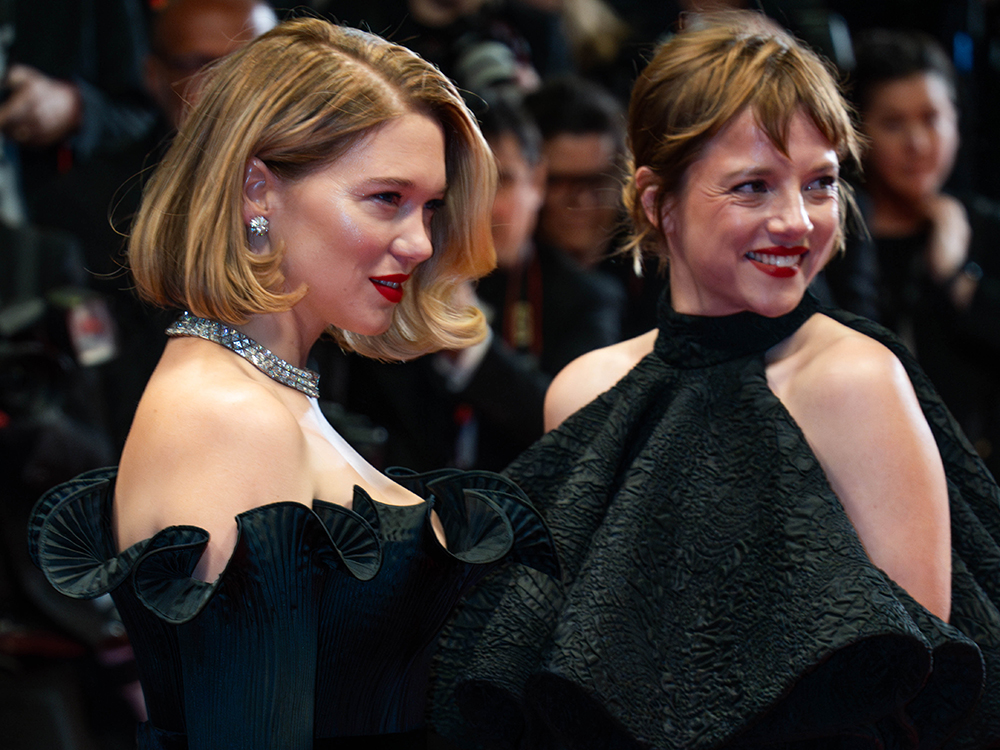
The red carpet itself became one of the defining visual moments of the festival’s first week. Léa Seydoux, who remains one of the most closely followed French actresses internationally, spent considerable time greeting photographers and fans despite the emotional heaviness of the film she was presenting. Observers on the Croisette noted how calm and focused she appeared throughout the evening, especially during group photos alongside Marie Kreutzer and Catherine Deneuve. Meanwhile, Jella Haase, increasingly recognized as one of Germany’s rising screen talents, attracted significant attention from European media outlets eager to discuss her growing international career. What also stood out was the relative simplicity of the event compared to some of Cannes’ larger studio premieres. There were no oversized marketing gimmicks or extravagant staged spectacles. Instead, the atmosphere remained elegant, restrained and deeply centered on the film itself. That sobriety seemed perfectly aligned with the tone of Gentle Monster, which many attendees later described as one of the bleakest and most emotionally exhausting competition entries of the year.
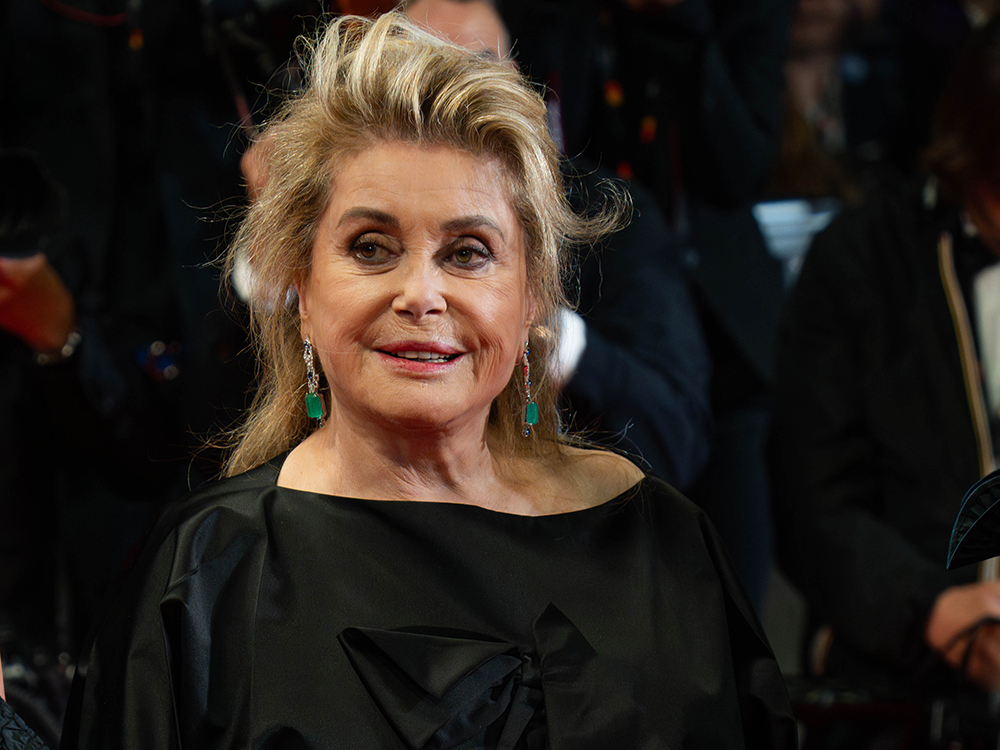
Following the screening, reactions inside the Palais suggested that Gentle Monster may become one of the defining conversation pieces of Cannes 2026. Several early reviews praised Léa Seydoux’s performance as one of the strongest of her career, with immediate speculation already emerging about a potential Best Actress award at the festival. Critics particularly highlighted the way she portrays a woman trapped between maternal protection, emotional denial and the horrifying realization that the life she believed in may have been built on lies. Catherine Deneuve, although reportedly appearing in a more supporting role, was also widely praised for bringing immense emotional gravity to the story whenever she appears onscreen. Some international critics compared the film’s suffocating atmosphere to the psychological dramas of 1970s European cinema, while others pointed toward its very modern examination of online criminality and hidden misogyny within contemporary society. Not everyone seemed equally convinced by the film’s uncompromising darkness, but even mixed reactions acknowledged its emotional power and the fearless nature of Marie Kreutzer’s direction.
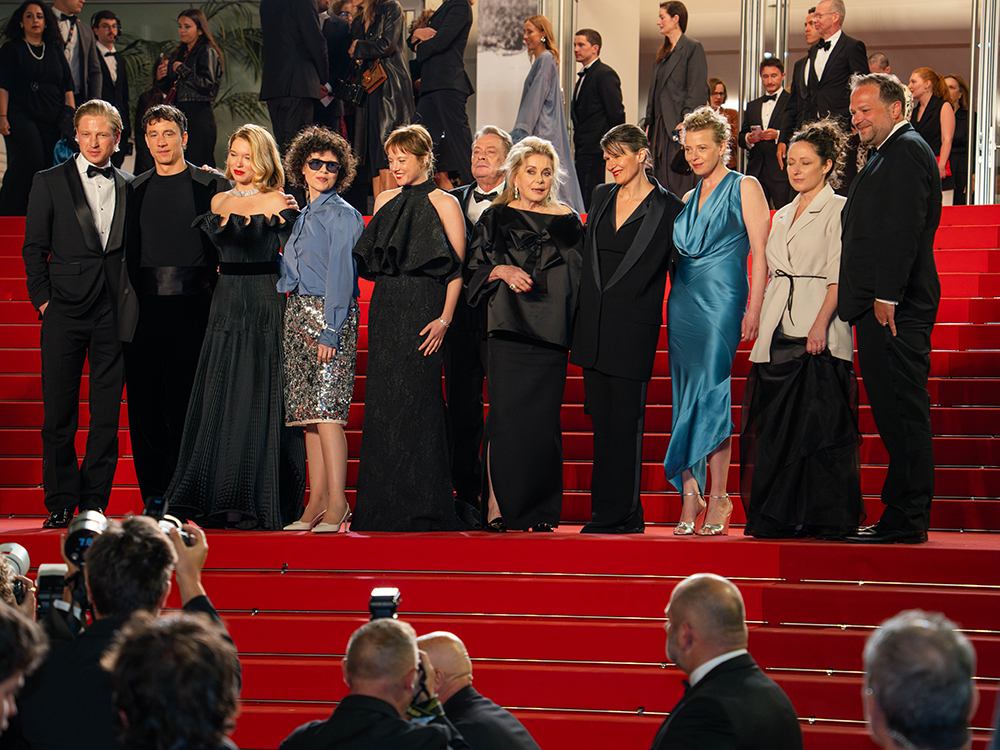
As Cannes 2026 continues, Gentle Monster already feels destined to remain one of the festival’s most debated and unforgettable titles. Distributed internationally by mk2 Films, with theatrical releases planned through Alamode Film in Germany and Ad Vitam in France, the film appears poised for a major awards-season journey following its Cannes debut. Beyond the glamour of the red carpet and the prestige of the competition lineup, what lingered most after the premiere was the unsettling feeling that Marie Kreutzer had transformed real cultural anxieties into something deeply intimate and painfully human. On a Croisette often dominated by spectacle and celebrity, Gentle Monster delivered something much rarer: a premiere that genuinely left audiences shaken long after the lights came back on.
You can discover our photos in our Flickr page
Synopsis :
Lucy and Philip are happy; they’ve just moved with their son into a country house near Munich. One morning, their lives are turned upside down when the police show up at their home to arrest Philip and seize his computers. Distraught, Lucy sets out to uncover the truth about her husband. Who is he really? Should she keep him away from her son?
Gentle Monster
Written and directed by Marie Kreutzer
Produced by Alexander Glehr, Johanna Scherz
Starring Léa Seydoux, Jella Haase, Laurence Rupp, Catherine Deneuve
Cinematography : Judith Kaufmann
Edited by Ulrike Kofler
Music by Camille
Production companies : Film AG, Komplizen Film, Kazak Productions
Distributed by Alamode Film (Germany), Ad Vitam (France)
Release date : 15 May 2026 (Cannes)
Running time : 114 minutes
Photos : @fannyrlphotography