

Cannes 2026 : A Woman's Life Turns Everyday Life into Powerful Cinema on the Croisette
Wednesday 13 May, 2:30 PM PT Cannes, Palais des Festivals et des Congrès de Cannes 2026-05-13 → 2026-05-15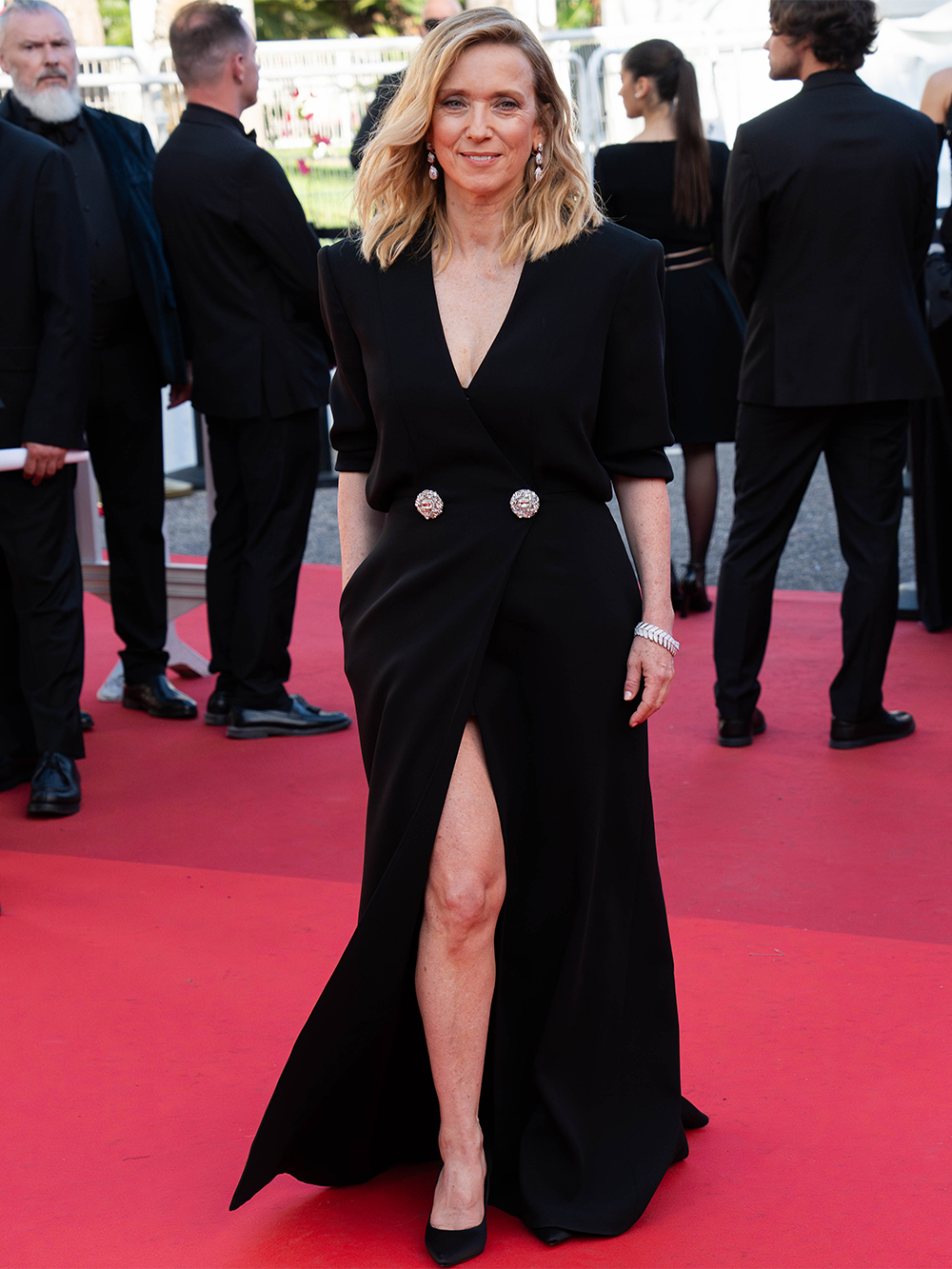
On the May 13, 2026, the red carpet of the Cannes Film Festival 2026 took on a softer, more intimate energy as the cast and creative team behind A Woman’s Life (La Vie d’une Femme) arrived at the Palais des Festivals for one of the first major competition premieres of the festival. After the thunderous spectacle often associated with blockbuster gala screenings on the Croisette, the arrival of Charline Bourgeois-Tacquet and her ensemble felt refreshingly grounded, almost deceptively modest, yet there was unmistakably something important in the air surrounding this French-Belgian comedy-drama competing for the Palme d’Or and the Queer Palm. Festival attendees gathered early along the barricades, many still remembering the charm and emotional intelligence of Charline Bourgeois-Tacquet’s debut feature Anaïs in Love from 2021, curious to discover how the filmmaker would evolve with a larger canvas, a more mature protagonist, and a story described by insiders as both deeply humane and quietly radical in its depiction of modern womanhood.

The atmosphere on the Croisette became increasingly electric as the cast emerged in front of the famous red carpet staircase. Léa Drucker, who plays Gabrielle, the overworked surgeon at the center of the film, immediately drew attention from photographers with a restrained yet striking elegance that perfectly mirrored the understated emotional tone of the project itself. Walking alongside her were Mélanie Thierry, Charles Berling, Marie-Christine Barrault, and celebrated Italian writer Erri De Luca, whose presence added an additional layer of literary prestige to the evening. Observers noted the remarkable chemistry between the cast members even before entering the theater, with several moments of spontaneous laughter and affectionate exchanges taking place in front of the cameras, offering a glimpse into what many festival insiders described as one of the warmest ensembles in this year’s competition. Unlike the heavily choreographed premieres often seen during Cannes, the team behind A Woman’s Life (La Vie d’une Femme) appeared genuinely moved by the occasion, especially Charline Bourgeois-Tacquet, who paused several times to greet audience members and festival workers before ascending the steps of the Palais.

The film itself represents a significant evolution for Charline Bourgeois-Tacquet, who co-wrote the screenplay with Fanny Burdino. Whereas Anaïs in Love explored youthful romantic instability with kinetic energy and playful chaos, A Woman’s Life (La Vie d’une Femme) shifts toward something more introspective and mature, focusing on Gabrielle, a 55-year-old childless surgeon whose existence has become consumed by professional responsibility, emotional duty, and a relentless routine that leaves little room for personal fulfillment. According to the official synopsis, Gabrielle’s carefully structured world begins to fracture when a novelist enters her hospital department to conduct research for a book, forcing her to confront desires and possibilities she had long buried beneath obligation. The premise immediately resonated with many Cannes critics because of its refusal to sensationalize its central character. Instead of building its narrative around melodramatic crisis, the film reportedly focuses on the invisible emotional exhaustion experienced by countless women balancing careers, caregiving, aging parents, and fragile relationships.

Behind the scenes, the production itself reflects a carefully assembled collaboration between some of the most respected names in contemporary French independent cinema. Produced by David Thion for Les Films Pelléas and co-produced by Jacques-Henri Bronckart and Tatjana Kozar for Versus Production, the project also received support from Arte France Cinéma and Auvergne-Rhône-Alpes Cinéma. Industry observers at Cannes repeatedly highlighted the pedigree of the creative team surrounding the film, especially cinematographer Noé Bach, whose visual approach reportedly combines clinical realism inside the hospital sequences with warmer, almost dreamlike textures in Gabrielle’s increasingly destabilized personal life. Editing duties were handled by Clément Pinteaux, while international sales are overseen by Be For Films, which first introduced the project to buyers during the European Film Market earlier in 2026.

One of the most fascinating aspects discussed during conversations around the premiere concerns the film’s shooting locations. Principal photography took place between March and May 2025 across Lyon, Villeurbanne, Grézieu-la-Varenne, Chaponost, and Meyzieu, locations chosen specifically for their ability to evoke a recognizable, lived-in France far removed from postcard imagery. Several French journalists attending the screening noted that this geographical realism gives the film a particularly authentic social texture, grounding Gabrielle’s emotional journey in spaces that feel tangible and deeply familiar rather than stylized for cinematic glamour. In many ways, this choice appears entirely consistent with Charline Bourgeois-Tacquet’s filmmaking sensibilities, which have always privileged emotional observation over visual artifice.

As the screening began inside the Grand Théâtre Lumière, anticipation among critics was palpable because A Woman’s Life (La Vie d’une Femme) arrives at a moment when Cannes audiences have become increasingly receptive to intimate character studies centered on women navigating questions of identity, labor, aging, and emotional autonomy. Several early reactions coming out of the theater praised Léa Drucker’s performance for its restraint and emotional precision, with some critics already describing it as one of the strongest female performances of the competition. Others pointed toward the screenplay’s ability to blend comedy and melancholy without falling into sentimentality, a tonal balancing act that has become something of a signature for Charline Bourgeois-Tacquet. There was also significant praise for the supporting cast, particularly Marie-Christine Barrault, whose scenes reportedly provide some of the film’s most emotionally devastating moments.

The red carpet itself also generated considerable discussion among festival attendees because of the contrast between the apparent simplicity of the film and the emotional ambition suggested by its themes. Unlike some Cannes premieres built around spectacle or controversy, A Woman’s Life (La Vie d’une Femme) seemed to capture attention through sincerity and emotional resonance. Observers noted how audience members leaving the screening remained unusually quiet while exiting the Palais, a reaction often interpreted at Cannes as a sign that a film has touched something deeply personal rather than merely impressed intellectually. Several attendees were overheard discussing how rare it remains to see middle-aged female protagonists portrayed with this level of complexity and humanity in contemporary cinema, particularly within stories that resist reducing them to either tragedy or caricature.

The film’s inclusion in the official competition further solidifies Charline Bourgeois-Tacquet’s emergence as one of the most compelling voices of contemporary French cinema. With a running time of 98 minutes and a theatrical release already scheduled in France for September 9, 2026 through Pyramide Distribution, A Woman’s Life (La Vie d’une Femme) now enters the intense Palme d’Or race carrying both critical curiosity and growing emotional momentum. Whether the film ultimately leaves Cannes with a major prize remains uncertain, but its premiere already succeeded in establishing it as one of the festival’s most talked-about human dramas, a film whose quiet emotional truths appear to have resonated far beyond the glamour of the red carpet itself. On a Croisette often dominated by excess, noise, and calculated provocation, Charline Bourgeois-Tacquet arrived with something far more delicate and perhaps far more enduring: a compassionate portrait of ordinary life that reminds audiences how revolutionary empathy can still feel in modern cinema.
You can discover our photos in our Flickr page
Synopsis :
Gabrielle, 55, devotes herself body and soul to her work. A surgeon and department head at a public hospital, she runs around and juggles countless tasks, overwhelmed by her responsibilities. She has little time left for her personal life—a husband who loves her and a mother she must care for. When a novelist comes to spend a few weeks in her department for a book, her balance is thrown off. In the daily life Gabrielle has built for herself, is there room for the unexpected?
A Woman's Life (La Vie d'une Femme)
Directed by Charline Bourgeois-Tacquet
Written by Charline Bourgeois-Tacquet, Fanny Burdino
Produced by David Thion
Starring Léa Drucker, Mélanie Thierry, Charles Berling, Laurent Capelluto, Marie-Christine Barrault
Cinematography : Noé Bach
Edited by Clément Pinteaux
Production company : Les Films Pelléas
Distributed by Pyramide Distribution (France)
Release dates : 13 May 2026 (Cannes), 9 September 2026 (France)
Running time : 98 minutes
Photos : @fannyrlphotography