

Cannes 2026 : Vincent Garenq, Antoine Reinartz and Mickaëlle Paty Deliver a Powerful Tribute with L’Abandon
Wednesday 13 May, 2:30 PM PT Cannes, Palais des Festivals et des Congrès 2026-05-13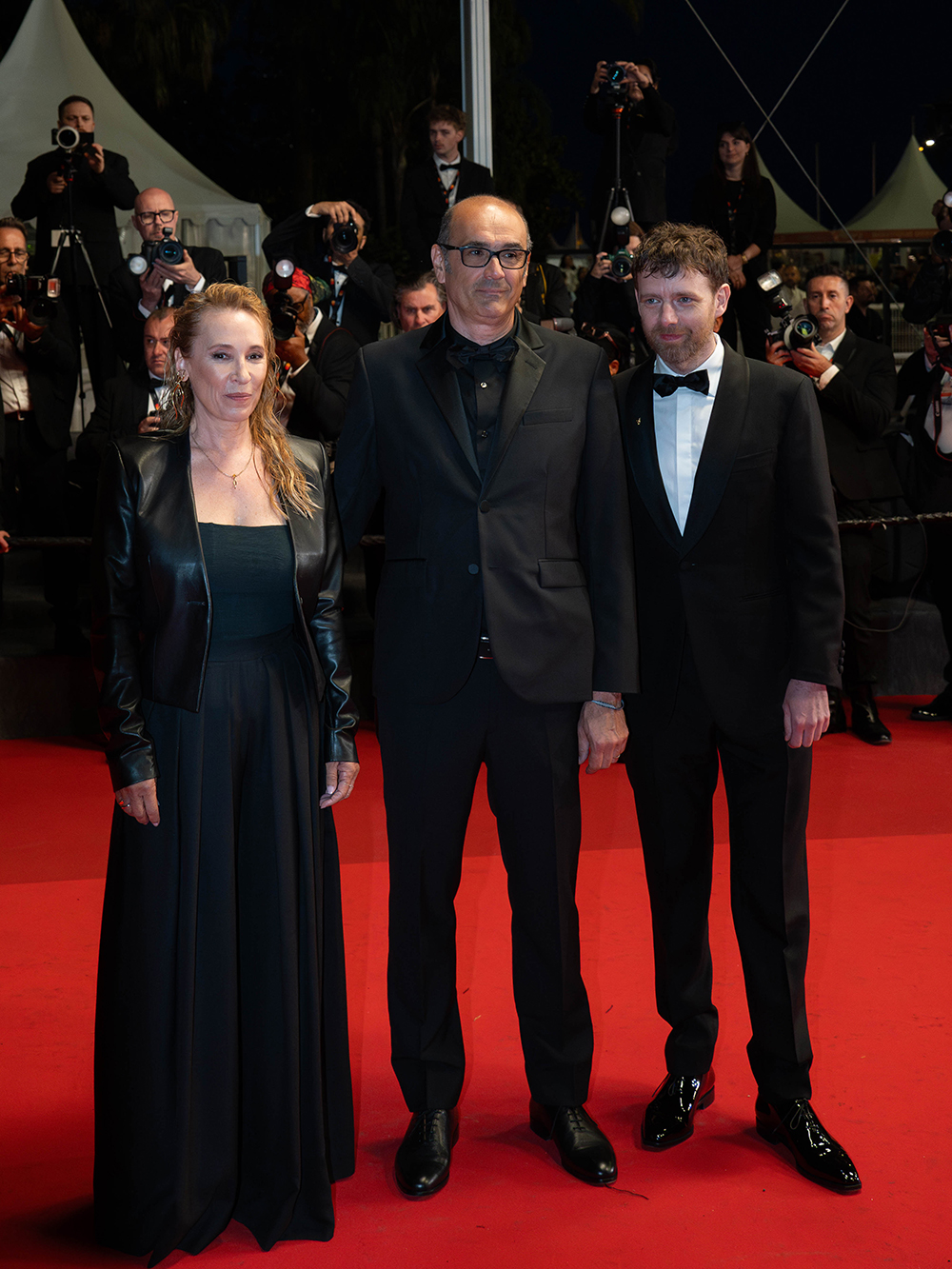
There are screenings at the Palais des Festivals et des Congrès that generate excitement, others that create controversy, and then there are those rare premieres that seem to suspend the constant frenzy of the Cannes Film Festival for a few minutes. On May 13, 2026, L’Abandon undeniably belonged to that final category. Presented Out of Competition at the 79th edition of the Cannes Film Festival, the latest feature film from Vincent Garenq transformed the Croisette into something far more solemn than the usual glamorous parade of couture gowns, luxury jewelry, and carefully orchestrated celebrity appearances. From the very first moments leading up to the screening, there was a visible shift in atmosphere around the Palais. Festivalgoers, journalists, security personnel, and even photographers lining the iconic staircase appeared acutely aware that this was not simply another high-profile French premiere. The film revisits the final eleven days in the life of teacher Samuel Paty, murdered on October 16, 2020, outside his school in Conflans-Sainte-Honorine after showing caricatures of Muhammad during a class discussion about freedom of expression. The emotional and political weight surrounding the project was already immense long before the cast stepped onto the red carpet, but seeing the team assembled together in Cannes gave the event an even more profound resonance.
The arrival of Mickaëlle Paty, sister of Samuel Paty, instantly became the defining image of the evening. Unlike many Cannes premieres where applause and screaming fans dominate the atmosphere, there was a respectful silence surrounding her appearance alongside the film’s cast and creative team. Observers near the barricades noted how deeply moved many attendees seemed as she slowly ascended the famous staircase with Vincent Garenq, Antoine Reinartz, Emmanuelle Bercot, and several members of the production team. The emotional core of the event clearly centered on her presence. According to statements she previously gave in the film’s press notes and to AFP on the Croisette, she had been involved throughout the development of the screenplay and consulted on every version of the script. That collaboration was not merely symbolic. The production repeatedly emphasized that authenticity and factual precision were essential priorities for the project. Mickaëlle Paty explained that she wanted the film to remain anchored in reality with minimal fictionalization, something she believed Vincent Garenq was uniquely capable of achieving because of his previous work on films such as Présumé Coupable and L’Enquête. During the red carpet appearance, photographers captured several intimate moments between her and Antoine Reinartz, whose portrayal of her brother has already generated strong reactions among early viewers and critics attending Cannes.
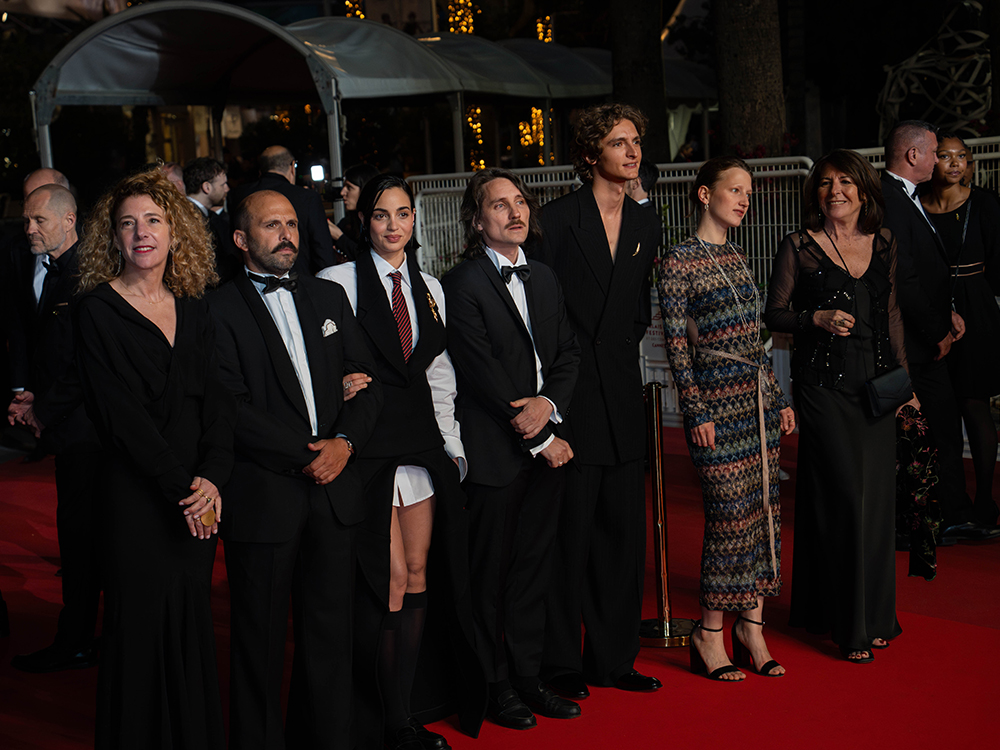
The performance of Antoine Reinartz quickly became one of the most discussed aspects surrounding L’Abandon during its Cannes unveiling. The César-winning actor, previously acclaimed for his work in BPM (Beats per Minute) and Anatomy of a Fall, reportedly underwent an intense preparation process to embody Samuel Paty with restraint and dignity rather than attempting overt emotional mimicry. According to comments from Mickaëlle Paty, one of the most surprising aspects for her was witnessing how deeply the actor managed to inhabit the role. She stated emotionally before the screening that Antoine Reinartz had “resurrected” her brother for 1 hour and 40 minutes, the runtime of the film, adding that seeing him on screen had profoundly moved her. That statement circulated rapidly among journalists covering the festival and contributed to the particularly charged emotional context surrounding the premiere. During the montée des marches, witnesses described Antoine Reinartz as especially attentive toward Mickaëlle Paty, often remaining close to her side as flashes exploded across the red carpet. It was one of those Cannes moments where the spectacle of cinema briefly gave way to something far more human and intimate.
The project itself had remained shrouded in secrecy for months prior to its official announcement. Distributor UGC only unveiled the trailer and poster on March 2, 2026, just hours after the verdict in the appeal trial concerning several individuals implicated in the murder of Samuel Paty. According to the distributor’s official communication, the decision to keep the film hidden during production was made deliberately to avoid interfering with the judicial process and to allow the legal proceedings to conclude before the story reached the public sphere again. That unusual production strategy only intensified curiosity once the film was officially selected by the Cannes Film Festival on April 9, 2026. Filming had taken place between July 2 and August 4, 2025, primarily in the Yvelines region, including Noisy-le-Roi, under highly discreet conditions. Even within industry circles, relatively little had leaked about the project during production, a rarity for a French film tied to such a nationally sensitive subject.
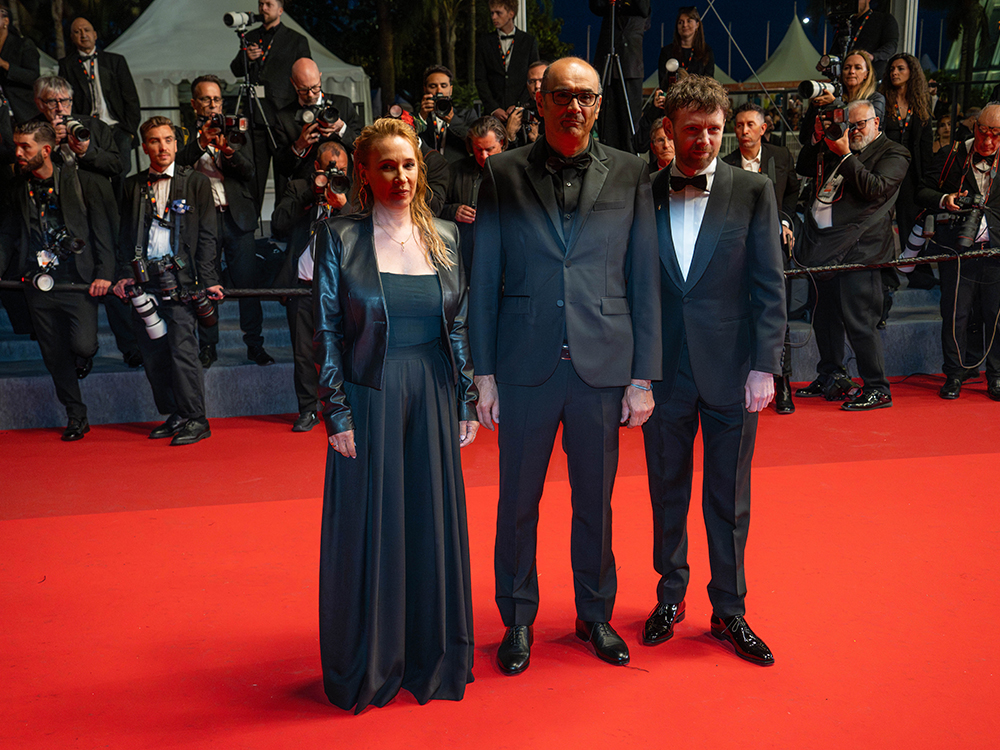
Beyond the emotional dimension, L’Abandon also reflects Vincent Garenq’s long-standing fascination with stories rooted in judicial, political, and media realities. Throughout his career, the director has consistently gravitated toward cases where institutions fail individuals, whether in Présumé Coupable, inspired by the Outreau affair, or the television miniseries Le Mensonge. In Cannes, several critics noted that L’Abandon appears to continue that thematic exploration by examining not only the tragedy itself but also the chain of institutional, social, and communicational failures that preceded the assassination. The screenplay, co-written by Vincent Garenq, Alexis Kebbas, and Mickaëlle Paty, draws partially from journalist Stéphane Simon’s investigative book Les Derniers Jours de Samuel Paty. According to the official synopsis, the film focuses specifically on the final eleven days leading to the murder, reconstructing the sequence of events through investigative and judicial material rather than sensationalism.
The premiere also attracted several political figures and public personalities, further underlining the national importance of the film. Among those attending the screening was French minister Aurore Bergé, delegated minister for Equality between Women and Men and the Fight Against Discrimination, whose presence reflected the broader political implications still surrounding the case years later. Her attendance contrasted with the absence of Gaëlle Paty, another sister of Samuel Paty, who reportedly was not involved in the project. French media have previously documented tensions between the two sisters following the assassination, noting their differing perspectives on how the tragedy should be represented publicly. Cannes itself did not become the place for those divisions to surface openly, but the absence remained noticeable given the deeply personal nature of the premiere.
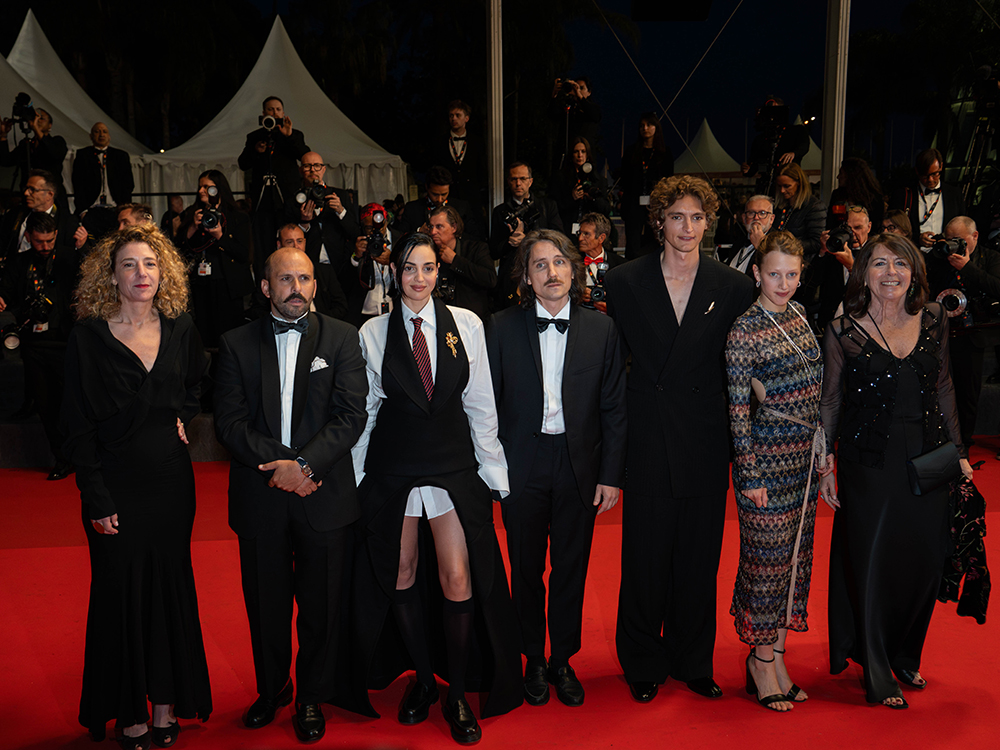
Inside the theater, attendees reportedly experienced one of the most subdued and emotionally heavy screenings of this year’s festival. Unlike the explosive standing ovations often engineered into Cannes mythology, reactions to L’Abandon were described by many journalists as quieter, more reflective, and visibly emotional. Several audience members emerged from the screening shaken rather than euphoric. Industry conversations afterward repeatedly centered on the challenge of adapting such recent national trauma to cinema without falling into exploitation. Early reactions suggest that Vincent Garenq deliberately avoided overt sensationalism, instead building the film around procedural detail, institutional tension, and the gradual escalation of events. The musical score composed by Nicolas Errèra, reuniting with the director after multiple previous collaborations, was also singled out for its restrained and haunting approach.
Technically, the film assembles an experienced creative team around Vincent Garenq. Cinematographer Renaud Chassaing reportedly favors cold, observational framing throughout the feature, while editor Aurique Delannoy structures the narrative with increasing tension as the timeline narrows toward the inevitable tragedy. Alongside Antoine Reinartz and Emmanuelle Bercot, the cast also includes Nedjim Bouizzoul, Emma Boumali, Azize Kabouche, Marie-Sohna Condé, Mounira Barbouch, Barbara Bolotner, Éric Génovèse, Jean-Michel Lahmi, and François Pérache. The production itself is backed by Les Films du Kiosque, Outside Films, France 3, UGC, and UMedia.
What made the Cannes presentation of L’Abandon particularly striking was the collision between the ritual glamour of the festival and the devastating gravity of the subject matter. Just minutes before the screening, the Croisette still carried its usual atmosphere of luxury branding, photographers shouting instructions, and tourists desperately trying to glimpse celebrities through the barriers. Yet once Mickaëlle Paty appeared on the red carpet, the emotional temperature visibly shifted. It served as a reminder that cinema at Cannes can still become a vehicle for collective reflection rather than pure spectacle. In a festival often dominated by celebrity narratives and awards speculation, L’Abandon created one of those rare moments where the conversation briefly transcended cinema itself and returned to larger questions about freedom of expression, memory, institutional responsibility, and national trauma.
You can discover our photos in our Flickr page
Synopsis :
Everyone knows the name Samuel Paty, but few people really know his story. On October 16, 2020, Samuel Paty, a history and geography teacher, was murdered as he left his school. Drawing on the investigations and court proceedings, this film looks back at the final eleven days and the chain of events that led to his tragic death.
L'Abandon
Directed by Vincent Garenq
Written by Vincent Garenq, Alexis Kebbas, Mickaëlle Paty
Based on the book The Last Days of Samuel Paty by Stéphane Simon
Produced by Marion de Blaÿ, Stephane Simon , Francois Kraus, Denis Pineau-Valencienne
Starring Antoine Reinartz, Emmanuelle Bercot, Nedjim Bouizzoul, Emma Boumali, Azize Kabouche, Marie-Sohna Condé, Mounira Barbouch, Barbara Bolotner, Éric Génovèse, Jean-Michel Lahmi, François Pérache
Cinematography : Renaud Chassaing
Edited by Aurique Delannoy
Music by Nicolas Errèra
Production companies : Les Films du kiosque, Outside Films, France 3, UGC, UMedia
Distributed by UGC (France)
Release dates : May 13, 2026 (Cannes)
Running time : 100 minutes
Photos : @fannyrlphotography