
 English
Convention - CinemaCon 2026: Spider-Man Beyond The Spider-Verse : Sony Pictures reignites anticipation with an emotional and ambitious finale tease
By Mulder, Las Vegas, Caesars Palace, Dolby Colosseum, 13 april 2026
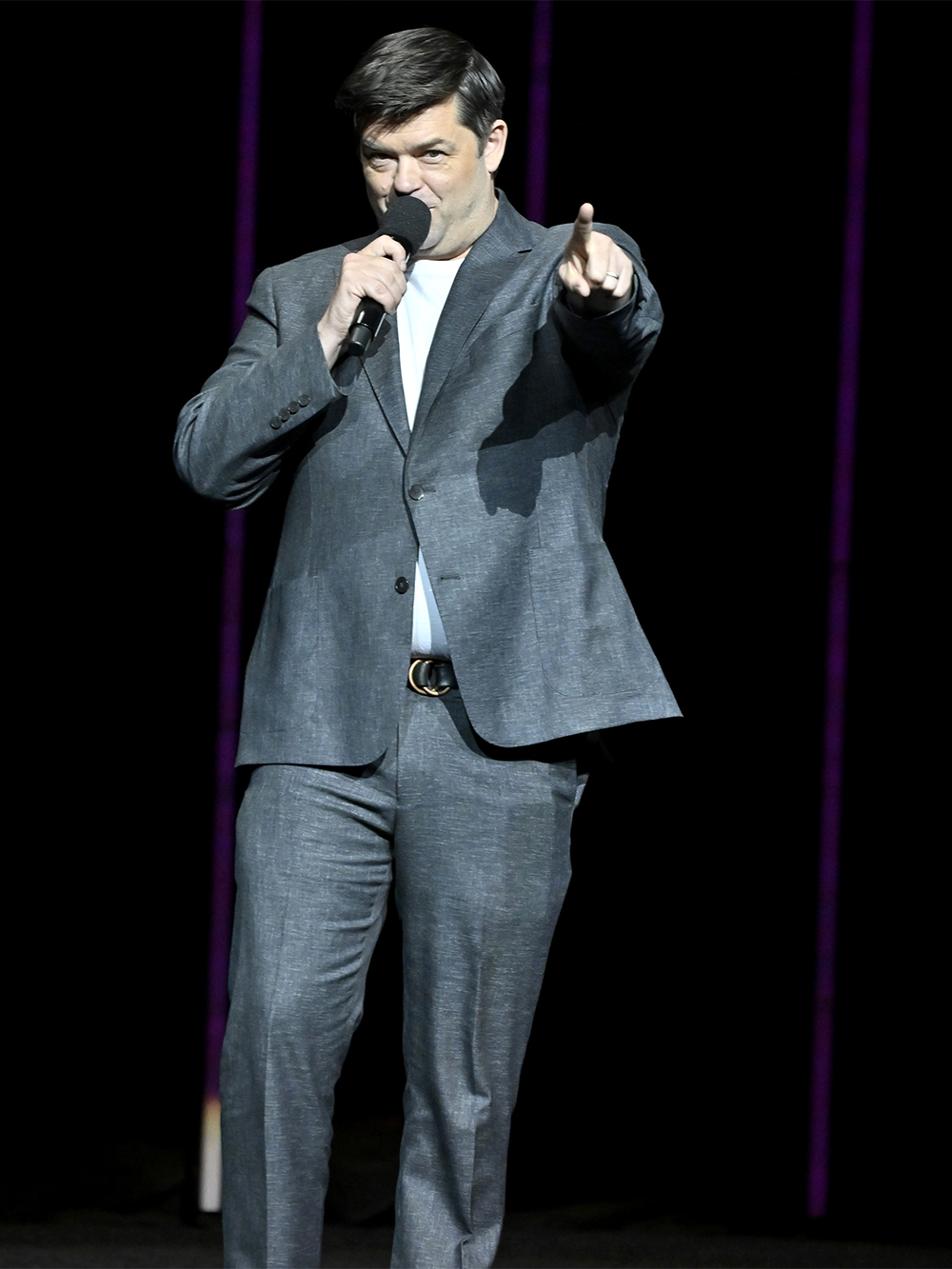
Photo courtesy of David Becker Getty Images for CinemaCon. All Rights Reserved.
The opening night of CinemaCon 2026 at the Dolby Colosseum inside Caesars Palace on April 13, 2026, immediately established a tone of scale and intent that few studios currently manage to sustain across an entire presentation, as Sony Pictures Entertainment delivered a meticulously structured showcase aimed not just at promoting individual films but at reassuring exhibitors about the long-term viability of theatrical diversity, weaving together genres, audiences and release strategies into a coherent vision that ultimately found its emotional and symbolic peak in the long-awaited return of Spider-Man: Beyond the Spider-Verse, a project that has quietly evolved into one of the most closely watched productions in contemporary animation, not only because of its narrative stakes but because of what it represents for the future of ambitious, artist-driven blockbuster filmmaking.
What became increasingly clear as the evening unfolded was that Sony was not simply presenting films but constructing a narrative about resilience and adaptability in an industry still recalibrating after years of disruption, moving fluidly from family entertainment to horror, anime, prestige drama and gaming adaptations before deliberately positioning animation as its emotional anchor, and when the Spider-Verse creative team—Phil Lord, Christopher Miller, Joaquim Dos Santos and Bob Persichetti—took the stage, the reaction inside the Colosseum reportedly shifted from polite industry interest to genuine enthusiasm, a reminder that this franchise has transcended its superhero label to become a creative benchmark that exhibitors and audiences alike now associate with innovation, emotional depth and a rare consistency of quality across installments.
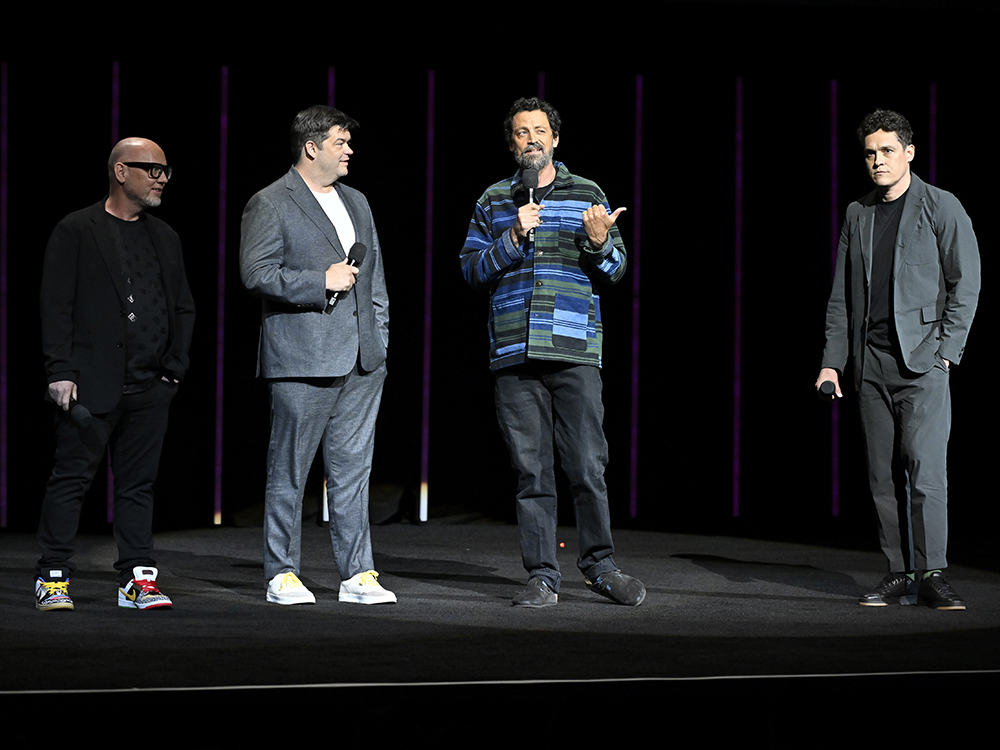
Photo courtesy of David Becker Getty Images for CinemaCon. All Rights Reserved.
The footage unveiled during the presentation, described by attendees as an explosive yet carefully curated sizzle reel rather than a conventional trailer, functioned as both a creative statement and a strategic reassurance following a production journey marked by delays, rewrites and industry-wide disruptions, with Sony openly leaning into the idea that the extended timeline was not a liability but a necessity, emphasizing that Spider-Man: Beyond the Spider-Verse is being crafted as the definitive conclusion to Miles Morales’ story, a positioning reinforced by earlier declarations from Phil Lord and Christopher Miller that the film represents the most emotional and narratively ambitious chapter of the trilogy, designed to deliver a payoff that justifies the patience of a fanbase that has remained remarkably engaged despite the long wait.
Narratively, the film resumes directly after the cliffhanger ending of Spider-Man: Across the Spider-Verse, placing Miles Morales in the precarious and psychologically charged environment of Earth-42, where he must navigate a reality in which he is both an outsider and a target, exploring themes of identity, responsibility and fractured belonging while being cut off—at least initially—from the support system that defined his journey in previous films, a direction that allows the filmmakers to deepen the emotional stakes while maintaining the expansive multiverse framework, including the continued presence of the Spot, voiced by Jason Schwartzman, whose reality-bending abilities are expected to serve as both a narrative engine and a visual playground for some of the film’s most experimental sequences.
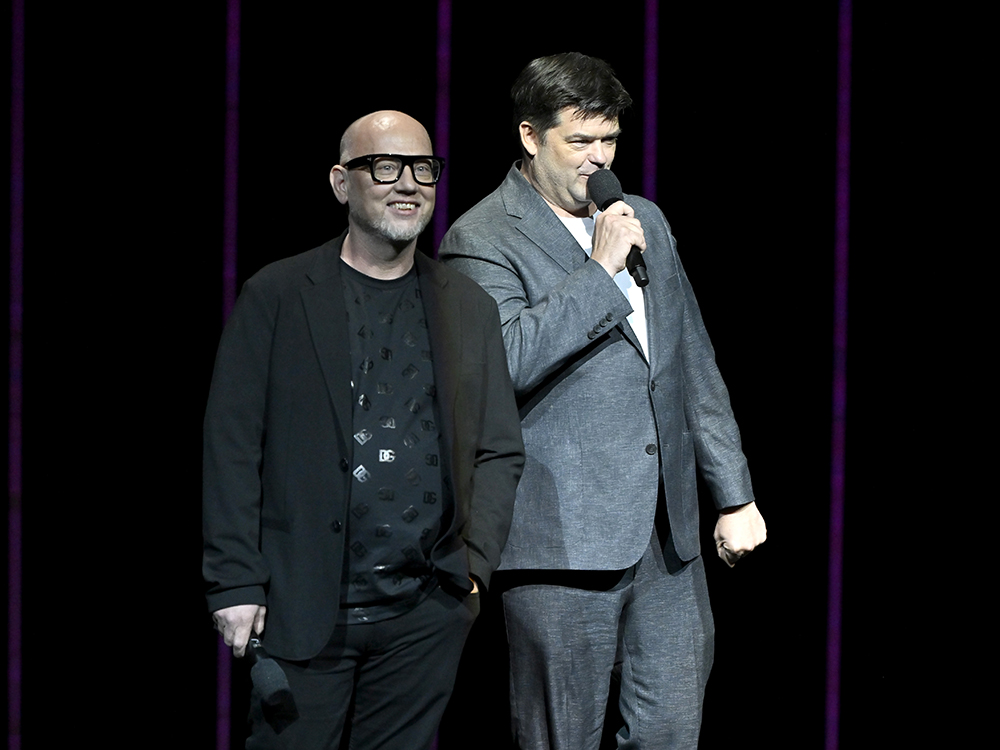
Photo courtesy of David Becker Getty Images for CinemaCon. All Rights Reserved.
The returning voice cast further reinforces the sense of continuity and emotional investment, with Shameik Moore leading the ensemble as Miles alongside Hailee Steinfeld as Gwen Stacy, supported by Brian Tyree Henry, Lauren Vélez and Jake Johnson, while the broader multiverse continues to expand through performances by Oscar Isaac, Mahershala Ali, Nicolas Cage and Daniel Kaluuya, a lineup that not only reflects the franchise’s narrative scope but also its ability to attract and retain top-tier talent across multiple installments, something increasingly rare in long-running animated properties.
Behind the scenes, the film’s development has been defined by an unusual combination of ambition and recalibration, having originally been conceived as part of a single sequel before being split into two distinct films, a decision that introduced significant structural and logistical challenges, further complicated by the 2023 SAG-AFTRA strike that halted voice recording and forced a reevaluation of timelines, yet insiders and collaborators suggest that these delays ultimately provided the creative team—now officially led by directors Bob Persichetti and Justin K. Thompson—with the opportunity to refine the film’s narrative architecture and visual language, ensuring that the final product meets the exceptionally high standards set by its predecessors rather than rushing to meet an arbitrary release window.
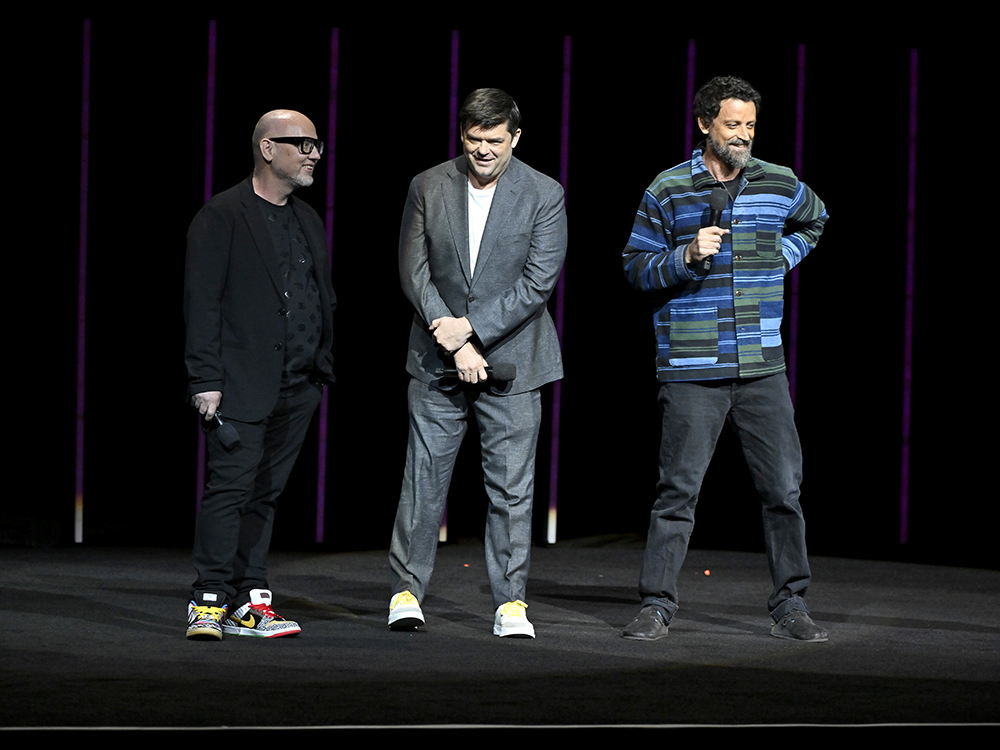
Photo courtesy of David Becker Getty Images for CinemaCon. All Rights Reserved.
From a technical standpoint, Spider-Man: Beyond the Spider-Verse continues to push the boundaries of what mainstream animation can achieve, with Sony Pictures Imageworks once again at the forefront of innovation, combining multiple animation styles into a cohesive visual experience while integrating advanced tools such as Unreal Engine for previsualization and a more dynamic virtual camera system influenced by live-action filmmaking, particularly through the involvement of cinematographer Alice Brooks, whose approach introduces new ways of framing and movement within an animated context, while composer Daniel Pemberton returns to craft a score designed to unify the trilogy both emotionally and thematically, reinforcing the sense of closure that defines this final chapter.
In a broader industry context, Sony also used the platform to address ongoing concerns surrounding artificial intelligence in filmmaking, with Christopher Miller clearly stating that generative AI would not be used in the creation of the film, positioning the Spider-Verse trilogy as a testament to human creativity and artistic craftsmanship at a time when such values are being actively debated within the industry, a stance that not only aligns with the franchise’s identity but also resonates strongly with a creative community still navigating the implications of technological change.
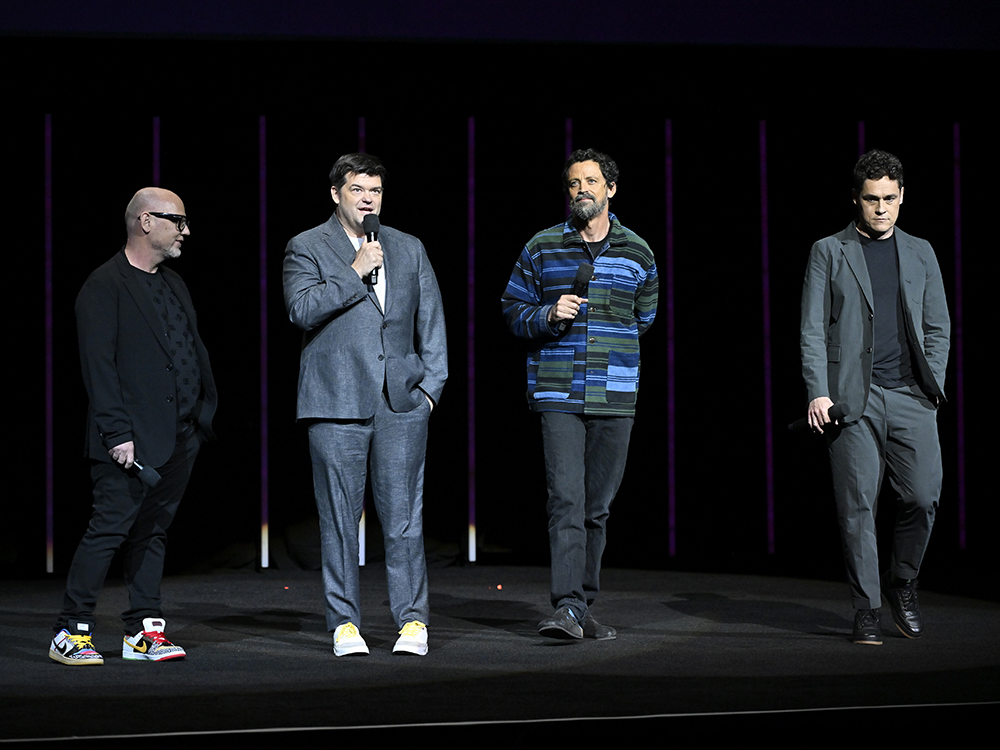
Photo courtesy of David Becker Getty Images for CinemaCon. All Rights Reserved.
The CinemaCon 2026 presentation achieved something that goes beyond standard marketing: it reframed Spider-Man: Beyond the Spider-Verse as both a narrative conclusion and a cultural milestone, restoring confidence after years of uncertainty while amplifying anticipation for what is now scheduled to be released on June 18, 2027 in the United States and June 23, 2027 in France, including IMAX and premium large formats, a rollout that underscores Sony’s conviction that this final chapter is not merely another installment but a defining cinematic event capable of closing one of the most influential animated trilogies of the modern era with the emotional weight, visual innovation and narrative ambition that audiences have come to expect—and perhaps even demand—from the Spider-Verse saga.
Synopsis :
After the conclusion of Spider-Man: Across the Spider-Verse, we reunite with our characters for the finale of the trilogy
Spider-Man: Beyond the Spider-Verse
Directed by Bob Persichetti, Justin K. Thompson
Written by Phil Lord, Christopher Miller, David Callaham
Based on Marvel Comics
Produced by Phil Lord, Christopher Miller, Amy Pascal, Avi Arad, Jinko Gotoh
Starring Shameik Moore, Hailee Steinfeld, Brian Tyree Henry, Lauren Vélez, Jake Johnson, Jason Schwartzman, Karan Soni, John Mulaney, Daniel Kaluuya, Mahershala Ali, Nicolas Cage, Kimiko Glenn, Oscar Isaac
Cinematography : Alice Brooks
Edited by Mike Andrews
Music by Daniel Pemberton
Production companies : Columbia Pictures, Sony Pictures Animation, Arad Productions, Lord Miller Productions, Pascal Pictures
Distributed by Sony Pictures Releasing (United States)
Release date : June 18, 2027 (United States), June 23, 2027 (France)