 English
Convention - CinemaCon 2026: Jumanji Open World unveils Sony Pictures’ biggest holiday gamble
By Mulder, Las Vegas, Caesars Palace, Dolby Colosseum, 13 april 2026
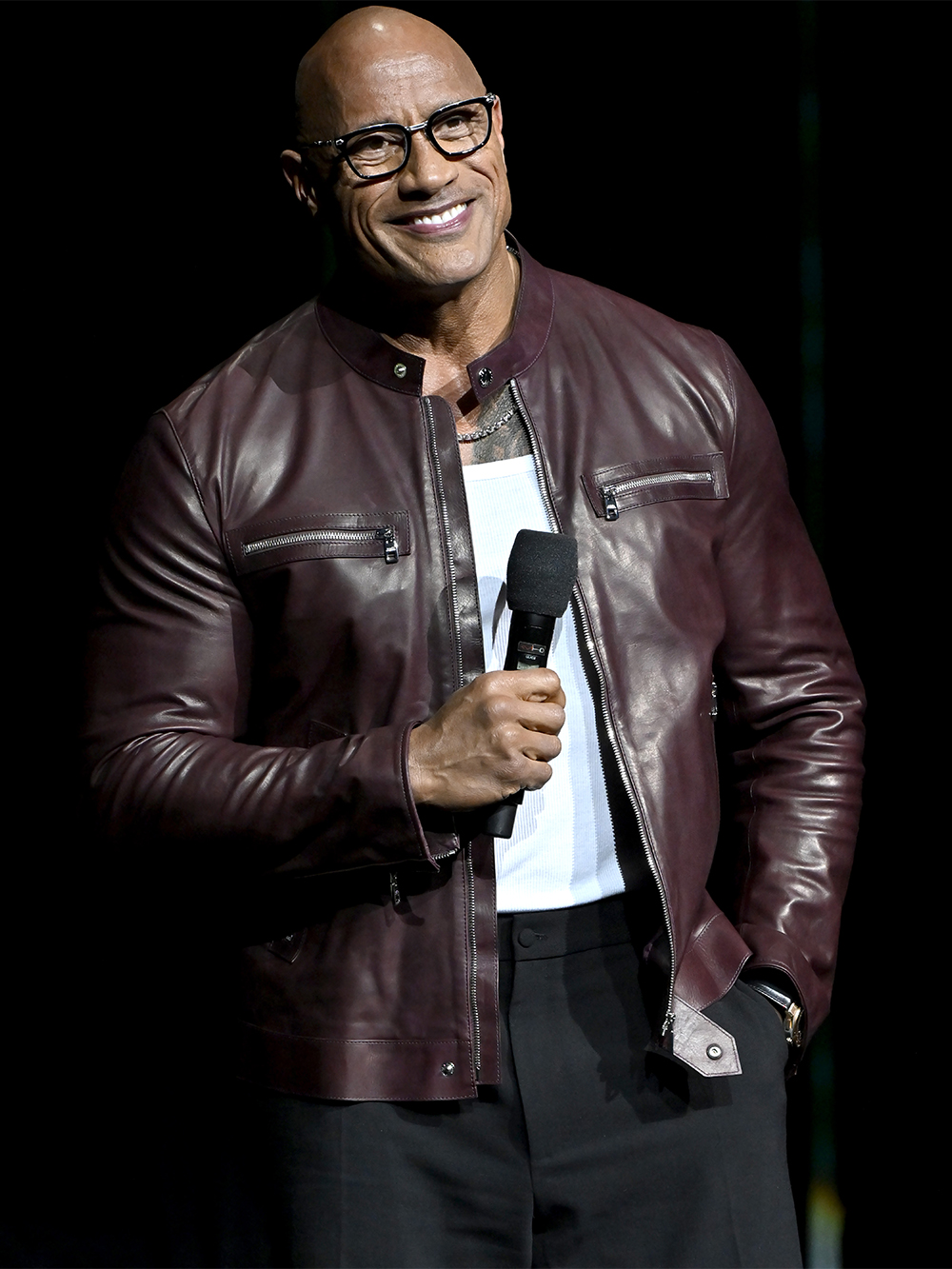
Photo courtesy of David Becker Getty Images for CinemaCon. All Rights Reserved.
The atmosphere inside the Colosseum at Caesars Palace on April 13, 2026 carried that familiar CinemaCon electricity part industry summit, part theatrical pep rally but this year, Sony Pictures Entertainment made sure its opening-night showcase felt like a statement of intent rather than just another slate presentation, and nowhere was that clearer than in the closing moments when Dwayne Johnson, Jack Black, and Kevin Hart took the stage to formally reveal Jumanji: Open World, instantly turning a packed room of exhibitors into an audience of fans, with the trio leaning into their real-life chemistry, trading jokes, and reminding attendees why this franchise has quietly become one of the most reliable crowd-pleasers in modern studio filmmaking, especially in a theatrical landscape still searching for consistent, multi-generational hits that can cut across demographics without relying solely on superhero fatigue or nostalgia overload.
What struck many observers in the room, beyond the predictable cheers, was how carefully the presentation framed Jumanji: Open World as both a continuation and a culmination, with Dwayne Johnson taking a moment to pay tribute to Robin Williams, a gesture that landed with surprising emotional weight and subtly repositioned the franchise not just as a comedic blockbuster series but as part of a longer cinematic lineage, reinforcing the idea that Jumanji has evolved from a one-off 1995 fantasy into a durable brand capable of reinventing itself across generations, while Jack Black, in his typically irreverent tone, celebrated theatrical audiences themselves, underscoring the film’s positioning as a “big screen first” experience at a time when studios are still negotiating the balance between streaming and theatrical windows.
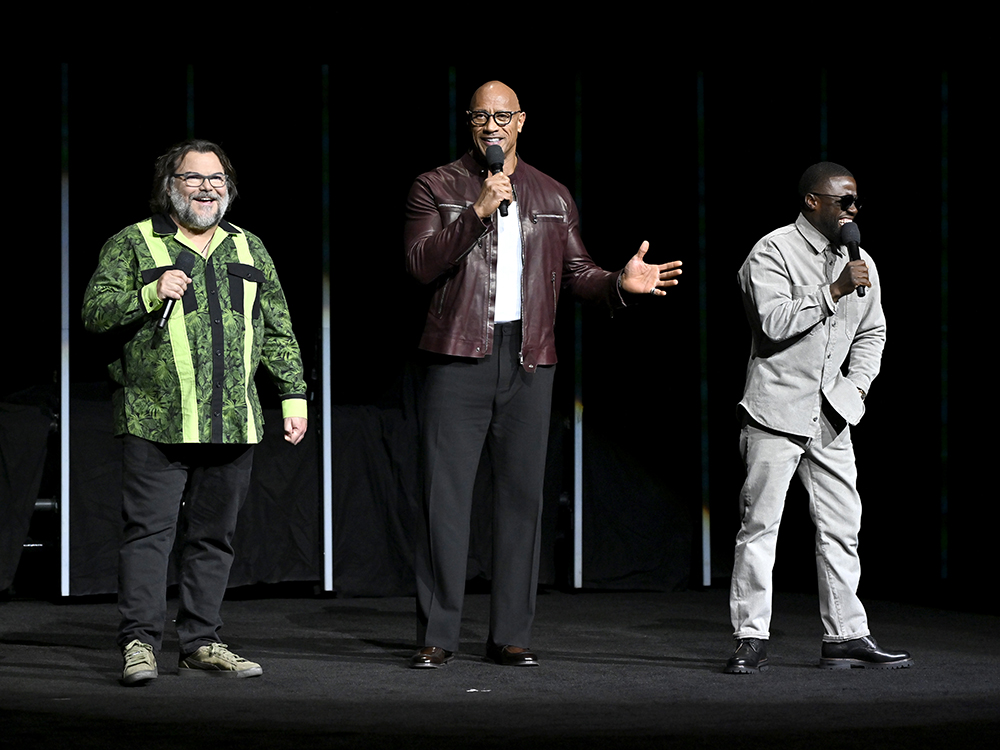
Photo courtesy of David Becker Getty Images for CinemaCon. All Rights Reserved.
Behind the showmanship lies a production that has been years in the making, with Jake Kasdan returning to direct and co-write alongside Jeff Pinkner and Scott Rosenberg, continuing the creative continuity that powered Jumanji: Welcome to the Jungle and Jumanji: The Next Level, while the producing team including Dwayne Johnson, Dany Garcia, Hiram Garcia, Matt Tolmach, and Jake Kasdan signals the ongoing influence of Seven Bucks Productions in shaping the franchise’s identity, particularly its blend of action spectacle and character-driven comedy, and from an industry standpoint, that consistency may be one of the key reasons Sony has managed to keep Jumanji relevant while other legacy properties have struggled to maintain audience interest beyond a single revival cycle.
The casting alone reads like a strategic playbook in audience retention, with returning ensemble members Dwayne Johnson, Jack Black, Kevin Hart, Karen Gillan, Nick Jonas, Awkwafina, Alex Wolff, Morgan Turner, Ser'Darius Blain, Madison Iseman, Danny DeVito, Rhys Darby, Bebe Neuwirth, and Lamorne Morris anchoring the film’s familiar dynamic, while the addition of Burn Gorman and Nasim Pedrad suggests an expansion of the game’s world and tone, potentially leaning further into the unpredictable, “open world” concept teased by the title, which insiders at CinemaCon hinted could reflect a broader narrative structure inspired by modern gaming logic rather than the more linear progression of previous entries, a direction that aligns neatly with evolving audience expectations shaped by interactive media.
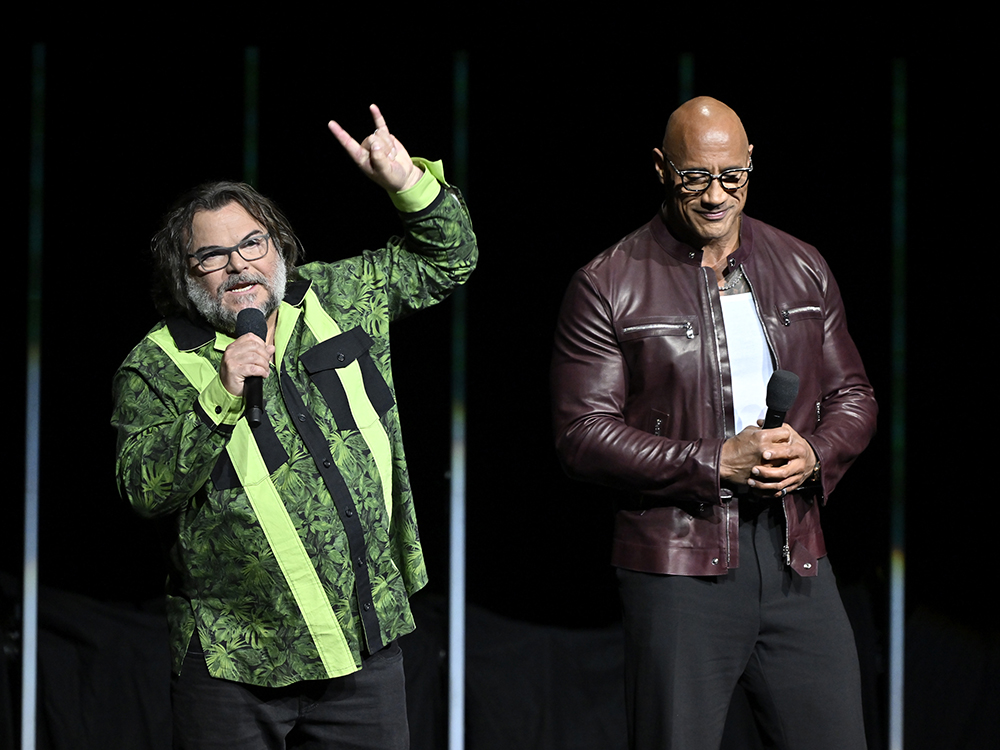
Photo courtesy of David Becker Getty Images for CinemaCon. All Rights Reserved.
From a production perspective, the timeline reflects both ambition and caution, with principal photography beginning in November 2025 in Los Angeles and wrapping on March 30, 2026, a relatively tight schedule for a film of this scale, especially considering the logistical challenges of coordinating such a large ensemble cast, while Danny DeVito reportedly completed his scenes by February 2026 and Jack Black followed shortly after, suggesting a well-orchestrated shoot designed to accommodate overlapping commitments, and with cinematography by Ben Davis, editing by Steve Edwards and Mark Helfrich, and music by Henry Jackman, the film retains much of the technical backbone that helped define the franchise’s modern visual and tonal identity.
Perhaps the most intriguing narrative thread—one that has been quietly developing since Jumanji: The Next Level—is the unresolved mystery surrounding Jurgen the Brutal, originally portrayed by Rory McCann, whom Dwayne Johnson previously hinted was merely an avatar for an unknown player, and while no footage shown at CinemaCon explicitly confirmed how this storyline will unfold, the Open World subtitle strongly implies a shift toward a more expansive mythology, potentially blurring the boundaries between players and avatars in ways that could redefine the stakes of the franchise, especially if this installment is indeed, as suggested by Dwayne Johnson, intended to serve as the final chapter.
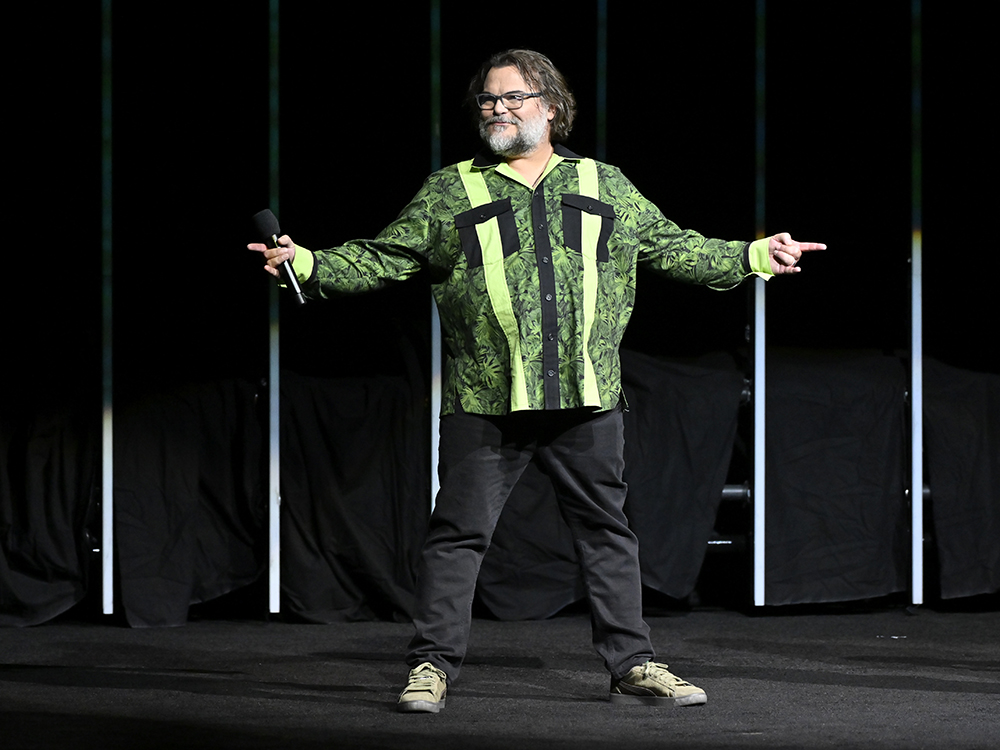
Photo courtesy of David Becker Getty Images for CinemaCon. All Rights Reserved.
Strategically, the December 25, 2026 release date positions Jumanji: Open World as a classic holiday tentpole, echoing the successful Christmas launches of its predecessors, while its move from an earlier December slot to avoid direct competition with major releases like Avengers: Doomsday and Dune: Part Three reflects a calculated scheduling decision by Sony Pictures Releasing, one that prioritizes long-term box office legs over opening weekend dominance, and if history is any indication, that counterprogramming approach—offering a comedic, family-friendly alternative to heavier blockbuster fare—could once again pay dividends in a crowded marketplace.
Ultimately, what Jumanji: Open World represents within the broader CinemaCon 2026 narrative is more than just another sequel announcement; it encapsulates Sony’s larger strategy of portfolio diversification, where instead of betting everything on a single franchise model, the studio builds a year-round ecosystem of films targeting different audiences, and in that context, Jumanji functions as a cornerstone property—accessible, scalable, and adaptable—capable of anchoring the holiday season while reinforcing the enduring appeal of theatrical entertainment, a message that resonated clearly in Las Vegas, where for a few minutes, the industry stopped thinking like exhibitors and simply reacted like an audience again.
Synopsis :
The Jumanji adventure continues with a fourth installment!
Jumanji: Open World
Directed by Jake Kasdan
Written by Jake Kasdan, Jeff Pinkner, Scott Rosenberg
Based on Jumanji by Chris Van Allsburg
Produced by Dwayne Johnson, Dany Garcia, Hiram Garcia, Matt Tolmach, Jake Kasdan
Starring Dwayne Johnson, Jack Black, Kevin Hart, Karen Gillan, Nick Jonas, Awkwafina, Alex Wolff, Morgan Turner, Ser'Darius Blain, Madison Iseman, Burn Gorman, Bebe Neuwirth, Lamorne Morris, Nasim Pedrad, Danny DeVito
Cinematography : Ben Davis
Editors : Steve Edwards, Mark Helfrich
Music by Henry Jackman
Production companies : Columbia Pictures, Matt Tolmach Productions, Seven Bucks Productions, The Detective Agency
Distributed by Sony Pictures Releasing (United States)
Release date : December 25, 2026 (United States)