

CinemaCon 2026: Avengers: Doomsday Steals the Show During Disney’s Blockbuster Presentation
Thursday 16 April, 7:00 PM PT Las Vegas, Caesars Palace, Dolby Colosseum 2026-04-01 → 2026-04-16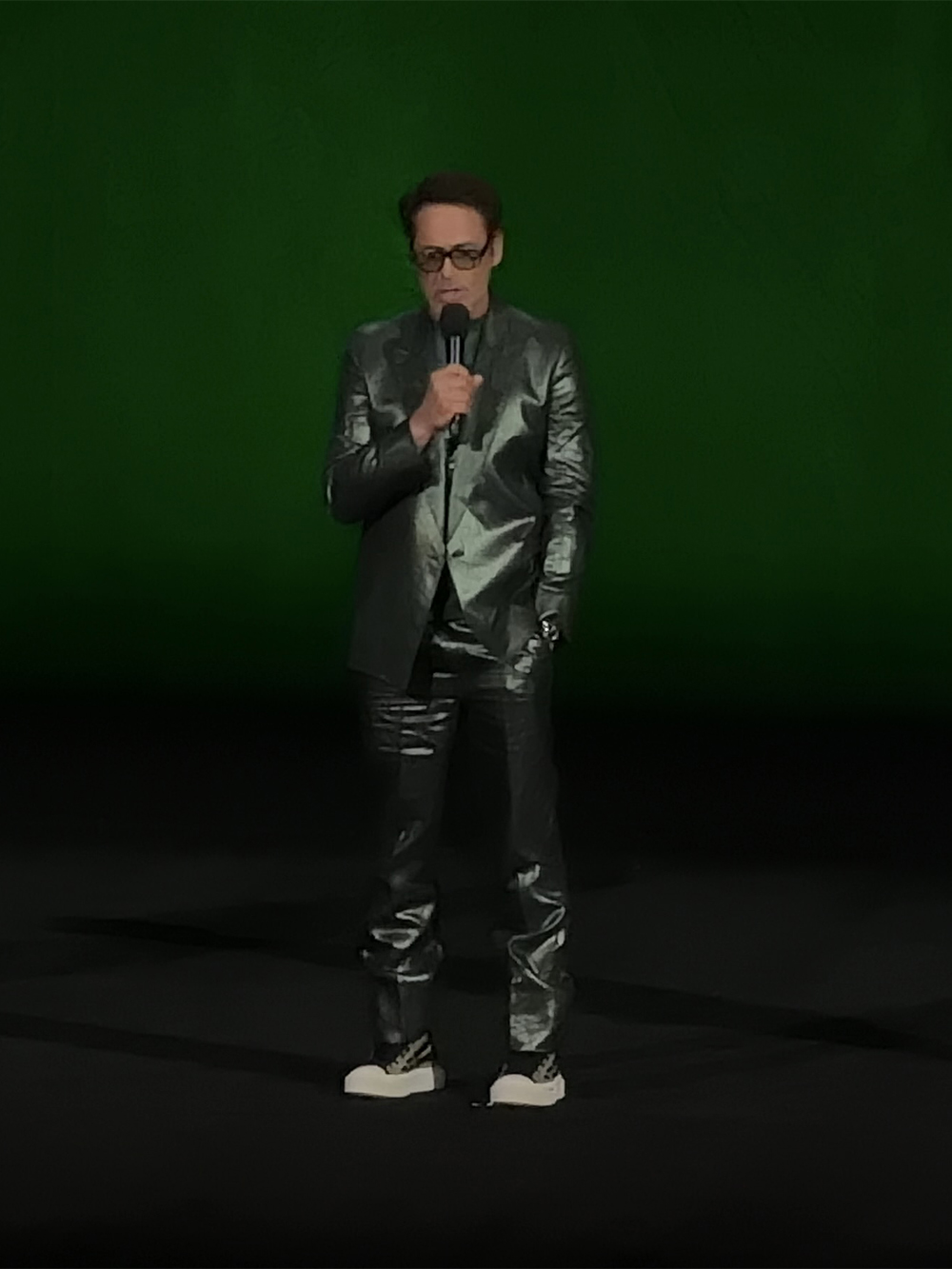
Inside the Dolby Colosseum at Caesars Palace on April 16, 2026, the closing stretch of The Walt Disney Company presentation became the kind of room-shaking CinemaCon moment studios chase for years. When the Marvel Studios logo hit the giant screen, the atmosphere reportedly changed instantly from attentive curiosity to full convention frenzy. Disney had already spent the week promoting a crowded slate, but once Avengers: Doomsday arrived, the presentation shifted into event mode. Kevin Feige took the stage personally, framing the movie not simply as another sequel but as a return to the communal scale that made Avengers: Infinity War and Avengers: Endgame theatrical landmarks. He told exhibitors Marvel wanted audiences “immersed in that theaters only experience,” a line that doubled as a mission statement for a studio eager to reassert the premium big-screen value of its flagship brand. The timing was strategic. Avengers: Doomsday is the first Avengers film since 2019’s Endgame, and Disney used CinemaCon to remind theater owners that the franchise remains one of the most bankable names in modern cinema. The film is officially directed by Anthony Russo and Joe Russo, written by Michael Waldron and Stephen McFeely, produced by Marvel Studios and AGBO, and scheduled for release on December 18, 2026 in the United States, with France set for December 16. The scale is enormous even by Marvel standards: the story brings together the Avengers, Wakandans, New Avengers, the Fantastic Four, and legacy X-Men characters from alternate universes to confront Doctor Doom, played by Robert Downey Jr. in one of the boldest casting pivots in franchise history.

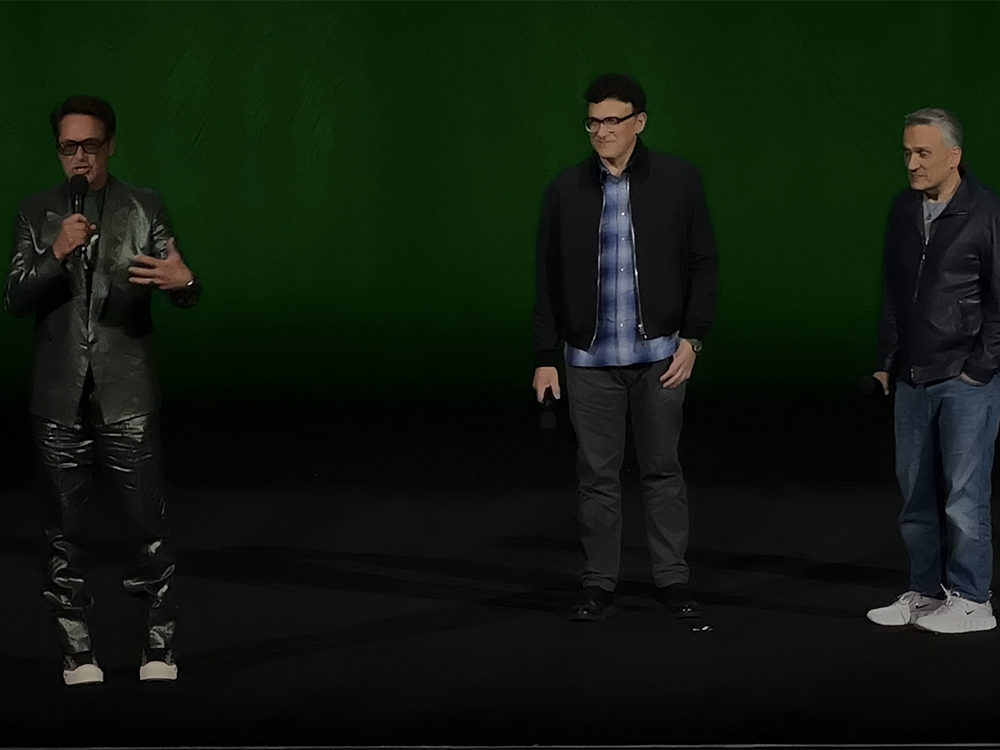
Before the trailer rolled, Disney also used the platform to launch Infinity Vision, a new premium large-format certification initiative designed to highlight theaters meeting specific technical standards for screen size, laser projection, brightness, and immersive sound. While Disney positioned it as a quality-first consumer guide, the industry subtext was obvious: Avengers: Doomsday opens the same day as Dune: Part Three, and reports indicate the Marvel film will not have access to domestic IMAX exclusivity during its first weeks. Infinity Vision therefore looked like both a practical workaround and a public signal that Disney intends to compete aggressively for premium-screen audiences even without IMAX dominance. It was one of the smartest pieces of business messaging at the convention because it turned a limitation into a marketing narrative. Then came the showmanship. Kevin Feige introduced the returning Russo brothers, who were greeted as architects of Marvel’s peak crossover era. Moments later, Robert Downey Jr. stormed the stage to massive applause. Witnesses described the entrance as pure star-power theater, with some reports noting music and sustained cheers before he even spoke. Robert Downey Jr immediately leaned into mischief, joking that he wanted to reveal 37,000 spoilers. It was classic Robert Downey Jr : playful, self-aware, and perfectly calibrated to acknowledge the secrecy culture surrounding Marvel while energizing the room. CinemaCon thrives on moments that feel exclusive, and Downey understands how to turn even a throwaway joke into a headline.

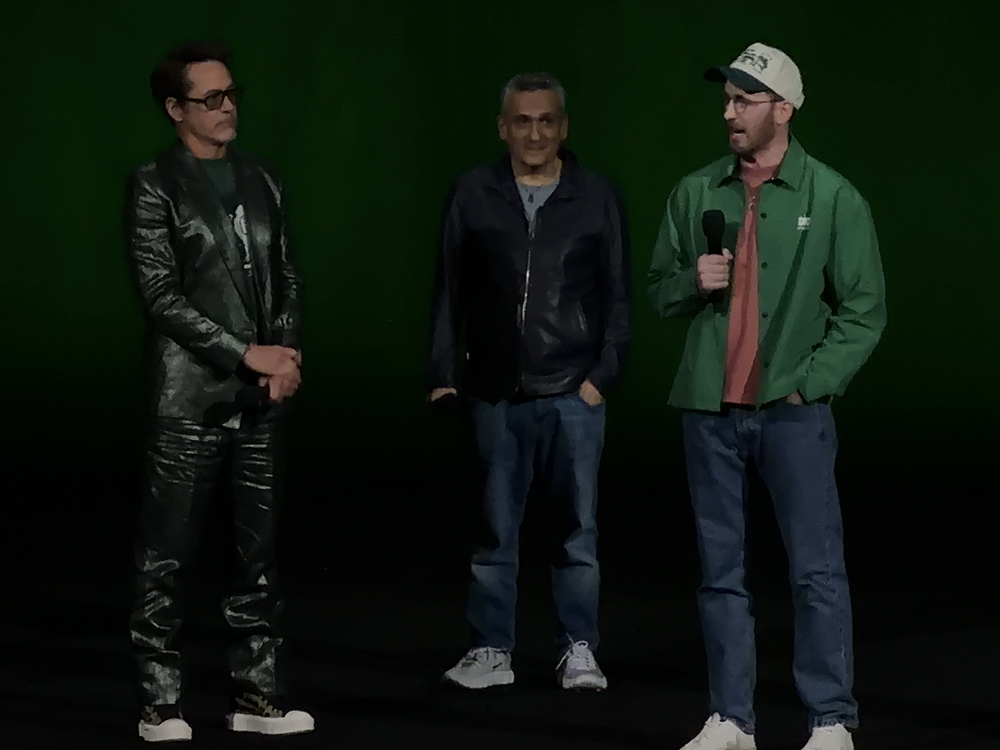
If Robert Downey Jr’s arrival was electricity, the next surprise was emotional nostalgia. Chris Evans then joined the presentation, returning to promote the film in which he reprises Steve Rogers. Chris Evans reportedly joked about Robert Downey Jr ’s new role as Doom, saying he loved Downey but did not like “this guy.” The banter mattered because it instantly reframed the movie not only as another Marvel crossover, but as a reunion of the faces most associated with the MCU’s global rise. For many exhibitors in the room, this was likely the clearest sign that Disney understands what casual audiences miss most: recognizable icons, emotional continuity, and the sense that something culturally shared is happening again. The trailer itself, shown exclusively to attendees, reportedly opened on apocalyptic imagery and multiversal dread, with narration from Doom warning that an existential threat was approaching. Trade reports and eyewitness descriptions mention a red-scarred sky, fractured realities, and crossover pairings designed to trigger maximum audience reaction. Among the most discussed shots were Thor rallying heroes, Steve Rogers wielding Mjolnir again, clashes involving Shang-Chi and Gambit, and encounters uniting characters from the Avengers, Fantastic Four, Wakanda, and the X-Men mythologies. Just as important as the footage was tone: rather than leaning on comedy, Marvel appears to be steering back toward operatic stakes, mythic conflict, and end-of-an-era grandeur. That tonal recalibration may be one of the most significant creative decisions surrounding the project.
What happened next became the defining anecdote of the entire Disney presentation: the audience reaction was so loud and sustained that the trailer was played a second time. In a convention built on applause meters and first-look footage, asking to run a trailer twice is almost unheard of because it signals genuine momentum rather than polite industry enthusiasm. Disney did not just show footage; it created the perception of inevitability. That perception matters because Marvel enters 2026 with something to prove. Recent years have brought uneven box office results and broader debate about superhero fatigue. Yet exhibitors remain highly responsive to eventized Marvel storytelling, especially ensemble chapters with clear stakes. Doomsday appears engineered as a corrective: legacy stars, multiverse collision, X-Men integration, Fantastic Four connectivity, and the Russo brothers returning to command structure. It is less a sequel than a strategic reset disguised as spectacle. If Endgame was the finale to Marvel’s first empire, Doomsday is being positioned as the opening strike of the second.
The box-office chessboard adds another layer. Releasing opposite Dune: Part Three creates one of the most fascinating December clashes in years, with analysts already predicting that Avengers: Doomsday could be among 2026’s highest-grossing films. Disney’s CinemaCon strategy suggested confidence rather than caution. Instead of dodging the competition narrative, the studio leaned into scale, premium presentation, and fan-service grandeur. That is often how major studios telegraph they have strong internal tracking. By the time the final release date card landed December 18, 2026 the message in the room was unmistakable. Disney wanted theater owners to leave believing Avengers: Doomsday is not just another release on the calendar, but the return of the kind of mass-audience blockbuster that can move concession sales, premium tickets, repeat business, and pop-culture conversation all at once. At CinemaCon 2026, many studios showed movies. Disney tried to show destiny.
You can discover our photos in our Flickr page
Avengers: Doomsday
Directed by Anthony Russo, Joe Russo
Written by Michael Waldron, Stephen McFeely
Based on Avengers by Stan Lee, Jack Kirby
Produced by Kevin Feige, Anthony Russo, Joe Russo
Starring Robert Downey Jr., Chris Evans, Chris Hemsworth, Pedro Pascal, Paul Rudd, Anthony Mackie, Florence Pugh, Vanessa Kirby, Ebon Moss-Bachrach, Wyatt Russell, Channing Tatum, Simu Liu, Ian McKellen, Tom Hiddleston, James Marsden, Patrick Stewart, Joseph Quinn, Sebastian Stan, David Harbour, Letitia Wright, Lewis Pullman, Kelsey Grammer, Danny Ramirez, Winston Duke, Alan Cumming, Hannah John-Kamen, Rebecca Romijn, Alex Livinalli, Mabel Cadena, Tenoch Huerta Mejía
Cinematography : Newton Thomas Sigel
Edited by Jeffrey Ford
Music by Alan Silvestri
Production companies : Marvel Studios, AGBO
Distributed by Walt Disney Studios Motion Pictures (United States), The Walt Disney Company France (France)
Release date : December 16, 2026 (France), December 18, 2026 (United States)
Photos and video 4K : Boris Colletier / Mulderville