
 English
Convention - Barco Unveils Sony’s 2026 HDR Slate with Spider-Man, Resident Evil and Jumanji
By Mulder, Las Vegas, Caesars Palace, 14 april 2026
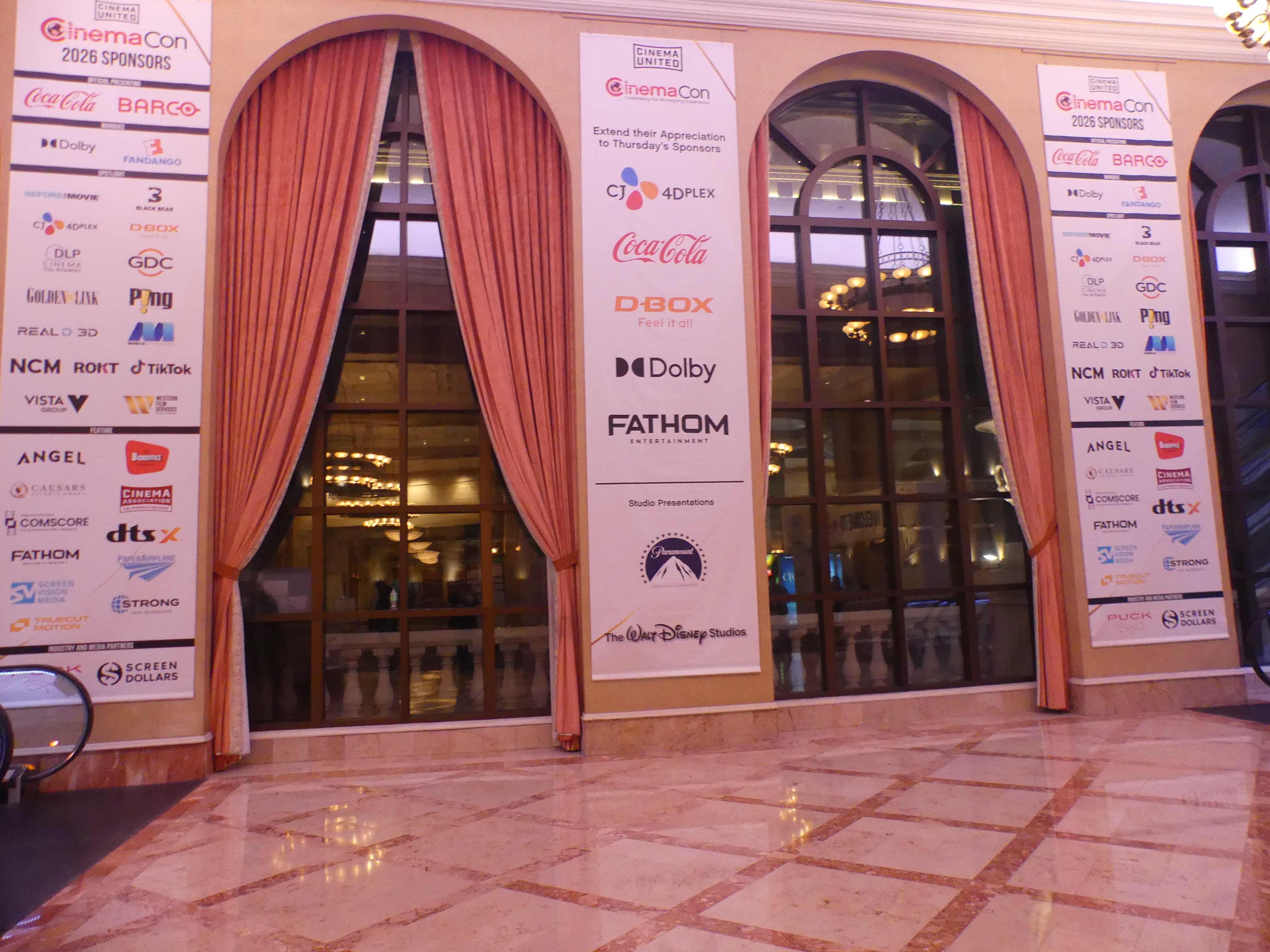
On the opening day of CinemaCon 2026, the annual convention where studios and theater owners measure the temperature of the theatrical business, Belgian technology group Barco used Sony’s upcoming slate to send a very clear message: premium large-format experiences are no longer a side strategy, they are becoming central to how major films are sold. The company confirmed that four high-profile Sony Pictures releases Spider-Man: Brand New Day (July 31, 2026), Insidious: Out of the Further (August 21, 2026), Resident Evil (September 18, 2026) and Jumanji: Open World (December 25, 2026) will all receive releases in HDR by Barco, the company’s proprietary high dynamic range theatrical format. The announcement was timed to the first night of CinemaCon, held April 13-16 at Caesars Palace in Las Vegas, where exhibitors are increasingly focused on technologies capable of making moviegoing feel distinct from home viewing.
Behind the marketing language lies a sharper industrial reality. Theater owners spent years rebuilding attendance after pandemic disruption, labor strikes and shifting streaming habits. What has consistently worked in that period are films that feel “worth leaving the couch for”: event pictures, spectacle titles and premium-format attractions. That is where Barco has positioned itself. Its HDR system uses patented Lightsteering technology to redistribute projection light across the screen, allowing highlights reportedly more than six times brighter than conventional projection while maintaining dark-area detail and broader contrast. In practical terms, that means superhero suits gleam harder, horror shadows deepen, explosions carry more punch and fantasy worlds gain more dimensionality. This is not merely a technical upgrade; it is a revenue strategy, since premium tickets generally command higher prices and stronger margins for exhibitors.
The headline title in the lineup is clearly Spider-Man: Brand New Day, the next chapter starring Tom Holland as Peter Parker. Following the enormous success of Spider-Man: No Way Home, the new film reportedly advances four years after the memory-erasing ending of its predecessor, with Peter isolated and functioning as a full-time Spider-Man in a New York that no longer knows his identity. The official synopsis also teases a dangerous physical evolution affecting his powers, suggesting a more vulnerable and unstable hero than audiences have seen before. Directed by Destin Daniel Cretton and written by Chris McKenna and Erik Sommers, the film features Tom Holland, Zendaya, Sadie Sink, Jacob Batalon, Jon Bernthal, Tramell Tillman, Michael Mando and Mark Ruffalo. Industry observers at CinemaCon noted that Sony continues to treat Spider-Man as one of the few brands capable of uniting younger audiences, families and comic-book fans across territories. Releasing it in HDR is therefore less an experiment than an obvious commercial play.
If Spider-Man represents scale, Insidious: Out of the Further represents precision targeting. Horror has become one of the most reliable genres in modern theatrical economics: modest budgets, devoted audiences and frequent profitability. The Insidious franchise has already grossed more than $740 million worldwide according to the release materials, and the new installment shifts focus to a new family. Amelia Eve plays Gemma, a mother who discovers she can not only enter The Further but bring entities back into the real world. Lin Shaye returns as Elise Rainier, with Jacob Chase directing. What makes the HDR angle particularly interesting here is that horror often benefits from darkness control rather than brightness alone. Deep blacks, subtle textures in shadows and sudden contrast spikes can materially intensify fear responses in an auditorium. In other words, for horror, HDR can be psychological technology as much as visual technology.
Then comes perhaps the most intriguing wildcard: Resident Evil, a fresh reinvention led by Zach Cregger, whose reputation surged after Barbarian and later projects. Instead of leaning immediately on legacy iconography, the synopsis introduces Bryan, a medical courier played by Austin Abrams, trapped in a catastrophic night of escalating survival horror. Co-written by Zach Cregger and Shay Hatten, the film also stars Zach Cherry, Kali Reis and Paul Walter Hauser. This suggests Sony is trying to reposition Resident Evil not simply as game adaptation nostalgia, but as filmmaker-driven horror with mainstream action appeal. That is a smart pivot. Game-based brands remain valuable, but contemporary audiences increasingly reward strong authorial hooks. If Zach Cregger can blend dread, momentum and franchise mythology, Sony may have more than a reboot — it may have a recurring theatrical engine.
Closing the year is Jumanji: Open World, scheduled for Christmas Day and reuniting Dwayne Johnson, Kevin Hart, Jack Black and Karen Gillan, alongside returning cast members including Alex Wolff, Madison Iseman, Morgan Turner, Ser’Darius Blain, Rhys Darby, Nick Jonas and Danny DeVito. Directed again by Jake Kasdan, the new premise flips the earlier formula: instead of characters entering the game, Jumanji spills into the real world. That premise is commercially elegant because it refreshes the concept without abandoning what audiences already know. Holiday corridors reward multi-generational comedies with action hooks, and Sony appears to be preserving one of its strongest family-event brands at a moment when broad four-quadrant hits are increasingly rare. HDR here is less about menace or realism than playful scale urban chaos, creature effects and heightened comic action all benefit from premium presentation.
One overlooked detail in the announcement is slate balance. Sony and Barco deliberately showcased four different audience lanes: superhero spectacle, supernatural horror, survival horror/action, and family adventure comedy. That diversification matters. Exhibitors do not need one mega-hit; they need a steady cadence of reasons for different demographics to return throughout the year. In that sense, the Barco slate is also an exhibitor calendar strategy. It follows earlier 2026 HDR by Barco Sony titles including 28 Years Later: The Bone Temple and GOAT, signaling an expanding partnership rather than a one-off promotional beat.
Founded in Kortrijk, Belgium, Barco reported 2025 sales of €964 million and employs more than 3,000 people globally, underscoring that cinema projection remains only one part of a broader visualization and networking business. Yet cinema carries symbolic importance: when audiences are wowed in theaters, projection brands become part of the premium experience narrative. That helps explain why technology companies now seek marquee title associations once reserved mainly for exhibitors and studios. In 2026, the projector itself has become part of the pitch.
The deeper takeaway from CinemaCon is simple: the battle for theaters is no longer just film versus streaming. It is ordinary viewing versus exceptional viewing. By attaching HDR branding to major Sony releases, Barco is wagering that audiences still respond when movies feel bigger, brighter, darker, louder and genuinely communal. If that bet is right, the future of theatrical exhibition may depend less on how many films open each weekend and more on how unforgettable they look once the lights go down.
(Source : press release)