
 English
Convention - CinemaCon 2026: Sony Pictures Ignites Las Vegas With Spider-Man, Jumanji and a Massive Theatrical Bet
By Mulder, Las Vegas, Caesars Palace, Dolby Colosseum, 13 april 2026
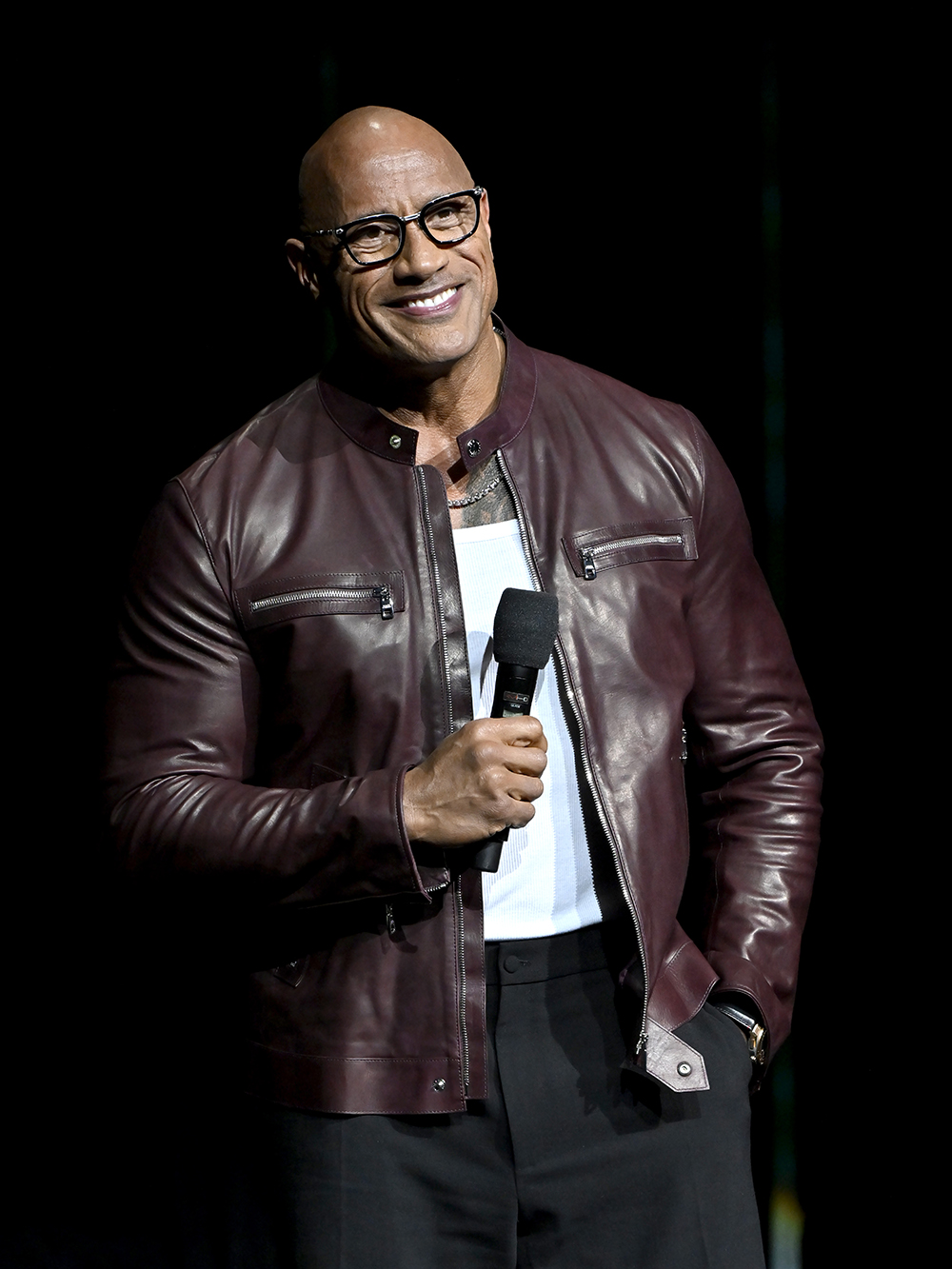
Photo courtesy of David Becker Getty Images for CinemaCon. All Rights Reserved.
The opening-night Sony Pictures presentation at CinemaCon 2026 delivered exactly what theater owners come to Las Vegas hoping for: scale, stars, exclusives and a loud declaration that the studio intends to compete across every quadrant of the theatrical market. Official CinemaCon scheduling confirmed that Sony Pictures Entertainment was assigned the Monday night opening showcase at The Colosseum at Caesars Palace in Las Vegas on April 13, launching the convention with a major slate presentation. What followed was a two-plus-hour program that moved rapidly from family comedy to superhero spectacle, horror, anime, prestige drama, gaming adaptations and legacy franchises. If there was one clear corporate message, it was that Sony Pictures wants exhibitors to see breadth as strength: not one tentpole strategy, but many lanes feeding multiplex survival.
The evening began with ceremony before spectacle. Tom Rothman, chairman and CEO of Sony Pictures’s motion picture group, reportedly opened by presenting the Legend of Cinema Award to Ellis Jacob, the longtime Cineplex executive. It was a symbolic start: before selling future movies, Sony Pictures saluted the exhibition business itself. That mood was reinforced when CinemaCon managing director Mitch Neuhauser took the stage to George Michael’s “Faith,” framing the song as a tribute to faith in theatrical cinema. It was a savvy room-reading move. CinemaCon audiences are not fans in cosplay; they are exhibitors, buyers and operators who need reassurance that studios still believe in moviegoing as an institution. Sony Pictures understood the room from minute one.

Photo courtesy of David Becker Getty Images for CinemaCon. All Rights Reserved.
Comedy arrived early with stand-up star Nate Bargatze, who used the stage to champion theaters in a practical, populist way. He even joked approvingly about senior discount tickets before bluntly declaring that he wants people going to theaters and wants to sell tickets. That may sound throwaway, but it neatly captured a central CinemaCon truth: the industry increasingly values stars who can sell accessibility, not just celebrity. Sony Pictures pairing Bargatze with the family title Breadwinner suggested a strategic read of the market comedies and all-ages films remain under-supplied. Mandy Moore also appeared to introduce footage, describing the film as a funny family comedy everyone can see together. In a business climate dominated by IP, even a modest family crowd-pleaser can become strategically valuable.
Then came the headline-grabber: Spider-Man. Multiple reports indicate Sony Pictures showcased new material from Spider-Man: Brand New Day, the next live-action installment starring Tom Holland, scheduled for July 31, 2026. Coverage from attendees described exclusive footage and fresh posters, while Sony Pictures reportedly leaned hard into emotional stakes, with Tom Holland appearing via hologram-style pre-recorded presentation. Trade reactions emphasized that the footage was not merely action-forward but hinted at unresolved consequences from No Way Home. That matters because Sony Pictures’s Spider-Man business has become a balancing act between standalone appeal and Marvel-universe relevance. If the next chapter genuinely lands as an emotional reset, Sony Pictures may have found the ideal route forward: continuity without homework.

Photo courtesy of David Becker Getty Images for CinemaCon. All Rights Reserved.
Sony Pictures also reminded exhibitors that horror remains one of the most reliable theatrical engines. During the presentation, Adam Bergerman, president of Sony Pictures Releasing, reportedly introduced a new chapter in the Insidious franchise from Blumhouse, with trailer footage debuting first to the room before a wider launch later. Horror is low-risk, high-margin and audience-habit forming; owners love it because it creates urgency and repeat attendance. Sony Pictures’s continued relationship with proven genre brands suggests the studio understands that prestige headlines may earn press, but horror often pays rent.
Another striking feature of the evening was how aggressively Sony Pictures embraced gaming and anime audiences. Crunchyroll reportedly previewed upcoming content including That Time I Got Reincarnated as a Slime, while filmmaker Zach Cregger appeared to discuss a new Resident Evil film. According to attendee notes, he described a story structure that traps audiences with a single protagonist moving from Point A to Point B a stripped-down survival framework that sounds closer to experiential horror than sprawling lore. That is a smart correction for Resident Evil, a brand that has historically oscillated between action excess and claustrophobic terror. If Sony Pictures keeps the concept lean, it could reconnect the franchise with both gamers and horror crowds.

Photo courtesy of David Becker Getty Images for CinemaCon. All Rights Reserved.
The presentation also reportedly leaned into future-facing adaptations from gaming culture. Social recaps described announcements for an R-rated animated Bloodborne adaptation and a live-action Helldivers film from director Justin Lin, with Jason Momoa attached and a November 10, 2027 release date. Even allowing for the usual CinemaCon showmanship, the logic is obvious: gamers are now one of the largest built-in theatrical constituencies in the world. Sony Pictures owns powerful interactive brands, and converting them into differentiated movies is a more durable strategy than chasing generic originals with no audience anchor.
Prestige cinema was not absent from the bombast. Attendee reports cited Klara and the Sun, directed by Taika Waititi, with Jenna Ortega, set for October 23, as well as The Nightingale, introduced via a message from Dakota Fanning and Elle Fanning. There was also a clip presentation for The Social Reckoning, written and directed by Aaron Sorkin, starring Mikey Madison, Jeremy Allen White and Jeremy Strong. Whether every one of these titles lands commercially is almost secondary. Their presence on the slate tells exhibitors that Sony Pictures does not intend to become a pure franchise factory. It still wants awards-season oxygen, adult audiences and cultural conversation.
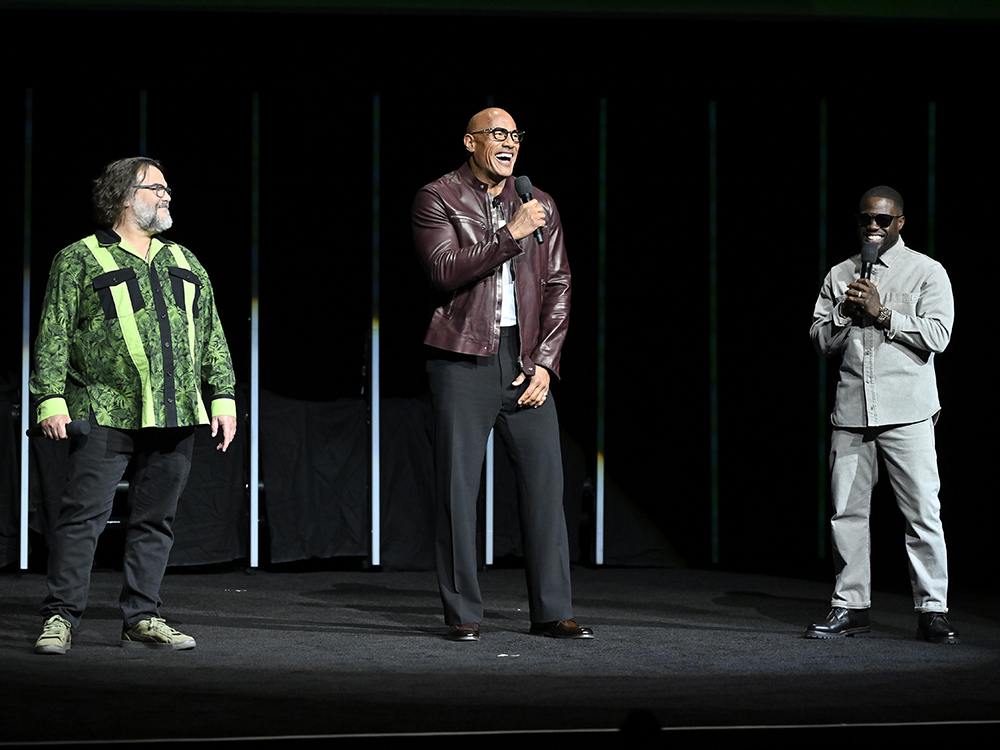
Photo courtesy of David Becker Getty Images for CinemaCon. All Rights Reserved.
Animation brought perhaps the warmest applause outside Spider-Man. Sony Pictures Animation reportedly teased Buds, an original film set for December 2027, but the emotional centerpiece was the return of the Spider-Verse team: Phil Lord, Christopher Miller, Joaquim Dos Santos and Bob Persichetti were cited by attendees as appearing to unveil early footage from Spider-Man: Beyond the Spider-Verse. Sony Pictures previously repositioned the film for 2027 after delays, and the CinemaCon appearance functioned as a reassurance campaign. The line reportedly used—welcoming audiences to the final chapter of Miles Morales’ story—was not accidental. Sony Pictures knows that after a long wait, fans need confidence that the finale is real, moving and worth patience.
The closing act was pure showbiz. Jack Black, Kevin Hart and Dwayne Johnson took the stage for the new Jumanji film, revealed by attendees as Jumanji: Open World, targeting Christmas. Jack Black praised big-screen movie lovers, while Dwayne Johnson honored Robin Williams, connecting the modern franchise back to its emotional roots. That was smart brand stewardship. Jumanji works because it is funny, multigenerational and event-sized without being exclusionary. In a fragmented market, Christmas counterprogramming with a recognizable four-quadrant adventure could be one of Sony Pictures’s safest bets.
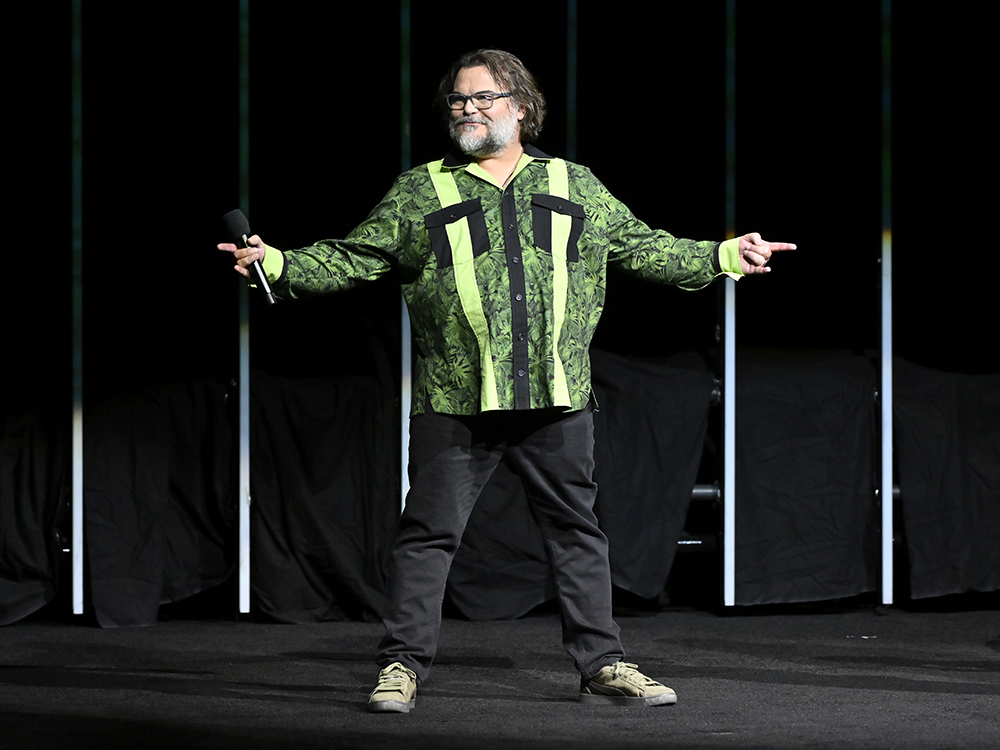
Photo courtesy of David Becker Getty Images for CinemaCon. All Rights Reserved.
The broader takeaway from Sony Pictures’s CinemaCon 2026 showcase is that the studio seems less interested in chasing a single trend than in weaponizing portfolio diversity. Superheroes for summer, family comedy for broad audiences, horror for dependable margins, anime for fan intensity, game adaptations for youth demos, awards titles for adults, and legacy adventure for holidays. Some studios still pitch one or two giant pillars. Sony Pictures pitched a city skyline. In an era when exhibitors need year-round reasons to stay alive, that may have been the smartest presentation of all.