
 English
Convention - CinemaCon 2026: Angel Studios Bets Big on Theatrical Growth With Expansive Film Showcase
By Mulder, Las Vegas, Caesars Palace, Dolby Colosseum, 13 april 2026
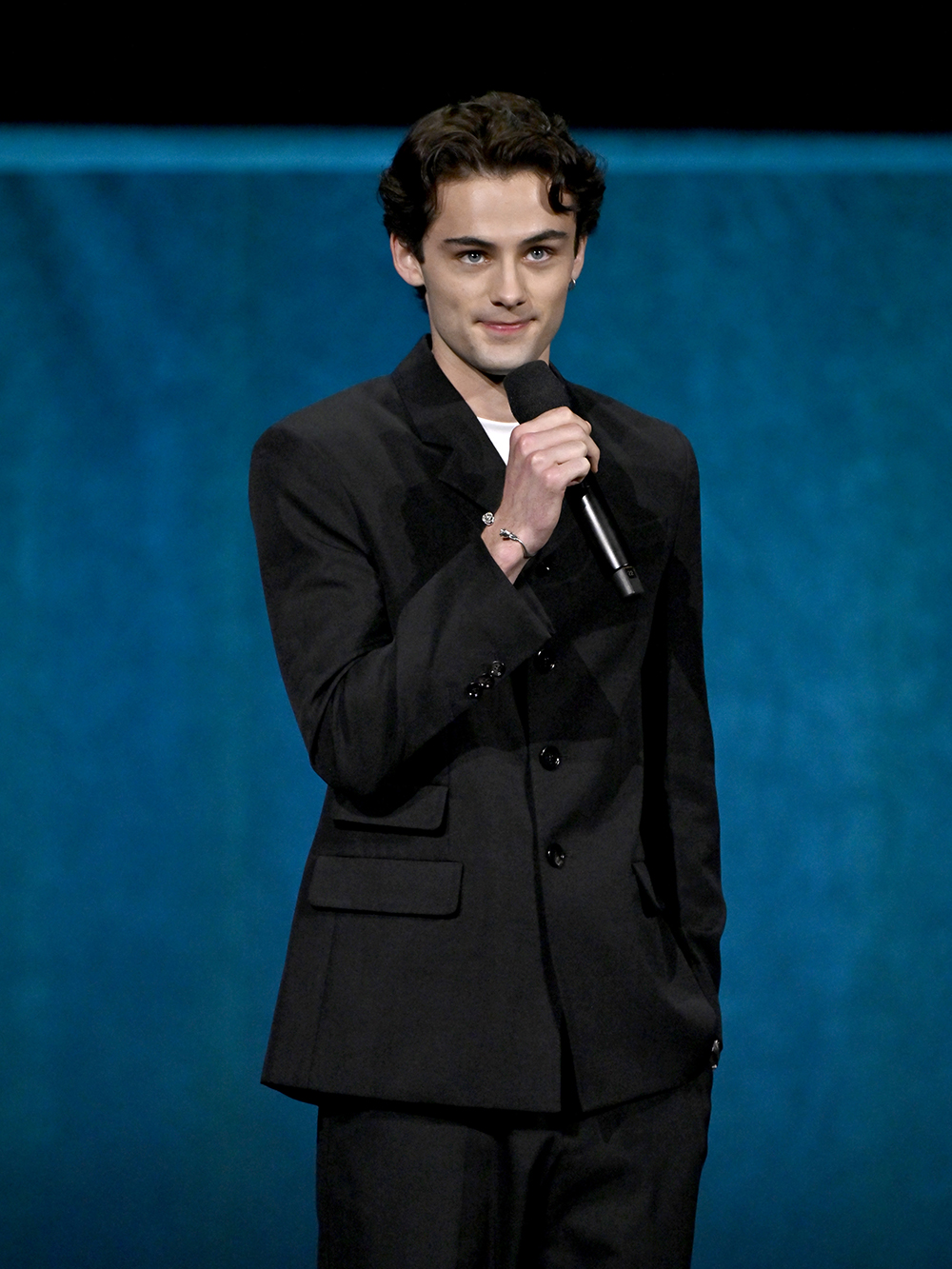
Photo courtesy David Becker Getty Images for CinemaCon. all Right Reserved
At CinemaCon 2026 in Las Vegas, Angel Studios used its Film Showcase slot to make a clear statement: the company that disrupted the independent marketplace with Sound of Freedom is no longer positioning itself as a niche distributor, but as a year-round theatrical player. The presentation, held during the special distributor forum at Caesars Palace alongside Sony Pictures Classics and StudioCanal, opened with Brandon Purdie, Executive Vice President and Head of Theatrical Distribution, delivering the company’s most direct message to exhibitors: “We believe there is no better place to launch a film than in theatres.” That line framed the entire showcase. Rather than lean solely on streaming or community-based releases, Angel emphasized cinemas as the center of its growth model, a notable stance for a company that originally built its audience through direct-to-consumer digital distribution. Shelley Schulz, Vice President of Domestic Theatrical Sales and Exhibitor Strategy, followed by outlining what comes next, reinforcing that Angel plans a broad and steady release pipeline rather than occasional breakout gambles.
The strategy matters because Angel has evolved rapidly in just a few years. Based in Provo, Utah, the company emerged from the former VidAngel business, later rebranding as Angel Studios and using equity crowdfunding, fan communities and guild voting systems to help finance and select projects. In 2025, the company became publicly traded under ticker symbol ANGX after a reverse merger, giving it more capital and legitimacy in the wider entertainment marketplace. That corporate maturation was visible at CinemaCon: instead of selling one title, Angel sold a slate. For theater owners hungry for consistent programming outside the major studios, that distinction is significant. The exhibition industry has repeatedly asked for more mid-budget and audience-specific releases, and Angel is attempting to occupy that lane with films aimed at faith-driven, family and heartland moviegoers, while gradually branching into action, biography and prestige drama.
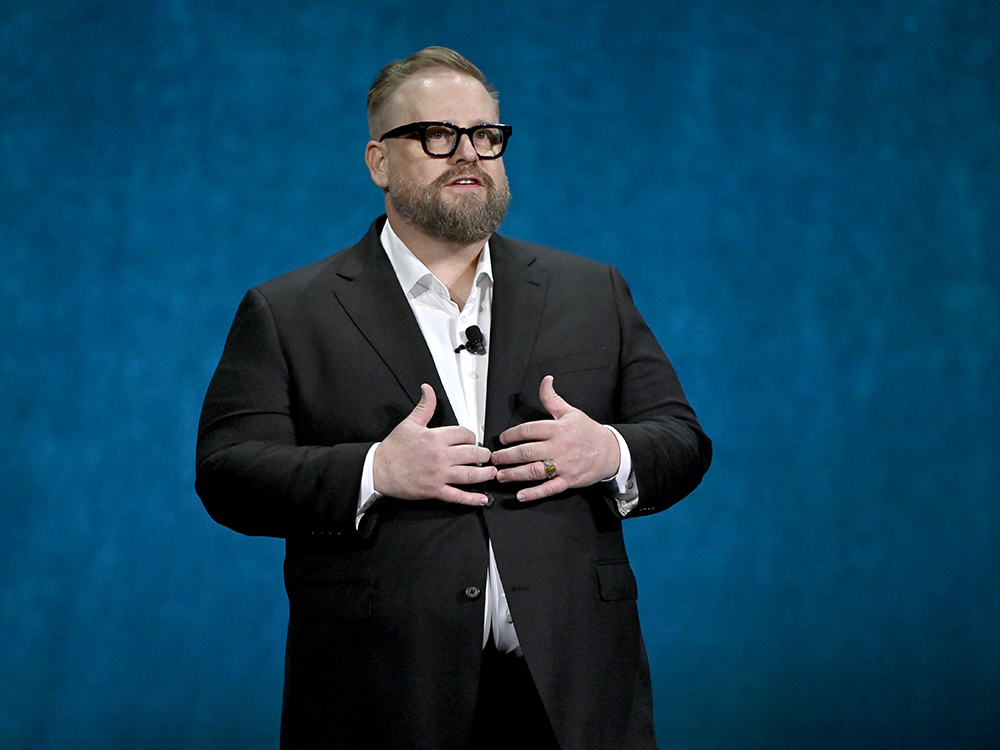
Photo courtesy David Becker Getty Images for CinemaCon. all Right Reserved
One of the first pieces of footage shown was a special look at Animal Farm, introduced as coming from director Andy Serkis. While details during the presentation were limited, the project instantly carried weight because Serkis has long been associated with ambitious performance-capture and darker literary adaptations. For Angel, backing a filmmaker with mainstream recognition suggests the company wants titles that can travel beyond its core audience. George Orwell’s material, political and timeless, also hints at a willingness to diversify tonally. It was one of the more intriguing moments of the showcase because it signaled sophistication rather than purely brand alignment.
Then came what attendees described as three headline announcements delivered in rapid succession. First was Angel and the Badman, a remake of the classic western, set for October release and starring Zachary Levi, Neal McDonough and Tommy Lee Jones. The choice is revealing: westerns remain commercially selective, but they overperform with older domestic audiences when marketed correctly. Pairing Zachary Levi’s approachable star persona with Tommy Lee Jones’ veteran gravitas gives the film crossover potential. It also continues Angel’s habit of reviving genres often underserved by major studios.
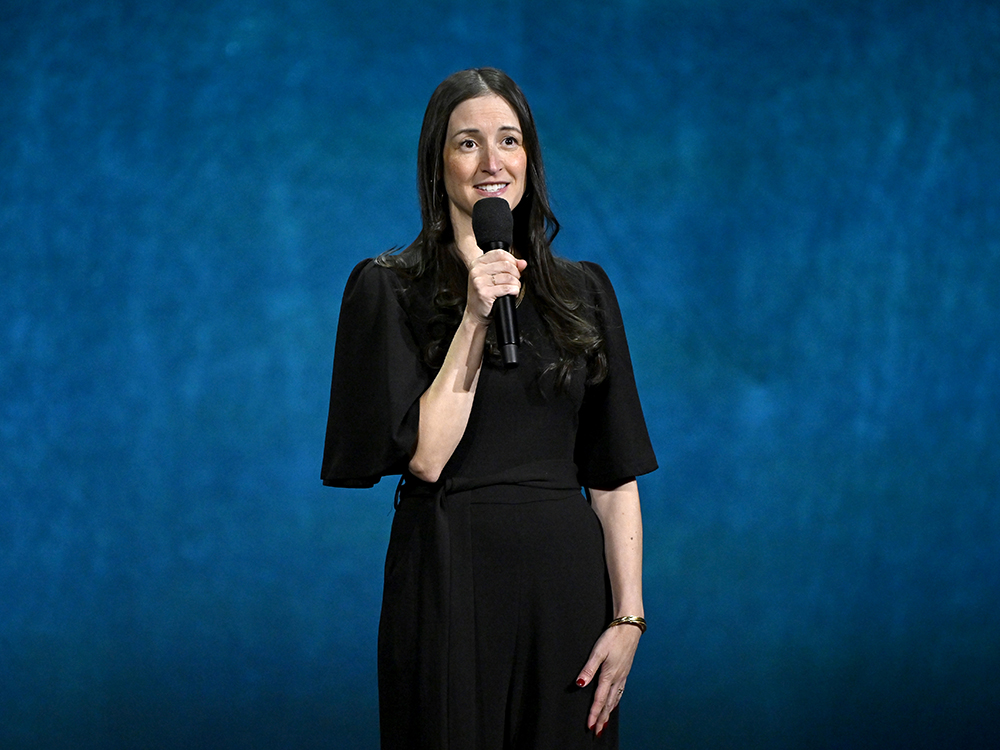
Photo courtesy David Becker Getty Images for CinemaCon. all Right Reserved
Second was Runner, scheduled for September 11, 2026, starring Alan Ritchson. Verified trade reporting added that Owen Wilson co-stars and the film follows a courier pursued while transporting a life-saving organ delivery, effectively blending chase thriller mechanics with emotional stakes. This may be one of the most commercially important bets in Angel’s lineup. Alan Ritchson, boosted by the success of Reacher, brings action credibility and growing mainstream appeal. If Angel can open a muscular thriller with a bankable streaming-era star, it would prove the company can compete outside the inspirational-drama space.
Third was The Brink of War, dated August 14, starring Jeff Daniels, Jared Harris and J.K. Simmons. A trailer was screened for attendees, with reports confirming the film centers on the 1986 Reykjavik summit between Ronald Reagan and Mikhail Gorbachev, dramatizing Cold War diplomacy at a moment when nuclear tensions were peaking. This is exactly the sort of adult-skewing historical drama that major studios now rarely produce theatrically. Casting Jeff Daniels as Reagan and Jared Harris as Gorbachev gives the project heavyweight dramatic credibility, while J.K. Simmons reportedly portrays Secretary of State George Shultz. For exhibitors, these films may not open huge, but they can play steadily with mature audiences often ignored by franchise-heavy schedules.
Angel also spotlighted several other upcoming releases, including Drummer Boy, described as an action musical, arriving November 6; Hershey, starring Alexandra Daddario and Finn Wittrock; and Zero A.D. for Christmas. Those titles underline how broad the company wants to become. Hershey appears designed as an uplifting American-founder biopic centered on chocolate magnate Milton Hershey, while Zero A.D. continues Angel’s biblical-event lane with a reworked title from the previously announced Bethlehem project. A striking through-line here is accessibility: every premise can be explained in one sentence, which exhibitors love because clarity sells tickets.

Photo courtesy David Becker Getty Images for CinemaCon. all Right Reserved
One of the presentation’s warmer moments came when William Franklyn-Miller, star of Young Washington, took the stage to discuss the July 3 theatrical release. He teased audiences by saying viewers would be surprised by “how intense it is,” before introducing a never-before-seen trailer. That anecdote matters because Young Washington could have been marketed as a conventional classroom-history title; instead, Angel appears to be selling it as youthful political drama with energy and stakes. Reframing historical figures for younger audiences may become one of the company’s smarter recurring strategies.
The broader takeaway from Angel’s CinemaCon showcase is that the company is trying to become a modern analogue to the old specialty mini-majors: a distributor serving audiences overlooked by blockbuster logic, but with increasingly polished commercial instincts. Since Sound of Freedom grossed more than $250 million worldwide, the industry has debated whether that success was a one-off cultural event or evidence of an underserved market. This presentation suggested Angel believes it was the latter. Instead of repeating one formula, it is now building categories: historical prestige, faith epics, family fare, western nostalgia, biopics and action thrillers. If even two or three of these titles connect, Angel’s theatrical credibility grows substantially.
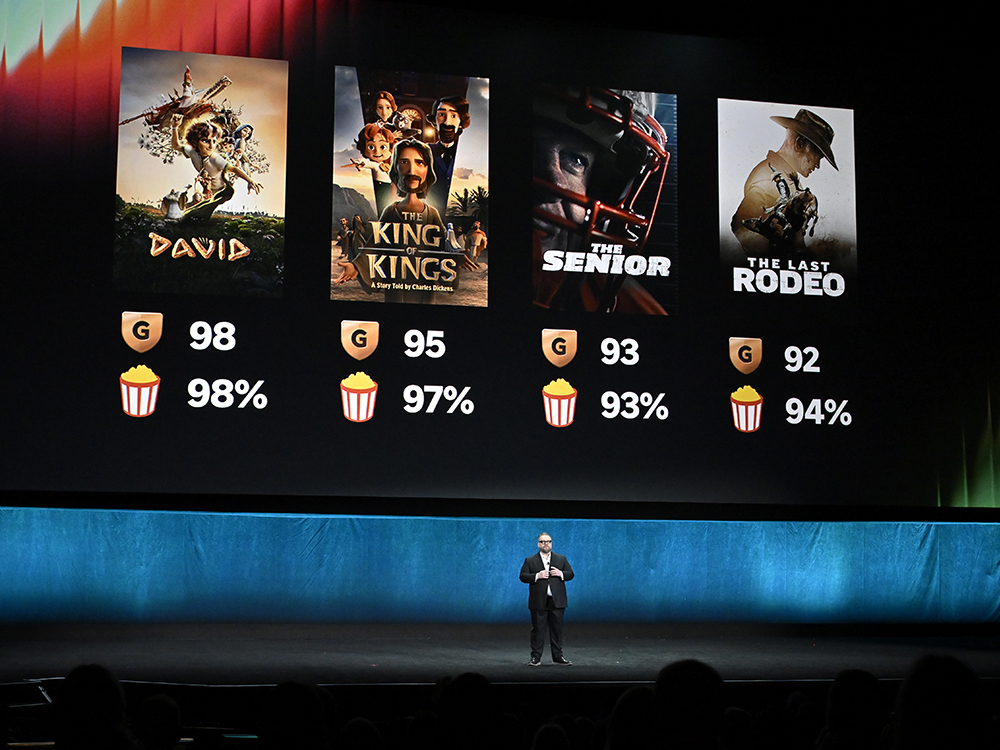
Photo courtesy David Becker Getty Images for CinemaCon. all Right Reserved
CinemaCon crowds often reward spectacle, stars and sequels. Angel Studios arrived with something else: conviction, a defined audience, and a slate built around movies many larger companies stopped making. Whether that translates into consistent box office remains to be seen, but among the independent presentations in Las Vegas, Angel’s may have been one of the clearest examples of a distributor showing not just movies, but an identity.
Discover the official trailers for these movies :
Angel And The Badman
Animal Farm
Runner
The Brink Of War
Young Washington