

WonderCon 2026 : For All Mankind expands its ambitious alternate history into a volatile Martian future with Season 5
Saturday 28 March, 3:55 PM PT Anaheim, Convention center 2026-03-28
At WonderCon, some panels feel like nothing more than promotional events, while others offer those rare, quietly electrifying moments when a series reminds you of just how far it has come, both narratively and emotionally. The presentation of For All Mankind at WonderCon 2026 undeniably fell into the latter category, as Sean Kaufman, Coral Peña, Matt Wolpert, Ben Nedivi, and Ruby Cruz gathered in the press room of the Anaheim Convention Center on March 28, 2026, to offer a deeper reflection on the long-term vision that has guided the series since its inception—a vision that has consistently elevated it beyond the boundaries of traditional television science fiction to make it something far more complex, almost historiographic in its narrative approach, where every narrative leap in time carries within it the accumulated weight of decades of alternative decisions, consequences, and ideological shifts.
What immediately emerged during the discussion was that Season 5, now set in the 2010s of this alternate timeline, represents a decisive turning point in the series, not because it simply amplifies its scope but because it fundamentally redefines the series’ central conflict, shifting from a rivalry between nations for the conquest of space to a far more complex and unstable question of governance, identity, and autonomy, as Happy Valley—once a fragile outpost on Mars—has now transformed into a thriving, densely populated colony with thousands of inhabitants, functioning both as a launchpad for deeper exploration of the solar system and as a self-sufficient society that increasingly sees itself as distinct from Earth—a transformation that Matt Wolpert and Ben Nedivi have described as the natural culmination of narrative threads sown several seasons ago, particularly in the wake of the dramatic events surrounding the theft of the Goldilocks asteroid, which effectively accelerated Mars’s economic and strategic importance while simultaneously intensifying tensions between those living on the Red Planet and the political powers attempting to regulate them from millions of miles away.
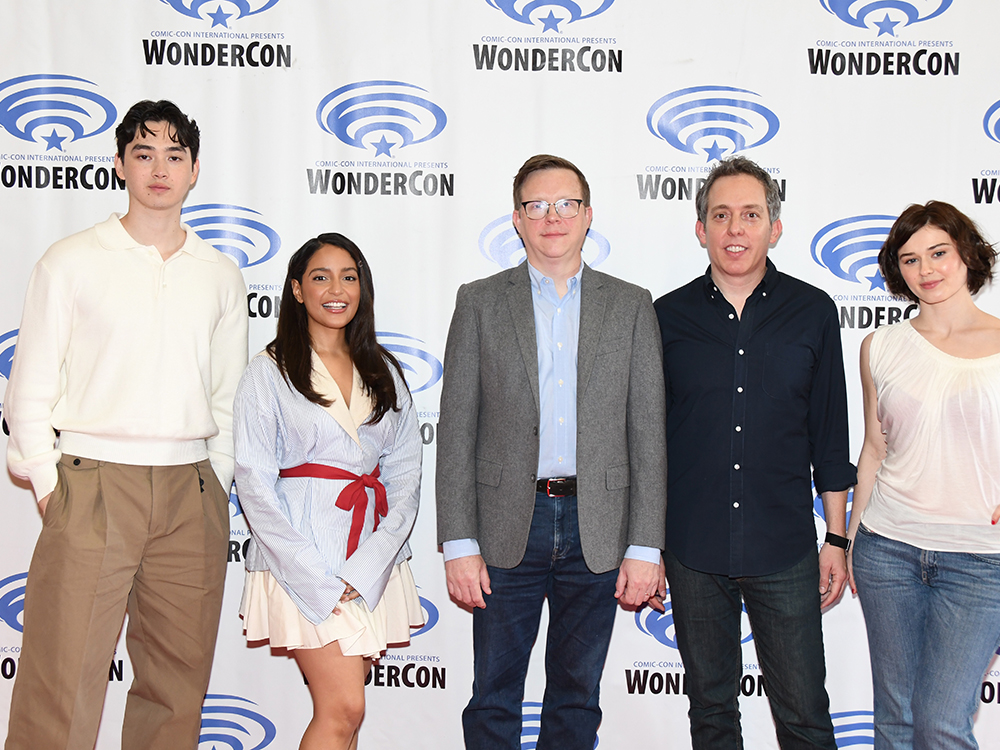
Listening to Coral Peña and Ruby Cruz discuss their characters offered a particularly fascinating glimpse into how the series continues to ground its grand speculative ideas in deeply human experiences, with both actresses emphasizing that life on Mars is no longer defined solely by survival, but by the emergence of a culture, a generational identity, and even dissent, featuring characters who were once pioneers and now find themselves within an established society grappling with questions that seem surprisingly familiar: who governs? Who belongs? And perhaps most importantly, who has the right to define the future? And it is precisely this shift that gives Season 5 a different emotional texture, moving away from the fascination of discovery toward the frictions of coexistence—a theme that resonates strongly at a time when real-world discussions about the commercialization of space and geopolitical competition are becoming increasingly relevant.
The presence of Sean Kaufman, representing a new generation within the series’ ever-evolving cast, has highlighted another key aspect of For All Mankind’s narrative strength: its ability to pass the narrative torch across decades without losing coherence or emotional engagement—a challenge few long-running series successfully meet, and yet, here, it seems almost natural, as the series’ structure—which advances by about ten years each season—allows it to explore the long-term consequences of its alternate-history premise in a way that is both sweeping and intimately connected, beginning with the decisive divergence of 1969, when Soviet cosmonaut Alexei Leonov becomes the first human to set foot on the Moon, a feat made possible by the continued leadership of Sergei Korolev, whose survival in this timeline fundamentally alters the trajectory of the global space race, forcing the United States to accelerate its own programs while paving the way for earlier inclusion of women and minorities, thereby reshaping not only space exploration but also societal progress in the broader sense.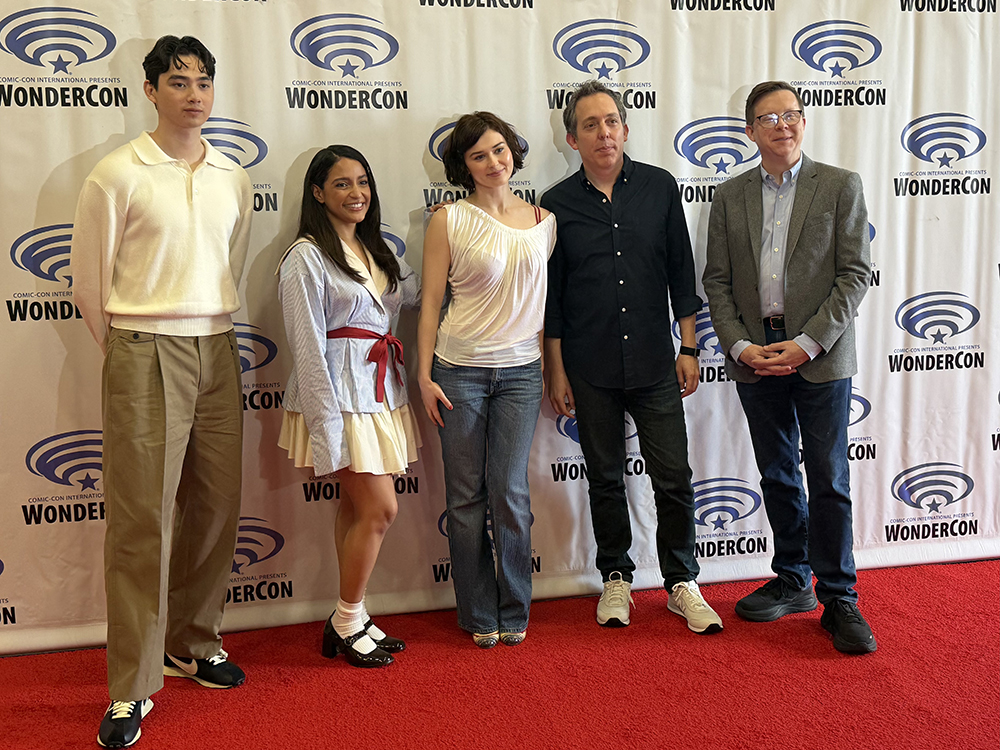
This carefully constructed alternate reality, imagined by Ronald D. Moore alongside Matt Wolpert and Ben Nedivi, continues to set the series apart from its contemporaries, as it explores not only technological advancements but also the repercussions of sustained global competition, creating a world where the absence of a climate crisis and the acceleration of civil rights movements appear as logical extensions of the series’ central premise rather than convenient narrative shortcuts, and it is this attention to causes and effects that gives *For All Mankind* its unique authenticity, even as it ventures into increasingly speculative territory.
First released on Apple TV+ on November 1, 2019, the series has gradually built a reputation as one of the platform’s most critically acclaimed productions, with its second season receiving particular acclaim and earning a nomination for the TCA Award for Outstanding Achievement in Drama. As confirmed prior to the launch of Season 5 on March 27, 2026, the series has already secured its long-term future with a sixth and final season scheduled for 2027, aligning with the creators’ original ambition to tell a story spanning approximately seventy years across seven seasons a level of narrative vision that remains increasingly rare in today’s television landscape.
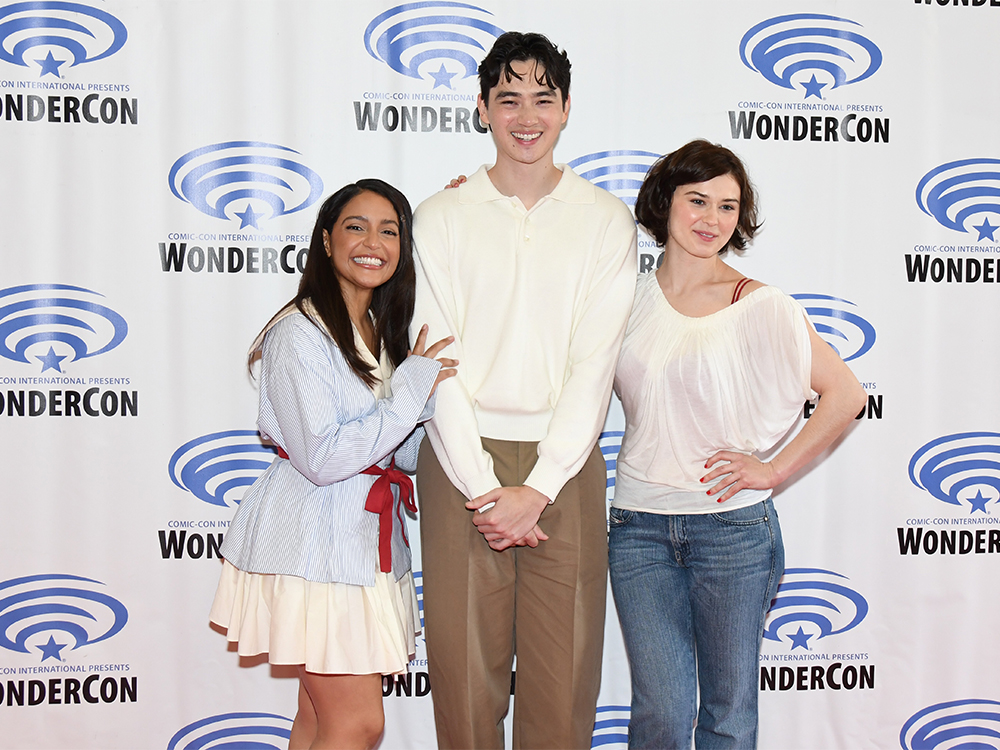
Beyond the immediate excitement generated by the current season, the announcement of Star City, a spin-off series centered on the Soviet space program, hints at a broader expansion of this meticulously constructed universe, offering the opportunity to explore parallel storylines that, until now, had largely remained in the background. At the end of the press conference, as photographers captured Sean Kaufman, Coral Peña, Matt Wolpert, Ben Nedivi, and Ruby Cruz in a moment that was both celebratory and transitional, there was a palpable sense that For All Mankind was entering its most thematically rich phase to date, a phase where the dream of reaching the stars has given way to the far more complex reality of life among them—a shift that not only deepens the narrative stakes but also reinforces the series’ enduring relevance as a reflection on ambition, progress, and the fragile balance between unity and division in the face of an ever-expanding frontier.
Synopsis :
For All Mankind chronicles the history of the Apollo missions. Rather than focusing solely on the facts, Al Reinert sought to highlight the human aspects of this extraordinary odyssey. Told by the astronauts themselves, they recall and comment on the images they had the privilege of seeing and experiencing on behalf of humanity: For All Mankind.
For All Mankind
Created by Ronald D. Moore, Matt Wolpert, Ben Nedivi
Starring Joel Kinnaman, Michael Dorman, Sarah Jones, Shantel VanSanten, Jodi Balfour, Wrenn Schmidt, Sonya Walger, Krys Marshall, Cynthy Wu, Casey W. Johnson, Coral Peña, Edi Gathegi, Toby Kebbell, Tyner Rushing, Svetlana Efremova, Daniel Stern, Mireille Enos, Costa Ronin, Sean Kaufman, Ruby Cruz
Music by Jeff Russo, Paul Doucette (season 3–present)
Executive producers : Ronald D. Moore, Matt Wolpert, Ben Nedivi, Maril Davis, Seth Gordon, Naren Shankar
Producer : Dia Dufault
Production companies : Tall Ship Productions, Sony Pictures Television[a], Delicatessen Media (season 5–present)
Network : Apple TV
Release November 1, 2019 – present
Running time : 42–82 minutes
Photos : Copyright Barbara Henderson