

The Mortuary Assistant : Jeremiah Kipp talks horror, realism, and adapting the hit video game
Wednesday 25 March, 12:00 PM PT USA 2026-03-20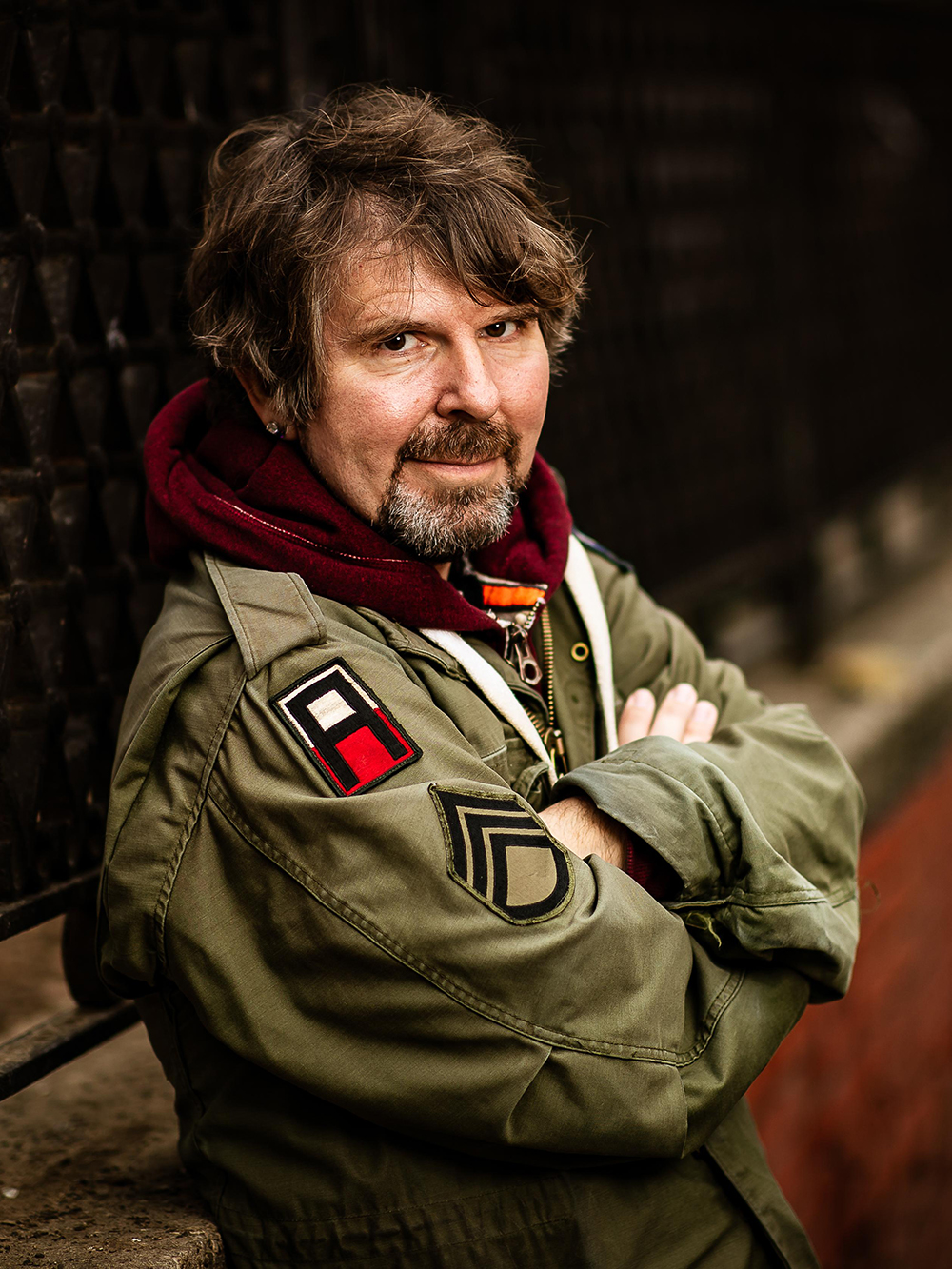
As horror cinema continues to explore new territories in the 2020s, few recent projects illustrate the growing bridge between independent video games and atmospheric genre filmmaking as convincingly as The Mortuary Assistant. On the occasion of the film’s streaming debut on Shudder on March 27, 2026, Mulderville had the opportunity to speak with Jeremiah Kipp, a filmmaker whose work has steadily gained attention among horror fans for its intimate, character-driven approach to fear, notably with Slapface in 2021. This new adaptation of the cult 2022 video game created by Brian Clarke and released by DreadXP under Epic Pictures Group represents a particularly fascinating challenge: translating a first-person interactive experience built on slow dread and ritualistic mechanics into a fully realized cinematic narrative without losing the suffocating tension that made the original game a bestseller in the indie horror scene.
Co-written by Tracee Beebe and Brian Clarke, the film retains the mythology of the game while expanding its psychological dimension, a direction that aligns perfectly with Jeremiah Kipp’s filmmaking style, often focused on trauma, isolation, and the fragile boundary between reality and hallucination. During our interview, the director spoke at length about the unusual pressure of adapting a title that already had a devoted fanbase, the importance of practical effects over digital shortcuts, and the deliberate decision to keep the film grounded in realism, even when dealing with demonic possession. With Shudder increasingly positioning itself as a curator of serious horror rather than just a streaming platform, the release of The Mortuary Assistant also reflects a broader industry shift toward smaller, more atmospheric productions that rely on mood, performance, and unsettling silence instead of spectacle — a philosophy that Jeremiah Kipp fully embraces and that makes this interview particularly timely as the film begins its second life on streaming after a limited U.S. theatrical run on February 13, 2026.
Q : What was your first reaction when you were approached to adapt the video game created by Brian Clarke into a film ?
Jeremiah Kipp : It's really nice to be talking to you. I really enjoyed your interview with the great John McTiernan and also Natasha Kermani for her wonderful film Abraham's Boys. Like really great conversations on both counts. I was immediately pulled into the world of Brian's game. It was so mysterious. It had such a sense of beautiful minimalism and, uh, I immediately was struck by the richness of the characters, the strength of the atmosphere, the creepiness of the scares, the density of the lore, but also there's something really universal about, like, walking into a room and seeing a dead body there that is inherently creepy and inherently strange, you know, and I think that Brian's game tapped into that weirdness. I think that it, um, it was a very cinematic game. Like when playing it, I was like, "Oh, I can see how this could be made into a movie because it had interesting characters who were different at the end of the story than they were at the beginning." And the way that you feel when you play the character of Rebecca Owens, I thought, you know, would be relatable to a horror movie audience where, when you watch a movie like John Carpenter's Halloween, you feel such empathy for Jamie Lee Curtis as Laurie Strode, you know. So, I thought that there was a connection between the game and cinema that I thought could be told, and I really appreciated the fact that we were able to translate that from game to movie.
Q : The original game relies heavily on player immersion. What was the biggest challenge in translating that first-person experience to cinema ?
Jeremiah Kipp : Ah, wonderful question. So, as I said, you know, when you watch a movie, you're not controlling Laurie Strode in Halloween, but you are identifying with her. You know, the audience, when watching a horror movie, will start yelling things at the screen like, "Don't go in there. Why did you drop the knife?" You know, and these things are very, very similar to when you're playing a game and you're, like, reacting in real time to something that's happening. Both of them are profoundly emotional experiences. And I think horror and the audience or the player's relationship to horror is what translates from game to screen in both cases.

Q : You previously directed Slapface, which also dealt with trauma and isolation. Did that film prepare you for The Mortuary Assistant ?
Jeremiah Kipp : Yes, it did prepare me for The Mortuary Assistant. Slapface was very personal filmmaking. In that sense, I wanted to make a film about where I grew up, you know. So, I grew up in a very rural backwoods environment. I didn't have a 10-ft tall monster in my life, but I wish that I had, you know, but, like, the stuff that that kid is dealing with kind of is akin to the dense backstory of Rebecca Owens, you know, and, like, she's dealing with her own childhood stuff as well. Uh, and the voices of the demons in the game, you know, they felt like metaphors for suicidal ideation and depression and guilt, you know. So, in that sense, you know, like I got this job because of Slapface, you know. Slapface was — the sales agent for that film was Epic Pictures Group and the distributor was Shudder — and those two teamed up to make this game into a movie. So, I was one of the directors they had in mind because they thought I might relate to the themes of The Mortuary Assistant, and indeed they were correct. I fell in love with that project immediately, and I felt it was as personal filmmaking as anything I'd done in Slapface.
Q : How closely did you collaborate with Brian Clarke during the writing process ?
Jeremiah Kipp : We were joined at the hip, you know, we were very close collaborators all through the entire process. Like, he was part of the interview process to decide on me as the director. And then, when the script was being developed, I was constantly speaking to Brian about the characters and about the rich history of Riverfield's mortuary. And I made sure that when we were on set, you know, like, we cast him as the second dead body that you see in the movie because I wanted to make sure that the game creator was there with us. But indeed, he had such a good time on the set. He was originally supposed to be on set only 5 days, but he was with us the entire time. You know, he fell in love with the process of filmmaking. And so, it was wonderful having him standing next to me by the monitor and, you know, asking him, like, you know, "Do you have any thoughts about the creature, like how the creature is moving?" And I was like, "Brian, can you just show the actor? Can you just move like the creature, and the creature will imitate you?" We would do stuff like that, like, and so it was very helpful and, you know, having Brian as a co-screenwriter, it allowed access to the game. You know, nobody understands the game better than Brian does. Nobody understands the characters or the way they speak or the way they are better than Brian does. So, having him be the co-screenwriter was able to bring the game into the movie and, you know, in ways that were hardwired into the project. So very much, we included the game creator throughout, and indeed all through post-production, you know, he was with us every step of the way. Even when we interviewed the sound designer, I made sure Brian was with me during the interview because I felt like sound is such a strong component in horror, the way that it affects the viewer. I wanted to make sure that Brian was part of the decision-making process of that, and indeed he was with me at the premiere and he will be talking to you as soon as we're done. So Brian and I are very much still like dance partners throughout this entire process.
Q : The screenplay is co-written by Tracee Beebe and Brian Clarke — how did that collaboration shape the final tone of the film ?
Jeremiah Kipp : I think Tracee was an essential element because she decided to pin the entire movie on the character of Rebecca Owens, you know, so, like, the throughline of the story from beginning, middle to end is Rebecca's story. And I think that Tracee, you know, she was like anything that doesn't support Rebecca's narrative is going to fall by the wayside. You know, I thought that was key. And, you know, Tracee's a very empathetic person who writes character-driven stories and is very interested in the impact of scares and shocks. So Tracee gave us the fundamental structure and then Brian filled in the world of his game.

Q: The embalming scenes feel extremely realistic. How important was it for you to use practical effects instead of CGI ?
Jeremiah Kipp: We decided from the beginning that this was going to be almost entirely practical effects-driven. You know, I mean, there were even things in the game where I talked to Brian and said that we might have to use VFX, and I think maybe we should just concentrate our strengths on practical effects. So, our practical effects artist, our special effects artist, was Norman Cabrera, who was a protégé of the special effects artist Rick Baker, who did American Werewolf in London. Now, Norman knew how we were going to shoot the dead bodies. We planned out our shots in pre-production, and he knew that we were going to get extremely close up on the wounds and on the embalming process. So he knew there was no margin for error, that the special effects had to look extremely realistic. Thus, when we were casting actors, he said, "Please send me over photos of the actors who are playing dead bodies so I can match their skin tones and their body types." And I’m sure he cracked open some medical journals to get the flesh beneath the skin, the meat underneath the skin, accurately. We also brought on an actor named Mark Steger to play the monster in the movie, The Mimic. Mark was an old friend of Norman’s, but he’s been in many TV shows like Stranger Things and Scary Stories to Tell in the Dark. He’s a remarkable creature actor, and he was actually the first actor that we cast. We cast Mark Steger as the monster before we cast Willa Holland as Rebecca or Paul Sparks as Raymond or anybody else for that matter. So yes, practical effects were essential. Almost everything—even some of the things in the movie that people might think are VFX—are actually done on set. There are scenes where Rebecca is possessed and is forced all the way across the room. Those were done in a more Everything Everywhere All at Once-type of way, where we would harness Willa Holland, the actor, to essentially an amusement park ride and travel her through the space in three-dimensional reality, in camera. So those effects were also practical and not done in post. We’re a very, very practical-driven movie.
Q: Did you consult real morticians or funeral professionals to make the procedures accurate ?
Jeremiah Kipp: Yes, I did speak to several young women who were Rebecca Owens’s age that were morticians, and it was extremely interesting because they were all very much like Rebecca Owens. They were very shy; often they had very tragic backstories. This job is something that a blue-collar person can get, and they were fascinated in talking about their craft. In many ways, the character of Rebecca Owens lives in her work and is not living in her life, which makes her vulnerable to the attacks of the creatures. I thought that working with the morticians, the real-life morticians, informed the character of Rebecca, but also really let me know that Brian Clark had done his homework and had made a character that was very true to reality.
Q: The film has a very slow-burn rhythm. Was that a conscious decision to stay faithful to the pacing of the game ?
Jeremiah Kipp: Yes, I loved that the game was told with such restraint. There’s a beautiful minimalism in the game, where you’re only seeing the tip of the iceberg and it suggests the dark depths underneath. This was very important to us. I loved the game so much, and I wanted to capture that feeling of quiet isolation, and then when you are attacked, there’s a bombardment. This was true to the spirit of the game and also an important reason to keep Brian Clark, the game creator, with us on set every day to maintain that beautiful atmosphere that he created so powerfully in his game.
Q: How did you work with Willa Holland to build the psychological arc of Rebecca Owens ?
Jeremiah Kipp: How do you work with Willa Holland to build the psychological arc of Rebecca Owens? Well, you hire a great actor and you get a great performance. But what was really great was Willa and I learning to trust each other. In pre-production, we would talk about the character, but we would always be relating the character to our own lives. So Willa would talk a lot about how she was a child actor in Hollywood and even a teenage actor in Hollywood, and she was spending more time on set in a make-believe reality than she was in school making friends. Thus, she had a very strange and lonely childhood, and she brought some of those elements into the character of Rebecca Owens in a way that was emotionally honest and deeply truthful. Also, she knew a lot of people who were in Narcotics Anonymous, so when she played that scene, she really wanted to honor the people that she knew in the program and play that scene as truthfully and honestly as possible. It was a lot of vulnerability on both sides—me talking to Willa about the ways I related to the character of Rebecca, and her talking to me about how she related to the character. So we held hands and did a trust fall together, and that’s what enabled us to proceed, doing very vulnerable, sensitive work in The Mortuary Assistant.

Q: Paul Sparks brings a very mysterious presence to Raymond Delver. What made him the right choice for the role ?
Jeremiah Kipp: I think Paul Sparks is a brilliant actor. And, you know, I didn't think he was going to say yes to this movie because he'd said in interviews before that he doesn't like horror films. So I, you know, the casting director, Allison Estston, was like, "What do you think of Paul Sparks?" And I was like, "Offer it to him." And when he received the script, he not only read the script, but he played the game. He did all the different endings of the game. He went on Reddit and was looking at subthreads, and he went and watched my movie Slapface. He did a deep dive into research before saying yes to the project. And then when we met, it was clear that he'd done so much homework and so much preparation and put so much thought into this character. And he knew that the role was—you only see so much of this guy, and he is a mystery to the audience. But Paul built the inner life of that character like he was building a cathedral, and he understood every aspect of what got that character to that point. He is a very, very thoughtful, smart, intelligent actor who I would love to work with again. Paul Sparks was an absolute dream and a joy to collaborate with.
Q: The morgue feels almost like a character in the film. How did you and cinematographer Kevin Duggin design its visual identity ?
Jeremiah Kipp: Kevin Duggin, our director of photography—I hadn't worked with him before, but from the very first interview, we were speaking the same language. We both understood that we were going to make a film using widescreen as a way to show things in the foreground and the background. It was something that was a key component of the game, seeing things out of the corner of your eye. We were both big fans of John Carpenter, you know, and indeed Kevin was a camera operator for Dean Cundey, who shot The Thing, Halloween, and Big Trouble in Little China. So he understood Dean's work really well. We have a few homages to Dean Cundey's camera work in our movie. And indeed, when we were posting camera tests and lighting tests on social media, the first like and the first thumbs up were from Dean Cundey. So I must tell you, I immediately felt like a little child, you know, watching great horror movies, to have one of my childhood heroes approve of our lighting. That was really meaningful to me and very meaningful to Kevin, too. Kevin was like a brother throughout the entire process and a real, wild collaborative mind. I would work with Kevin again any time.
Q: The score by Jeffery Alan Jones is very restrained. What kind of musical direction did you want for the film ?
Jeremiah Kipp: The score by Jeffrey Alan Jones is very interesting. What kind of musical direction did you want for the film? Jeffrey was a very, very intelligent, sensitive collaborator. And, you know, when Brian and I met him, he was talking about Riverfield's mortuary as if it were a character, as if it had its own autonomy and its own inner life. And when he was thinking about the music, he was thinking about this building as the antagonist of the film, you know. So, in many ways, the music in the film is the deep, unsettling spirit that lives inside Riverfield's mortuary. Jeffrey's a total artist, and, you know, when speaking to him, he's a master of his craft and a master technician, but when you speak to him, it's almost like speaking in poetry, artist to artist. He's a beautiful collaborator.
Q: Horror fans often say the scariest moments come from silence rather than noise. Do you agree with that philosophy ?
Jeremiah Kipp: I do agree with that philosophy. I think that it's an immersive experience, and those sort of things reverberate off the viewer, you know, so it's an essential ingredient and a vital component in cinema.
Q: How did the limited theatrical release on February 13, 2026 influence the way audiences reacted compared to festival or streaming viewers ?
Jeremiah Kipp: Wow, it's a wonderful question. You know, the theatrical experience is unique. I always, you know—you always, as a filmmaker, want to be able to show the audience the cinematic experience on a big screen with fully immersive sound. You know, Jeffrey Alan Jones had designed the soundscape in Atmos. So you're supposed to feel the sound all around you. So when we played it in theaters, the people who loved the game came out to see it, you know, and that was very meaningful to me because we cared very much about what the audience of the game thought of our film. So I'm so happy we were allowed to have the theatrical experience beforehand and then very quickly afterwards to show it on Shudder, which is for the streaming audience, so the viewer at home can have the personal experience. I think both are incredibly meaningful. When I was a child, I would go see a movie in a movie theater and respond to the feeling of the audience. But then there were so many movies that you didn't see in the movie theater that you saw on VHS or on DVD or Blu-ray, you know, and I really appreciated that we were able to get hold of those things and not miss them. So I think both viewing experiences are profound, rich, and rewarding, just in different ways.
Q: Shudder has become a major platform for serious horror films. Did you always see this project as a perfect fit for them ?
Jeremiah Kipp: Well, I think that they saw the project as a perfect fit for them because they were one of the producers, you know, but I've had a beautiful relationship with Shudder over the years when they took on my previous film, Slapface. They curated it so beautifully, you know, like they put it out into the world in such a meaningful, substantial way. So, when we were collaborating again on The Mortuary Assistant, it felt in many ways like returning home. I love the programming on Shudder because if you love slasher films, if you love psychological horror, if you love monster movies, if you love artsy films, if you love just pure splatterific entertainment, Shudder curates beautifully. The films that they program during their month are like jewels in a crown, pearls on a necklace. So the fact that they were so enthusiastic about The Mortuary Assistant was very meaningful to me, and it felt like being partners with an institution that I love so much. It was a privilege, an honor, and a joy to work with Shudder, and I would love to work with them again anytime.
Q: Video game adaptations used to aim for big spectacle, but this film is very intimate. Do you think the genre is changing ?
Jeremiah Kipp: I do think it is changing, and I think that the filmmaking technique from game to film adaptation is evolving. I think that they used to think of them as big, spectacular productions, you know, like when they did Super Mario Bros., they were like Blade Runner, which is antithetical to what that game is. And now I think because we've had a long history of video games, people are starting to crack the code and realize that it's about the characters, it's about the story, it's about the atmosphere of the game and representing that atmosphere cinematically. The Last of Us as a series was a huge step forward for games, where they understood that people loved these characters and loved going on the journey with them. And I think that Iron Lung also successfully did that recently, with Markiplier playing the lead role, you know, and it's wonderful because people who watch Markiplier on YouTube love him as a character, and then seeing him in Iron Lung took a character that people love and plugged him into a video game that people love. And I thought that that was also an intimate, engrossing experience. That is what we were aiming for with The Mortuary Assistant. And it feels like the closer indie horror game adaptations to cinema are to intimate experiences, the more personal they will be for the viewer. And, you know, in some ways it makes them very niche, but I think that means that if people like it, they will love it. You know, it certainly is meaningful to me when I see a good adaptation of a video game.

Q: Were there scenes from the game that you wanted to include but couldn’t for narrative or budget reasons ?
Jeremiah Kipp: Ah, there was an ending in the game where Raymond goes to a sublevel in the basement, encounters a strange and mysterious character, and I wanted so badly to include it in the film. I loved that scene so much. But again, you know, Tracy intelligently pinned the whole movie on Rebecca, and to go to that ending would have been to stray off Rebecca's story and do something about Raymond that would have felt like a loose limb, you know, a phantom limb. So we left that out. But I swore that if we ever did a prequel or a sequel or any other mortuary film, we will be damn sure to include that scene. I love it so much.
Q: What was the most difficult scene to shoot during production ?
Jeremiah Kipp: I think that every scene was a difficult scene to shoot during production. When we were shooting with Paul Sparks, he was there for five days, and he would walk up to me laughing and say, "Jeremiah, you've hit the trifecta. Every day we have heavy special effects, heavy stunts, and heavy page counts on an independent film." So, you know, the whole thing was a bit of a challenge. But you know, I think when you see movies that take place in extreme given circumstances, those are the movies that we kind of want to see. You know, the making of the movie is the film, and if the making of the movie was a struggle, then that is visually represented in the movie through Rebecca's struggle. I wouldn't have it any other way. I really loved making this movie. I loved the struggle of getting it onto the screen, and I greatly enjoyed every part of it. It was made by people who cared, you know—the producers, the distributor, the crew, the actors—they all cared very much about getting this video game onto the screen in a meaningful way. So in that sense, you know, it doesn't feel like pain, it feels like love.
Q: After The Mortuary Assistant, would you like to adapt another horror game, or do you prefer original stories ?
Jeremiah Kipp: Oh, wonderful question. I think there's room for both. I would choose both. You know, I love original stories, and I think there is always room for original stories, but I think there are so many spectacular indie horror games that would make fantastic films. I don't think all video games should be made into films. Some are experiential and, you know, they just don't translate into the world of cinema. But if you have a game that has great characters, a wonderful story, and a beginning, middle, and an end, there's a whole universe of indie horror games that would make spectacular films, and it would be a privilege to do some of them.

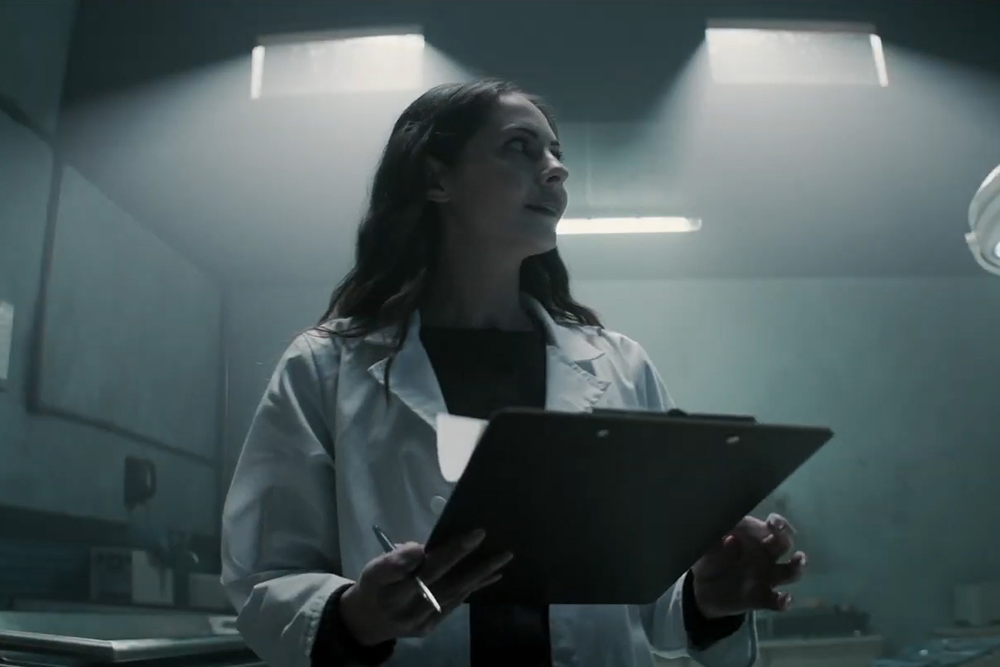
The film itself follows Rebecca Owens, played by Willa Holland, widely known for her work on Arrow, Legion, and The O.C., as she begins her first night shift at the River Fields mortuary, a setting that quickly becomes the stage for one of the most claustrophobic supernatural experiences in recent horror cinema. Opposite her, Paul Sparks, recognized for Boardwalk Empire, portrays Raymond Delver, a mentor whose calm demeanor hides layers of disturbing ambiguity, while the cast also includes Mark Steger, remembered for physically performing the Demogorgon in Stranger Things, alongside John Adams, Keena Ferguson Frasier, Emily Bennett, and Shelly Gibson, all contributing to a world that feels disturbingly grounded in procedural realism before descending into ritualistic terror. One of the film’s most striking elements, frequently highlighted by critics from outlets such as Screen Rant and In Session Film, is its heavy reliance on practical effects during the embalming sequences, which were designed to feel clinically authentic rather than stylized, an approach reinforced by cinematographer Kevin Duggin’s cold, desaturated lighting and editor Don Money’s deliberately slow pacing that mirrors the mounting dread of the original game.
Composer Jeffery Alan Jones adds to the unease with a restrained score that creeps in almost imperceptibly, allowing silence to become one of the film’s most powerful tools. Produced by Epic Pictures Group and Creativity Capital, and overseen by producers Patrick Ewald and Cole Payn, the film runs for 91 minutes but deliberately refuses the rapid-fire rhythm of mainstream horror, choosing instead to explore themes of guilt, addiction, and psychological vulnerability that critics, including Horror Fuel and Ginger Nuts of Horror, have noted as key to why the film works as a standalone piece rather than a simple video-game adaptation. In that sense, The Mortuary Assistant is less about jump scares than about endurance — the endurance of fear, of grief, and of the terrifying idea that the rituals meant to prepare the dead for peace may instead open the door to something far worse.
Synopsis ::
Rebecca Owens spends her first night working at the River Fields morgue. Soon, the corpses awaken from their long slumber and turn against her...
The Mortuary Assistant
Directed by Jeremiah Kipp
Written by Tracee Beebe, Brian Clarke
Based on The Mortuary Assistant by DreadXP
Produced by Patrick Ewald, Cole Payn
Starring Willa Holland, Paul Sparks
Cinematography : Kevin Duggin
Edited by Don Money
Music by Jeffery Alan Jones
Production companies : Epic Pictures Group, Creativity Capital
Distributed by Shudder
Release date : February 13, 2026 (United States), March 26, 2026 (Shudder)
Running time : 91 minutes
We would like to thank Jeremiah Kipp for taking the time to answer our questions.