

The Mortuary Assistant : Brian Clarke on Bringing His Indie Horror Game to the Big Screen
Wednesday 25 March, 12:00 PM PT USA 2026-03-20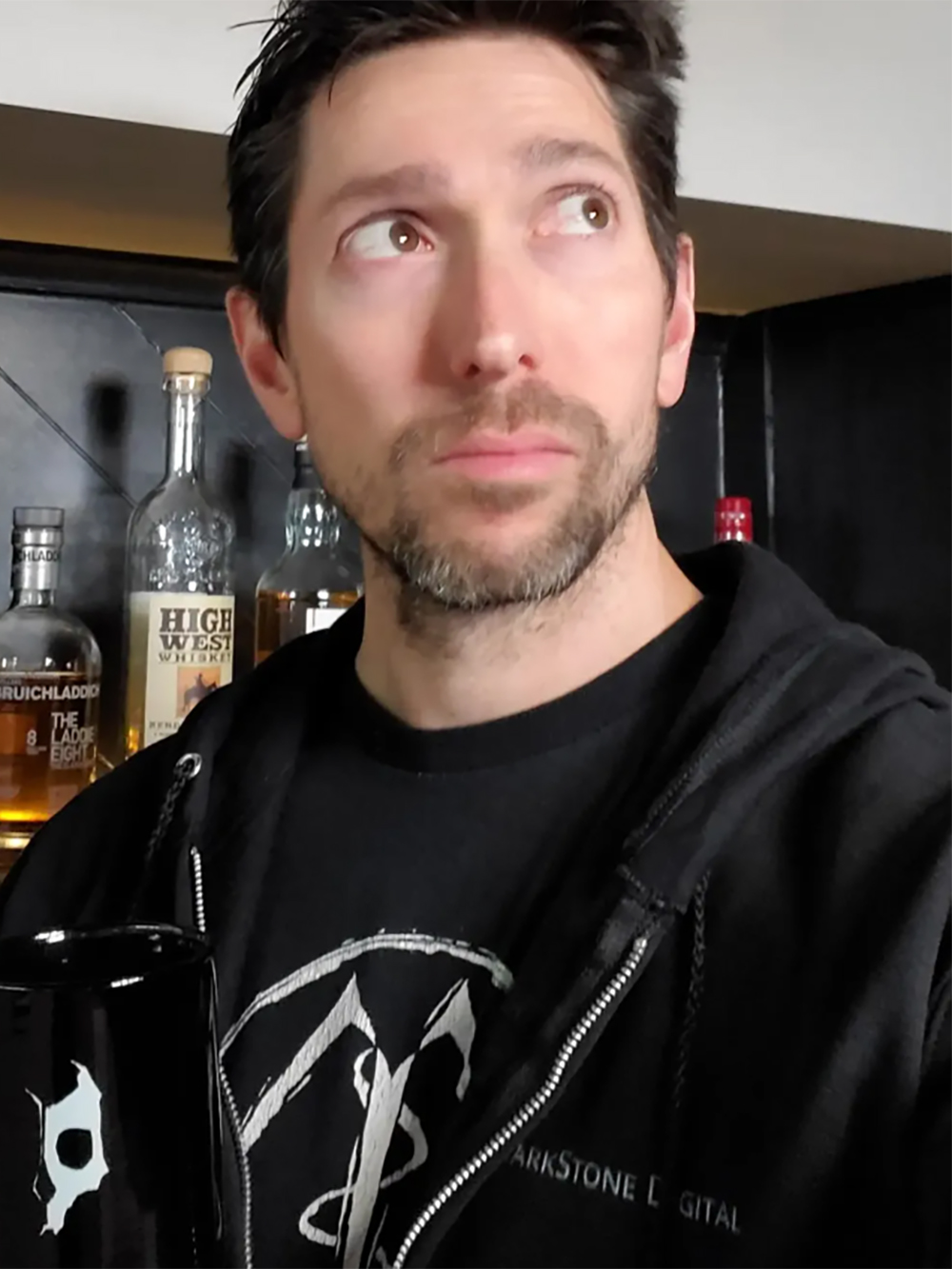
Talking with Brian Clarke about The Mortuary Assistant felt less like a standard promotional interview and more like a conversation with someone who still seems slightly surprised by the journey his creation has taken. What began in 2022 as an independent horror video game developed by Brian Clarke and released through DreadXP, a publishing label under Epic Pictures Group, has gradually evolved into a full cinematic project arriving on Shudder on March 27, 2026, after a limited U.S. theatrical run on February 13, 2026. During the interview, Brian Clarke explained how the original game was built around the idea of tension through routine, the unsettling feeling that something is wrong in a place where nothing should move, an idea that came from his fascination with quiet, procedural environments rather than traditional haunted-house chaos. That philosophy carried directly into the film adaptation, which he co-wrote with Tracee Beebe, while Jeremiah Kipp, previously known for Slapface, directed the feature.
What struck me most while discussing the film with Brian Clarke was how determined he was to keep the suffocating intimacy of the game intact, even when the project moved into a different medium. He mentioned that many adaptations tend to exaggerate scale, but the goal here was the opposite: to keep the story small, personal, and psychologically grounded. This approach aligns with the way the film has been described by several genre outlets, including IndieWire, which listed it among the most anticipated horror releases of 2026, highlighting how the project reflects the growing influence of indie horror games on modern cinema, a trend that increasingly favors atmosphere and character-driven dread over blockbuster spectacle.
Q : You created The Mortuary Assistant as an independent horror game in 2022. When you first released it, did you ever imagine it would become a feature film only a few years later ?
Brian Clarke : I started in indie development just making tiny games by myself in an office, and so yeah, I had absolutely no idea that this would be the direction that it would go. I was trying to survive, not make something that would turn into a movie, you know.
Q : What inspired the original idea behind The Mortuary Assistant? Why a mortuary, and why that very quiet, procedural type of horror ?
Brian Clarke : Well, so I didn't have an idea of where I wanted to set things at first. I did a game jam by myself, just one that I decided to do, give myself a week to make something small. And I ended up deciding, okay, well being with a dead body is scary, like being alone in a room with one. So what's a setting where you would do that, right? And I had a few options of either autopsy or embalming. And I chose embalming because there's a mix of artistry and science together, like good reasons to be nice and up close to the body. Um, and I think from there I just ended up coming up with systems to get you close to it, doing the various embalming techniques and everything. And once that prototype gained traction with big YouTubers and stuff like that, I knew that's what I needed to be making. And so I started leaning into story and the characters and all that. Um, and I've always loved horror. That's always been just what I work in, just because I think it's one of the best mediums to tell any kind of story.
Q : Your game became popular because of its atmosphere rather than action. Was that a conscious reaction against more traditional, jump-scare-driven horror games ?
Brian Clarke : I knew that I didn't want to do what a lot of other indie horror kind of ends up doing, which is they'll forcefully take your camera, show you something, and a loud jump-scare sound, and that's it. Um, nothing against those games, but what I wanted to do was something that I started to call passive jump scares, things that didn't react right away. It wasn't until you looked at it. It wasn't until you noticed it that it did something, right? and so with that, I knew atmosphere was really important. And so I tried to lean into silence. I used the storm and the sound of rain to kind of fill the void, but it happens for so long it kind of becomes the baseline for silence. And I didn't want to break that anytime except for when you noticed something was happening, to kind of accentuate what you notice.

Q : When the film adaptation was announced in 2022, what was your first reaction? Excitement, fear, or a bit of both ?
Brian Clarke : when they wanted to turn it into a movie, yeah, I was extremely… at first I figured they didn't plan on actually doing anything with it, because it was part of my contract experience signing the game with Dread for publishing, was, "Oh, we think it'd make a good movie. Would you be open to that?" and I was just trying to survive and keep the lights on. So I was like yeah sure, that sounds fine, whatever, yeah, movie, sure. But then later, after the game came out, it started to become a really serious conversation, and I was extremely open to it, but I was very unsure the entire time whether it was actually going to happen or not. But the entire experience was absolutely amazing. So I loved it. It was certainly surprising, but I enjoyed it.
Q : You co-wrote the screenplay with Tracee Beebe. How different was the writing process compared to designing the story for a video game ?
Brian Clarke : Well, when I wrote it myself, there was no limitation, right? I could just come up with just about anything. And that was, as long as I liked it, that worked. Um, once I was talking to Tracee about it, she had all sorts of questions about the characters and the story, and she knew that there were specific things that work in the game that needed to make it onto film, right? And so we had a lot of conversations about what those things were, and it was much more a dissection process instead of a creative process. I mean, it was creative too, but for coming up with the game, that's like pulling something out of nothing. For adapting it to film, it becomes a sort of inward look at something I had already created. So I was dissecting and looking at something that I had built in a way that I never thought I would, right? I understand my story. I understand my characters, but to analyze them in a way that makes sense for someone else that's writing an adjacent story that works for screen is a very interesting experience that I think, that inward look at what I had built, was fun to do and just very, very different.
Q : In a game, the player controls the experience, but in a movie the audience just watches. What was the biggest challenge in translating that interactive fear into cinema ?
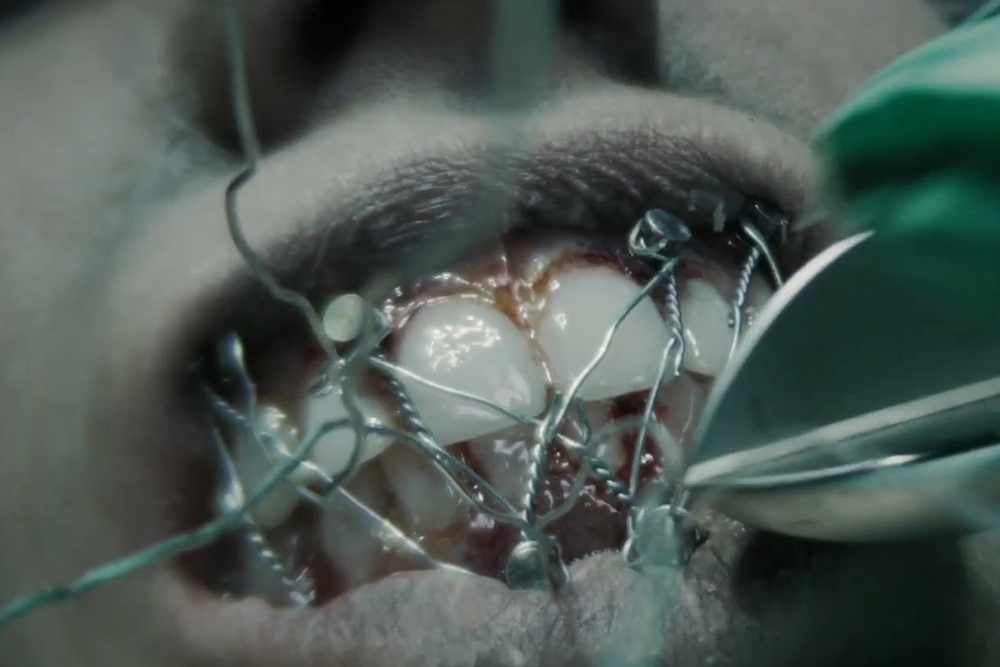
Brian Clarke : a lot of that is obviously up to Jeremiah and our director of photography Kevin Dugan, who made some great choices to bring things from the game into the film. One of them that I thought was a really interesting choice, a very good choice, was in the game you are working on a body. You get really close, you're doing all the different tasks and cutting open the neck, doing all the eye-cap stuff, you're getting very close to the body and checking things off this list. Well, the way they decided to interpret that for film was to use — they got this special type of lens that's used for medical procedures that gives you a very, very up-close view of things. And so all of our practical effects, like cutting open the body, doing the embalming with the trocar and things like that, they used these very, very detailed up-close shots that I think mimic what the player feels when they're really up close to the body in the game working on it. So it's things like that where they're thinking not just what moments can we bring from the game into the film. They were doing things to try to figure out how we could capture the feeling of playing the game onto the film, right? And so I think that's a really great example of the mindset that they were in and things that they did which worked out very well. I thought they were really successful.
Q : Director Jeremiah Kipp has a very specific style, especially in slow-burn horror. What made him the right choice to direct this adaptation ?
Brian Clarke : Jeremiah was my top choice when I was very fortunate to be involved in interviewing the directors and finding one for the film. Jeremiah was the only one where I really truly believed that he understood the characters. He understood the story. He had a personal connection to it and really loved it. He loved it almost as much as I did, and we had a very, very strong and good connection right off the start that turned into a friendship very quickly. So it was a no-brainer that he would be the one to work on it. He knew exactly what needed to be done to bring various aspects of the game to film, and his style from films like Slapface, which I really enjoy, his style I think works really well with trying to capture that feeling and emotion behind the characters and behind the game. He's all about those personal connections and growth in characters and their lived experience. And I think his love for that comes through with what he wanted to do with The Mortuary Assistant, which is why he was such a good fit. It was an absolute pleasure to work with him, no-brainer to work with him.

Q : One thing fans loved in the game was the feeling of isolation. How important was it for you to keep that same claustrophobic atmosphere in the film ?
Brian Clarke : Oh, extremely important. I mean, like you said, the isolation is a big part of the game and that atmosphere and that feeling. So the entire film is this close focus on Rebecca and her experience. So Jeremiah naturally came to the same conclusion that I did while I was developing the game, which is if I want there to be something for viewers to connect to, I really need to lean into Rebecca and her story and really focus on this character and the issues that she experiences, right? Her story beyond just her experience in the mortuary. And the choices that the entire crew made reflect that in how closely we follow Rebecca, not just in her story, but physically in the frame, where she's always feeling isolated in this larger environment and everything has this kind of claustrophobic feel wherever she goes. I think it's masterfully done the way they captured all of that. And so that was a big part of, you know, the mortuary is sort of its own character. And to kind of marry those two, to make it just Rebecca and this building, I think lends to that feeling of isolation that's so important in the game.
Q : The film relies a lot on practical effects instead of CGI. Was that something you pushed for, to keep the horror grounded and realistic ?
Brian Clarke : practical effects are something that Jeremiah and I both love. I think, um, it's funny. I come from a computer background. Everything I do is digital and 3D and everything. Um, but when it comes to film, I'm a huge believer in something being physical on set with you. I think it gives something more tangible for the actors to work with. It looks better just in general when you light it, and its presence on the set is undeniable. And the more stuff you do as a green screen, the more stuff you throw in after the fact, the more actors have to just kind of imagine things, the more you have to say, "Oh, well, this will happen in post, so don't worry about it." And we didn't want to do that. There are some shots, um, there's one shot in particular where Rebecca's in a coffin and it's a shot of her eye, zooming out of the coffin and getting this larger shot. It looks almost like it's CG, but it's not. It's done with one of those medical lenses I was talking about, where we get a really close view and pull out. It's a phenomenal looking shot, and it's all practical, and I think it just lends a whole different flavor. It has this kind of more old-school, almost like '80s horror kind of vibe to it, which I actually really love.
Q : Rebecca Owens is a very vulnerable character, and the story deals with trauma and addiction as much as demons. Why was it important to give the horror an emotional core ?
Brian Clarke : as I knew from the beginning that I wanted something to deal with demonic possession, and you're basically dealing with a spooky mortuary haunted house sort of thing, and you've got demons in there, right? Um, but as I made the decision to lean into Rebecca's character, it also started to inform more aspects of the story for how demons operate, the demonology of The Mortuary Assistant universe, which is the fact that as demons possess you, they start to exploit the deepest, darkest parts of yourself. And so digging into Rebecca's past was really important. And so that's why her past has the depth that it does, has the turbulence that it does, so that there's something there for the demons to work with, for there to be something scary in the environment. And so I ended up building, ultimately, this metaphor of demonic possession being analogous to the experience of drug addiction and the concept of demon possession. It's drug addiction in that you don't realize it's taking over you. You don't realize what it's doing to you, what it's doing to the people around you, and even if you overcome it, you're not cured of it. It's just something that you know how to deal with now, and you're stronger and move past. So those two ended up being like two sides of the same coin for the story of the game, that I think ended up working very well and ended up being something that various audience members really identified with, something that you could resonate with as a personal story, and that was important for both the game and the film.

Q : Seeing actors like Willa Holland and Paul Sparks bring your characters to life must be surreal. What was it like the first time you watched them perform scenes you originally imagined alone ?
Brian Clarke : they were interesting to work with. It was a pleasure. It was awesome. But they were two very different approaches. Willa had never played the game before. She didn't really know much about it, but she understood the character and she had a lot of personal experience that she wanted to connect with the character. And I think it really comes through in her performance. And in particular, there's a scene in Narcotics Anonymous where she gives a speech, and she made up that speech. That was one of those where I was on a flight heading back to the shoot, and it was the one thing I wasn't there for, that I was like, "Man, I don't know about some of this dialogue. I wish I could adjust some of it." And I came back and she's like, "I hope you don't mind, I changed the dialogue for this scene." And they played it for me. It was perfect. So she really brought herself into the character, which very much mirrors Rebecca as a character. So it was a perfect fit. And for Paul also, like Raymond, he was very meticulous. He understood, he had played the game, he had watched videos, he went on Reddit and took part in conversations about the character, trying to understand the character. He had tons of notes. He would ask me about deeper lore about this character that wasn't in the game. He knew things that I didn't know how he knew them, because they were things that were my lore. And I'm sure I said it somewhere or posted it somewhere offhand, but I have no idea how he knew it. And so they both took approaches that were very similar to their characters. And there was a moment when Paul came, you know, he wears glasses and dresses all nice and everything, but there's a moment where he comes out, he's got contacts on, he's wearing Raymond's blue button-down shirt and khakis and everything. And it felt very like I'm standing next to my character. This is really, really strange. That's very cool.
Q : Did the movie allow you to explore parts of the story that you couldn’t fully develop in the game ?
Brian Clarke : the NA example is a good example, I think, where we expand on a character without adding something that is out of place for the character, right? And that was something I think we really wanted to make sure happened in the film, was that anything that we added that was new would make sense in the universe and would make sense for the characters. Not so much that we're like, "Oh, we can't deviate at all from the story that's been built in the game." We follow it very closely, but there are a few things that we do differently. And I think the important thing is that we don't do a disservice to the game, to the concept, right? And I think that we achieved that pretty well, to walk that line of adding a little bit extra, giving depth to these characters and things that players haven't seen before, without putting so much out there that players feel like it's not connected, right? I think that was the important part, and I think they did a good job with it.
Q : Horror fans often say the scariest moments in The Mortuary Assistant come from silence rather than noise. Why do you think quiet horror works so well ?
Brian Clarke : the silence, I knew from the beginning for the game that I wanted to play into silence as a part of the horror, because like we were talking about, the atmosphere being very important. I felt that if I had tons of stingers and musical rises and stuff like that, that I would break that unease that's built during the gameplay. So I think silence plays a huge role in the build. So if I do a little breadcrumb that something spooky might happen soon, there are little hints of it, and then it's just silent, and then I break that silence with something, I think that's successful. With the movie, we wanted to do that too. But I know that Jeffrey Alan Jones, who did the sound, had to walk this line of we've got to keep it entertaining for the movie and hit these musical score notes properly in scenes, but we also want to have those moments where we drop down. And you're kind of doing the same thing, playing the same game in film, where you're like we want to have sounds for these things so we can pull them away, and then when silence is there it has more meaning, right? And I think that's one of those things that's sort of an eternal struggle for films, because you can't just have a permanently silent movie, right? I mean, I think you'd get bored. So you've got to have some things that give you these cues, and so it's an interesting balance, rather than from the game to the movie, where the game is almost all silence all the time, and the movie has its moments of silence, but also has its moments of music and build to kind of supplement that silence when it comes in later. It's kind of another, you know, two sides of the same coin.
Q : The film had a limited theatrical release before coming to Shudder. Do you think streaming platforms are becoming the best home for this kind of atmospheric horror ?
Brian Clarke : I think it's both, because I love that Shudder exists. It is a fantastic thing that you just have a non-stop horror library. I think it's beautiful. They take indie films of all kinds. There's John Adams, a director in the Adams Family films. He's a writer, director, everything. His family just makes movies, and Shudder picks those up too, and they're great movies. So I think having a place like that where you can have sort of an official release for indie films is wildly important. At the same time, I would love to see more indie films make their way into theaters, because it's an experience. I can tell you when I went to the first screening in New York to actually see it in a movie theater, the experience of that versus, you know, I had seen it a bunch of times on my monitor going like, "Oh, I like this thing, that thing, whatever," giving critiques in post. But seeing it on a screen with other people in the theater, it's just a completely different experience that I think filmmakers hopefully could have more access to. I think that's kind of the future for filmmaking, is getting these smaller creators in, because big movies are kind of not hitting the mark right now. They're doing these big bombastic things, and they don't always please everybody. Indie films, while not pleasing everybody either, there's a lot more of them and they're a lot crazier ideas, and they can be a lot more fun. So I think there should be more access to them.
Q : Indie horror games are influencing movies more and more today. Do you think we are entering a new era where game creators will become filmmakers ?
Brian Clarke : I don't know about becoming filmmakers. It's certainly something I would like to do because I have a lot of fun doing it. But I think, as far as film adaptations go, yeah, because you can look at Iron Lung that Markiplier just did, and we got Five Nights at Freddy's and Mortuary Assistant here. I think there are waves in Hollywood of what becomes the big thing for a bit, right? And it's been Marvel for like ever, you know, and those are fun and great big blockbuster things, but I think there's a bit of a desire for weird and out-there ideas that are kind of reminiscent of the 80s and 90s. And I think the indie horror space, indie horror games, are this sort of untapped market for weird and crazy ideas because they're made by one guy who wants to do something strange, you know, and I think they're a great chance for other movies. Not all of them should be made into movies, but I think there are some great ones out there that should.
Q : Looking back at your career, what did you learn from making the game that helped you during the film production ?
Brian Clarke : I think what's interesting is I spent 13 years in AAA working at bigger studios, so I have experience working on big teams. That helped a lot in learning how to work with other people from other disciplines that complemented each other. Right now, for the last 7 years, I've been doing indie, where I do everything myself, which has also been really helpful in that it's made me more confident in my own creative decisions and my own choices from a technical standpoint as well. And so I think those two married together helped me be helpful to Jeremiah on set and to others. I was very timid at first, jumping into film and being involved in all that, but Jeremiah especially was very welcoming and very collaborative, and it made me feel very welcome. So I was able to take those experiences from my previous jobs and bring them onto the set and actually be useful, and actually be helpful to the art team, to Jeremiah, to everybody in some way.
Q : Was there a moment during the making of the movie where you thought, “This is exactly what I imagined when I created the game” ?
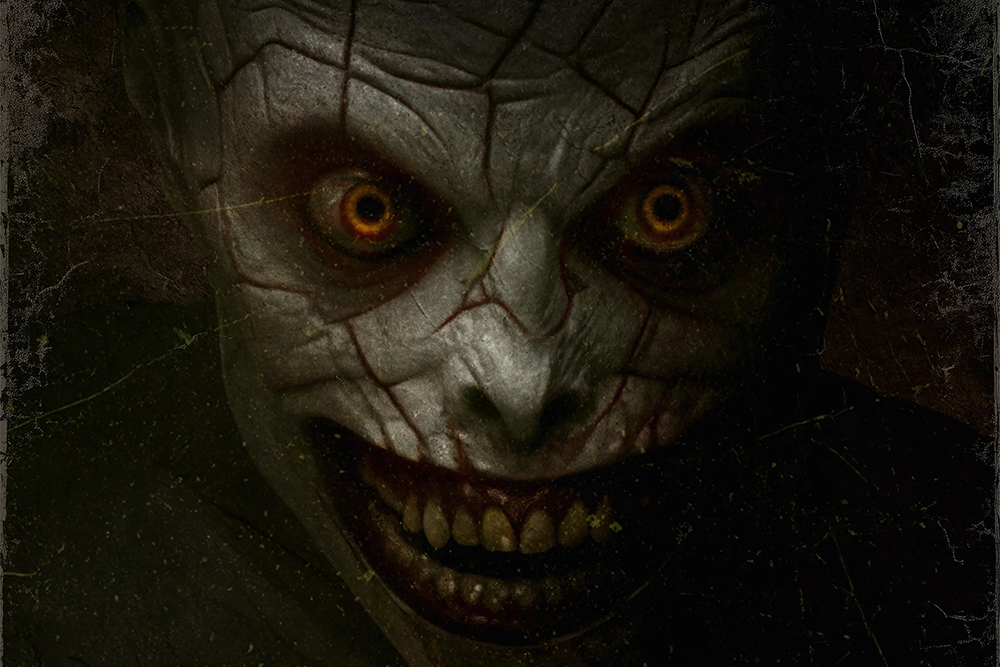
Brian Clarke : I think there were moments where we were hitting it and I'm just like, this is awesome, this is great. I know we were doing things with the mimic. We had Mark Steagall, who plays the mimic, who was on, you know, he plays Demogorgon in Stranger Things, and I know his work. So I had the luxury of showing him, like, oh, well the mimic crouches like this, and maybe you could do this and move off-screen this way, and then he'd do that, and I'm like, oh, this is really cool, I work with Mark Steagall, this is awesome. And so there are things like that where we're firing on all cylinders and it's great. And there are other things where there are moments where I'm like, it's not quite my choice. But at the same time, you have to realize that it's not just me in my basement making a game. It's Jeremiah, it's Tracy B.B., it's Kevin Dugan, it's all these different people that also have interest in Mortuary Assistant and the universe and the story and making films, and they have their expertise that I don't have. And so it was definitely a balance of where do I step in and kind of say stuff, and where do I trust the process and the skill sets of others and just let things take the course that they're taking, right? And it's definitely a learned skill to work on a big team like that. I say big, it was 30 people, but you know.
Q : Fans of the game know there are multiple endings and hidden lore. Did you ever consider making the film more ambiguous or branching like the game ?
Brian Clarke : So the multiple endings, I mean, there are six of them, right? So in the movie, we tackle quite a few of them. I think we tackle like three or four of them. But there are a couple, especially the most recent ending, I would love to put into another film. I would love to do something with it because I think there's more that can be shown, that can be told, and you can't throw everything in, right? I think it is an exercise not to throw everything in. Like, I think fans, you want to please fans, you want to give them everything, but at the same time, if you put all of it in there, you lose some of the things that need to be done uniquely for film. But that being said, like I said, there are other endings where I would love to tackle more than what we were able to put on screen, which means, hey, maybe we'll be lucky enough that I can be involved in another one. Maybe I can write that one. I would love to write a film at this point. This experience definitely lit a fire in me where I'd love to explore other avenues, not just game development.
Q : After this experience, do you see yourself continuing to work in film, or is your heart still mainly in video games ?
Brian Clarke : Sort of dovetails into what I was saying. Yeah. Um, so I love making games. It's a great experience. Especially on my own now, in this capacity, in the indie space where I just do the thing I want to do. I love it. It's great. Um, there was a point very early on where I was trying to figure out what I wanted to do in life, where I was at a sort of a crossroads, where I didn't know if I wanted to go into film or make video games. And I thought film was for other people, a certain type of person, a much smaller, harder-to-get-into community. And so I was discouraged, and I had always been playing games and tweaking things, messing around with games and modding them and stuff. And so I just sort of naturally went that path. Uh, I don't regret it at all. Like I said, I love making games, but working on this film sort of reminded me of one of my original loves, which is film. I love telling stories in my games, and the way I tell stories in my games is somewhat cinematic at times, and is influenced by films that I've watched. So I absolutely, at this point, would love to entertain other things as well. And I know Jeremiah and I want to work together again in whatever capacity. We just like working with each other. We think we complement each other well. Um, so yeah, I don't think this is the end of my movie experience. I'm very busy with Paranormal Activity right now and wanting to finish that, so that's my first focus, but who knows where we go from there. I'd love to experiment and see what's out there, you know.
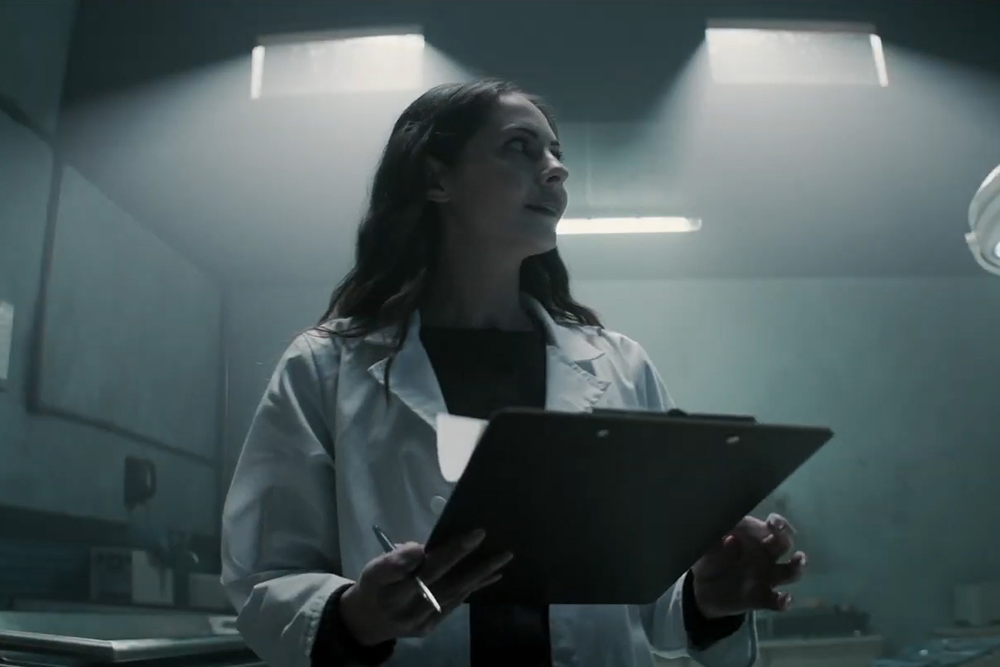
The film itself follows Rebecca Owens, played by Willa Holland, a newly certified mortician working her first night shift at the River Fields mortuary, where routine embalming procedures slowly turn into a confrontation with demonic forces and personal trauma. Opposite her, Paul Sparks plays Raymond Delver, a mentor whose calm demeanor hides disturbing knowledge, while the cast also includes Mark Steger, known for physically portraying the Demogorgon in Stranger Things, alongside John Adams, Keena Ferguson Frasier, Emily Bennett, and Shelly Gibson, all contributing to the film’s claustrophobic tone. Directed by Jeremiah Kipp and produced by Patrick Ewald and Cole Payn, the movie deliberately avoids heavy CGI in favor of practical effects, something critics such as Screen Rant noted when praising the realism of the embalming scenes, shot by cinematographer Kevin Duggin in cold, desaturated lighting that reinforces the feeling of isolation.
Editor Don Money keeps the pacing slow and deliberate, mirroring the gradual escalation of the original game, while composer Jeffery Alan Jones provides a restrained score that builds tension without overwhelming the atmosphere. Reviews from genre outlets like Horror Fuel and In Session Film have emphasized that the film works not only as an adaptation but as a standalone supernatural drama, especially because it explores themes of addiction, guilt, and psychological fragility rather than relying solely on possession clichés. That balance between emotional vulnerability and supernatural horror is what makes The Mortuary Assistant feel like part of a broader evolution in horror cinema, where projects produced by companies such as Epic Pictures Group and released through curated platforms like Shudder are proving that smaller, carefully crafted stories can generate just as much impact as large-scale studio productions, especially when they understand that sometimes the most terrifying sound in a horror film is not a scream, but silence in a room where nothing should be alive.
Synopsis :
Rebecca Owens spends her first night working at the River Fields morgue. Soon, the corpses awaken from their long slumber and turn against her...
The Mortuary Assistant
Directed by Jeremiah Kipp
Written by Tracee Beebe, Brian Clarke
Based on The Mortuary Assistant by DreadXP
Produced by Patrick Ewald, Cole Payn
Starring Willa Holland, Paul Sparks
Cinematography : Kevin Duggin
Edited by Don Money
Music by Jeffery Alan Jones
Production companies : Epic Pictures Group, Creativity Capital
Distributed by Shudder
Release date : February 13, 2026 (United States), March 26, 2026 (Shudder)
Running time : 91 minutes
We would like to thank Brian Clarke for taking the time to answer our questions.