
 English
Festivals - Festival Cinémathèque 2026 : Inside the making of Saturday Night Fever with John Badham
By Mulder, Paris, Cinémathèque, 14 march 2026
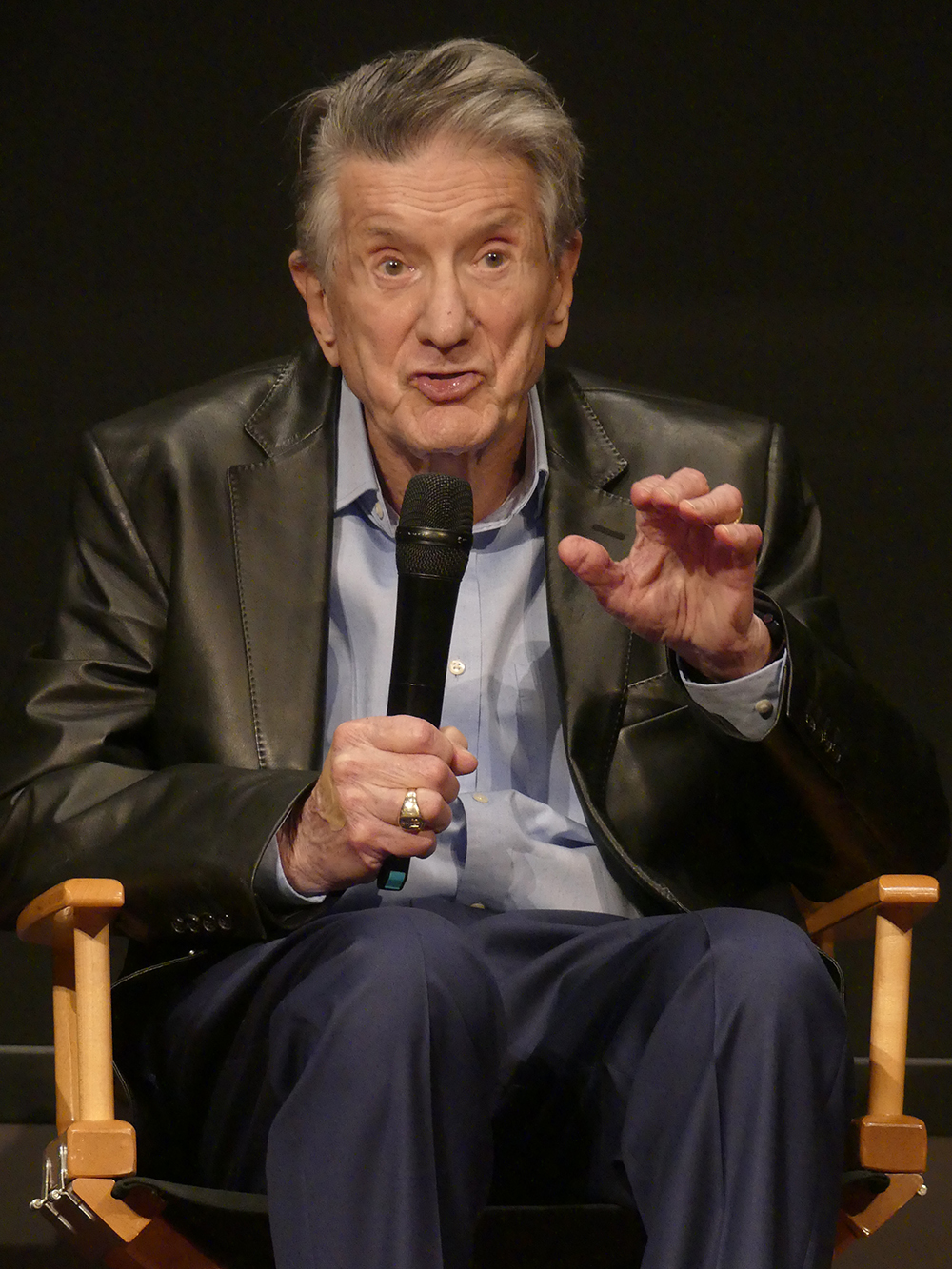
On March 14, 2026, the thirteenth edition of the Festival de la Cinémathèque française offered one of its most memorable moments with a special screening of Saturday Night Fever followed by an exceptional conversation with its director John Badham, held in the main theater of the Cinémathèque in Paris. The event perfectly illustrated the spirit of this year’s festival, which chose to honor two emblematic figures of American cinema from the late twentieth century: actress Debra Winger, celebrated for the rigor of her career and her collaborations with filmmakers such as Bob Rafelson, Alan Rudolph, Costa-Gavras, Karel Reisz, and Bernardo Bertolucci, and filmmaker John Badham, whose filmography captures both the rise of the Hollywood blockbuster and the anxieties of modern society. From Saturday Night Fever to WarGames and Blue Thunder, his work has repeatedly anticipated cultural and technological shifts, and his presence as guest of honor naturally drew a packed audience eager to revisit one of the defining films of the 1970s on the big screen in the setting where cinema history feels almost tangible.
The screening itself quickly reminded the audience why Saturday Night Fever remains such a cornerstone of popular culture. Released in 1977 and produced by Robert Stigwood, the film stars John Travolta as Tony Manero, a young Italian-American from Brooklyn whose mundane working-class life finds its only escape on the dance floor of the 2001 Odyssey disco. Inspired by the 1976 New York magazine article “Tribal Rites of the New Saturday Night” by Nik Cohn, the film became a global success, transforming Travolta into an international star and turning disco music into a worldwide phenomenon. The soundtrack, largely driven by the Bee Gees, sold more than forty million copies and remained one of the best-selling albums in history for decades, while the film itself was later selected by the United States National Film Registry for being “culturally, historically, or aesthetically significant.” Seeing the film again in a theater filled with cinephiles and students created a strange but powerful contrast between the gritty realism of its Brooklyn locations and the almost mythological aura the film has acquired over nearly fifty years.
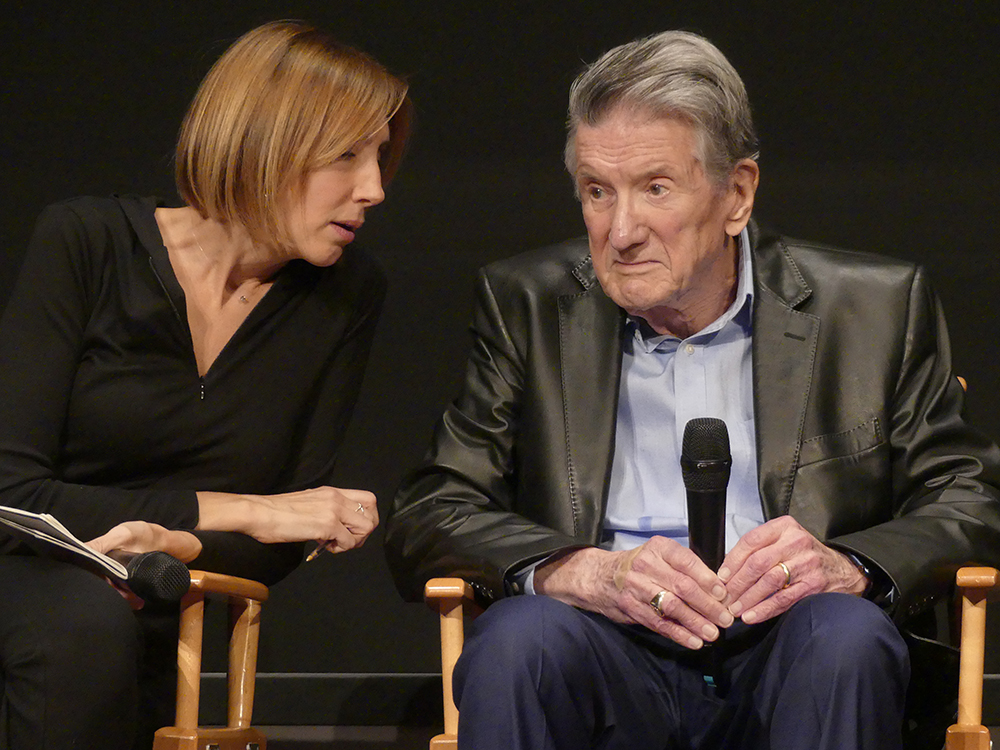
After the projection, the discussion was led by Jean-François Rauger, director of programming at the Cinémathèque française and author of Rosso Sangue – Le cinéma italien des années de plomb, alongside film critic Murielle Joudet, known for her essays on actresses and cinema history, including books on Isabelle Huppert, Gena Rowlands, and Catherine Breillat. Their conversation with John Badham quickly moved beyond nostalgia and focused on the very concrete reality of making a low-budget film that no one expected to become a cultural landmark. The director recalled with humor that the production constantly felt on the verge of collapse, especially once filming moved into the nightclub scenes. According to him, the film cost barely three million dollars, which meant that the crew had to shoot quickly in real streets and real locations, often before dawn to avoid crowds of fans already drawn by the rising popularity of John Travolta. Everything changed, he explained, when the team began working inside the disco: lighting the dance floor in a way that would look beautiful on camera required far more time and technical effort than expected, and the schedule began to slip dangerously. Badham credited producer Robert Stigwood for understanding that the heart of the film was in those scenes and allowing the production to slow down just enough to get them right, a decision that ultimately defined the film’s visual identity.
Listening to John Badham describe the shoot also revealed how accidental many elements of the film’s success were. The famous illuminated dance floor, now one of the most recognizable images in film history, was inspired by a club the director had seen in Alabama and recreated with a relatively modest budget. The cast itself was largely unknown at the time, with many actors coming from the New York theater scene, and John Travolta insisted on performing his own dance sequences, rehearsing for hours every day to give Tony Manero the confidence and swagger that became the character’s signature. Even the tone of the film, often remembered today as glamorous and nostalgic, was originally much darker, reflecting the frustrations of working-class youth in 1970s Brooklyn, a realism reinforced by the screenplay of Norman Wexler, who added the family conflicts and social tensions that still give the film emotional weight today.
The exchange also highlighted how the meaning of the film has evolved over time. When it was released, its R-rated version shocked audiences with its language, violence, and sexuality, leading to a later PG re-edit intended to attract younger viewers who had already made the soundtrack a massive hit. Today, however, what stands out is less the controversy than the precision with which the film captured a moment in American culture, from fashion to music to the shifting roles of men and women. John Badham noted that many scenes showing the characters’ attitudes toward women would not be written the same way today, but he insisted that the film worked precisely because it did not try to soften that reality, a point that resonated strongly with the audience during the discussion.
This special screening also perfectly reflected the broader ambitions of the Festival de la Cinémathèque française, which continues to combine heritage cinema, restorations, and encounters with artists who shaped modern film history. Alongside the tributes to Debra Winger and John Badham, the 2026 edition also honored filmmakers such as Aleksandar Petrović, Robert Bober, Anja Breien, and Pierre Zucca, as well as historian and archivist Naoum Kleiman, often nicknamed “the Russian Langlois,” while also showcasing restorations from Kadokawa Pictures and paying tribute to the city of Brussels. A study day organized with the CNC and the CST on the theme “Cinema & Ecology – Reinventing Criticism, Rethinking Practices” further demonstrated the festival’s desire to connect film history with contemporary questions.

Leaving the theater after the event, it was striking to see how Saturday Night Fever still works both as a time capsule and as a living film. Hearing John Badham speak about the chaos of the shoot, the doubts surrounding the project, and the unexpected scale of its success reminded everyone in the room that cinema history is often made not by certainty but by risk, instinct, and a few decisions taken at the right moment. Nearly fifty years after its release, Tony Manero’s walk down the Brooklyn street still feels like the beginning of something, and for a couple of hours at the Cinémathèque française, it felt as if the disco lights had never stopped shining.
You can discover our photos in our Flickr page
Synopsis :
Tony Manero isn't happy. His parents, who are of Italian descent, swear by his older brother, Frank, whose calling—the priesthood—places him at the top of the family's affections. Tony, meanwhile, is content to work as an errand boy for the family shop and put up with his family's criticism. But on Saturday nights, he’s a different man, donning a sequined suit and dazzling the dance floor of “2001,” his favorite nightclub, with the energy of his dance moves. A newcomer, Stephanie, convinces him to take a chance and enter the contest organized by the “2001.” A massive hit with the public, it launched disco and the early John Travolta, and helped the Bee Gees sell forty million records.
Saturday Night Fever
Directed by John Badham
Written by Norman Wexler
Based on "Tribal Rites of the New Saturday Night" by Nik Cohn
Produced by Robert Stigwood
Starring John Travolta, Karen Gorney
Cinematography : Ralf D. Bode
Edited by David Rawlins
Music by Bee Gees, David Shire
Production company : Robert Stigwood Organization
Distributed by Paramount Pictures
Release dates : December 12, 1977 (New York City), December 14, 1977 (Mann's Chinese Theatre), April 5, 1978 (France)
Running time : 119 minutes
Photos and video 4K : Boris Colletier / Mulderville