

The Invisible Path : The Hidden Craft of Jean-Jacques Annaud Revealed in Paris
Wednesday 18 March, 6:00 AM PT Paris, Fondation Jérôme Seydoux-Pathé 2026-03-18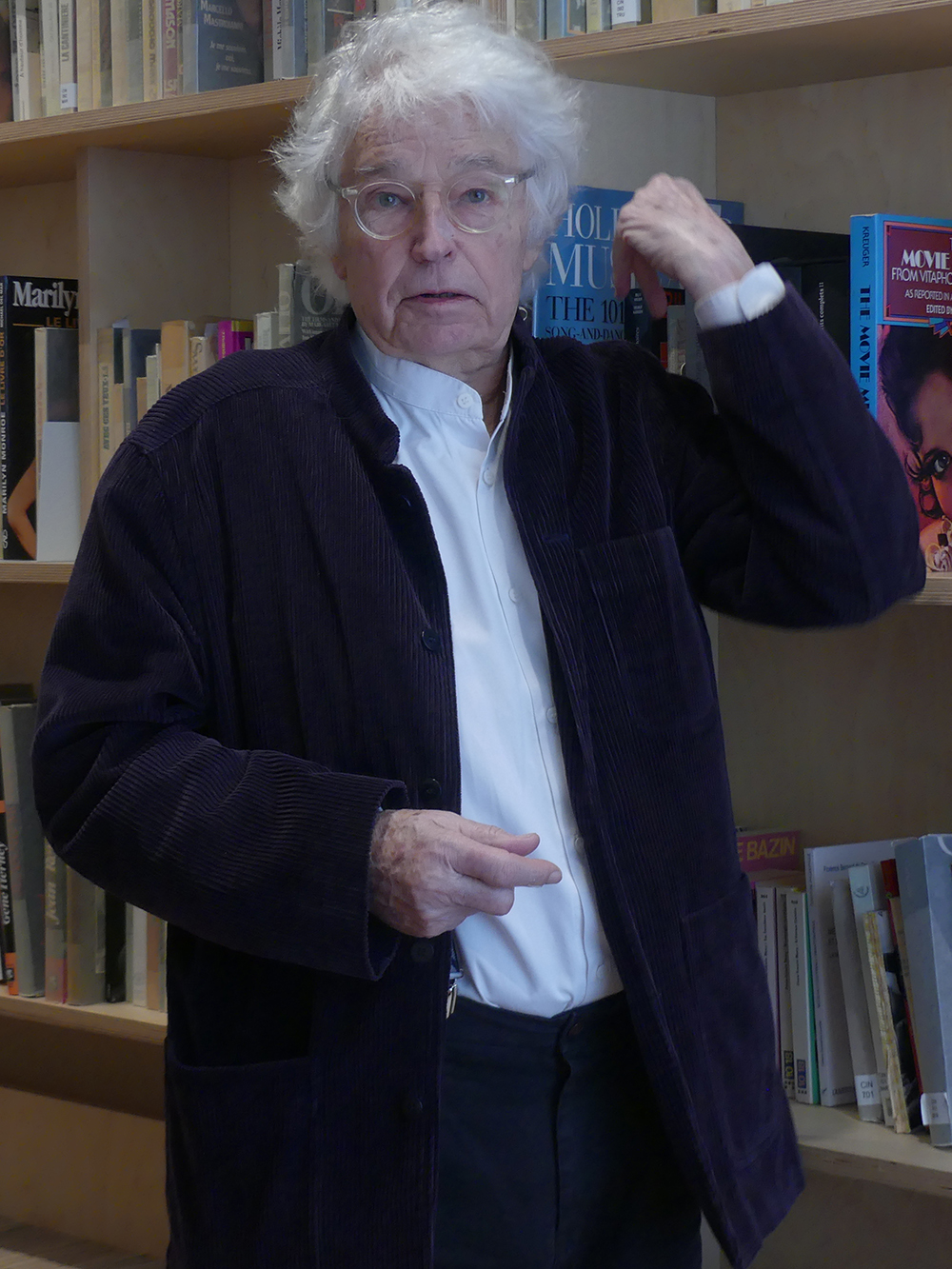
On March 18, 2026, our media was invited to the Fondation Jérôme Seydoux-Pathé in Paris for a special press preview of The Invisible Path, the new exhibition dedicated to Jean-Jacques Annaud, one of the most singular figures in French and international cinema. The morning began with a small breakfast organized in the presence of the filmmaker himself, creating a rare moment of proximity with a director whose work has often been associated with monumental productions and extreme shooting conditions. Around thirty journalists gathered for this first discovery before visiting the exhibition, spread across the ground floor and first floor of the Foundation’s building at 73 avenue des Gobelins. After the visit, the experience continued in small groups of five, each group being given roughly fifteen minutes to meet Jean-Jacques Annaud in person, an intimate format that perfectly matched the spirit of the exhibition itself: behind the spectacle, a craftsman, methodical, precise, and deeply involved in every stage of creation.
Open to the public from March 20 to October 31, 2026, the exhibition proposes far more than a retrospective of a filmography. Conceived as a sensory and intellectual journey through the making of cinema, the Invisible Path reveals what normally remains hidden: documentary research, scouting photographs, annotated storyboards, scale models, costumes, director’s notebooks, and personal archives accumulated over decades. The curatorial approach emphasizes the idea that Jean-Jacques Annaud is less a filmmaker of improvisation than an architect of images, someone whose films are built layer by layer through years of preparation. This philosophy echoes his training at the Institut des Hautes Études Cinématographiques (IDHEC) and his early career in advertising, where precision, anticipation, and technical rigor are essential skills. Walking through the rooms, visitors quickly understand that the illusion of realism in his films is never accidental but the result of obsessive preparation, often stretching over several years before the first day of shooting.
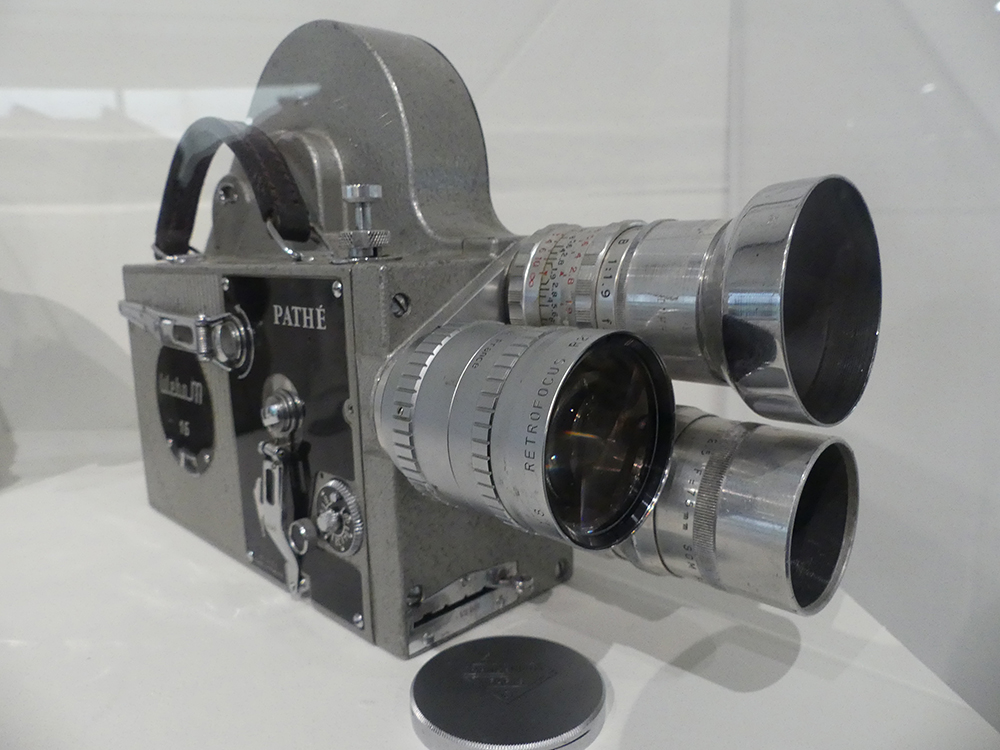
The exhibition highlights the remarkable consistency of a method already visible in La Victoire en chantant (1976), released internationally as Black and White in Color, which won the Academy Award for Best Foreign Language Film, and refined through productions shot across several continents. Africa, Europe, Asia, and South America appear throughout the archives, reminding visitors that Jean-Jacques Annaud has repeatedly chosen the most demanding locations in order to achieve visual authenticity. One section recalls the extraordinary linguistic work done for Quest for Fire (1981), where a prehistoric language was created with the help of a professional linguist, while another evokes the famous production of The Bear (1988), for which several bear cubs were raised in order to obtain the natural behavior required for the film. The preparation of The Name of the Rose (1986), adapted from the novel by Umberto Eco and starring Sean Connery, is also explored in detail, showing nearly four years of research, sketches, and architectural planning before the cameras even rolled. Throughout the exhibition, the same idea returns again and again: in the cinema of Jean-Jacques Annaud, textures, gestures, light, and sound are designed as parts of a single organic system intended to disappear behind the illusion of reality.
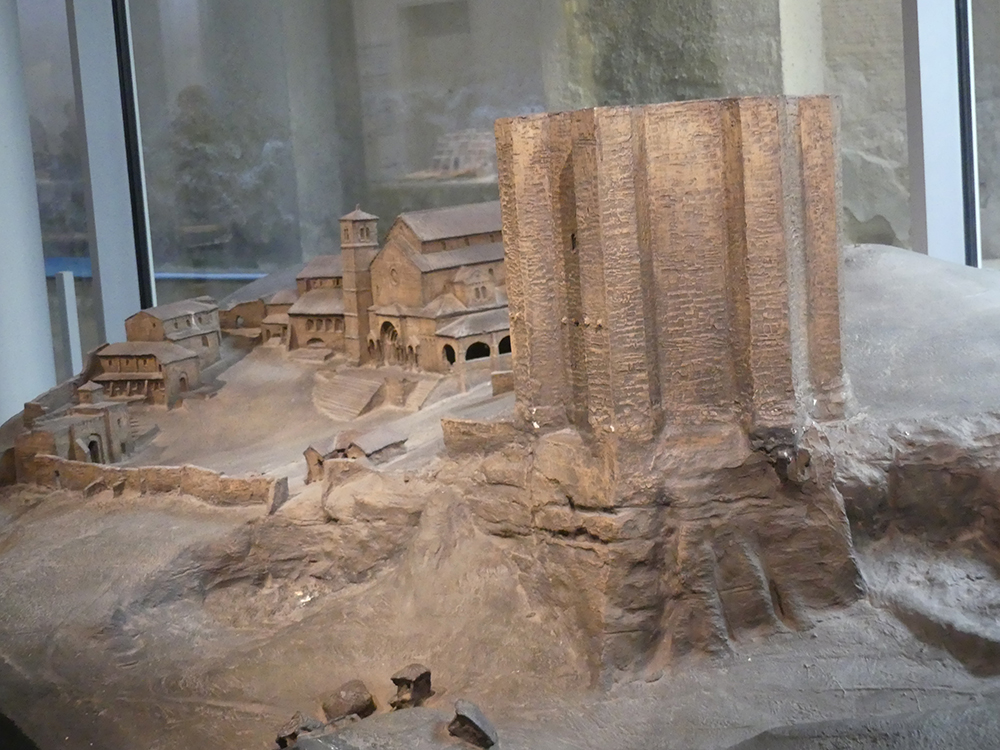
Among the most striking pieces on display is the reproduction of a fourteenth-century illuminated manuscript placed on its lectern, immediately recreating the mystical atmosphere of The Name of the Rose. Nearby, the monumental model of the abbey designed by production designer Dante Ferretti stands as one of the highlights of the exhibition, illustrating the constant dialogue between imagination and engineering that defines the director’s work. Construction plans, set photographs, and technical notes surround the model, offering visitors an almost archaeological perspective on the birth of a film set. Another particularly moving section is devoted to Notre-Dame brûle (2022), with preparatory models of the cathedral, the burning belfry, the forest of roof beams, and the collapse of the oculus. The fresco of the Chapel of the Seven Sorrows, the treasury, the reliquary holder, and the famous chimeras all testify to the historical rigor demanded by Jean-Jacques Annaud, who had to recreate on screen an event still vivid in collective memory while maintaining both documentary precision and dramatic intensity.
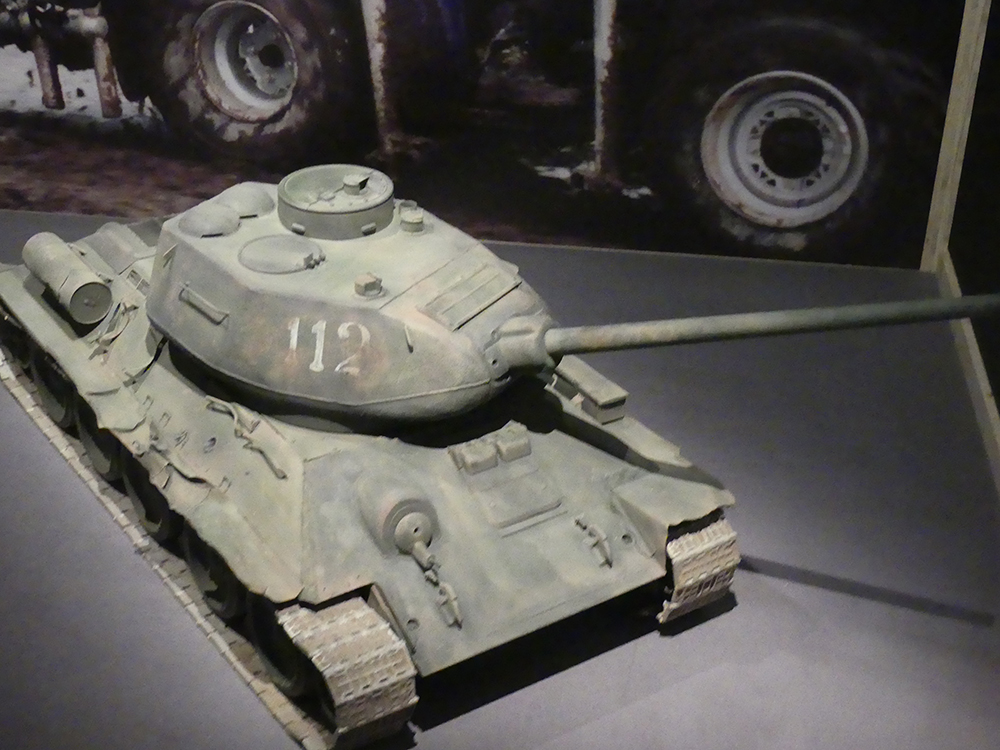
The exhibition also allows visitors to discover objects that instantly evoke the diversity of his filmography, such as the 1/10-scale Stalingrad tank used to extend the horizon in Enemy at the Gates (2001), a perfect example of the director’s obsession with believable detail, or the iconic dress worn by Jane March in The Lover (1992), presented alongside original sketches by costume designer Yvonne de Sassinot de Nesle, showing how costume contributes to the emotional and visual identity of his films. Original artwork by Philippe Druillet created for the poster of Quest for Fire reminds visitors of the close relationship between cinema and graphic arts, while for the first time the exhibition presents personal storyboards annotated by Jean-Jacques Annaud, sometimes in collaboration with Norbert Iborra and Maxime Rebière, offering direct insight into the construction of shots and the choreography of movement within the frame. These documents, rarely shown to the public, are among the most fascinating elements of the exhibition because they reveal the filmmaker thinking visually, long before the camera is even present.
Beyond the exhibition itself, the Fondation Jérôme Seydoux-Pathé extends the experience with a program that reflects the director’s cinematic influences. From May 13 to May 30, 2026, Jean-Jacques Annaud will present a personal selection of silent film masterpieces by Sergei Eisenstein, Vsevolod Pudovkin, Charlie Chaplin, Buster Keaton, Harold Lloyd, Abel Gance, René Clair, and Friedrich Wilhelm Murnau, reminding visitors that his spectacular cinema is rooted in the visual storytelling of early film history. Several productions made with Pathé will also be screened as part of the Pathé Cinémathèque program, and on April 10, 2026, Jean-Jacques Annaud will lead a masterclass followed by a discussion before the screening of Two Brothers. Additional talks, including one with Jean Rabasse, Jean-Marie Dreujou, and Mathieu de la Mortière, will revisit the making of Notre-Dame brûle, offering further insight into the collaboration between directing, cinematography, and art direction.
With the Invisible Path, the Fondation Jérôme Seydoux-Pathé once again demonstrates its ability to combine historical rigor, educational ambition, and genuine cinematic emotion. More than a simple tribute, the exhibition becomes a journey into the creative process of a filmmaker whose career from Black and White in Color to Wolf Totem (2015), including Seven Years in Tibet (1997) with Brad Pitt embodies a vision of cinema that is both popular and artisanal, spectacular yet deeply constructed. After spending the morning walking through these rooms and listening to Jean-Jacques Annaud speak about his work with the same precision that defines his films, one impression remains clear: the invisible part of cinema, the one the audience never sees, is often the place where the real adventure begins.
You can discover our photos in our Flickr page
Practical information:
Fondation Jérôme Seydoux-Pathé — 73 avenue des Gobelins, 75013 Paris
From March 20 to October 31, 2026
Wednesday–Thursday: 2:00 PM – 7:00 PM
Tuesday–Friday: 2:00 PM – 8:30 PM
Saturday: 11:30 AM – 7:00 PM
Full price: €5 — Reduced price: €3
Photos and video: Boris Colletier / Mulderville.net
Filmography:
1976 - Black and White in Color
1979 – Hothead
1981 - Quest for Fire
1986 - The Name of the Rose
1988 - The Bear
1992 - The Lover
1995 - Wings of Courage
1997 - Seven Years in Tibet
2001 - Enemy at the Gates
2004 - Two Brothers
2007 - His Majesty Minor
2011 - Black Gold
2015 - Wolf Totem
2022 - Notre-Dame brûle
Photos and video : Boris Colletier / Mulderville