
 English
Festivals - Cinematheque Francaise festival 2026 : Tribute to Debra Winger with a special screening of Terms of Endearment
By Mulder, Paris, Cinémathèque française, 13 march 2026
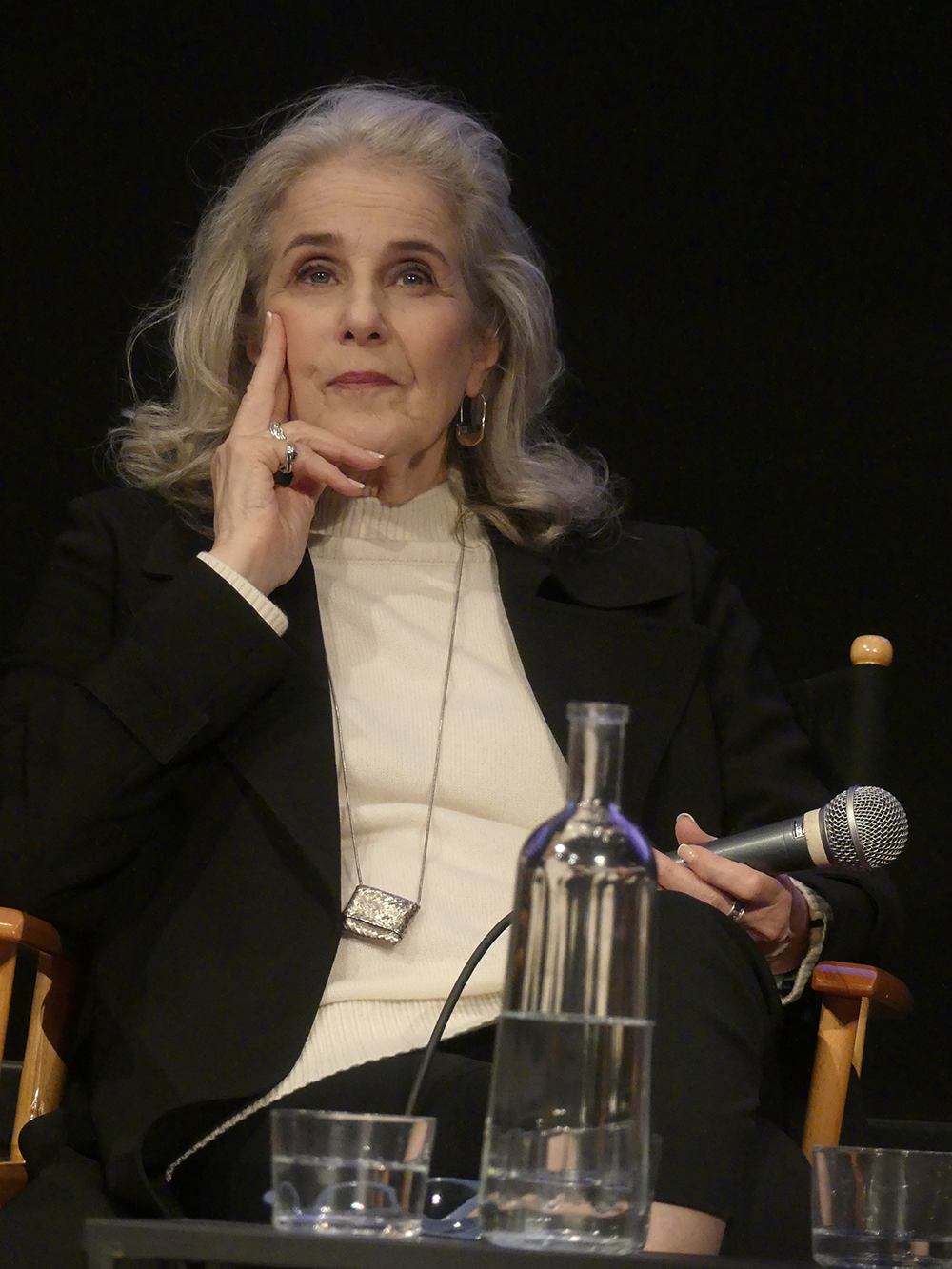
On March 13, 2026, our publication attended a special screening of Terms of Endearment at the Cinémathèque Française in Paris, organized as part of the 13th edition of the Cinémathèque Française Festival—an event that once again demonstrated why this annual celebration remains one of the most important gatherings for film lovers in Europe. The screening was followed by a onstage discussion moderated by Pauline de Raymond with actress Debra Winger, one of this year’s festival guests of honor. The atmosphere in this historic Parisian venue was both respectful and deeply moving, as the audience clearly understood that this was not merely an opportunity to rediscover one of the most famous American films of the 1980s, but also to share a rare moment with an actress whose career has long symbolized both the glamour and the contradictions of the Hollywood star system. As always during the festival, the screening was accompanied by an exhibition of archival documents and photographs, and our media team produced a comprehensive photo report, available on our website, documenting the evening as well as the audience’s enthusiastic reaction—many of whom remained in the theater long after the discussion ended, continuing to talk about the film and the memories associated with it.
The 2026 edition of the Cinémathèque Française Festival places particular emphasis on major figures of late 20th-century American cinema, with Debra Winger and filmmaker John Badham presented as two artists representing very different yet equally significant facets of Hollywood. In the case of Debra Winger, the festival’s program highlights her reputation as one of the most demanding and selective actresses of her generation, known for having worked with directors such as Bob Rafelson, Alan Rudolph, Costa-Gavras, Karel Reisz, and Bernardo Bertolucci, while navigating a career marked by the pressures exerted on actresses within the studio system. The festival has also announced the screening of the documentary *Searching for Debra Winger*, directed by Rosanna Arquette, which explores precisely this tension between artistic integrity and industry expectations. Meanwhile, the presence of John Badham, guest of honor, highlights another facet of American cinema history, from Saturday Night Fever to WarGames—films that captured the anxieties and cultural shifts of their time. Beyond these tributes, the festival continues its tradition of presenting recently restored prints, as well as tributes to filmmakers such as Aleksandar Petrović, Robert Bober, Anja Breien, Pierre Zucca, and film historian Naoum Kleiman, not to mention special programs dedicated to Kadokawa Pictures and the city of Brussels, once again confirming the event’s commitment to both preservation and discovery.
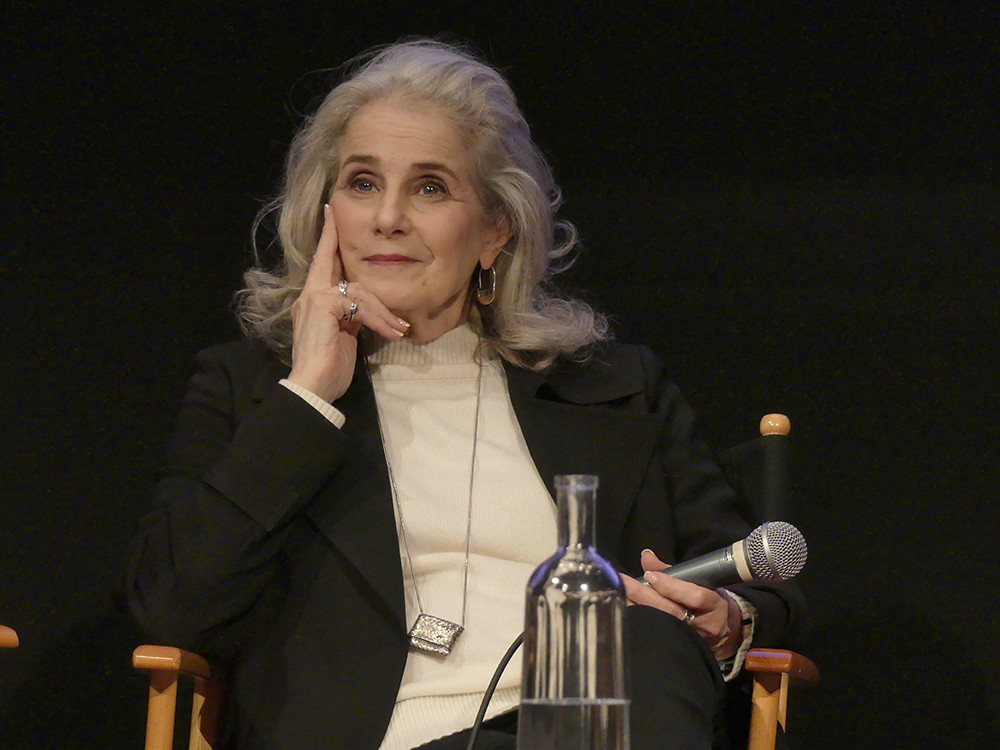
Seeing Terms of Endearment on the big screen in this context reminded everyone why this film remains one of the defining works of 1980s American cinema. Released in 1983, this tragicomedy was written, produced, and directed by James L. Brooks, adapted from Larry McMurtry’s 1975 novel, and starred Debra Winger, Shirley MacLaine, Jack Nicholson, Danny DeVito, Jeff Daniels, and John Lithgow. The film traces more than thirty years of the complicated relationship between Aurora Greenway, played by Shirley MacLaine, and her daughter Emma, played by Debra Winger, exploring family ties, love, regrets, and the passage of time with a balance of humor and heartbreak that remains remarkably modern. Originally released by Paramount Pictures in November 1983 before a nationwide release in December, the film became one of the biggest hits of the year, grossing approximately $165 million worldwide and ranking among the highest-grossing films of 1983, just behind Return of the Jedi. Its critical success culminated at the 56th Academy Awards, where it received eleven nominations and won five Oscars, including Best Picture, Best Director for James L. Brooks, Best Actress for Shirley MacLaine, Best Supporting Actor for Jack Nicholson, and Best Adapted Screenplay, thereby cementing its place in Hollywood history.
During the discussion following the screening, several anecdotes about the production resurfaced, reminding the audience that the emotional intensity visible on screen was often accompanied by tension behind the camera. It is well known that Shirley MacLaine and Debra Winger had a difficult relationship during filming, which Shirley MacLaine herself later confirmed, explaining that James L. Brooks sometimes encouraged a certain level of tension on set to stimulate the performances. Another well-known anecdote concerns the role of Garrett Breedlove, ultimately played by Jack Nicholson, which had been originally written for Burt Reynolds, who turned down the role due to a prior commitment—a decision he would later publicly regret. Harrison Ford and Paul Newman had also been approached before Jack Nicholson accepted the role, which would earn him the Oscar for Best Supporting Actor. Even the famous beach scene between Shirley MacLaine and Jack Nicholson is shrouded in legend, as Shirley MacLaine later revealed that Jack Nicholson had improvised part of that moment, thereby contributing to the spontaneity that became one of the film’s hallmarks.
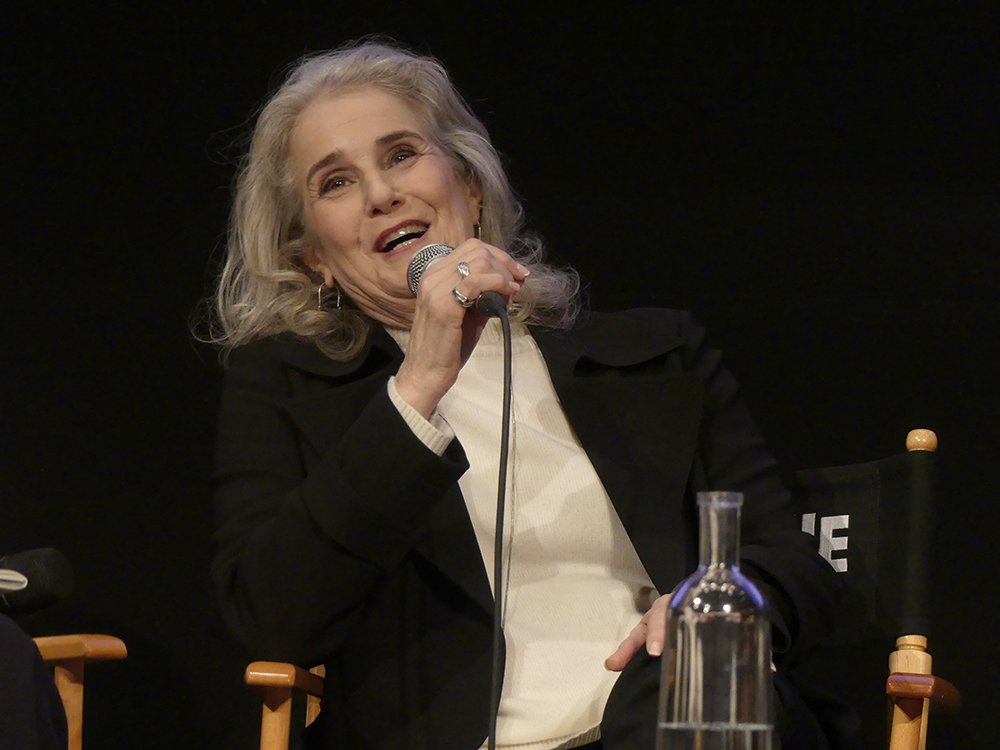
Watching the film today in its restored version also highlights the care taken in its production, from Andrzej Bartkowiak’s cinematography to Richard Marks’ editing and Michael Gore’s score, all of which contribute to the film’s unique tone, constantly oscillating between comedy and tragedy without ever losing its emotional sincerity. The filming locations, notably Houston, Texas, and Lincoln, Nebraska, add a down-to-earth realism that reinforces the story’s authenticity, and even the actors’ off-screen lives have become an integral part of the film’s mythology, with Debra Winger notably beginning a relationship with Nebraska Governor Bob Kerrey during filming. These details, often mentioned during retrospectives, were warmly received by the Parisian audience, many of whom reacted with laughter or applause whenever a familiar scene appeared on screen, proving that the film has lost none of its power more than forty years after its release.
The evening at the Cinémathèque Française ultimately felt like much more than a simple screening. It served as a reminder of how certain films continue to live on through the memories of those who saw them upon their release, while also finding new audiences thanks to restorations and festivals. Watching Debra Winger talk about her career, the complexity of her relationship with Hollywood, and the enduring legacy of Terms of Endearment gave the event a rare emotional charge—the kind that only happens when the history of cinema and personal history come together in the same room. For a festival dedicated to preservation, reflection, and a passion for cinema, this screening perfectly embodied the spirit of the Cinémathèque française, where every screening is not just a film, but a piece of living memory.

You can discover our photos in our Flickr page
Synopsis :
Aurora raised her daughter Emma on her own, keeping men out of her life. Yet Emma leaves her abusive mother at the first opportunity. Alone, Aurora then meets Garret, a former cosmonaut who has become an alcoholic... A bond begins to form between the two of them.
Terms of Endearment
Written and directed by James L. Brooks
Based on Terms of Endearment 1975 novel by Larry McMurtry
Produced by James L. Brooks
Starring Debra Winger, Shirley MacLaine, Jack Nicholson, Danny DeVito, John Lithgow
Cinematography : Andrzej Bartkowiak
Edited by Richard Marks
Music by Michael Gore
Distributed by Paramount Pictures (United States),
Release dates : November 23, 1983 (US, limited), December 9, 1983 (US, Wide), April 4, 1984 (France)
Running time : 132 minutes
Photos et video 4K : Boris Colletier / Mulderville