 English
Premiere - The Women’s House: A Premiere Marked by Humanity, Humor and Deep Emotion
By Mulder, Paris, Forum des Images, Room 500, 18 february 2026
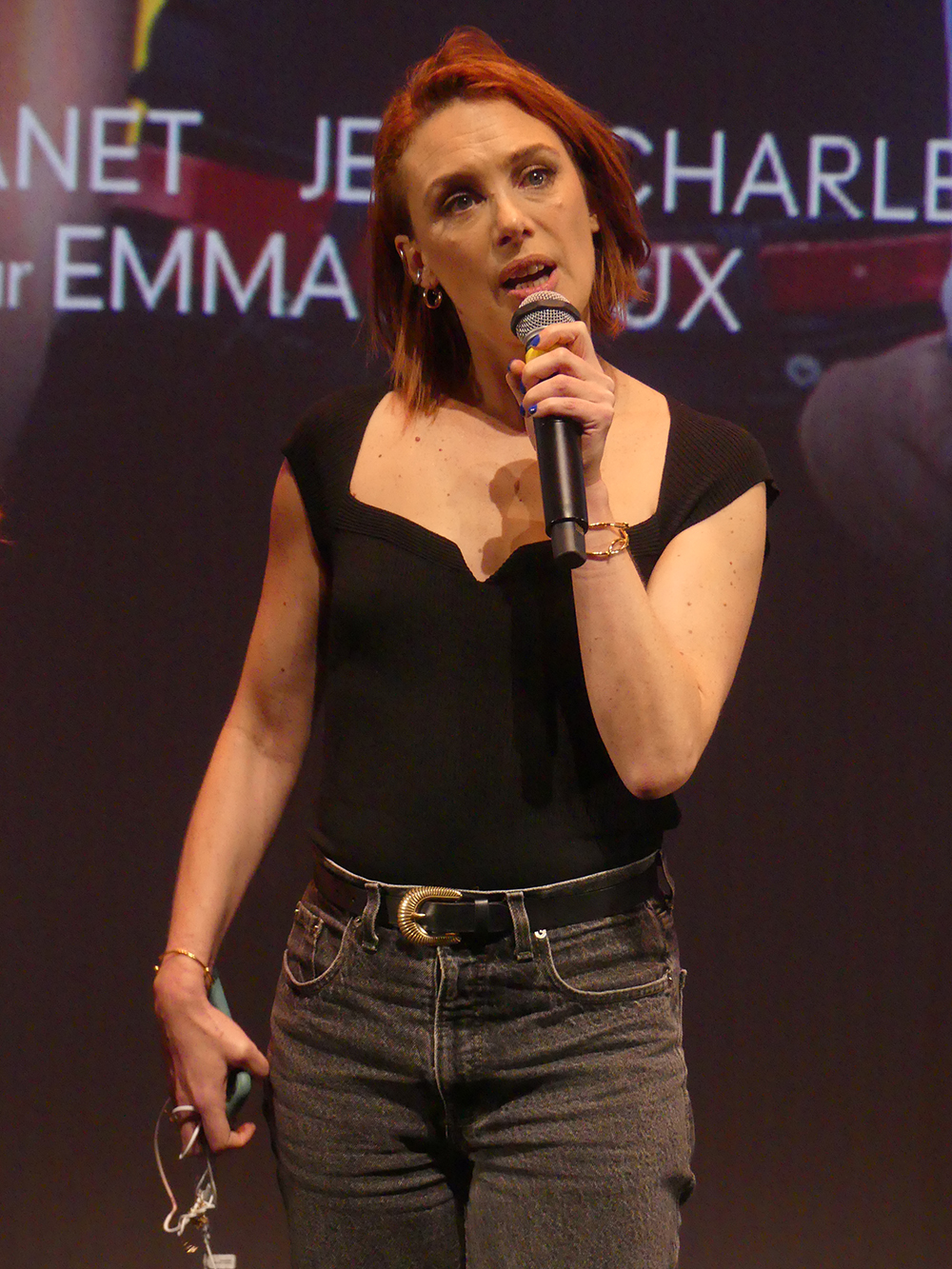
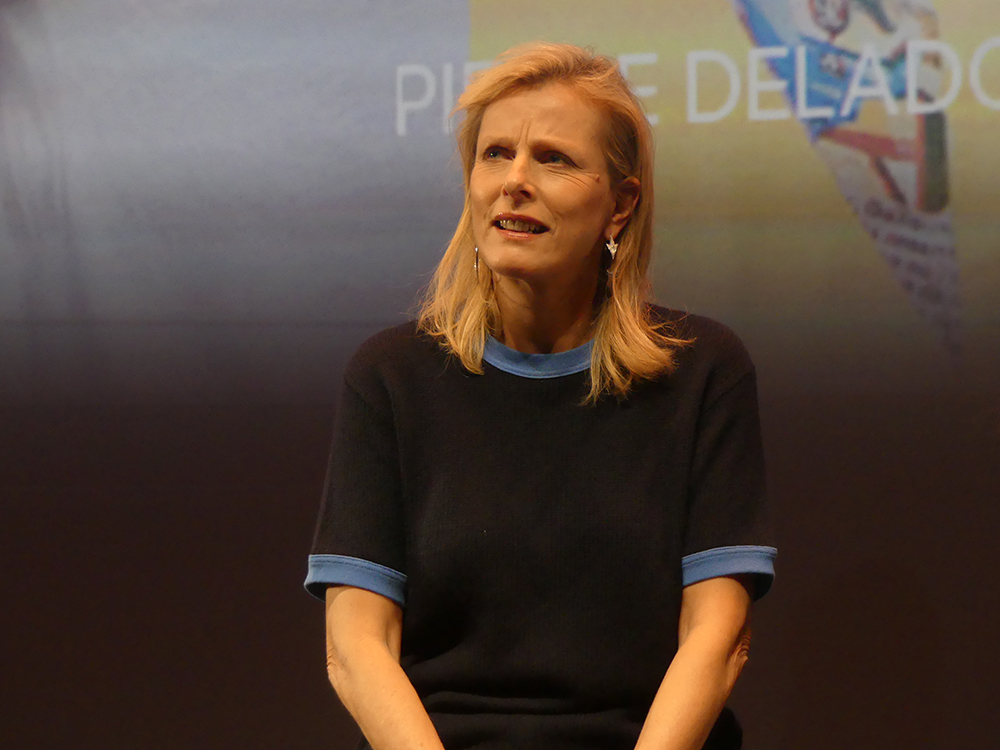
Tonight, the Forum des Images hosted a private screening of the film The Women's House, organized by Club Allociné, transforming the venue into a space for reflection, emotion, and lively discussion. Our media outlet attended the event, which was followed by a Q&A session with director Mélisa Godet, producer Emma Javaux, and actors Karin Viard, Eye Haïdara, Oulaya Amamra, Laetitia Dosch, and Pierre Deladonchamps. The atmosphere was both attentive and deeply engaged, reflecting the very spirit of the film: a respectful silence during the screening, then a palpable need to share impressions afterwards, as if the audience had collectively understood that this was not just a preview, but an encounter with a subject that resonates far beyond the cinema.
The Women's House, written and directed by Mélisa Godet and co-written with Catherine Paillé, is inspired by the real institution founded by Ghada Hatem in Saint-Denis, a pioneering structure dedicated to helping women who are victims of violence. Rather than constructing a sensationalist narrative, Mélisa Godet deliberately chose to focus on the consequences, depicting the processes of care, listening, and reconstruction. During the discussion, the director talked about the genesis of the project, recalling hearing Ghada Hatem speak on the radio for the first time in late 2016, describing a place where doctors, psychologists, lawyers, and social workers collaborate under one roof. That initial spark grew into what Mélisa Godet described as a “luminous ensemble film,” guided by a fundamental ethical decision: violence would never be shown on screen. Instead, the film channels its emotional power through testimonials, gestures, silences, and the everyday resilience of patients and caregivers.
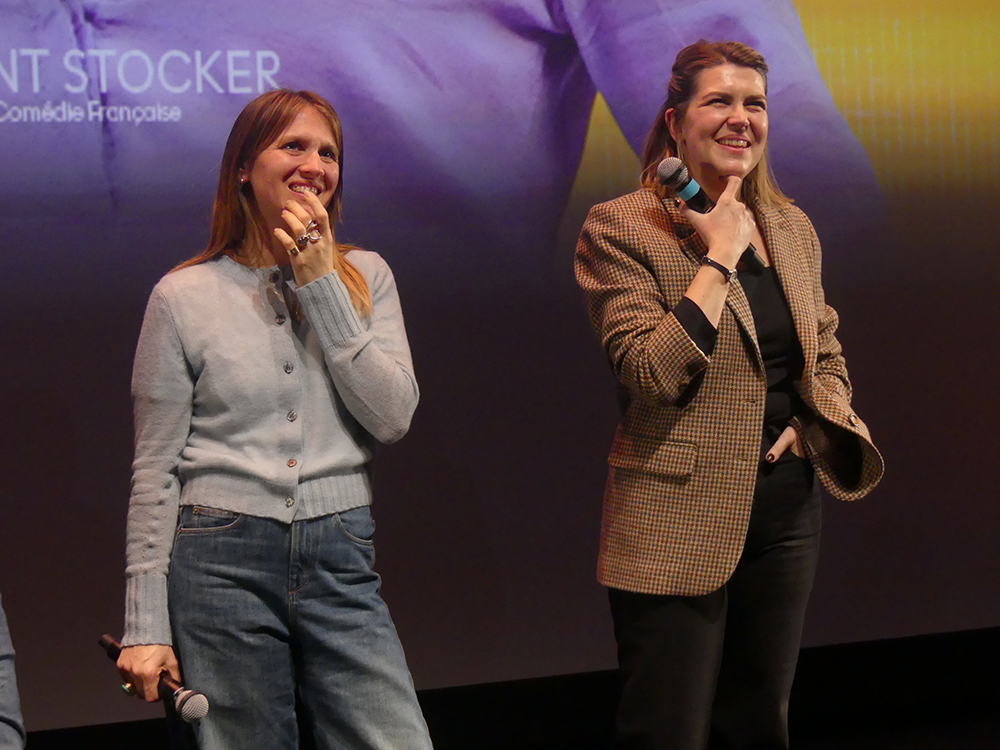
Producer Emma Javaux shared a striking anecdote about her own discovery of the story, recounting how she listened to a podcast interview with Ghada Hatem while jogging on vacation. She described the moment as a revelation, a rare instance in which a producer perceives not only the cinematic potential of a subject, but also its necessity. Emma Javaux explained in detail how initial discussions about financing proved surprisingly easy despite the seriousness of the subject matter, noting that the clarity of Mélisa Godet's vision—a film intended for the general public rather than an educational work—reassured partners such as France 2 Cinéma, Canal+, and Pathé. She also highlighted the creation of a genuine code of ethics on set, insisting on a working environment based on respect and psychological safety, a position for which many technicians and actors later thanked her, describing it as a rare experience in the industry.
Karin Viard, whose portrayal of Diane, the tireless leader of the medical team, anchored the film's dynamic energy, was the center of conversation throughout the evening. Karin Viard explained her decision not to meet Ghada Hatem before filming, fearing unconscious imitation, preferring instead to immerse herself in interviews, documentaries, and podcasts. Physical resemblance, she noted humorously, was secondary to capturing an inner drive, a bulldozer energy that Ghada Hatem herself later acknowledged as strangely accurate. The actors' reflections revealed the multi-layered complexity of the film.
Technically, The Women's House reveals a carefully constructed aesthetic. Director of photography Fabien Faure, editor Loïc Lallemand, and composer Audrey Ismaël worked closely with Mélisa Godet to strike a balance between realism and cinematic rhythm. The director explained that the ensemble sequences, often tinged with humor, were shot with dynamic coverage, while the patients' testimonies were captured in extended shots to preserve the integrity of the discourse. The music by composer Audrey Ismaël, built around female choirs and discreet percussive textures, was designed not to overwhelm but to accompany, reinforcing the urgency without sinking into melodrama. The film was shot in part at the Cité Le Refuge in Paris's 13th arrondissement and in reconstructed sets in Bry-sur-Marne, a decision guided by respect for the daily functioning of the real Maison des Femmes.
Beyond its artistic qualities, the film inevitably opens up a broader societal dialogue. Ghada Hatem shared verified figures during interviews: approximately 4,000 new patients are welcomed each year at the Maison des Femmes in Saint-Denis, with daily attendance ranging from 50 to 80 women, and a multidisciplinary team of around 50 professionals, many of whom work part-time due to the emotional intensity of the work. She also confirmed the expansion of the network, which now has more than thirty establishments across France, illustrating the growing recognition of these specialized care centers.
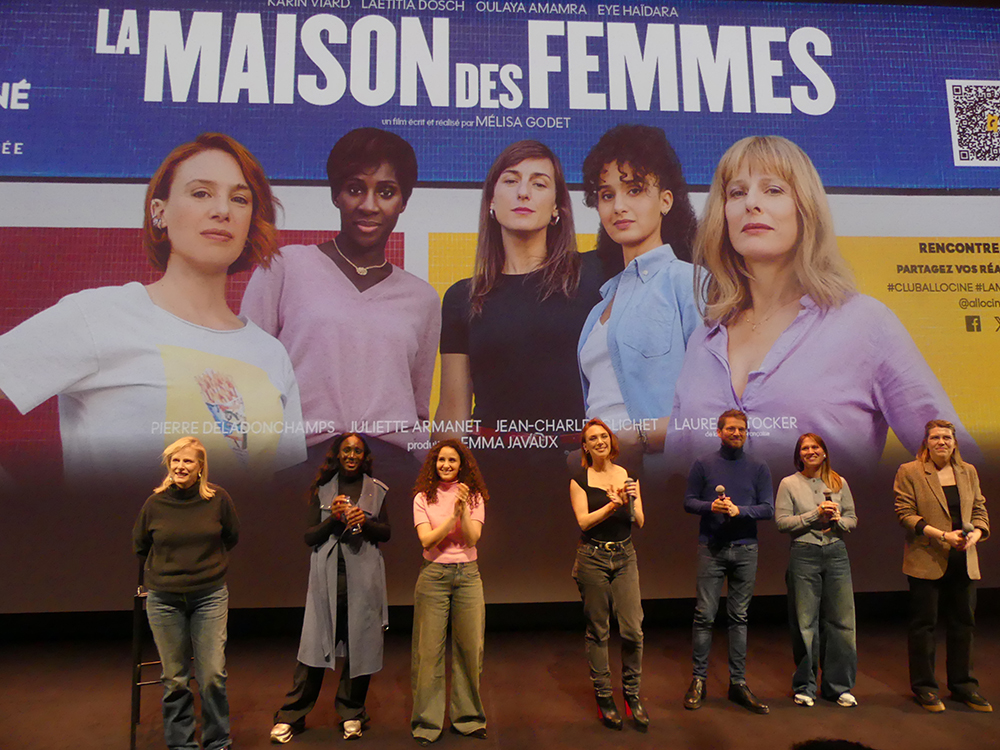
Distributed in France by Pathé Films, The Women's House will be released in theaters on March 4, 2026. If the Paris premiere demonstrated one thing, it is that Mélisa Godet's debut feature film has already accomplished something rare: sparking debate not through provocation, but through empathy, nuance, and humanity. The prolonged applause that followed the screening did not seem like a routine gesture at a festival, but rather recognition of a film that dares to explore trauma, resilience, and solidarity with remarkable restraint and emotional intelligence.
You can discover our photos in our Flickr page
Synopsis :
At the Women's House, between care, listening, and solidarity, a team fights every day to support women victims of violence in their recovery. In this unique place, Diane, Manon, Inès, Awa, and their colleagues welcome, support, and restore confidence. Together, with their strengths, their fragilities, their convictions, and their inexhaustible energy.
The Women's House (La maison des femmes)
Directed by Mélisa Godet
Written by Mélisa Godet, Catherine Paillé
Produced by Emma Javaux
Starring Karin Viard, Laetitia Dosch, Eye Haïdara, Oulaya Amamra, Pierre Deladonchamps, Juliette Armanet, Jean-Charles Clichet, Laurent Stocker, Aure Atika , Délia Miloudi, Alexandra Roth, Regis Romele
Cinematography : Fabien Faure
Edited by Loic Lallemand
Music by Audrey Ismaël
Production companies : Une Fille Productions, France 2 Cinéma, Canal + , Zinc Film
Distributed by Pathé Films (France)
Release dates : March 4, 2026 (France)
Running time : 110 minutes
Photos and video 4K : Boris Colletier / Mulderville