
 English
Cerermony - Paris Film Critics Awards 2026: Paul Thomas Anderson dominates the ceremony
By Mulder, Paris, Royal Monceau,, 08 february 2026
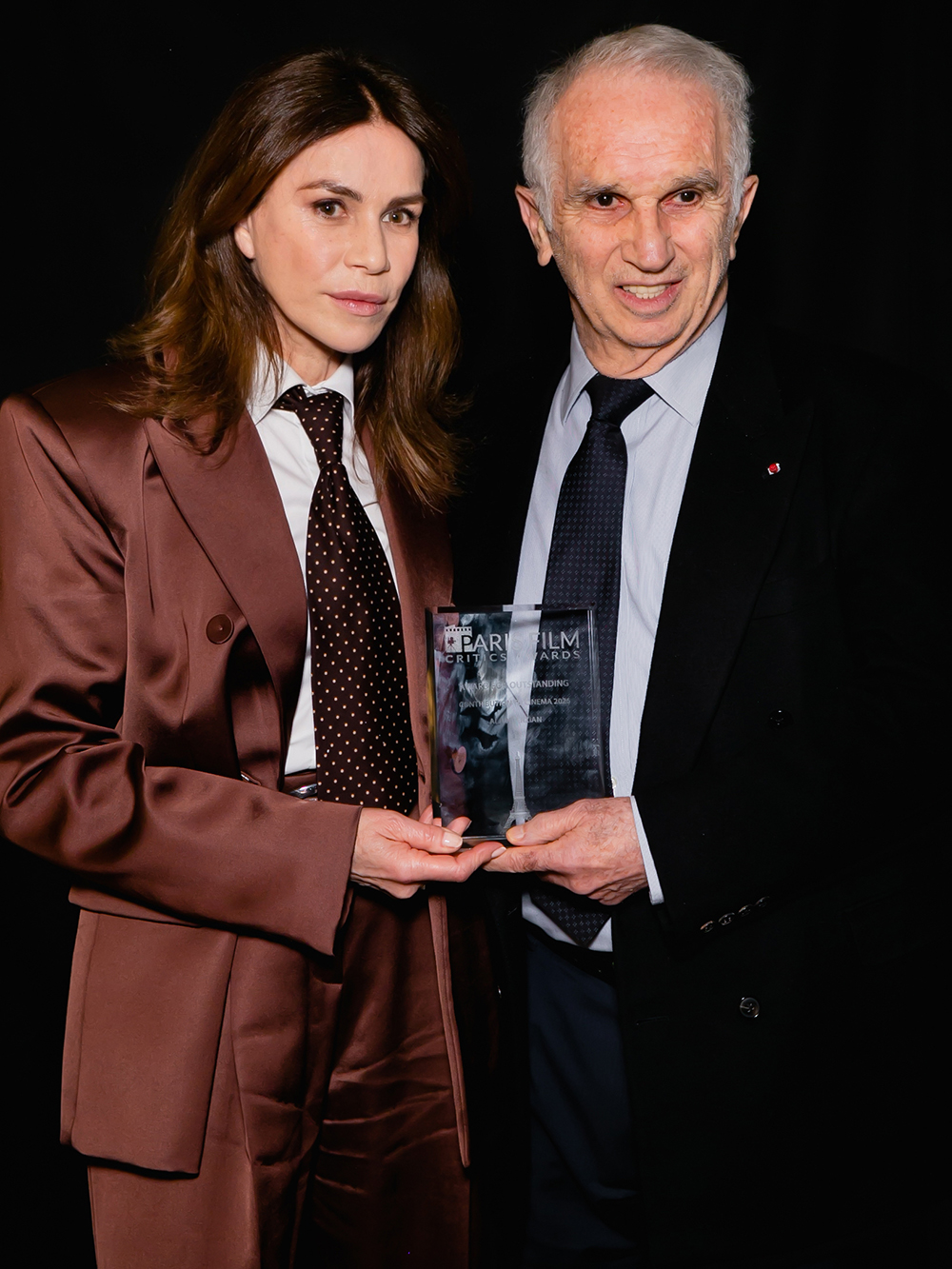
Held on February 8, 2026, in the hushed setting of Le Royal Monceau, the Paris Film Critics Awards confirmed their unique status in the French awards landscape by unveiling a list of winners that combines critical standards and international openness, under the watchful eye of an academy composed of 130 members, including many French film critics. At the heart of the evening, Paul Thomas Anderson's triumph stood out as the highlight of the year, with his film Knives Out winning four major awards—Best Film, Best Director, Best Adaptation, and Best Editing—consecrating a work perceived by many observers as a pinnacle of direction and narrative construction. while the elegant and almost studious atmosphere of the ceremony served as a reminder that these awards remain above all a celebration of critical vision, far from the glitz and glamour, with a palpable sense of attending an evening where passionate conversations about cinema counted as much as the trophies themselves.
Paul Thomas Anderson's dominance was not limited to the top category, as the American filmmaker was also personally honored as Best Director, an accolade that highlights the artistic coherence of a film praised for its formal mastery and rhythm, while the award for Best Editing, given to Andy Jurgensen, highlighted a work of artistry often cited in post-screening discussions, as the film's editing and internal dynamics contribute to its dramatic tension. This double accolade for both the film and its director, relatively rare in French critics' awards, illustrates the unanimously enthusiastic reception of a work that has transcended cultural boundaries, reminding us that the Paris Film Critics Awards have regularly served as a sensitive barometer of strong aesthetic trends even before certain major international ceremonies.
The 2026 edition was also marked by the remarkable emergence of Pauline Loquès, who was rewarded for her first film Nino, a clear signal sent by critics to a new generation of filmmakers, especially as Théodore Pellerin won the award for Best Male Newcomer, confirming the upward trajectory of an actor whose screen presence continues to grow in intensity. In the same spirit of renewal, Nadia Melliti received the award for Best Female Newcomer for La Petite Dernière, illustrating the voters' constant desire to highlight performers capable of imposing a strong identity from their very beginnings, while these choices reflect a careful reading of developments in contemporary French-language cinema, between formal audacity and emotional anchoring.
In terms of established performances, Léa Drucker won Best Actress for Dossier 137, an award that continues a series of demanding and nuanced roles, while Wagner Moura was crowned Best Actor for L'Agent secret, highlighting the Paris Film Critics Awards' ability to fully embrace international cinema. Supporting roles also received special recognition, with awards going to Leïla Bekhti for Ma mère, Dieu et Sylvie Vartan and Raphaël Personnaz for La Femme la plus riche du monde, two performances widely praised for their accuracy and depth,
in an edition where critics clearly favored subtle acting and complex characters.
Beyond the acting categories, the winners reflect a marked aesthetic diversity, with the award for best original screenplay going to Jafar Panahi for A Simple Accident, best cinematography to Manuel Dacosse for The Stranger, and best original music to Kangding Ray for Sirât, all choices that reflect a critical sensibility attentive to the sensory and narrative dimensions of cinema. The technical awards, which often reveal underlying trends, also honored Judy Becker for the set design of The Brutalist and Pierre-Yves Gayraud for the costumes in La venue de l'avenir, highlighting the decisive role of artistic direction in the overall perception of a work.
The evening took on a particularly emotional dimension with the presentation of honorary awards, notably the one awarded posthumously to Claudia Cardinale, presented to her daughter Claudia Squitieri, a moment steeped in cinematic memory, recalling the indelible mark left by the actress on the history of European and international cinema. Alain Terzian received the award for outstanding contribution to cinema for his entire career, in recognition of his major achievements as a producer, and Le Grand Rex was honored for its contribution to the art of cinema, a vibrant tribute to an iconic Parisian institution. Through these 2026 awards, the Paris Film Critics Awards strongly reaffirm their mission: to celebrate works and artists where artistic ambition meets narrative power and international influence.
2026 Paris Film Critics Awards:
Best Film: There Will Be Blood, Paul Thomas Anderson
Best First Film: Nino, Pauline Loquès
Best Director: Paul Thomas Anderson, One Fight at a Time
Best Actress: Léa Drucker, Dossier 137
Best Actor: Wagner Moura, The Secret Agent
Best Supporting Actress: Leïla Bekhti, My Mother, God, and Sylvie Vartan
Best Supporting Actor: Raphaël Personnaz, The Richest Woman in the World
Best New Actress: Nadia Melliti, The Last Child
Best New Actor: Théodore Pellerin, Nino
Best Original Screenplay: A Simple Accident, Jafar Panahi
Best Adapted Screenplay: The Battle After the Battle, Paul Thomas Anderson
Best Cinematography: The Stranger, Manuel Dacosse
Best Editing: There Will Be Blood, Andy Jurgensen
Best Original Score: Sirât, Kangding Ray
Best Production Design: The Brutalist, Judy Becker
Best Costume Design: The Coming of the Future, Pierre-Yves Gayraud
Best Documentary: Put Your Soul on Your Hand and Walk, Sepideh Farsi & Fatma Hassona
Best Animated Film: Arco, Ugo Bienvenu
Best Series (or Miniseries): Adolescence
Lifetime Achievement Award (posthumous): Claudia Cardinale
Award for Outstanding Contribution to Cinema: Alain Terzian
Award for Best Contribution to the Art of Cinema: Le Grand Rex – Paris
Photos: Copyright Béatrice Cruveiller / Paris Film Critics Awards 2026
Photos : Copyright Anthony Marco
(Source: press release)