
 English
Premiere - The Bojarski Affair: a special screening in Paris revives the memory of a forgotten genius
By Mulder, Paris, Pathe Convention, 07 february 2026
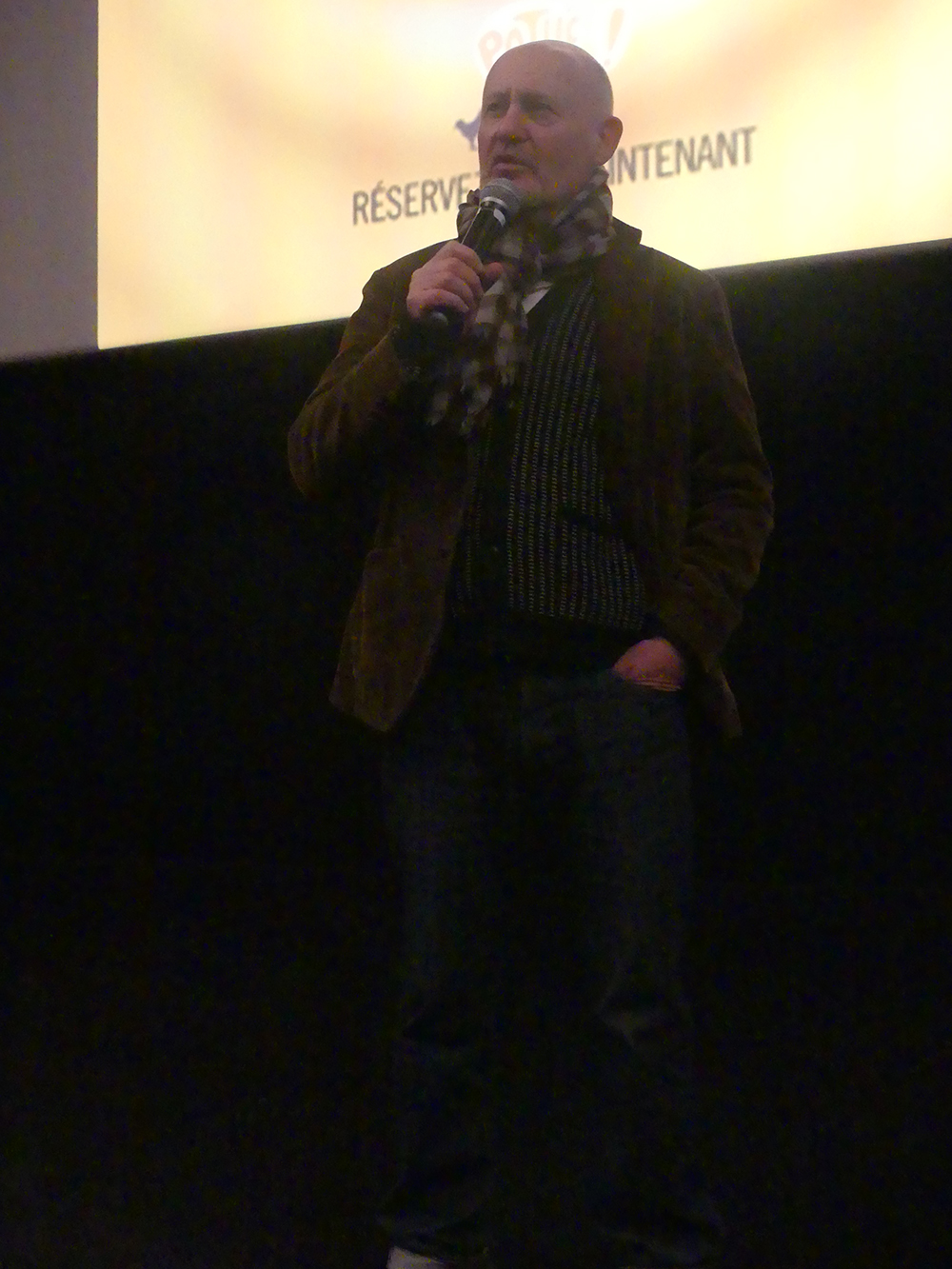
Today, the Pathé Convention cinema in Paris, hosted a special screening of The Bojarski Affair, an event that felt like both a memorial and a popular celebration. Our media outlet was there to capture the film's presentation by its director, Jean-Paul Salomé, a simple but meaningful moment during which the film's director and co-screenwriter took the time to place his work in a history that had remained in the blind spot of collective memory for too long. The atmosphere in the room was particularly attentive, almost reverent, as if the audience was aware that they were not only watching a film, but also witnessing the rediscovery of a real destiny that had been unjustly relegated to the margins. This enthusiasm has continued since the film's release, which has already attracted more than 800,000 cinema admissions and has a viewer rating of 4.1/5 on the Allociné website, confirming strong word of mouth and genuine public curiosity about this unique story, which goes against the grain of more conventional biopics.
Inspired by rigorously documented facts, The Bojarski Affair traces the journey of Jan Bojarski, played by Reda Kateb, a Polish engineer who fled to France during World War II and put his extraordinary technical talents to use in forging documents under German occupation. As confirmed by historical archives and the film's official press kit, Bojarski's real drama began after the war: deprived of a recognized civil status, he found himself unable to file patents for his inventions, despite their authenticity, an absurd situation that condemned him to a succession of menial jobs unworthy of his genius. This institutional marginalization gradually pushed him into a gray area, then into outright illegality, when he was approached by criminal networks and began producing counterfeit banknotes of such high quality that they became legendary, to the point that they are still kept today in the vaults of the Bank of France. The film follows this shift with relentless precision, while depicting the obsessive hunt led for nearly fifteen years by Inspector André Mattei, played by Bastien Bouillon, inspired by the real Commissioner Benamou, whose tenacious pursuit oscillated between professional duty and an almost intimate fascination with his adversary.

What sets The Bojarski Affair apart, beyond its meticulous historical reconstruction, is director Jean-Paul Salomé's deeply human view of his central character, presented both as an exceptional craftsman and a pariah crushed by the system. Based on research conducted with journalist Jacques Briod, the film incorporates verified elements of rare precision, notably the reconstruction of the clandestine workshop where Bojarski himself manufactured all of his machines, from presses to printing plates, to chemically modified inks with aspirin, a detail confirmed by the archives. Julien Hirsch's photography captures this almost obsessive meticulousness in shots with a very concrete texture, highlighting the central paradox of the story: Bojarski is never shown as a flamboyant gangster, but as a creator locked in his solitude, recycling his genius for lack of recognition. The relationship between Reda Kateb and Sara Giraudeau, who plays Suzanne Bojarski, gives the film an essential emotional depth, depicting a couple consumed by unspoken words, while Pierre Lottin adds further nuance by embodying another facet of exile and fragmented identity in post-war France.

Produced by Bertrand Faivre and Florence Gastaud for Le Bureau and Les Compagnons du Cinéma, with the participation of France 2 Cinéma, Auvergne-Rhône-Alpes Cinéma, Cactus Films, and Artémis Productions, and distributed by Le Pacte, The Bojarski Affair was released in France on January 14, 2026. Set to music by Mathieu Lamboley, whose mechanical motifs accompany the rigor and determination of the main character with formidable effectiveness, the film stands out as both a dark thriller and a belated but necessary tribute to a man whose talent shook the certainties of the Banque de France, before history attempted to erase him. At the end of this Paris screening, one thing is clear: The Bojarski Affair is not only a public success, it is a film that righted a historical injustice, giving a face, a voice, and human complexity back to an extraordinary destiny.
Check out our photos on our Flickr account
Synopsis:
Jan Bojarski, a young Polish engineer, found refuge in France during the war. He put his talent to use forging documents during the German occupation. After the war, his lack of official identity papers prevented him from patenting his many inventions, and he had to settle for low-paying odd jobs... until one day a gangster offered him the chance to use his exceptional talents to forge banknotes. This marked the beginning of a double life, unbeknownst to his family. He soon found himself in the crosshairs of Inspector Mattei, the best cop in France.
The Bojarski Affair
Directed by Jean-Paul Salomé
Written by Jean-Paul Salomé, Bastien Daret, Delphine Gleize
Produced by Bertrand Faivre, Florence Gastaud
Starring Reda Kateb, Sara Giraudeau, Bastien Bouillon, Pierre Lottin, Camille Japy, Victor Poirier, Lolita Chammah, Olivier Loustau, Quentin Dolmaire, Arthur Teboul, Ambrine Trigo Ouaked, Héléna Sadowy
Director of photography: Julien Hirsch
Editing: Valérie Deseine
Music: Mathieu Lamboley
Production companies: Le Bureau, Les Compagnons du Cinéma, France 2 Cinéma, Auvergne-Rhône-Alpes Cinéma, Cactus Films, Artémis Productions
Distribution: Le Pacte (France)
Release date: January 14, 2026 (France)
Running time: 128 minutes
Photos and video: Boris Colletier / Mulderville