 English
Premiere - Marty Supreme : Paris Sets the Table for Josh Safdie’s Feverish American Dream
By Mulder, Paris, Le Grand Rex, 03 february 2026

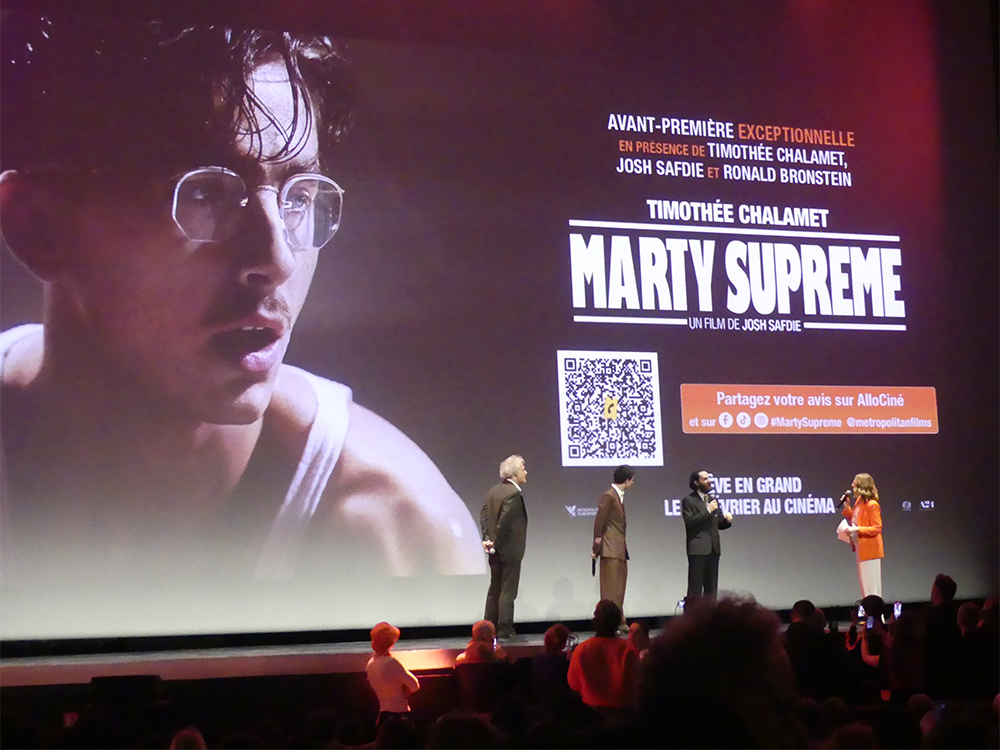
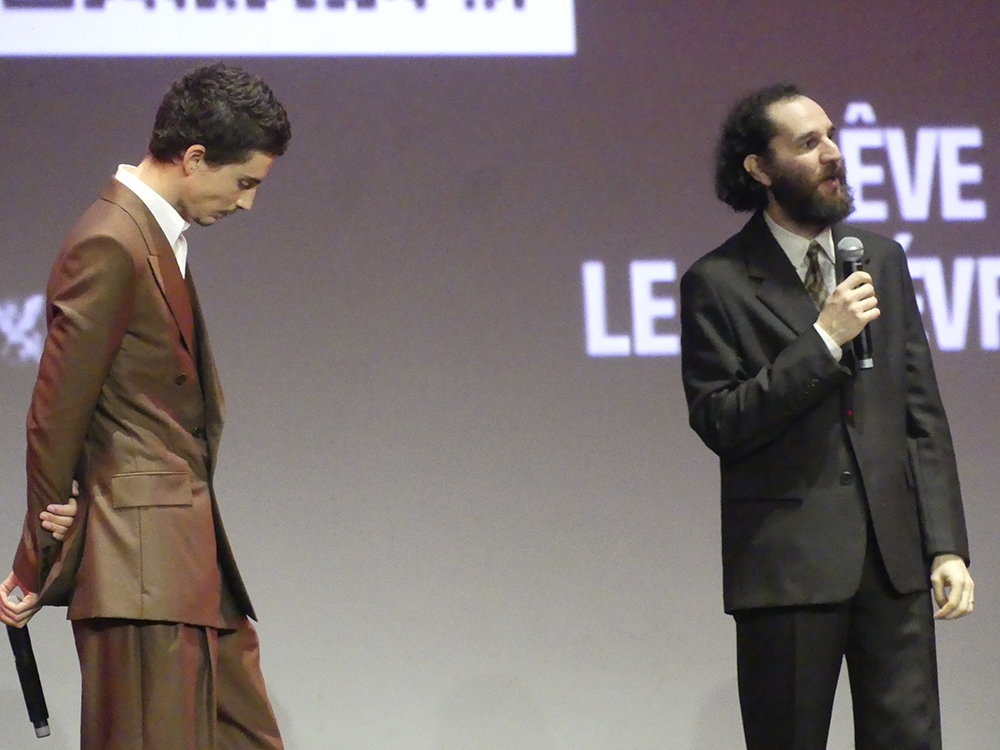
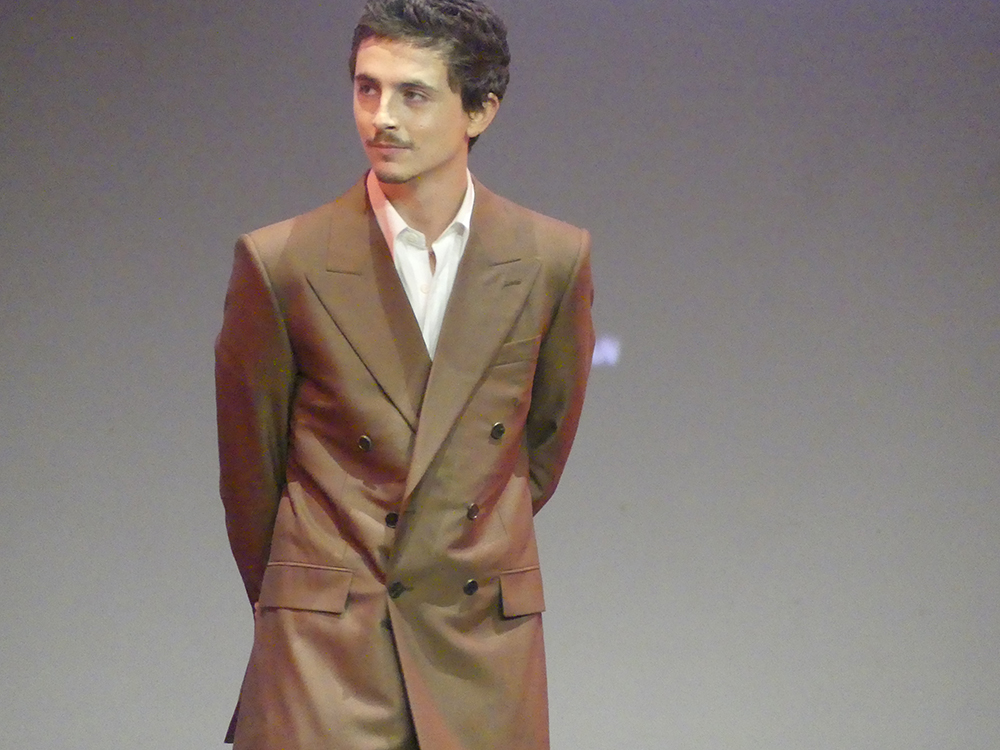
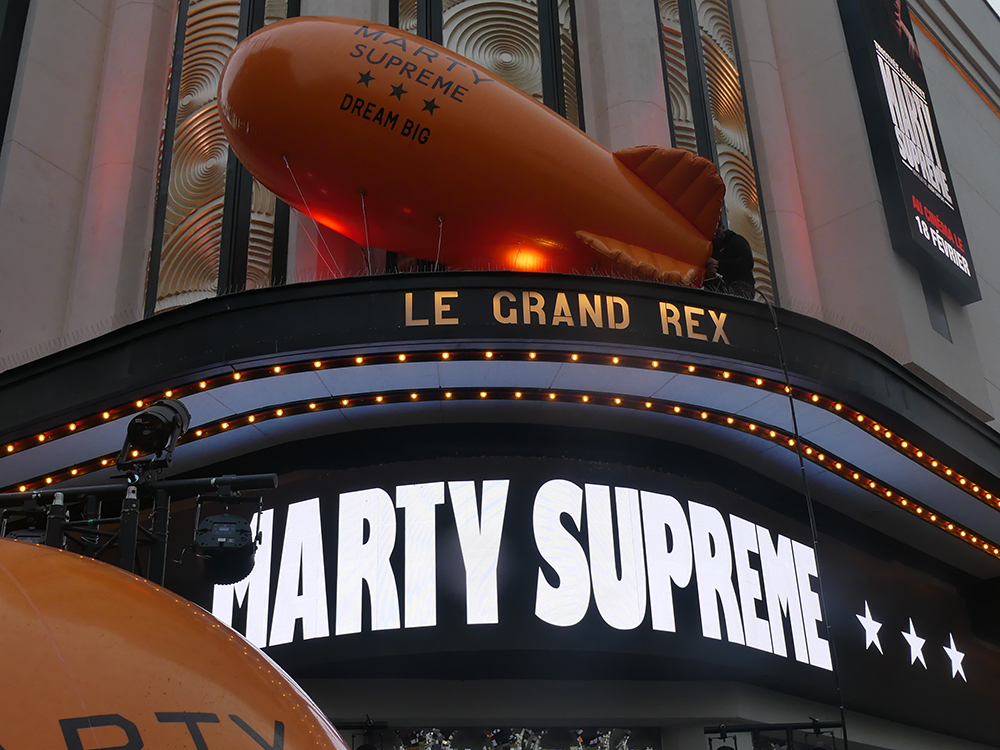
Tonight, the Grand Rex in Paris was transformed into a time machine, transporting its audience directly to the bustling, smoke-filled New York of the early 1950s for the Paris premiere of Marty Supreme, an event our media outlet attended amid palpable excitement and genuine cinephile fervor. Presented in person by screenwriter Ronald Bronstein, director Josh Safdie, and actor Timothée Chalamet, the screening set the tone for what was to follow: this was not a prestigious, polished screening, but the arrival in France of a film already shrouded in myth, rumors of awards, and a reputation for raw, almost reckless ambition. The Grand Rex, often accustomed to blockbuster premieres, seemed unusually attentive that evening, as if the audience instinctively sensed that Marty Supreme belonged to a rarer category of American cinema, one driven as much by obsession and characters as by spectacle, a feeling reflected in the silence that fell over the theater once the lights went down.
Marty Supreme is an American sports comedy-drama directed in 2025 by Josh Safdie, who co-wrote the screenplay with Ronald Bronstein. It is Safdie's first solo feature film since The Pleasure of Being Robbed in 2008, and in many ways his most personal work to date. Set primarily in 1952, the film follows Marty Mauser, a talkative and fiercely ambitious young man from New York's Lower East Side who believes, against all logic and social expectations, that table tennis will be his ticket to fame. Although loosely inspired by the life of legendary con man and ping-pong champion Marty Reisman, the film deliberately eschews the conventions of the biopic, opting instead for a fictional narrative that uses its protagonist as a prism through which to examine postwar America, capitalism, ambition, and the intoxicating power of self-confidence. Timothée Chalamet leads the cast with a performance that has already earned him a Golden Globe Award and a Critics' Choice Award, supported by an eclectic ensemble including Gwyneth Paltrow, Odessa A'zion, Kevin O'Leary, Tyler Okonma, Abel Ferrara, and Fran Drescher, each contributing to the film's dense, almost novelistic social fabric.
What makes Marty Supreme particularly interesting, and what resonated strongly at its Paris premiere, is the way director Josh Safdie transforms a niche, almost forgotten sport into a cinematic battleground fraught with existential stakes. Josh Safdie's fascination with table tennis dates back to his childhood, marked by stories of eccentric characters, Jewish immigrants who played obsessively in his grandparents' circle, and this personal connection permeates the film. The project truly took shape in 2018, when Sara Rossein, Josh Safdie's wife and executive producer, gave him Marty Reisman's memoir, The Money Player, sparking years of research and immersion in a subculture populated by hustlers, dreamers, and misfits. This long gestation period is visible on screen, where each secondary character seems to have a life of their own, each location is steeped in history, and each exchange around the ping-pong table is presented as a miniature war of wills.
Shot primarily in 35mm by cinematographer Darius Khondji, whose collaboration with Safdie once again emphasizes proximity, intensity, and a tactile sense of place. Using vintage anamorphic lenses and long focal lengths, Khondji places the camera at an uncomfortable distance from faces and bodies, as if spying on private moments of despair and bravado, a choice that amplifies Timothée Chalamet's physical performance. Timothée Chalamet trained for months under the guidance of coach Diego Schaaf and former Olympian Wei Wang, performing many of his own stunts, including grueling sequences that underscore Marty's masochistic commitment to his dream. Even small details, such as the decision to give Timothée Chalamet glasses rather than contact lenses to subtly alter his gaze, or the layered makeup by Michael Fontaine that briefly convinced Gwyneth Paltrow that the actor's scars were real, speak to the obsessive authenticity that drives the production.
That same obsessive energy extends to the film's art direction, overseen by veteran designer Jack Fisk, who painstakingly reconstructed vanished spaces such as Lawrence's Broadway Table Tennis Club using archival photos, blueprints, and even a rare 16mm recording to accurately determine color palettes. Josh Safdie's obsession with realism apparently extended to the trash littering the streets, with production designer Adam Willis insisting that it be moistened so that the actors could physically feel the harshness of their environment, an anecdote that sums up the film's refusal to romanticize poverty or struggle. The result is a world that feels chaotic, sordid, and alive, whether in New York, London, Paris, or Tokyo, the latter of which was filmed during a very tight shoot with a mostly local crew in early 2025.
Musically, Marty Supreme continues Josh Safdie's collaboration with composer Daniel Lopatin, whose soundtrack blends electronic textures with period influences, guided by an eclectic playlist ranging from New Order to Fats Domino. Mixed at Electric Lady Studios, the soundtrack underscores the film's central tension between the past and the future, anchoring Marty's story in its time while giving it a strangely timeless feel. The use of pop and new wave tracks such as “Everybody Wants to Rule the World” and “The Perfect Kiss” further reinforces the film's ironic commentary on ambition and self-mythification, themes that seemed particularly relevant during the Paris screening, where the audience reacted audibly to the film's marked shifts in tone, oscillating between comedy, despair, and tragedy.
Marty Supreme had already established itself as one of A24's biggest hits, having premiered at a secret screening at the 2025 New York Film Festival, ranked among the top ten films by the National Board of Review and the American Film Institute, and grossed $124 million worldwide, making it the studio's third biggest hit. Its awards record is equally impressive, with nominations at the Oscars, BAFTAs, Golden Globes, and Critics' Choice Awards, and Timothée Chalamet's performance widely hailed as a career-defining role. But what made the Paris premiere so special was not the weight of the accolades, but the sense that the film's central ideas—about obsession, belief, and the price of dreaming too hard in a world that doesn't care—were easily understood across cultures.
When the lights came back on at the Grand Rex, the applause seemed less like a polite response to a prestigious film and more like recognition, recognition of the fact that Marty Supreme touches on something universal beneath its very American setting. Watching Josh Safdie, Ronald Bronstein, and Timothée Chalamet take the stage before the screening, there was a quiet irony in seeing a film about a man desperate to be taken seriously now welcomed by one of Europe's most iconic cinemas. At that moment, Marty Mauser's impossible dream no longer seemed so ridiculous, and the Paris premiere confirmed what the film had been suggesting all along: sometimes blind faith and unshakeable conviction are enough to change reality, at least for the duration of a film, and sometimes far beyond.
You can discover our photos in our Flickr page
Synopsis :
Marty Mauser, a young man with boundless ambition, is willing to do anything to achieve his dream and prove to the world that nothing is impossible for him.
Marty Supreme
Directed by Josh Safdie
Written by Ronald Bronstein, Josh Safdie
Produced by Josh Safdie, Ronald Bronstein, Eli Bush, Anthony Katagas, Timothée Chalamet
Starring Timothée Chalamet, Gwyneth Paltrow, Odessa A'zion, Kevin O'Leary, Tyler Okonma, Abel Ferrara, Fran Drescher
Cinematography : Darius Khondji
Edited by Ronald Bronstein, Josh Safdie
Music by Daniel Lopatin
Production company : Central Pictures
Distributed by A24
Release dates : October 6, 2025 (NYFF), December 25, 2025 (United States), February 18, 2026 (France)
Running time : 150 minutes
Photos and video : Boris Colletier / Mulderville