
 English
Premiere - The Testament of Ann Lee lights up Los Angeles: a singular premiere for an unclassifiable American odyssey
By Mulder, Los Angeles, Linwood Dunn Theater,, 14 december 2025
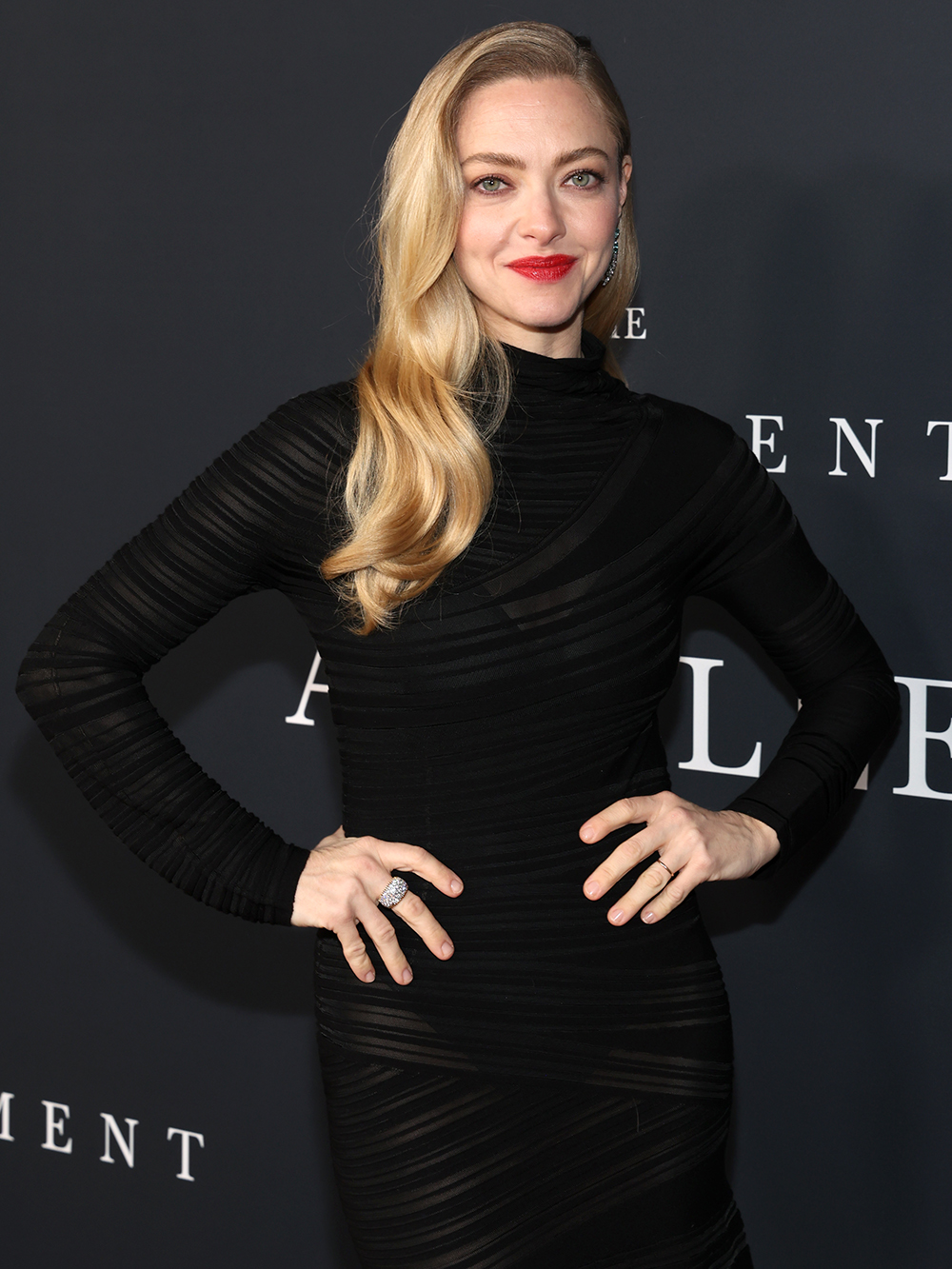
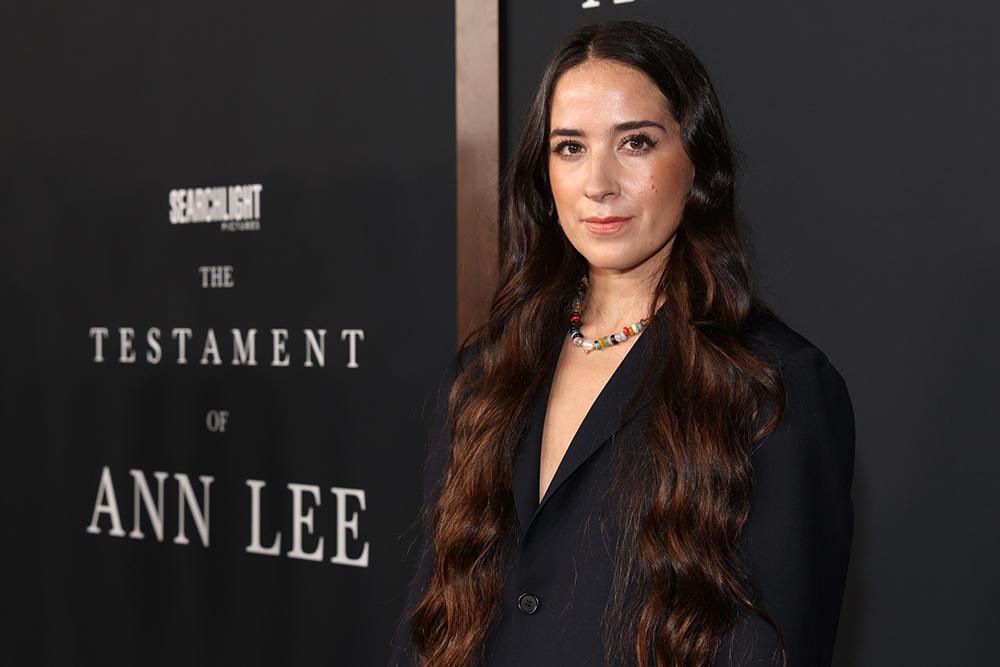
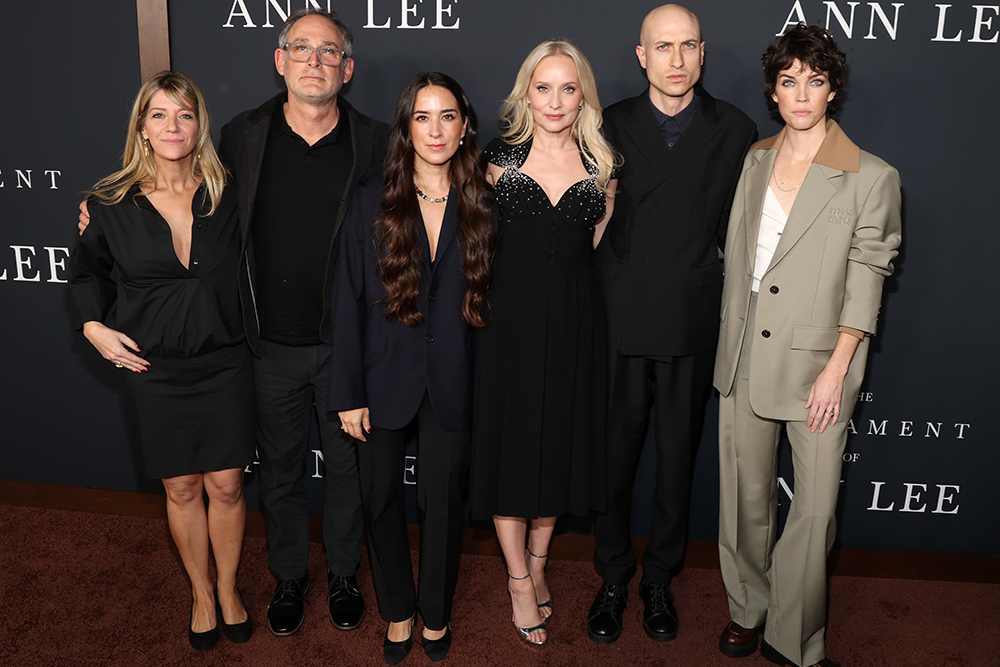
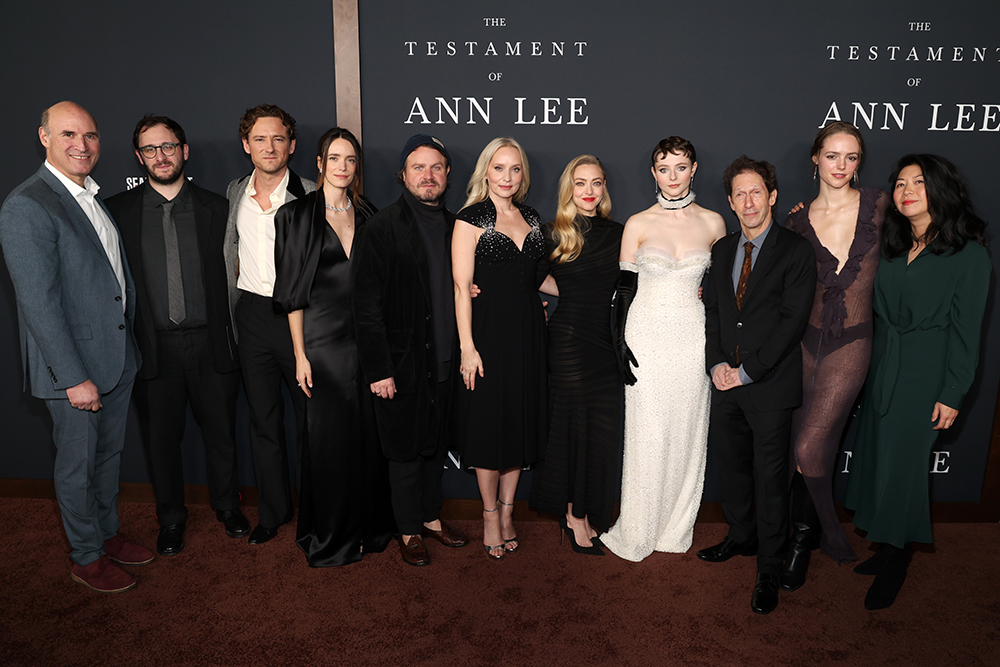
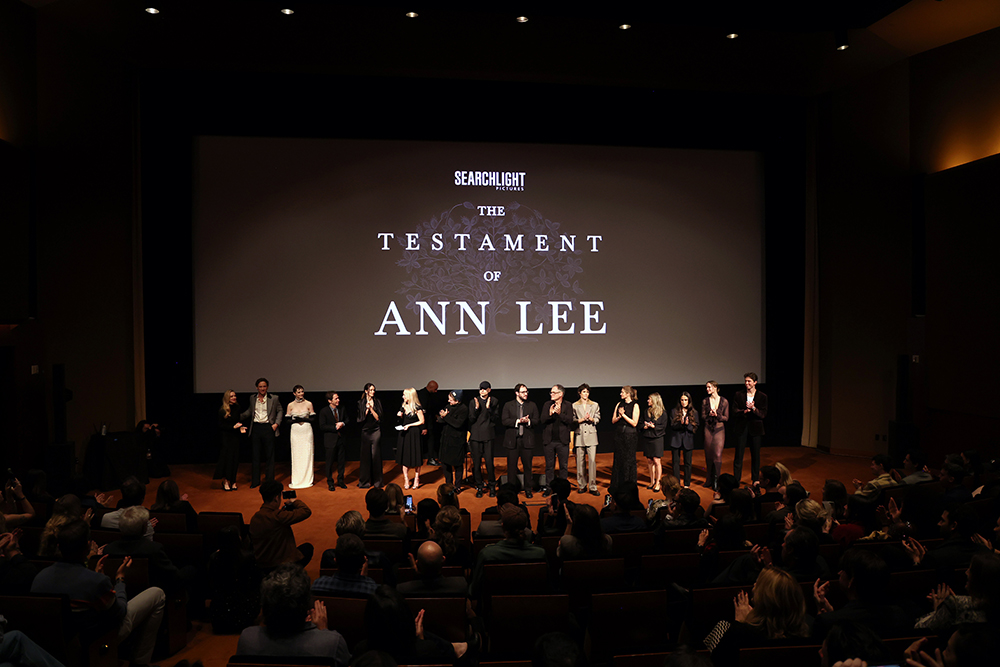
On December 14, 2025, the Linwood Dunn Theater in Los Angeles became, for one night, a space suspended between cinema, ritual, and collective contemplation as Searchlight Pictures unveiled the Los Angeles premiere of The Testament of Ann Lee. The red carpet gathered an impressive ensemble, with Amanda Seyfried, Lewis Pullman, Stacy Martin, Thomasin McKenzie, Tim Blake Nelson, Natalie Shinnick, and director Mona Fastvold in attendance, underscoring the sense that this was not just another awards-season stop but a meaningful milestone for a film that has stubbornly followed its own path from conception to screen. There was a palpable quiet intensity in the room, the kind that usually surrounds films people already suspect will linger long after the lights come back on, and as editor-in-chief of Mulderville, it was hard not to feel that rare impression of witnessing a work whose ambitions exceed the usual labels we tend to apply so easily.
At the heart of the evening, Mona Fastvold spoke candidly about the long road that led The Testament of Ann Lee to this moment, openly admitting her early anxiety around the genre itself, reluctant for a long time to even call the film a musical. That hesitation makes sense when you see how radically the film approaches sound, movement, and voice, far removed from conventional song-and-dance structures. Co-written with her longtime collaborator and husband Brady Corbet, the film emerged from Fastvold’s discovery of a Shaker hymn while wrapping The World to Come, a revelation that sparked years of research into Ann Lee and an industry struggle marked, by her own admission, with near-total disinterest at first. That context gives the Los Angeles premiere an added resonance: this is a project that exists because its creators refused to simplify or dilute it to make it more marketable, a stance that feels increasingly rare in contemporary cinema.
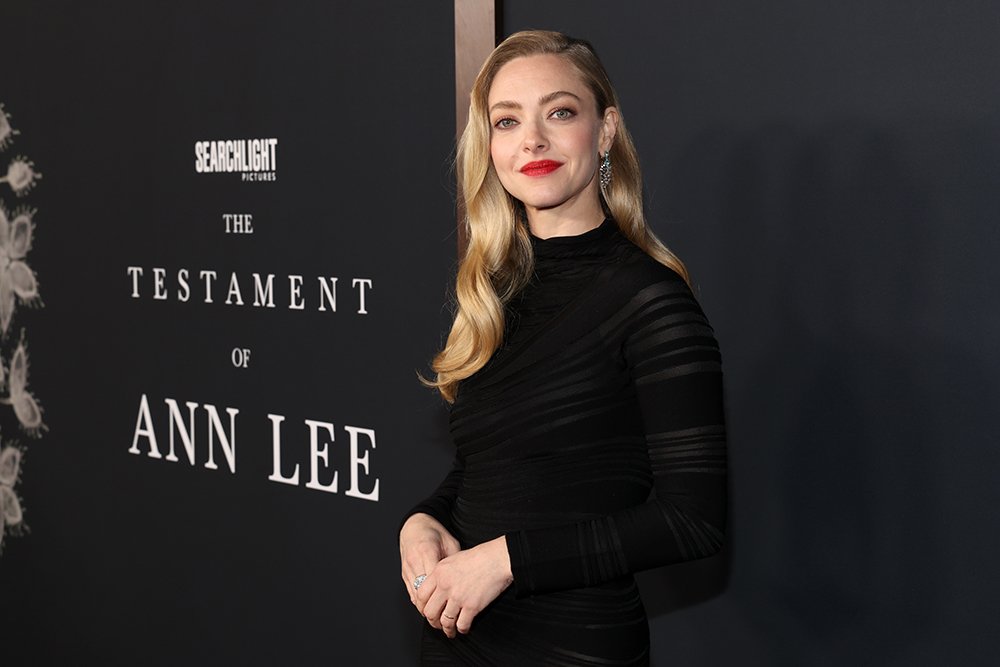
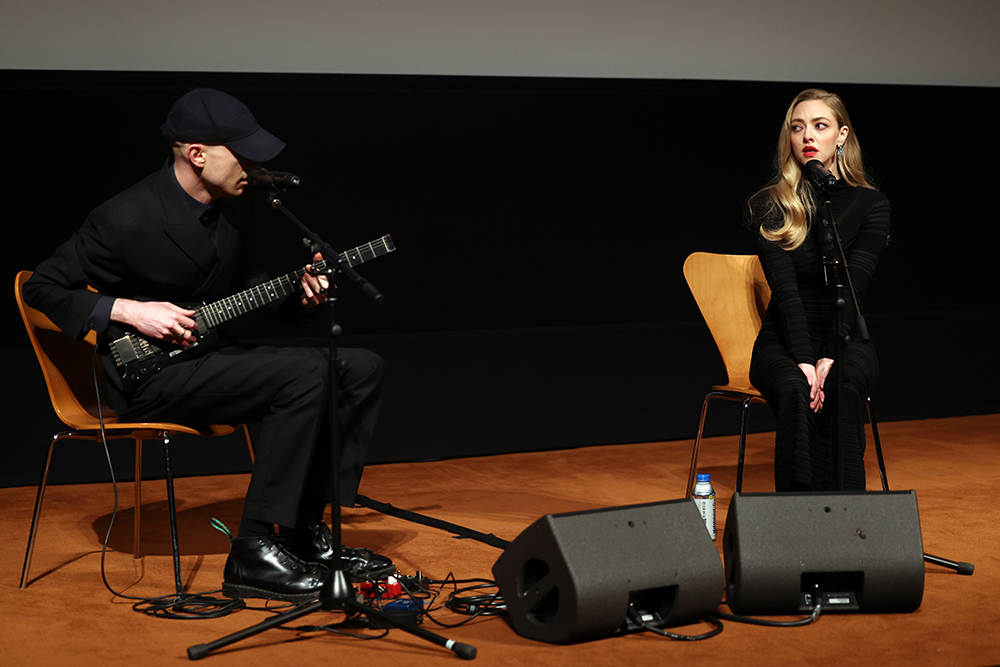
Amanda Seyfried, who embodies Ann Lee with a rawness that has already earned her Golden Globe and Critics’ Choice Award nominations, was clearly moved revisiting the journey publicly. She spoke with striking honesty about her initial doubts when Fastvold first approached her, confessing that she could neither hear the songs nor imagine the physical language of the character. Yet that uncertainty ultimately became part of the creative process, as Fastvold guided her toward a completely different relationship with singing and movement, rooted in prayer, emotional release, and physical exhaustion rather than performance. Seyfried’s description of having to “unlearn” her formidable musical training echoed Fastvold’s own explanation of working with composer Daniel Blumberg, choreographer Celia Rowlson-Hall, and the sound design team to build a sonic world where thunder, wind, breath, stomps, and animal-like vocalizations merge into a form of ecstatic devotion rather than spectacle. Watching Seyfried discuss this process at the premiere, it became clear why the performance feels so unsettling and powerful on screen: it is not meant to be beautiful in the traditional sense, but truthful, almost confrontational in its vulnerability.
What also stood out during the Los Angeles premiere was how confidently the film positions Ann Lee as a figure of radical modernity. Fastvold’s assertion that Lee might be “perhaps the first American feminist” resonated strongly in the room, especially given how little space she occupies in mainstream historical narratives. Spanning 18th-century England and America, the film traces Lee’s rise from obscurity to the founding of the Shaker movement, a community built on gender equality, communal living, and ecstatic worship, all while facing persecution and profound personal tragedy, including the loss of four children in infancy. Fastvold’s choice to depict childbirth in an unflinching, graphic manner, using prosthetics to render these moments as physically and emotionally real as possible, aligns with the film’s refusal to romanticize faith or suffering. It is a portrait of belief as something bodily, painful, and transformative, a theme that feels especially potent when experienced with an audience as attentive as the one gathered at the Linwood Dunn Theater.
From a purely cinematic standpoint, The Testament of Ann Lee also asserts itself as a work of craft and texture, shot on 35mm film by cinematographer William Rexer, with Brady Corbet serving as second unit director, continuing a visual and thematic dialogue that echoes their collaboration on The Brutalist. The editing by Sofía Subercaseaux and the score by Daniel Blumberg, who drew directly from original Shaker hymns while pushing toward something deeply experimental, reinforce the film’s tactile, almost elemental quality. Knowing that the film will receive a limited 70mm theatrical release in the United States on December 25, 2025, after a prestigious festival journey that included Venice, Toronto, London, Chicago, AFI Fest, Beyond Fest, and many others, adds another layer to the Los Angeles premiere: this is cinema designed to be felt in a room, with sound and image enveloping the viewer.
As the screening concluded and the audience slowly filtered back into the Los Angeles night, there was a shared sense that The Testament of Ann Lee is not a film that seeks easy consensus. It challenges, provokes, and sometimes unsettles, but it does so with an integrity that feels inseparable from Mona Fastvold’s vision and Amanda Seyfried’s fearless commitment. For Mulderville, this premiere wasn’t just another red carpet moment to document; it was a reminder of why certain films matter beyond their release dates or awards prospects. The Testament of Ann Lee arrives as a singular American story told through an equally singular cinematic language, and its Los Angeles premiere felt less like a celebration of arrival than a quiet acknowledgment that this film was always destined to stand slightly apart, singing in its own voice.
Discover the official red carpet video :
itw Amanda Seyfried
itw Andrew Morrison
itw Brady Corbet
itw Celia Rowlson Hall
itw Daniel Blumberg
itw Gosia Margarita Karpiuk
itw Lewis Pullman
itw Mona Fastvold
itw William Rexer
itw Sofia Subercaseaux
itw Tim Blake Nelson
itw Thomasin McKenzie
Synopsis :
The fascinating and incredible true story of Ann Lee, founder of the religious cult known as the Shakers. This passionate prophetess, who preached gender equality and social justice, was adored by her followers.
The Testament of Ann Lee
Directed by Mona Fastvold
Written by Mona Fastvold, Brady Corbet
Produced by Andrew Morrison, Joshua Horsfield, Viktória Petrányi, Mona Fastvold, Brady Corbet, Gregory Jankilevitsch, Klaudia Śmieja-Rostworowska, Lillian LaSalle, Mark Lampert
Starring Amanda Seyfried, Thomasin McKenzie, Lewis Pullman, Stacy Martin, Tim Blake Nelson, Christopher Abbott
Cinematography : William Rexer
Edited by Sofía Subercaseaux
Music by Daniel Blumberg
Production companies : Kaplan Morrison, Intake Films, Mid March Media, Annapurna Pictures, FirstGen
Mizzel Media, Yintai Entertainment, ArtClass Films, Carte Blanche
Distributed by Searchlight Pictures (United States), The Walt Disney Company France (France)
Release dates : 1 September 2025 (Venice), 25 December 2025 (United States), 20 February 2026 (United Kingdom), March 11, 2026 (France)
Running time : 137 minutes
Photos : Getty Images for Searchlight Pictures