
 English
Festivals - PIFFF 2025 : Flush : A Toilet, a Trap, and a Frenetic Descent into Absurd Survival
By Mulder, Paris, Max Linder Panorama, 16 december 2025

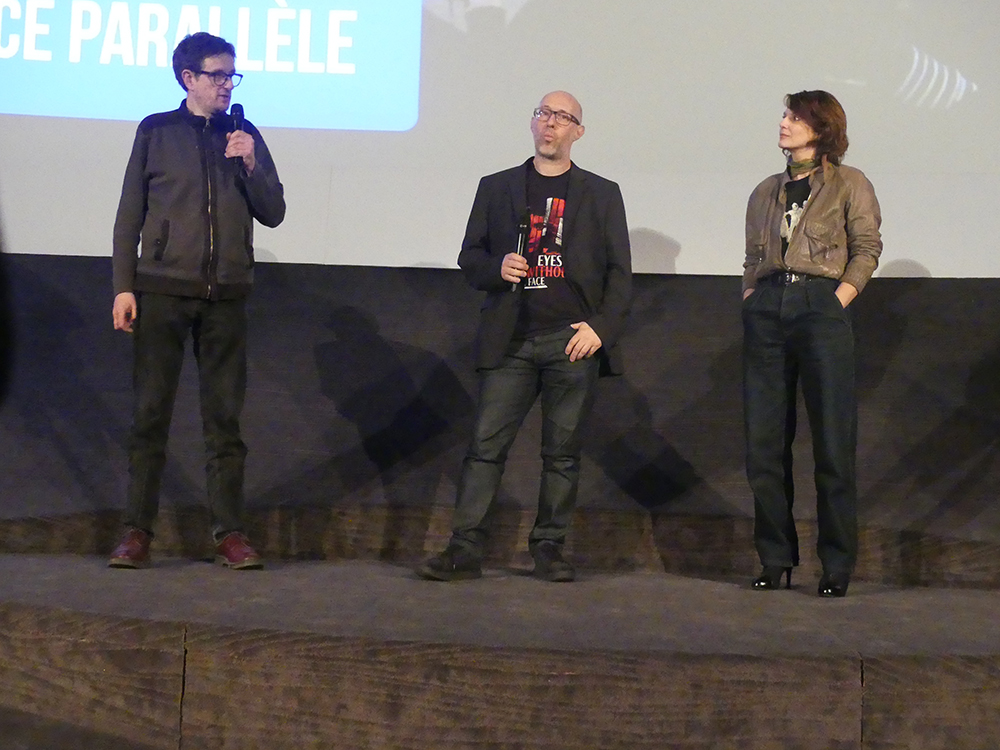
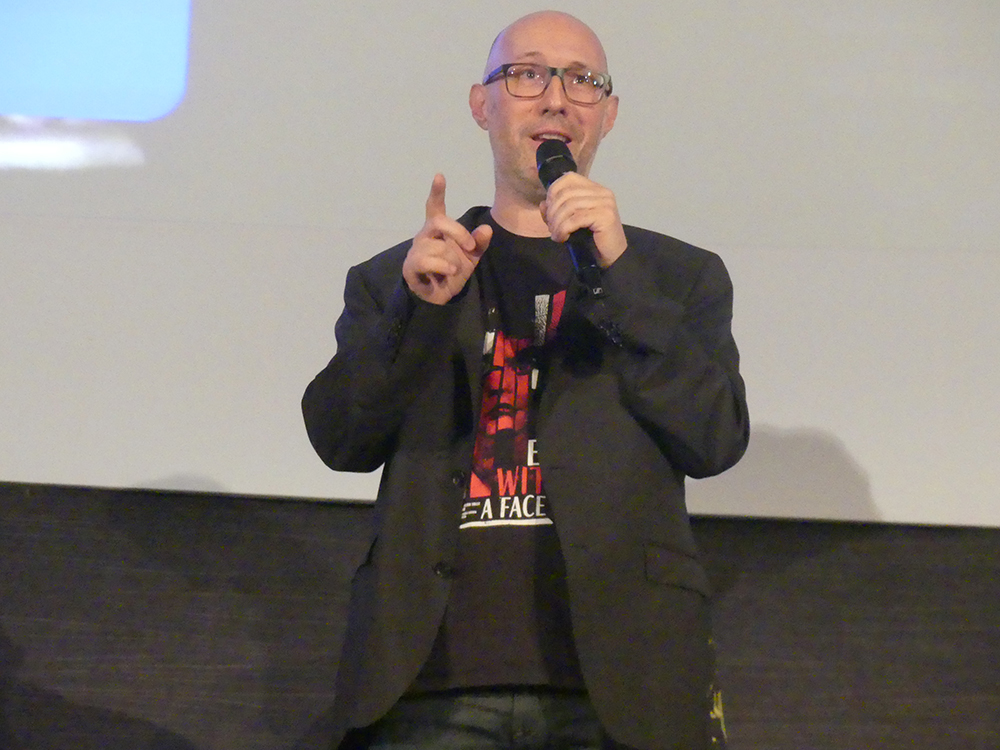
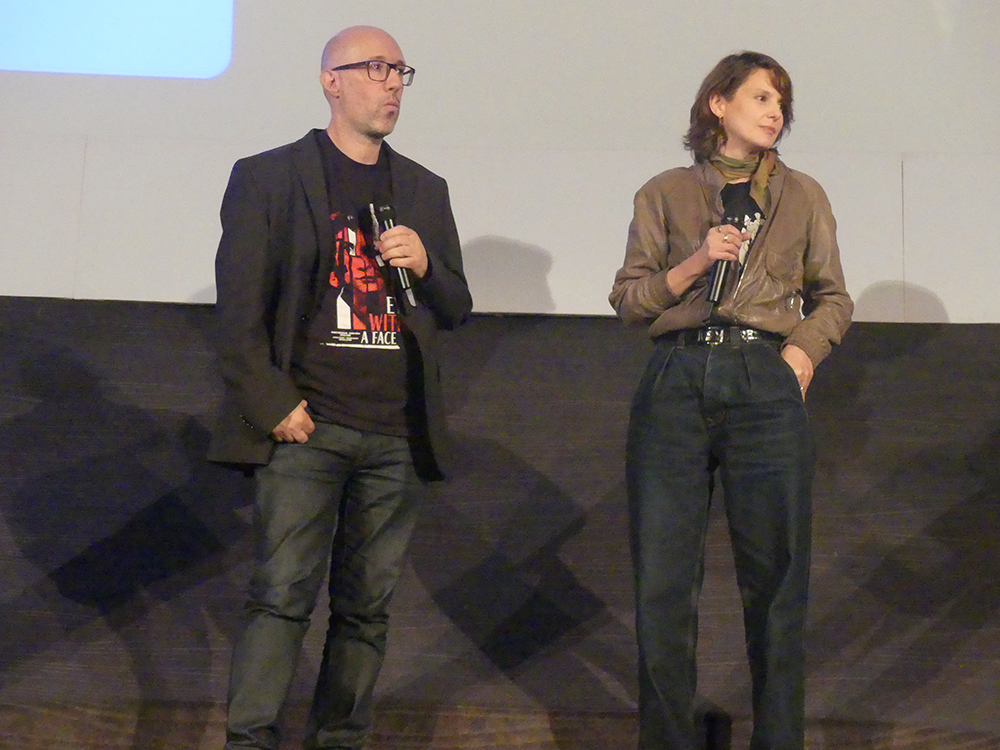
Presented at the 2025 edition of the Paris International Fantastic Film Festival, Flush was one of those screenings that instantly justified why festivals like PIFFF remain essential for fans of daring genre cinema. The screening was introduced by director Grégory Morin, who was visibly both enthusiastic and amused by the reaction to his debut feature film, and was followed by a long and lively Q&A session with Grégory Morin, screenwriter David Neiss, and lead actress Élodie Navarre. The exchange felt less like a formal discussion and more like a shared moment of collective disbelief at what we had just experienced. There was laughter, curiosity, and genuine fascination in the room, especially when the filmmakers discussed the challenge of transforming such a grotesque and minimalist idea into a seventy-minute survival nightmare that never loses momentum.
For those who have followed Gregory Morin's career through his short films, his transition to feature films seems like a natural evolution rather than a cautious step, as Flush fully embraces the director's reputation for inventive, trashy, and unapologetic cinema, pushing his obsessions to their logical extreme. The film is relentlessly energetic, brimming with ideas and striking economy, refusing any narrative downtime, a quality that becomes even more impressive given its quasi-unique single-location concept. Jonathan Lambert, proving once again why he is such a singular presence in French cinema, anchors this controlled chaos, delivering a performance that oscillates between black comedy, raw panic, and pathetic humanity with remarkable precision. Rarely has the idea of spending more than an hour in a bathroom been so claustrophobic, so stressful, and yet so perversely entertaining, with Morin transforming the most mundane and humiliating of spaces into a veritable existential prison.
A self-proclaimed cinephile and great lover of Asian cinema, Grégory Morin proudly displays his influences without ever falling into imitation, creating a film that borrows the percussive rhythms, brutal irony, and grotesque humor of Korean crime thrillers while injecting a layer of absurdity and cruelty that evokes the spirit of Takashi Miike at his most sadistic and playful. Flush delights in tormenting its deeply flawed antihero, drawing tension and comedy from every new humiliation, every drop of water, every failed escape attempt, with a mischievous energy that feels both referential and distinctly personal. The film's pace is frenetic, its tone joyously unstable, and its visual language precise and functional, thanks in large part to the work of cinematographer Mathieu de Montgrand, whose camera never lets us forget the physical discomfort and psychological breakdown of its protagonist.
The premise is so absurd that it borders on genius: Luc, a cocaine-addicted loser desperately trying to win back his ex-wife on their child's birthday, finds himself caught up in a drug deal that ends with him being abandoned, left for dead, with his head stuck in a squat toilet, his survival depending on a fragile balance between water pressure, time, and his sheer willpower. Forget coffins buried underground, isolated cliffs, shark-infested waters, or desert islands, because Flush joyfully reinvents the survival genre by literally plunging its hero into shit. Thanks to Grégory Morin and David Neiss, the expression “it tastes like shit” becomes a twisted narrative engine, with tension rising as steadily and cruelly as the water in a toilet tank, transforming bodily functions into instruments of suspense. The film's sense of escalation is constant, intelligent, and often hilarious and uncomfortable, finding new ways to push the situation further without betraying its internal logic.
Beyond its provocative nature, Flush also benefits from a strong cast, with Élodie Navarre bringing emotional grounding and a commanding presence to a story that could easily have descended into pure gimmickry, while Elliot Jenicot adds texture to the film's dark and morally compromised world. Pauline Pallier's tight editing ensures that the film never drags, treating its seventy-minute runtime as an asset rather than a limitation, while Mike Theis and Luc Rougy's score subtly amplifies the absurdity and angst without ever overwhelming the narrative. Produced by Kieran Clemow, Thomas Leterrier, and Jean-Michel Tari, via AJM STUDIO, F-PARTNERS, and AKTV, Flush stands as a bold calling card, a film that announces Grégory Morin as a filmmaker unafraid to embrace the ridiculous in order to achieve something strangely visceral and human.
Seen in the charged atmosphere of the PIFFF, surrounded by an audience ready for excess and experimentation, Flush provoked equal parts laughter, groans, and genuine tension. It's the kind of film that thrives on collective reactions, sparking debate, disbelief, and admiration for its sheer audacity, and perfectly embodying the very spirit of the festival. This screening was not just a curiosity, but a reminder that fantasy cinema can still surprise by going where no one expects it to go, even if that place happens to be the bottom of a toilet bowl.
You can discover our photos in our Flickr page
Synopsis :
Luc, a junkie adrift, tries to win back his ex, but finds himself caught up in drug trafficking. Left for dead, his head stuck in a toilet, he has only one night to get out of this situation and rebuild his life.
Flush
Directed by Grégory Morin
Written by David Neiss
Produced by Kieran Clemow, Thomas Leterrier, Jean-Michel Tari
Starring Jonathan Lambert, Élodie Navarre, Elliot Jenicot
Cinematography : Mathieu de Montgrand
Edited by Pauline Pallier
Music by Mike Theis, Luc Rougy
Production companies : AJM STUDIO, F-PARTNERS, AKTV
Distributed by NC
Release dates : NC
Running time : 70 minutes
Photos and video 4K : Boris Colletier / Mulderville