

PIFFF 2025 : Orfeo mesmerizes Paris at its French premiere at the Max Linder Panorama
Sunday 14 December, 11:00 AM PT Paris, Max Linder Panorama 2025-12-14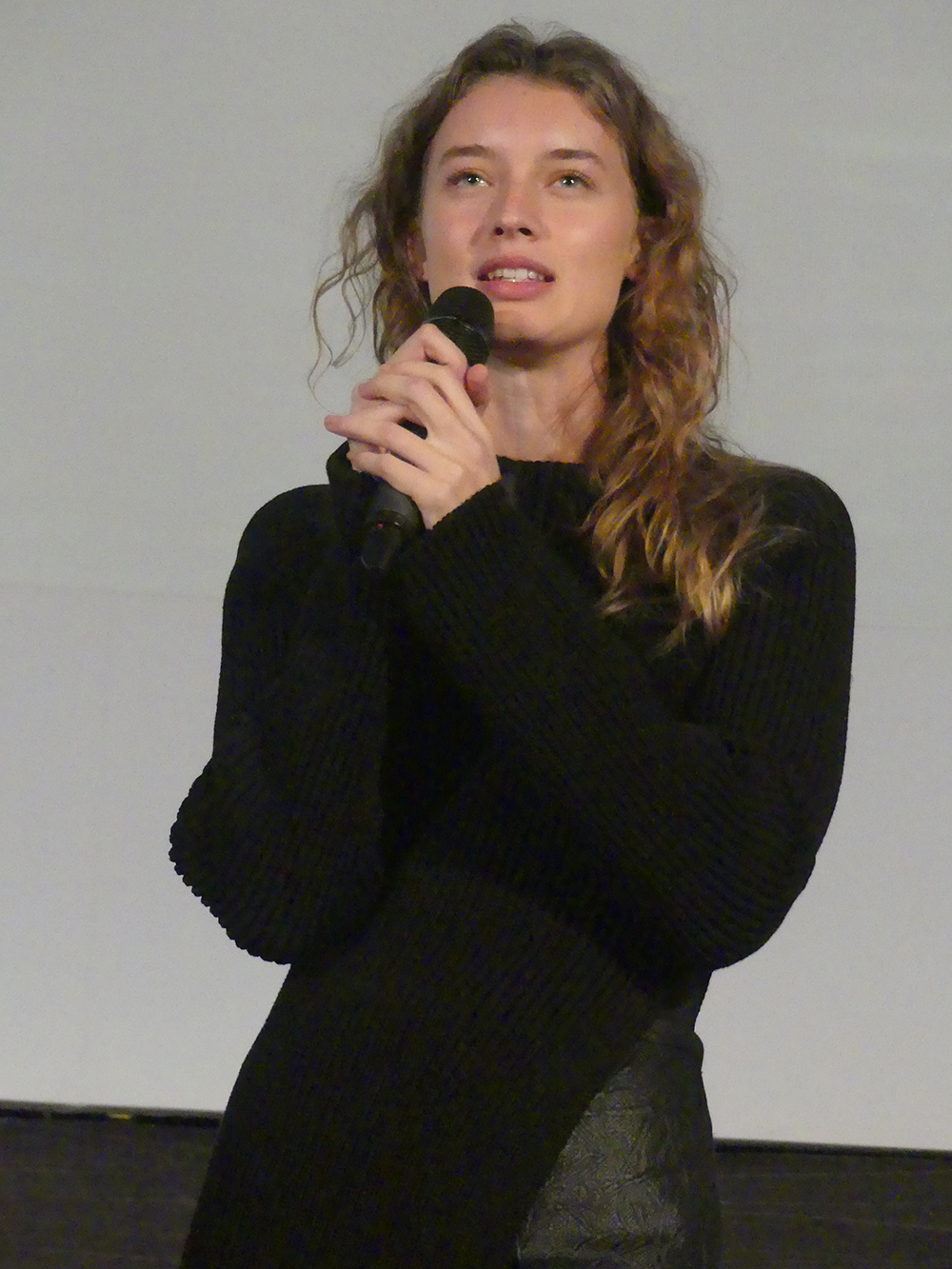
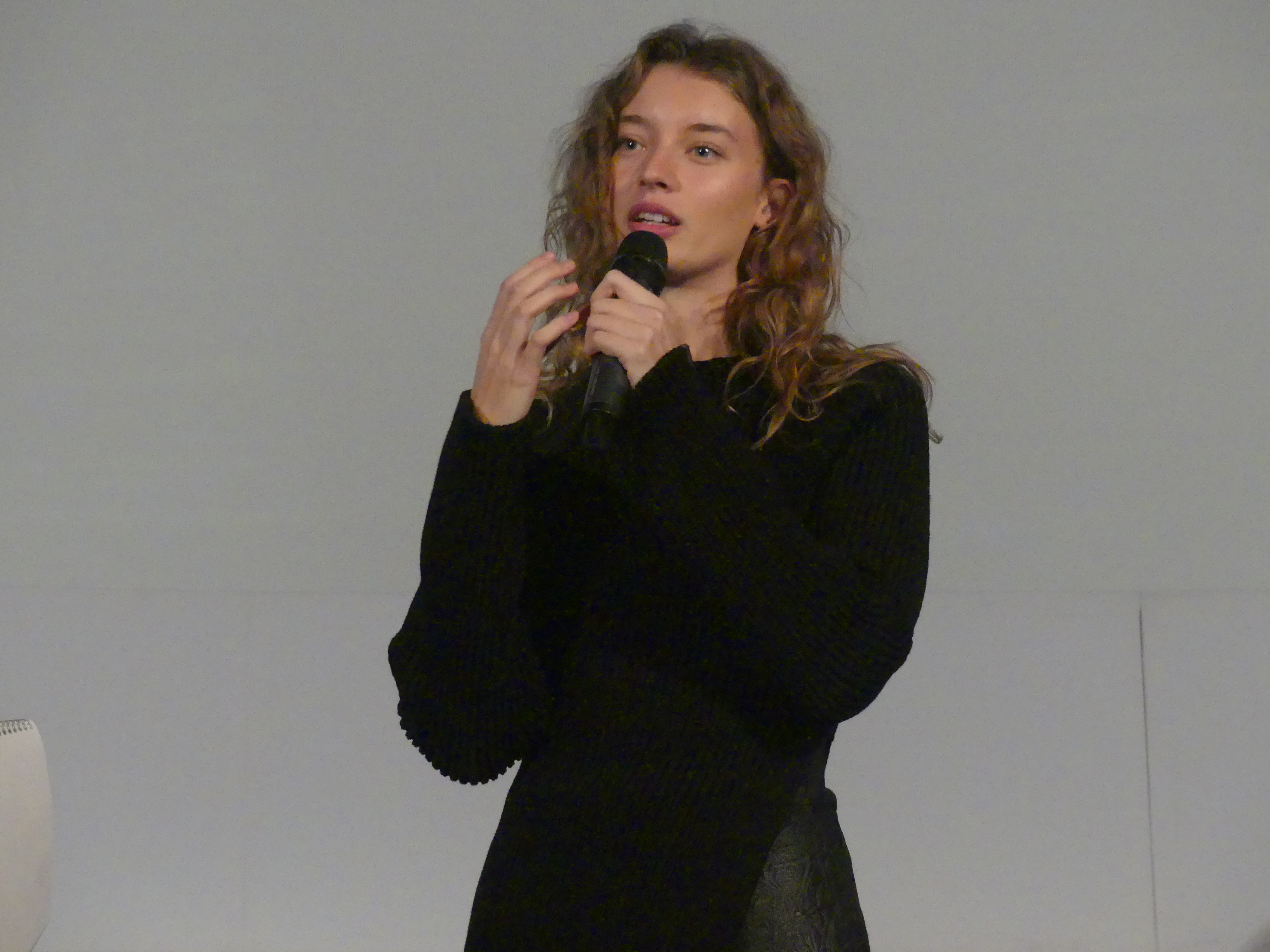
As part of the 2025 edition of the Paris International Fantastic Film Festival, our media outlet was present today at the Max Linder Panorama for the French premiere of Orfeo, the first feature film by Italian director Virgilio Villoresi. It was a special moment in the festival's program, elegant, strange, and deeply sensory, faithful to the DNA of PIFFF, which likes to shake things up and celebrate fantasy cinema in the broadest sense, free and daring. The screening had a special flavor, enhanced by the presence of lead actress Giulia Maenza, who came to present the film to the Parisian audience before taking part in a long, warm, and passionate Q&A after the screening, where one could feel both the emotion and pride of defending such a unique work. In the theater, the almost religious silence that settled in from the very first minutes already testified to the film's visual power, and the discussions that followed confirmed that Orfeo leaves no one indifferent: it is experienced, felt, and lived through, rather than understood in the classical sense of the term, which makes it precisely the ideal subject for a festival like PIFFF.
Giulia Maenza's career path adds an extra layer of fascination to this project, as her journey is so atypical and revealing of a very instinctive relationship with the image. Born in Sicily, she grew up surrounded by her two older brothers, Davide Maenza and Marco Maenza, before being spotted almost by chance in a stadium by a former model. From there, her fashion career took off: she quickly began modeling for Versace, Dolce & Gabbana, Ermanno Scervino, Moschino, DSquared2, Giambattista Valli, Elie Saab, Armani Privé, Christopher Kane, Max Mara, Blumarine, Miu Miu, Azzedine Alaïa, and Oscar de la Renta, while becoming one of the sought-after faces of campaigns for Bvlgari, Chopard, René Caovilla, Topshop, Dolce & Gabbana, and Express, and appearing in major titles such as Vogue Italia, Vogue Paris, Vogue Japan, Vogue Germany, Marie Claire, and Vanity Fair France. Seeing her today embody Eura in Orfeo, with an almost spectral restraint, confirms how her relationship with the body, the gaze, and visual presence finds a natural, almost obvious extension here.
Noticed during its out-of-competition presentation at the Venice Film Festival, Orfeo impresses above all with the rigor and sensuality of its staging, each shot seeming to be conceived as an autonomous tableau, sometimes enriched with stop-motion sequences with baroque and dreamlike accents, at times evoking the plastic precision and troubled erotic charge of the cinema of the duo Hélène Cattet and Bruno Forzani, without ever falling into simple quotation. Directed by Virgilio Villoresi, written by Virgilio Villoresi and Alberto Fornari, and produced by Alessandro Del Vigna, Chiara Ghidelli, Greta Rossi, Alessandra Rosso, Giulio Sangiorgio, and Enrico Maria Vernaglione, the film stands out as a deeply artisanal work, shot in 16 mm, which favors practical effects, models, optical effects, and in-camera experimentation over any form of digital smoothing. Loosely inspired by Dino Buzzati's Poema a fumetti, often considered one of the first Italian graphic novels, Orfeo revisits the myth of Orpheus and Eurydice through a deliberately fragmented narrative, in which a solitary pianist, played by Luca Vergoni, falls into a labyrinthine afterlife in search of his beloved, guided by music, memories, and almost mythological figures embodied in particular by Vinicio Marchioni and Aomi Muyock.
Beyond its pictorial beauty, Virgilio Villoresi deliberately rejects any explanatory narrative, preferring a dreamlike logic where meaning is constructed in the interstices, in the repetition of motifs, in pure sensation—an approach that may be disconcerting but richly rewards viewers willing to let themselves be carried away. Marco de Pasquale's photography, Virgilio Villoresi's own editing, and Angelo Trabace's music contribute to this almost hypnotic experience, where the film becomes less a narrative than a mental space to be explored. At 74 minutes, Orfeo asserts a strong and coherent identity, confirming Virgilio Villoresi as a filmmaker for whom cinema is above all a sensory and poetic art, capable of dialoguing with ancient myths while speaking of desires, losses, and artistic creation in a resolutely contemporary way. This French premiere at PIFFF will remain one of those rare moments when you feel that a film, through its radicalism and sincerity, naturally finds its place in a festival that still champions fantastic visions, images, and emotions, far from the beaten track, and that stays with you long after you leave the theater.
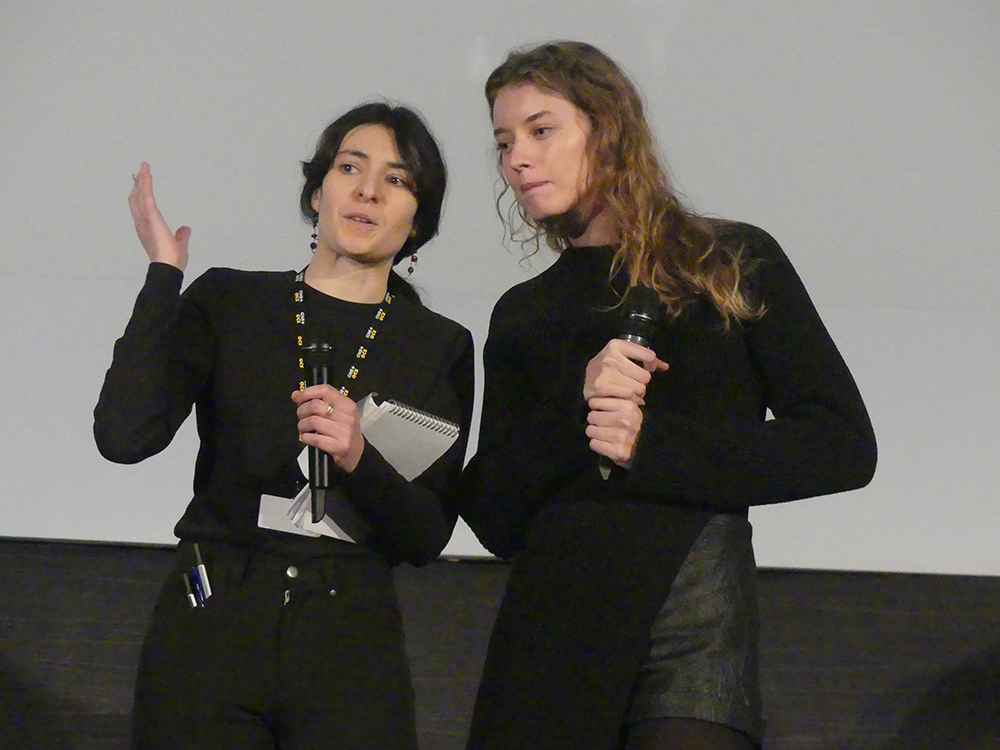
You can discover our photos in our Flickr page
Synopsis :
A pianist falls for a mysterious woman who vanishes into a supernatural realm. Following her through a doorway, he encounters fantastical beings and must navigate a dreamlike afterlife to find her, guided by music and memories.
Orfeo
Directed by Virgilio Villoresi
Written by Virgilio Villoresi, Alberto Fornari
Produced by Alessandro Del Vigna, Chiara Ghidelli, Greta Rossi, Alessandra Rosso, Giulio Sangiorgio, Enrico Maria Vernaglione
Starring Luca Vergoni, Giulia Maenza, Vinicio Marchioni, Aomi Muyock
Cinematography : Marco de Pasquale
Edited by Virgilio Villoresi
Music by Angelo Trabace
Production companies : Fantasmagoria
Distributed by NC
Release dates : NC
Running time :74 minutes
Photos and Video : Boris Colletier / Mulderville