 English
Premiere - Silver Star : A Paris Premiere Charged With Emotion, Cinema, and Rebellion
By Mulder, Paris, Max Linder Panorama, 17 november 2025
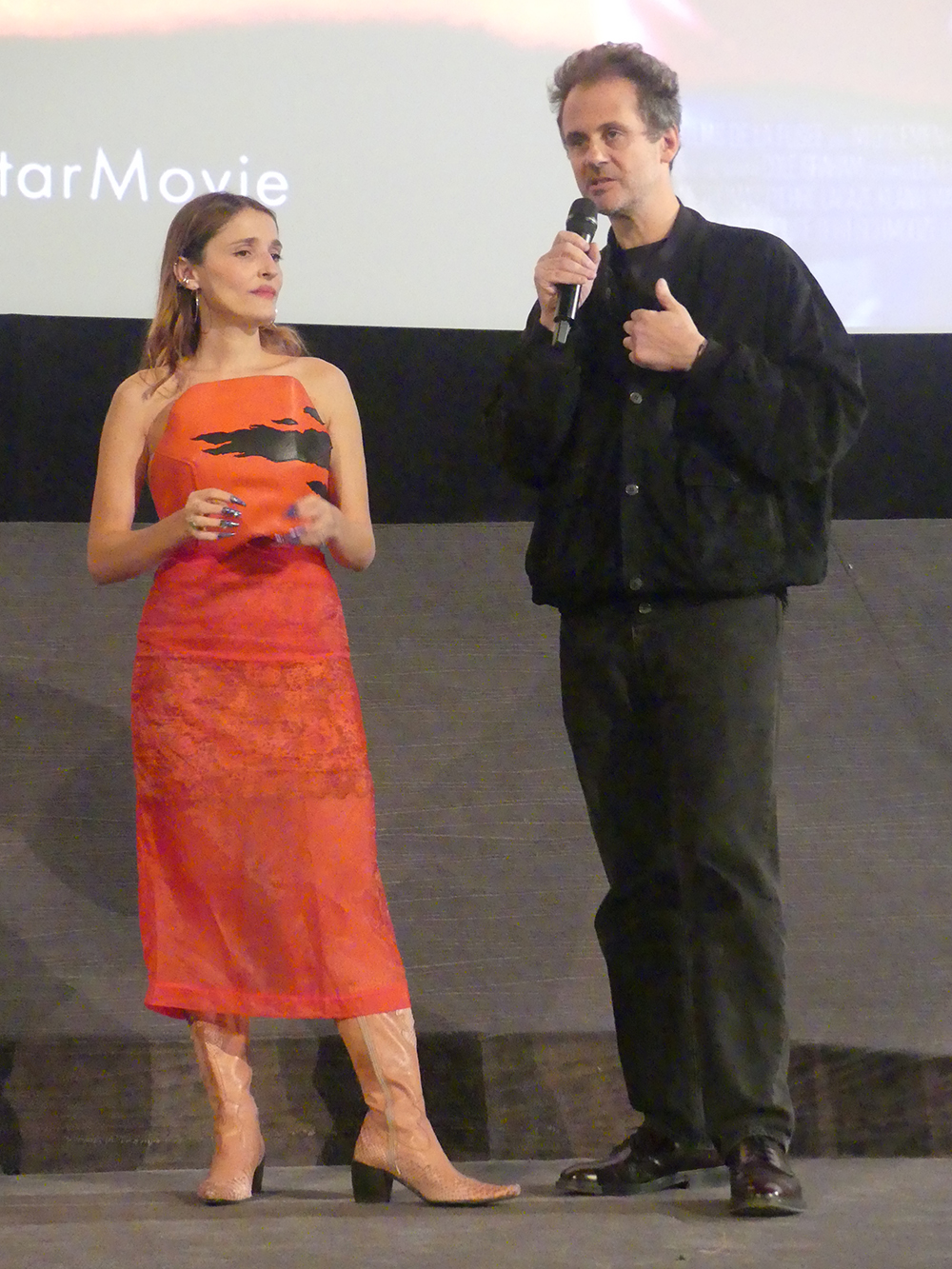
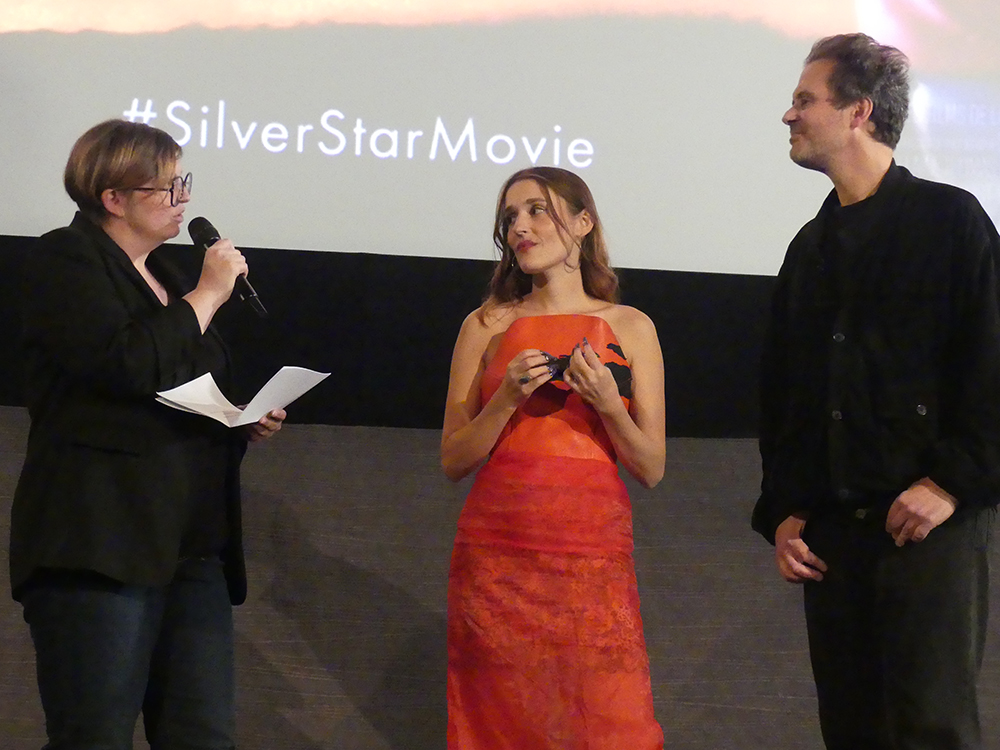
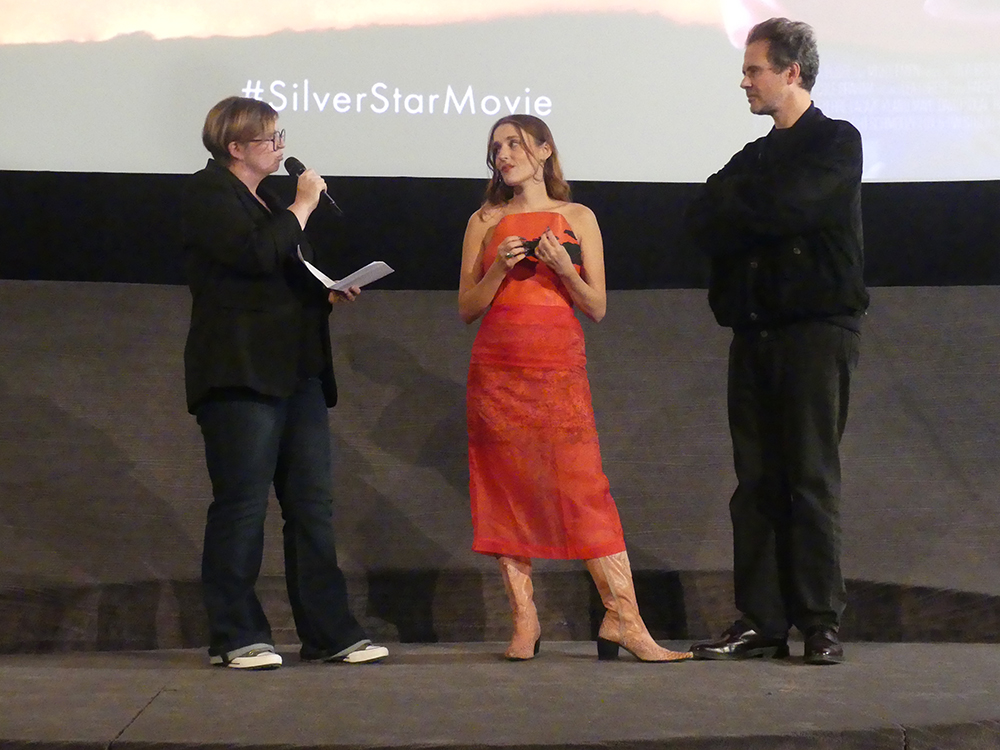
The Parisian chill settling over Boulevard Poissonnière this November 17, 2025, didn’t keep cinephiles from crowding into the legendary Max Linder Panorama, where the premiere of Silver Star unfurled in an atmosphere both electric and warmly communal. Our media outlet was onsite, soaking in the anticipation surrounding a film that already carries a reputation for its audacity, its deeply human storytelling, and the unmistakable creative chemistry between its writer-director duo Ruben Amar and Lola Bessis. The evening came with its share of emotion, notably the disappointment of learning that lead actress Grace Van Dien, initially announced as a guest, had canceled her appearance. Still, the void she left was quickly filled by the vibrant presence of the filmmakers themselves, who introduced the film with quiet pride and a palpable sense of accomplishment. And to everyone’s delight, the screening ended with a short, soulful performance by Tracy De Sà, whose voice added an unexpected but fitting final note to a film already infused with rhythm and resilience.
The heart of Silver Star lies in its formidable duo: Billie and Franny, two young women adrift in the vast contradictions of modern America. It’s impossible not to feel the weight of the film’s origins when listening to Ruben Amar and Lola Bessis, whose press notes trace the project back to their years in the United States, a period marked by the rise of Trumpism, the murder of George Floyd, and a growing sense of fracture in a society already riddled with inequality. These experiences breathe through the narrative, shaping a story that’s both intimate and political, a road movie that doubles as a fractured portrait of a country at war with itself. The synopsis, deceptively simple—a failed bank robbery, a hostage-taking, and an urgent escape across the American wilderness—quickly gives way to a deeper reflection on identity, poverty, race, and female autonomy. Billie, played by Troy Leigh-Anne Johnson, embodies a silent struggle rooted in systemic violence, family expectations, and a foggy, emerging sense of gender and sexual identity. Opposite her, Franny, brought to life by Grace Van Dien, is the embodiment of loud, chaotic vitality—a pregnant eighteen-year-old, teetering between survival instinct and bravado, who hides her fears beneath makeup, attitude, and rap music blasted like armor.
What makes Silver Star particularly compelling is how seamlessly its creators weave the present into the past. Ruben Amar and Lola Bessis draw explicit parallels between contemporary America and its foundational violence, notably through Civil War re-enactments that serve as both narrative backdrop and poetic device. Shooting within real reenactments gave the film an almost documentary edge—campfires burning, horses neighing, and a temporal disorientation that lingers like smoke. This setting becomes the symbolic terrain where Billie confronts not just America’s historical fractures but her own lineage, imagined here as descending from Cathay Williams, the first Black woman to enlist in the U.S. Army by disguising herself as a man. The film’s visuals reinforce this dialogue: the tight telephoto shots, the camera trapped inside cars, the jittery handheld aesthetic, all expressing the internal confinement felt by the two protagonists. And who could forget the anecdote of Lola Bessis, seven months pregnant, quite literally directing scenes from the trunk of a car—one of those behind-the-scenes truths that perfectly encapsulates the raw, guerrilla spirit of the production.
Casting the two leads was a journey in itself. The filmmakers endured a long, often exhausting search, refusing to settle for industry pressures or familiar faces. For Franny, they considered nearly every rising star in Hollywood before stumbling upon the casting announcement for Stranger Things season 4, which led Lola Bessis to a certain clip of Grace Van Dien—whose offbeat charm and unmistakable spark instantly caught their attention. The revelation came during the costume test, when the actress fully merged with the character, erasing any remaining doubt. Billie’s casting was even trickier. Because the character rarely speaks, the performance relies on micro-expressions, tone, and presence. Then came the audition tape from Troy Leigh-Anne Johnson, a young woman initially so unlike Billie in demeanor, yet capable of transforming onscreen into someone hardened, wounded, and infinitely complex. Their pairing is the beating heart of the film—fractured, mismatched, and wildly complementary.
Visually, Silver Star slices through the traditional road movie aesthetic with boldness and conviction. Budget constraints became artistic advantages: no external vehicle rigs, minimal lighting equipment, and a winter shoot in the New Jersey cold that offered almost no natural light. Instead of chasing the sweeping vistas typical of the genre, Ruben Amar and Lola Bessis embraced the claustrophobic interior of their characters’ stolen car, the saturated colors of neon-lit diners, and the movement of bodies, faces, and breath. Cinematographer Cole Graham works like a closeness sculptor, while editor Rafael Torres molds the chaos into a rhythm that mirrors the protagonists’ fractured emotional landscapes. Composer Polérik Rouvière infuses this wild ride with music that mixes modern energy with an undercurrent of melancholy—adding depth to a journey constantly oscillating between despair and hope.
The influences of Silver Star are proudly worn, yet never merely imitated. Critics have already noted parallels with Sean Baker, the Safdie Brothers, and Andrea Arnold, influences the filmmakers openly embrace. They also owe much to the New Hollywood spirit—Terrence Malick, Bob Rafelson, and Jerry Schatzberg—alongside the atmospheric wanderings of Wim Wenders. But nestled within these inspirations are more intimate artistic lineages: the gritty photographic work of Brenda Ann Kenneally, the piercing portraits by Mary Ellen Mark, and the unforgettable documentary Streetwise by Martin Bell, all of which helped the filmmakers shape the emotional and social texture of the film.
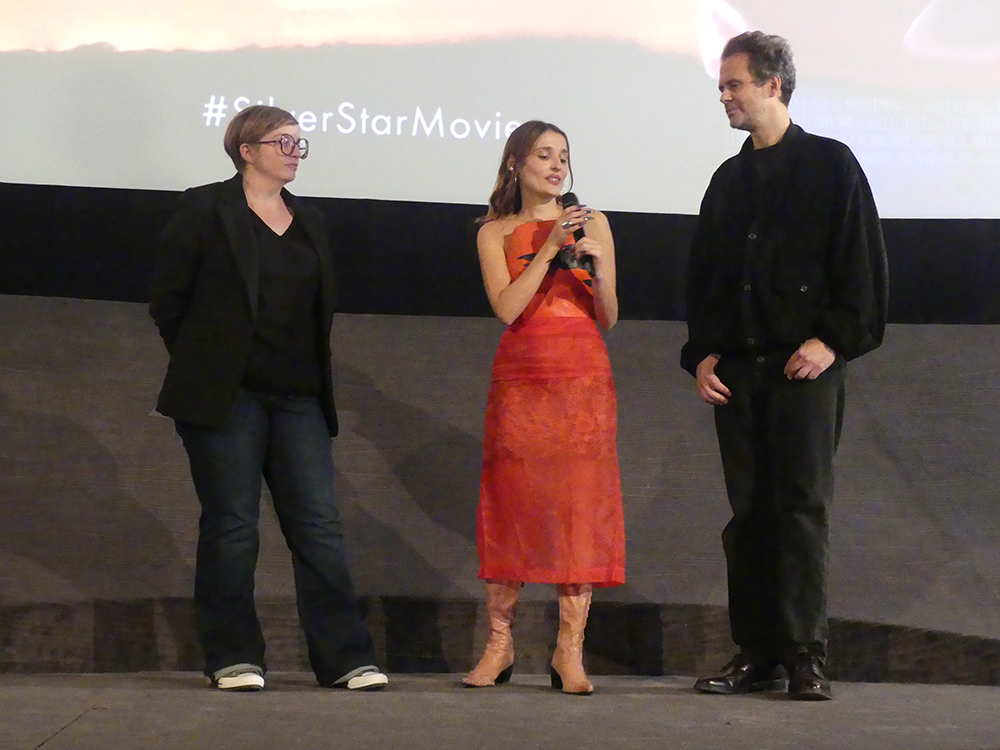
The Paris premiere reminded everyone present why cinéma d’auteur still matters, especially when it comes from voices like Ruben Amar and Lola Bessis, who continue to champion artistic freedom despite financial hurdles and an industry increasingly allergic to risk. Silver Star, produced by Ruben Amar, Lola Bessis, Philippe Imhaus, Simon Lefort, and David Solal, and backed by Les Films de la Fusée, Middlemen, and Carte Blanche, radiates the fierce independence of a project made with heart, sincerity, and stubborn determination. Distributed in France by Wayna Pitch and set for release on November 26, 2025, the film promises to bring its blend of drama, absurdity, social commentary, and unexpected tenderness to a much wider audience. And if the applause at Max Linder Panorama was any indication, Billie and Franny’s wild odyssey is about to resonate far beyond the screen, inviting viewers to laugh, hurt, and dream alongside two unforgettable young women navigating the fault lines of America—and themselves.
You can discover our photos in our Flickr page
Synopsis :
Billie, a young, introverted African-American tomboy with one eye missing, decides to rob a bank to help her parents in need. The situation turns into a fiasco and she takes Franny, an 18-year-old who is heavily pregnant, has a strong personality, and nothing left to lose, hostage. Together, they embark on an electrifying escape across the American wilderness in search of a better future.
Silver Star
Written and directed by Ruben Amar, Lola Bessis
Produced by Ruben Amar, Lola Bessis, Philippe Imhaus, Simon Lefort, David Solal
Starring Grace Van Dien, Troy Leigh-Anne Johnson, Tamara Fruits, Johnathan Davis, Getchie Argetsinger, Ekaterina Baker, Joey Giambattista, Josh Silberman, Amy Tribbey, Noa Fisher, Odley Jean
Cinematography : Cole Graham
Edited by Rafael Torres
Music by Polérik Rouvière
Production companies : Les Films de la Fusée, Middlemen, Carte Blanche
Distributed by Wayna Pitch (France)
Release dates : November 26, 2025 (France)
Running time : 102 minutes
Photos and video : Boris Colletier / Mulderville