 English
Cerermony - The American French Film Festival 2025 : A Celebration of Transatlantic Cinema and Cultural Connection
By Mulder, Neuilly-sur-Seine, Sacem, 12 november 2025
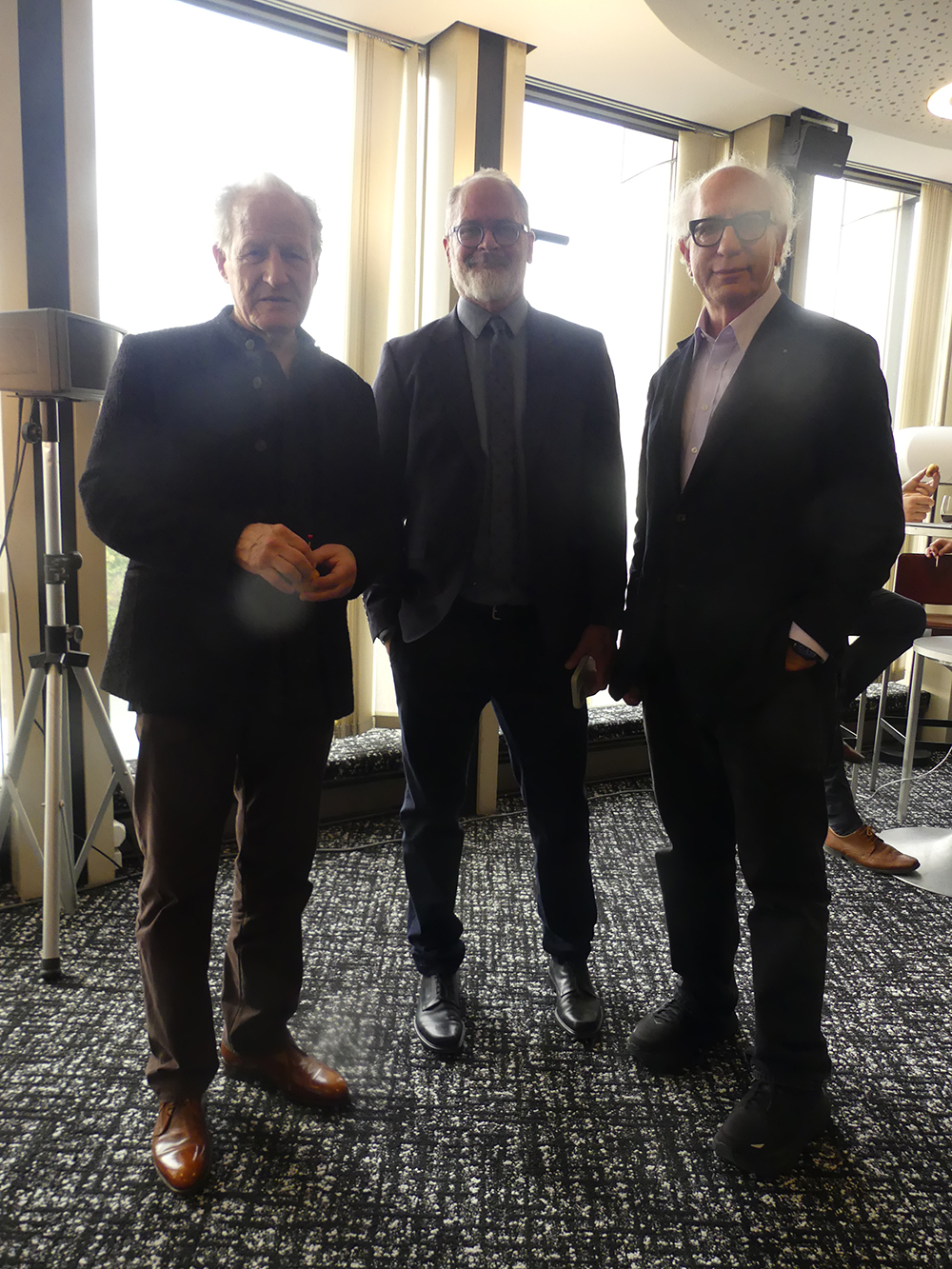
On November 12, 2025, our media was present at the SACEM headquarters in Neuilly-sur-Seine for the Parisian closing ceremony of The American French Film Festival 2025, freshly returned from Los Angeles. The afternoon gathered numerous film industry figures, including the legendary Michael Mann, who brought a touch of Hollywood prestige to the event. The atmosphere was both celebratory and reflective, as guests honored a festival that had once again succeeded in merging French artistry and American cinematic energy into a harmonious dialogue. The 29th edition, held in Los Angeles from October 28 to November 3, had drawn over 14,000 attendees—a record-breaking figure that speaks volumes about the enduring appeal of Franco-American film collaboration.
This year’s edition stood out not only for its attendance but also for the emotional resonance of its programming. The festival concluded with the U.S. premiere of GURU (Gourou), the latest psychological drama by Yann Gozlan, starring Pierre Niney. This closing choice reflected the event’s focus on introspection and the complexity of human emotion—a fitting end to a week filled with screenings that explored the soul of contemporary storytelling. What made the experience so remarkable was the sense of cross-cultural exchange permeating every discussion, every roundtable, and every film screening. Behind the glittering premieres, The American French Film Festival reminded everyone that cinema remains one of the most powerful tools for empathy and understanding between nations.

During the official ceremony hosted by the Franco-American Cultural Fund (FACF), the list of winners illustrated the creative diversity that continues to characterize the festival. The Audience Award for Best Film went to Colors of Time (La Venue de l’avenir) by Cédric Klapisch, co-written with Santiago Amigorena and produced by Bruno Lévy. Featuring Vincent Macaigne, the film encapsulated Klapisch’s trademark humanism—gentle, witty, and deeply humane. Distributed by StudioCanal, this bittersweet meditation on time and connection reaffirmed Cédric Klapisch’s gift for crafting stories that transcend generations and borders. At the SACEM event, the presence of Cédric Klapisch, Vincent Macaigne, and Bruno Lévy made the moment particularly symbolic—a celebration of cinema that bridges artistic sensibilities across continents.
The Critics’ Award was bestowed upon Love Me Tender, written and directed by Anna Cazenave Combet and represented at the closing ceremony by producers Raphaëlle Delauche and Nicolas Sanfaute. This delicate exploration of vulnerability and self-discovery once again confirmed Anna Cazenave Combet as one of France’s most promising voices. Distributed by Be For Films, her work stands at the crossroads of sensitivity and boldness—a balance that defines much of today’s French auteur cinema. The film’s reception, both in Los Angeles and in France, proved how deeply audiences yearn for authentic and emotionally intelligent narratives.

The Best First Film Award was presented to The Girl in the Snow (L’Engloutie), directed by Louise Hémon, produced by Margaux Juvénal, and co-written with Anaïs Tellenne. Featuring haunting performances by Matthieu Lucci and Galatéa Bellugi, the film unfolded like a dream filled with mystery and poetic melancholy. The recognition of Louise Hémon’s directorial debut highlights a global movement toward giving a voice to new, often female perspectives in cinema—voices that question, provoke, and redefine storytelling conventions.
In the documentary category, the Audience Award went to Drugged and Abused: No More Shame (Soumission chimique : Pour que la honte change de camp), a striking work directed by Linda Bendali and co-written with Andrea Rawlins-Gaston, produced by Patrice Lorton, and starring Caroline Darian, with international sales managed by Camille Serra. The film’s unflinching look at systemic abuse and its social consequences deeply resonated with both juries and spectators. By turning pain into awareness, Linda Bendali and her team reminded audiences that documentary filmmaking remains one of the most vital forms of activism today.

The American Students Award—a prize symbolizing the festival’s cultural bridge—went to Nouvelle Vague, directed by Richard Linklater, written by Vince Palmo, Holly Gent Palmo, Michèle Halberstadt, and Laetitia Masson. This work, distributed by Netflix, beautifully captured Richard Linklater’s enduring fascination with the passing of time and the intersections between French and American identity. The recognition by American students showed the younger generation’s growing enthusiasm for films that explore identity, culture, and human experience beyond language barriers.
The Jury Award for Best Series was granted to The Sentinels (Les Sentinelles), directed by Thierry Poiraud and Edouard Salier, and created by Guillaume Lemans and Xabi Molia. Produced by Delphine Clos with the support of Alix Lebrat and Louise Gigon, the series stood out for its blend of tension, aesthetic precision, and narrative innovation—further evidence that French television has achieved cinematic levels of quality. Meanwhile, Hugo Becker’s The Lifeline (Ligne de Vie) received the Short Film Award for its minimalist storytelling and emotional depth, a poignant reminder of how short formats can deliver powerful messages.

Beyond the competition, the festival honored two giants who symbolize the Franco-American bond in cinema: Jodie Foster, who received the Lifetime Achievement Award for her bilingual career bridging Paris and Hollywood, and Richard Linklater, who was presented with the Franco-American Cultural Fund Award, as well as the Chevalier des Arts et des Lettres distinction by the CNC. These tributes emphasized how both filmmakers, in their own way, have built cultural bridges through cinema—proof that storytelling knows no nationality.
Organized by the Franco-American Cultural Fund (FACF)—a collaboration between the Directors Guild of America (DGA), the Motion Picture Association (MPA), SACEM, and the Writers Guild of America West (WGAW)—with the support of Unifrance, CNC/Film France, Villa Albertine, Air Tahiti Nui, and Variety, the festival remains one of the most vital cultural events connecting France and the United States. From masterclasses to educational screenings and sold-out premieres, this year’s edition offered an inspiring reminder that cinema remains a living language—one of empathy, imagination, and artistic freedom.

As the applause filled the SACEM auditorium in Neuilly-sur-Seine, it echoed the same energy that had animated Los Angeles days earlier: gratitude and awe for the filmmakers who continue to shape the dialogue between two nations. Through the artistry of Cédric Klapisch, Anna Cazenave Combet, Louise Hémon, and Richard Linklater, The American French Film Festival 2025 reaffirmed a simple yet profound truth—that cinema, whether born in Paris or Hollywood, continues to unite us in the shared light of emotion, curiosity, and creation.
You can discover our photos in our Flickr page
Photos and video : Boris Colletier / Mulderville