

Harry Potter: Enter the Magical World transforms the Hilton CDG into an annex of Hogwarts
Sunday 9 November, 2:30 PM PT Tremblay en France, Hôtel Hilton Paris Charles de Gaulle Airport 2025-11-09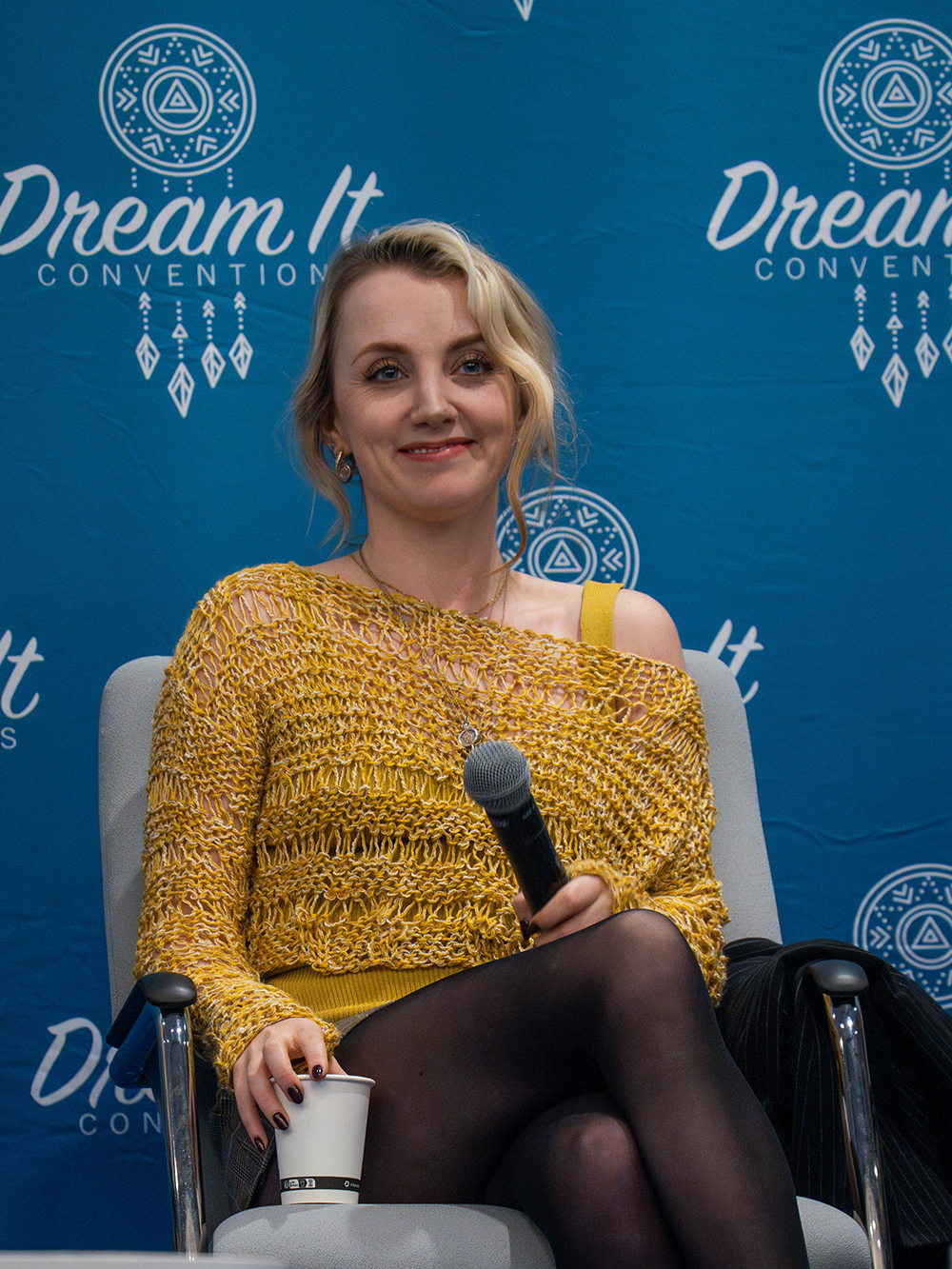
There are events that instantly awaken viewers' emotional memories, and the Enter the Magical World convention, which took place at the Hilton Paris Charles de Gaulle Airport Hotel in Tremblay-en-France on November 8 and 9, 2025, strikes exactly that chord. A stone's throw from the runways of Roissy, a piece of popular cinema history comes to life: the actors who played characters that became childhood companions return to engage with an audience that grew up with them, between books and screens. The program includes meetings, photo sessions, signings, and conferences, but the real promise lies elsewhere: for a weekend, rediscovering that feeling of stepping out of the Muggle boarding line and into the corridors of Hogwarts, leaving the routine behind for a universe whose leitmotifs—a musical theme, a wink, a name spoken—are enough to bring back ten years of images.
The cast assembled has the feel of reopening chapters: Matthew Lewis (Neville Longbottom), Bonnie Wright (Ginny Weasley), Evanna Lynch (Luna Lovegood), David Bradley (Garrick Ollivander), Stanislav Yanevski (Viktor Krum), and Christian Coulson (Tom Riddle). Each one carries with them a slice of the saga and a type of memory: the outsider who becomes an everyday hero, the soul sister who asserts herself, the eccentric who sees more clearly than anyone else, the craftsman who offers wands as if handing out destiny, the taciturn champion, and the youthful face of the future enemy. On site, the exchanges will take very concrete forms—photos, autographs, Q&As—but it is the direct witnesses of a decade-long film shoot who will give depth to the event, these actors capable of sharing a set anecdote, a costume detail, a nighttime fit of laughter that suddenly transports you back to the making of a myth.
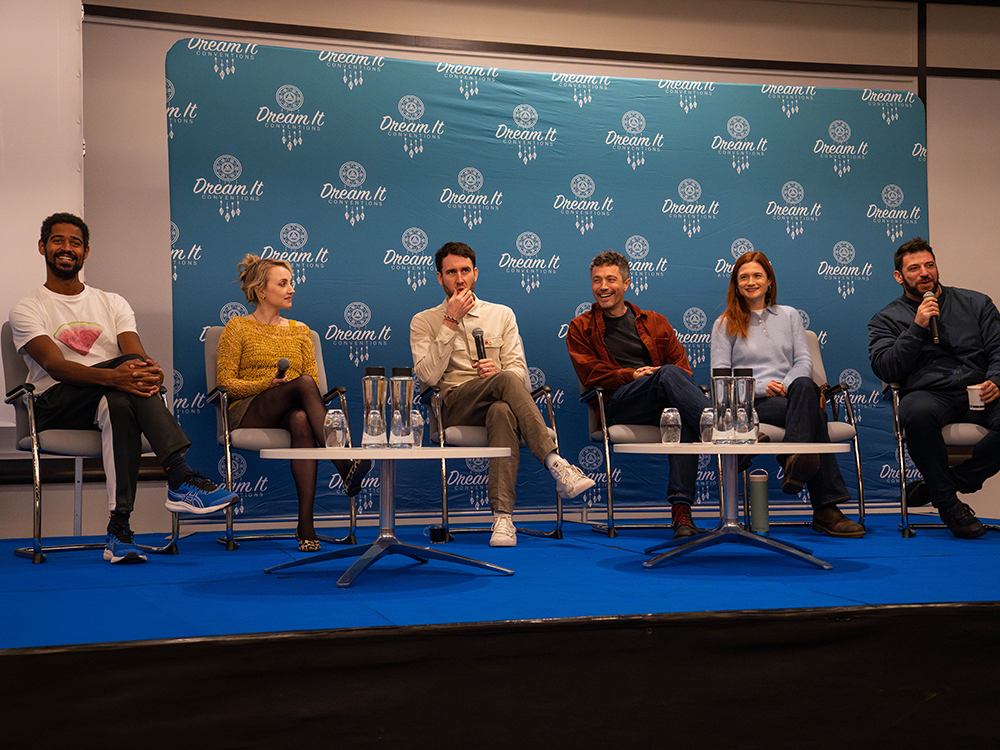
The charm of this type of convention also comes from what we now know about the genesis of the adventure. Before the red carpets, there was a secretary in producer David Heyman's London offices who, in 1997, stumbled upon a relegated manuscript and put it back on the pile: a chain of coincidences was set in motion, leading to the sale of rights in 1999 and a studio gamble that would soon exceed $7.7 billion at the global box office. On the sidelines of the meetings in Tremblay, it's easy to imagine fans asking Matthew Lewis how he experienced this growth in scale, the transition from a British film set to an industrial fortress: Leavesden, the former airfield that became the saga's base of operations, where more than 700 people worked and which David Heyman described as a veritable small town. The fact that the studio is now open to visitors further amplifies the mythology: those who come to the Hilton will remember the huge rooms where the Great Hall, the Room of Requirement, and the corridors where we spent as much time filming as we did waiting were reconstructed.
However, this industrial story has never been just about numbers; it has been written by personalities. The choice of directors created an aesthetic palette that can be glimpsed in the memories of the games: Chris Columbus gives the first two films the look of a golden picture book, Alfonso Cuarón desaturates and stretches the space, Mike Newell injects the paranoia of a teen thriller, and David Yates establishes a political and emotional gravity that will lead to the final battle. Steve Kloves' screenplays—supported once by Michael Goldenberg—arbitrated the essentials, and the music stitched together the collective memory: from John Williams to Patrick Doyle, Nicholas Hooper, then Alexandre Desplat, each added their own motifs to “Hedwig's Theme,” that nostalgic whistle that will probably be heard coming out of the speakers in the lobby as fans unroll posters for autographs.

Tremblay's guests are also gateways to specific parts of the story. David Bradley, for example, shares his thoughts on the scene with the wands and the almost artisanal logic behind the choice, when magic comes through the texture of the wood and the weight in the hand; Evanna Lynch, a long-time fan before becoming an actress, speaks with rare delicacy about the fetish objects and how Luna established herself as a model of benevolent eccentricity; Bonnie Wright often returns to the maturation of her character, from the little sister on the sidelines to the front-line ally; Stanislav Yanevski reactivates the sporting thrill and strangeness of the international encounters of the Triwizard Tournament; Christian Coulson recounts the subtle pressure of embodying a face of evil still in the making, where apparent gentleness already masks the fracture; Finally, Matthew Lewis embodies the trajectory that so many viewers remember: the confidence that grows day by day, as awkwardness turns into clear-headed courage and the camera zooms in to give him, at the decisive moment, the sword, the line, and the look.
The promise of Enter the Magical World contains the simple idea of a tête-à-tête between careers and audiences that have advanced together. When Daniel Radcliffe, Emma Watson, and Rupert Grint were propelled against their will into the heart of a media storm, a group of adults held the helm: J.K. Rowling demanding a predominantly British cast, Steve Kloves vowing to remain faithful to the characters, David Heyman protecting a marathon shoot, Stuart Craig rethinking the architecture of Hogwarts as needed, Tim Burke and the British special effects teams growing a local industry. This web of decisions allowed audiences to grow up with their heroes, and it is this thread that visitors come to touch when they stand in front of the camera for a photo with Bonnie Wright or hold out a case to David Bradley for an autograph next to a sketch of a wand.
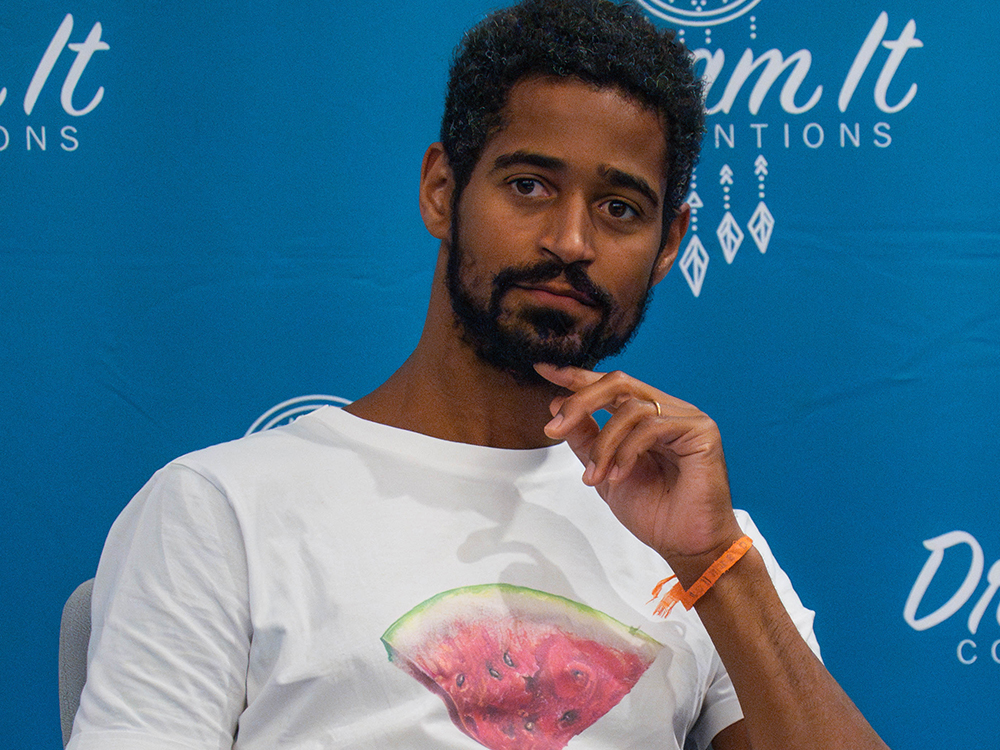
This convention also reflects a changing cultural landscape. Debates have flared up in recent years: Chris Columbus's statements about the unlikely adaptation of “The Cursed Child” with the original cast, controversial positions around J.K. Rowling, and a broader discussion about the separation of the work from the author. In a context where everyone has their own compass, this type of gathering brings us back to the original experience—the films as a theater experience, the community as a home—and reminds us that a shared universe is first and foremost a conversation, sometimes contradictory, always alive. People don't come to Tremblay to make decisions, but to hear again, from the actors themselves, what this decade of film sets and releases synchronized with our own ages was like.
In practical terms, access was via passes (starting at €79), with extras added depending on the guests for photo shoots, autographs, or private meetings. That's the rule of the game at conventions: a ticket for the atmosphere, then à la carte options to create your own moment, whether it's a photo to frame in your hallway or a dated autograph to add to your DVD box set. The venue, which is easily accessible, has the advantage of absorbing the crowds while allowing for lively exchanges; and we know from experience that conferences, when they include one or two unexpected memories from the filming, can be worth the trip on their own.
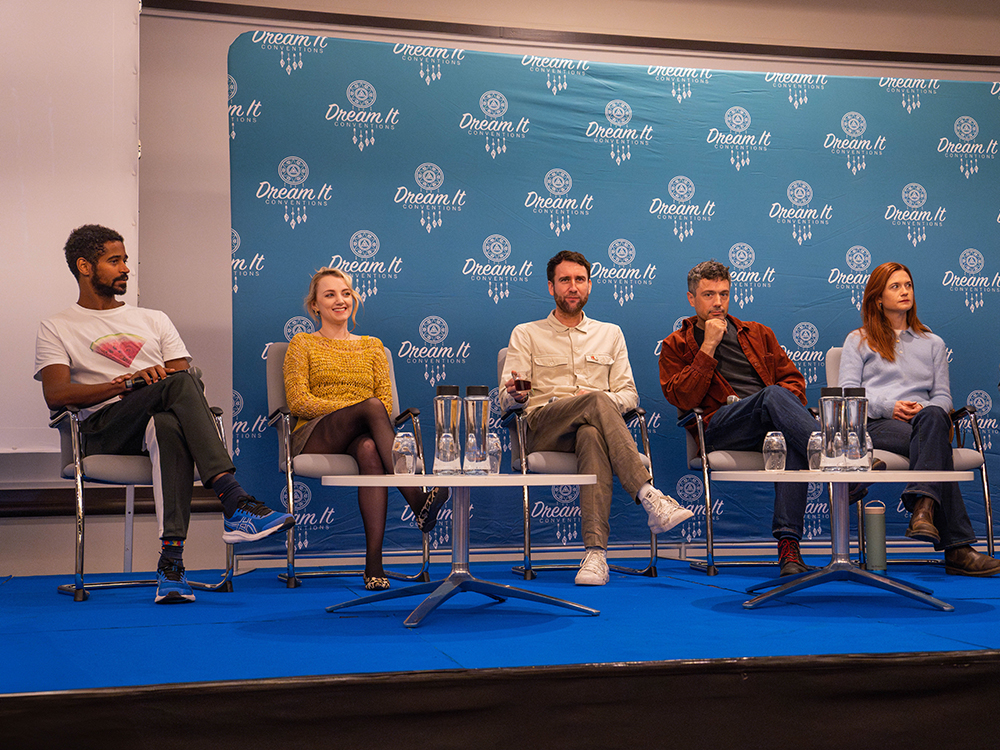
These two days are not just a replay of nostalgia, they reaffirm the power of a narrative that has shaped the collective imagination. When Eduardo Serra spoke of “mathematical precision” to harmonize shots and digital effects, he was essentially saying the same thing as fans discussing a connection between two films: the need for a credible world. When Alexandre Desplat, together with Conrad Pope, rediscovered the symphonic grandeur of the original to accompany the final battle, he completed a musical circle that we can still hear today. And when David Yates chose to use handheld cameras to convey the feeling of fleeing across open countryside, he was reviving a simple idea: magic only works if we feel its weight, fatigue, and fear. It is this weight that we come to share, through a glance, a word or a photo, with Matthew Lewis, Bonnie Wright, Evanna Lynch, David Bradley, Stanislav Yanevski and Christian Coulson. In Tremblay-en-France, for a weekend, boarding is announced; and we already know that in our suitcases on the way back, there will be a little more than a badge and a selfie—an extra story.
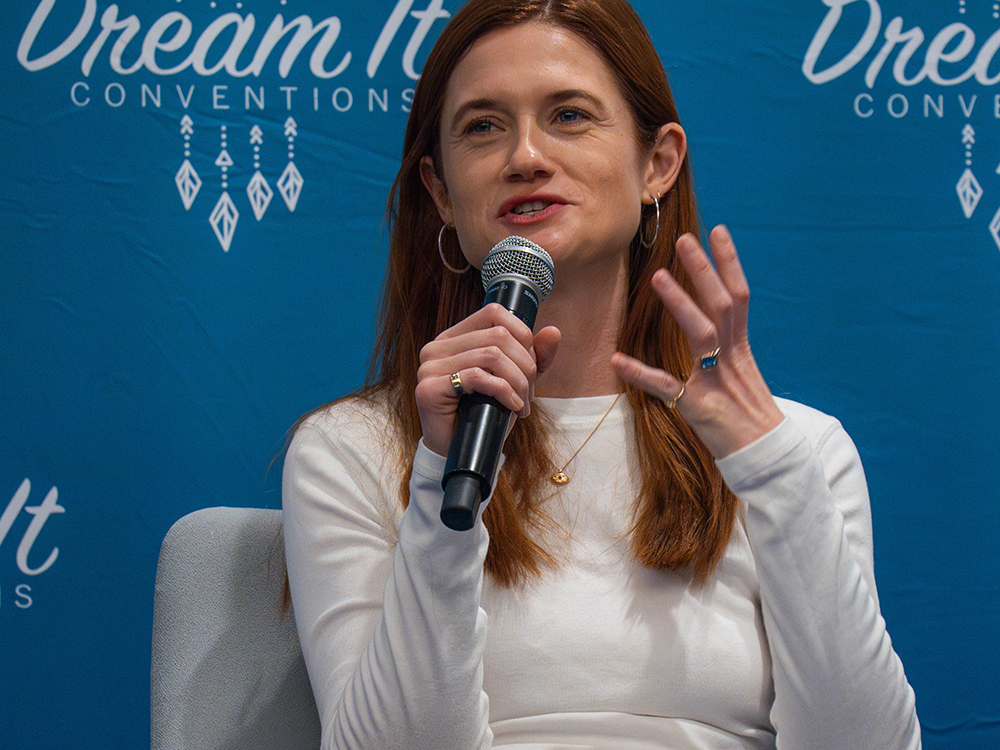
You can discover our photos in our Flickr page
Practical information
Dates and times: November 8, 2025, to November 9, 2025
Location: Hilton Paris Charles de Gaulle Airport Hotel, 8 Rue de Rome, 93290 Tremblay en France
Prices: Starting at €79
Official website: www.dreamit-conventions.com
Photos: @fannyrlphotography